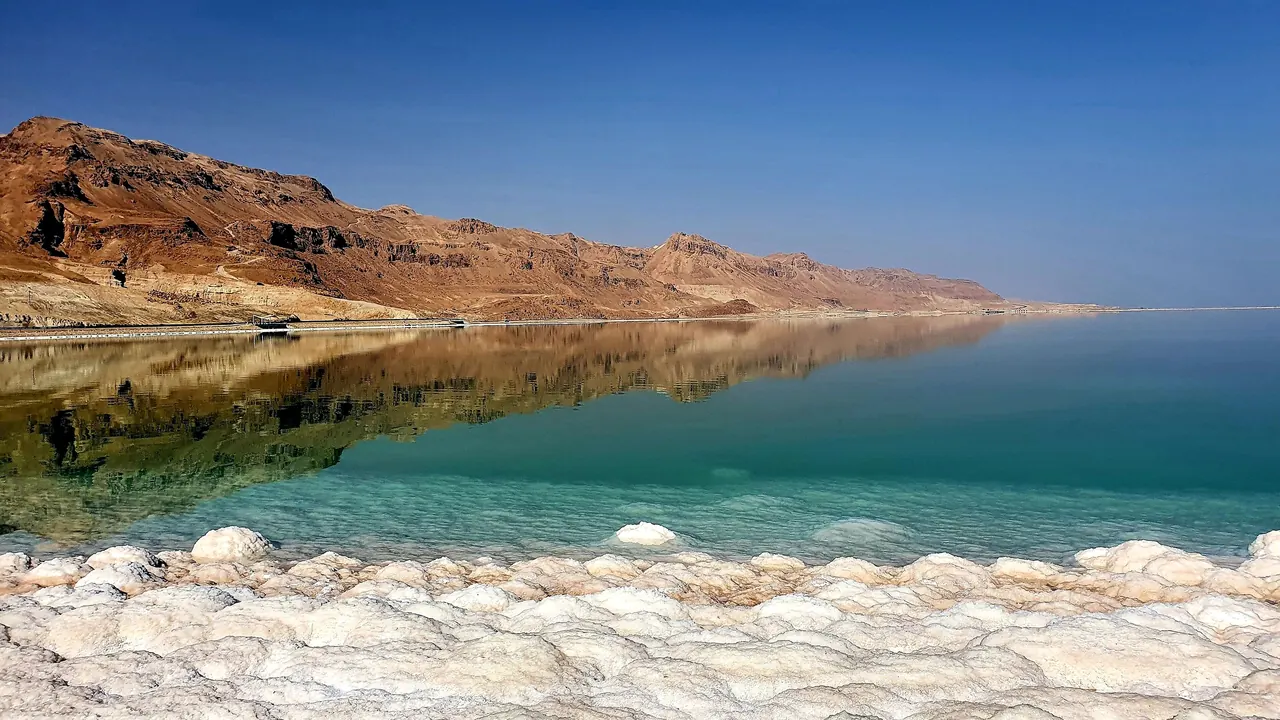
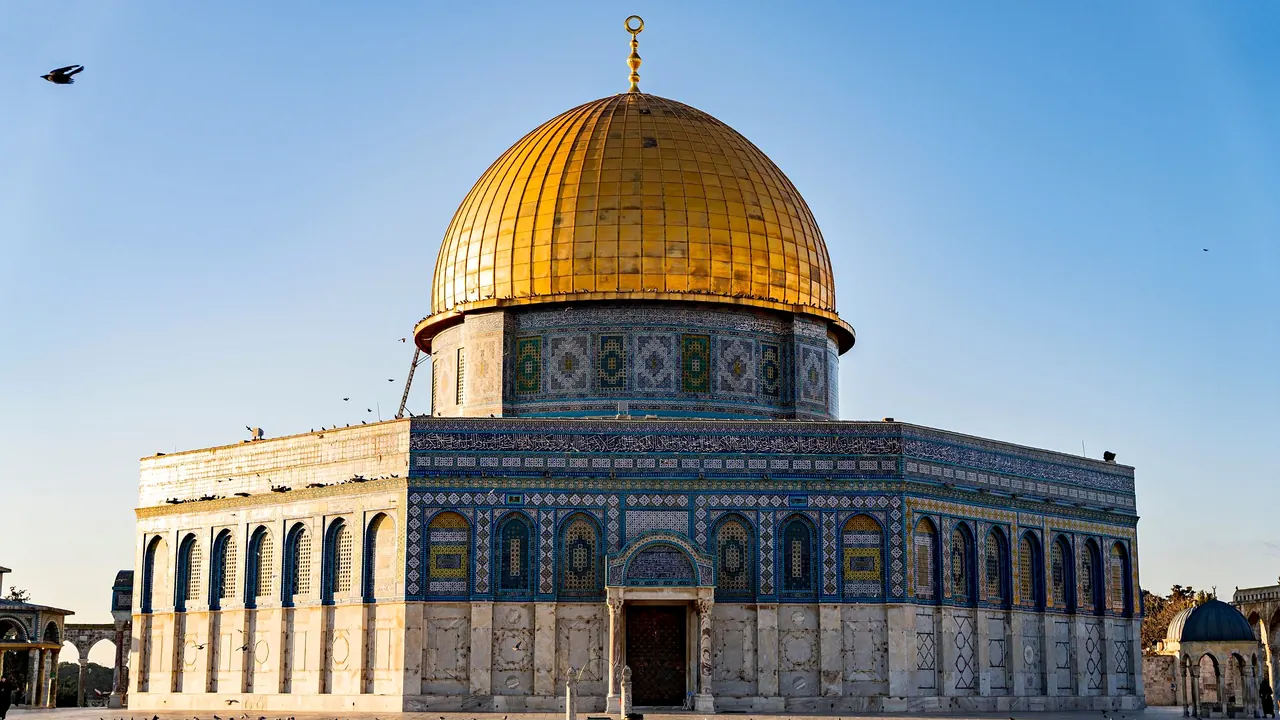
Photos: Dead Sea by Anagoria, CC BY-SA 4.0, cropped; Jerusalem by Yasir Gürbüz, Pexels License.
Dead Sea or Jerusalem?
Our verdict in twelve categories, each scored against the same fixed benchmark cities, and the climate month by month, so you can choose for your trip.
Choose Dead Sea for
- wellness
- beaches
- nature and the outdoors
Book the Dead Sea when the point of the trip is to slow down. Days go on floating in the mineral water, coating yourself in mud, soaking in sulphur pools and staying in a spa hotel at Ein Bokek, with Masada at dawn and the springs of Ein Gedi as the outings. It makes a good winter escape for sun and rest, as long as you accept hotel buffets and early nights, because there is no town around you.
Choose Jerusalem for
- culture and sights
- food and drink
- shopping
Jerusalem is the choice for a trip built on history and on the city itself. It has the holy sites of the Old City, the Israel Museum and Yad Vashem, dinner at Mahane Yehuda, and a long list of day trips from Bethlehem to Tel Aviv. It is the better base for a first visit to the country, and the Dead Sea fits into it as a single day out. Doing it the other way round means driving an hour and a half uphill for every meal or sight worth planning.
Scoreboard
Twelve categories on one fixed scale from 0 to 100. The shaded stretch is the gap between the two.
Your match
Pick a travel style or drag the sliders, and both match scores follow your weighting.
Wins on wellness and beaches with your weighting.
Wins on culture and sights and food and drink with your weighting.
What matters to you?
Category by category
What the scores mean for a trip.
Beaches & swimming
You can't really swim in either place, but at the Dead Sea you are on the water itself. The hotel beaches at Ein Bokek have shade, showers, lifeguards and a calm, shallow shore. The float itself is what people come for, and the water is warm even in winter.
From Jerusalem the beach is always a day out. It is about an hour to the long Mediterranean sand at Tel Aviv for real swimming, or an hour down to the same Dead Sea shore. The Dead Sea cannot offer that Tel Aviv option, but taking it costs you a day in the city.
Food & drink
Food is one of the sharpest gaps between the two. At the Dead Sea you mostly eat at your hotel, with large breakfasts and buffet dinners. A few grills in the Ein Bokek malls and the kibbutz dining rooms add some variety.
Jerusalem has a real food culture. There is Mahane Yehuda by day and by night, hummus and ka'ak bread in the Old City and East Jerusalem, and Kurdish, Iraqi and Yemenite dishes from the Jewish kitchens. The upmarket restaurant scene is modest and much of West Jerusalem closes for Shabbat, but even a short stay eats far better than a week by the Dead Sea.
Culture & sights
Masada stands up to almost any site in the region, and together with Qumran and the synagogue mosaic at Ein Gedi it gives the Dead Sea two or three superb outings. After that, there is no old town to fall back on.
Jerusalem is in another league. The Western Wall, the Holy Sepulchre and the Dome of the Rock all lie inside one walled square kilometre, with the tunnels and the City of David beneath. The Israel Museum holds the Dead Sea Scrolls found at Qumran. The city needs several days, and Masada can be added from there.
Nightlife
The Dead Sea has no nightlife beyond a hotel bar and a walk along the Ein Bokek promenade, and most guests go to bed early before Masada at dawn. Jerusalem is low-key too, but it has Mahane Yehuda's stalls turning into bars after hours, the pubs of Nahalat Shiva and the bars along Emek Refaim, with Tel Aviv half an hour away by train for clubs.
Nature & outdoors
Both share the Judean Desert, but the Dead Sea sits right in it. Ein Gedi's springs and waterfalls, the salt pillars of Mount Sodom and the canyons of Nahal Zohar are close to your hotel. Each evening the mountains of Jordan turn pink across the water.
Jerusalem's own countryside is gentler, with pine woods and spring-fed trails around Sataf and Ein Karem and the canyon of Wadi Qelt dropping towards Jericho. Ein Gedi and Masada are still within reach, but at an hour or more each way a dawn hike there becomes a long day.
Day trips
From the Dead Sea the one big outing is Jerusalem itself, which is worth a day or two. After that come Arad, Beersheba with its ancient mound, and the crater rim at Mitzpe Ramon, a shorter list made up mostly of desert places.
Jerusalem is the far better base for day trips. Bethlehem is on the doorstep, Tel Aviv and Jaffa are half an hour away by train, and Masada, Qumran and Jericho lie to the east. Caesarea, Acre and the Baha'i gardens in Haifa are within about two hours.
Good for families
At the Dead Sea the hotel pool is the real playground. Older children enjoy floating, but the water stings eyes and grazes. Apart from the short waterfall trail at Ein Gedi and the Masada cable car, there is little aimed at children.
Jerusalem offers more for children: the Biblical Zoo with the aquarium beside it, the hands-on Bloomfield Science Museum, and Hezekiah's Tunnel to wade through, in a culture that makes families welcome. The Old City's steps defeat a stroller, though, and both places are hard going with children on a summer afternoon.
Getting around
The Dead Sea is a region for a car. Route 90 links Ein Bokek, Masada and Ein Gedi in under an hour, but buses are too infrequent to plan sightseeing around, so visitors without a car rely on hotel shuttles and tours.
Jerusalem is easier. The centre can be walked, though it is hilly, the light rail runs along Jaffa Road, buses cover the rest, and a fast train goes to Tel Aviv and the airport. The catch is Shabbat, when public transport stops from Friday afternoon to Saturday evening.
Shopping & style
Shopping at the Dead Sea means mud, salts and mineral creams from the Ein Bokek malls and factory shops, plus dates from the kibbutzim. Jerusalem gives you far more to browse, from olive wood, spices and embroidery in the Old City souq to Armenian painted ceramics, silver Judaica and the international brands along Mamilla.
Affordability
Both are expensive, so the real difference is where the money goes. At the Dead Sea it goes on the resort hotel and the entry fees at Masada and Ein Gedi. Floating from the free public beaches costs next to nothing, and a kibbutz guesthouse is the way to save.
In Jerusalem, hotels, sit-down restaurants and alcohol are expensive, but many holy sites are free, the light rail is reasonable, and hummus and falafel in the market and the Arab neighbourhoods keep meals cheap. Days built around hotel buffets at the Dead Sea leave little room for that kind of saving.
Live music & performing arts
The Dead Sea has nothing beyond a singer or a show in the hotel lounge. Jerusalem's scene is small but real: the Jerusalem Symphony Orchestra, the Jerusalem Theatre, visiting ensembles in Old City churches, and summer concerts at the Sultan's Pool below the walls. Most of the theatre is in Hebrew.
Wellness & relaxation
This is where the two differ most. At the Dead Sea the spa is the whole trip. You wake beside the water, go in before the heat builds, rest through the afternoon and use the hotel's heated indoor pools when a winter day turns cool. The softer sun at this depth has drawn people with skin complaints for generations, and they get the benefit from a stay of several days, not from a single visit.
From Jerusalem the same shore is an hour's drive away, so the float and the mud fit into one day between sights, and then you drive back up to a crowded, intense city. Jerusalem's own calm comes on Shabbat, when the traffic stops in West Jerusalem, and in the gardens on the Mount of Olives and inside the Armenian compound.
When should you go?
Pick your month. The climate figures are measured averages, not a forecast.
Dead Sea in July
Jerusalem in July
Daytime high, °C
Rainfall in the month, mm
Where the figures come from
Jerusalem has no rain gauge within 25 km of the centre, so its rainfall comes from a gridded climate dataset read at the destination rather than from a gauge further away.
Temperature and rainfall are climate normals, averaged over the years shown. Dead Sea: 1991-2020 normals, Ghor El Safi (21.1 km from centre). Jerusalem: 1991-2020 (sunshine 1981-2010) normals, Jerusalem (1.8 km from centre).
The Dead Sea is at its best in the cooler half of the year. Around the Ein Bokek hotels, December to February bring highs in the low twenties, about 22°C in January, with little rain and plenty of sun. That is pleasant for lying out between floats. November and March are warmer, in the high twenties, and good for walking at Ein Gedi. April and October are already in the thirties, and from May to September the heat is fierce, around 42°C in July, so anything active has to be done at first light.
Jerusalem sits up in the hills, and its year runs almost the other way. Winter is cool and wet, with highs near 12°C and about 109mm of rain in January, which makes the stone lanes slippery. April, May and October are dry, with highs in the twenties, the best weather for walking the city. Summer peaks around 31°C, which is warm but manageable for sightseeing, and it is also when the Mediterranean off Tel Aviv is warmest for a beach day.
Which traveller are you?
On a relaxing and wellness trip, the Dead Sea is the obvious pick. Its Ein Bokek hotels are built around heated mineral pools, mud wraps and treatment rooms, and the days settle into floating and resting. Jerusalem's crowded Old City is anything but restful.
For a culture and arts trip, Jerusalem wins by a long way. The four quarters of the Old City, the excavations beneath them, the Israel Museum and Yad Vashem fill several days, and Masada and Qumran are easy outings from there.
On a food and nightlife trip, Jerusalem is the only real option. Mahane Yehuda turns into grills and bars after dark, and the Arab quarters keep their hummus and knafeh counters busy. At the Dead Sea, dinner is a hotel buffet and the evening ends at the bar.
Before you go
| Measure | Dead Sea | Jerusalem |
|---|---|---|
| Official language | Hebrew | Hebrew |
| Currency | New Israeli Sheqel (ILS) | New Israeli Sheqel (ILS) |
| Sockets | CHM230 V, 50 Hz | CHM230 V, 50 Hz |
| Driving side | Right | Right |
| Time zone | UTC+2, UTC+3 in summer | UTC+2, UTC+3 in summer |
| Emergency number | Police 100, fire 102 | Police 100, fire 102 |
| Elevation | - | 754 m |
| Main airport | Ben Gurion International Airport (TLV)111 non-stop destinations | Ben Gurion International Airport (TLV)42 km from centre111 non-stop destinations |
By the numbers
| Measure | Dead Sea | Jerusalem |
|---|---|---|
| Population | - | 1,050,151 |
| People per km² | - | 8,374 |
| Museums within 10 km | - | 69 |
| UNESCO World Heritage sites within 50 km | - | 7 |
| Swim season, months above 21 °C | - | 7 months |
Where else could you go?
Every comparison below shares a destination with this one, so you can follow Dead Sea or Jerusalem somewhere new.
- Tel Avivvs Jerusalem
- Ammanvs Jerusalem
- Petravs Dead Sea
- Petravs Jerusalem
- Eilatvs Dead Sea
- Aqabavs Dead Sea