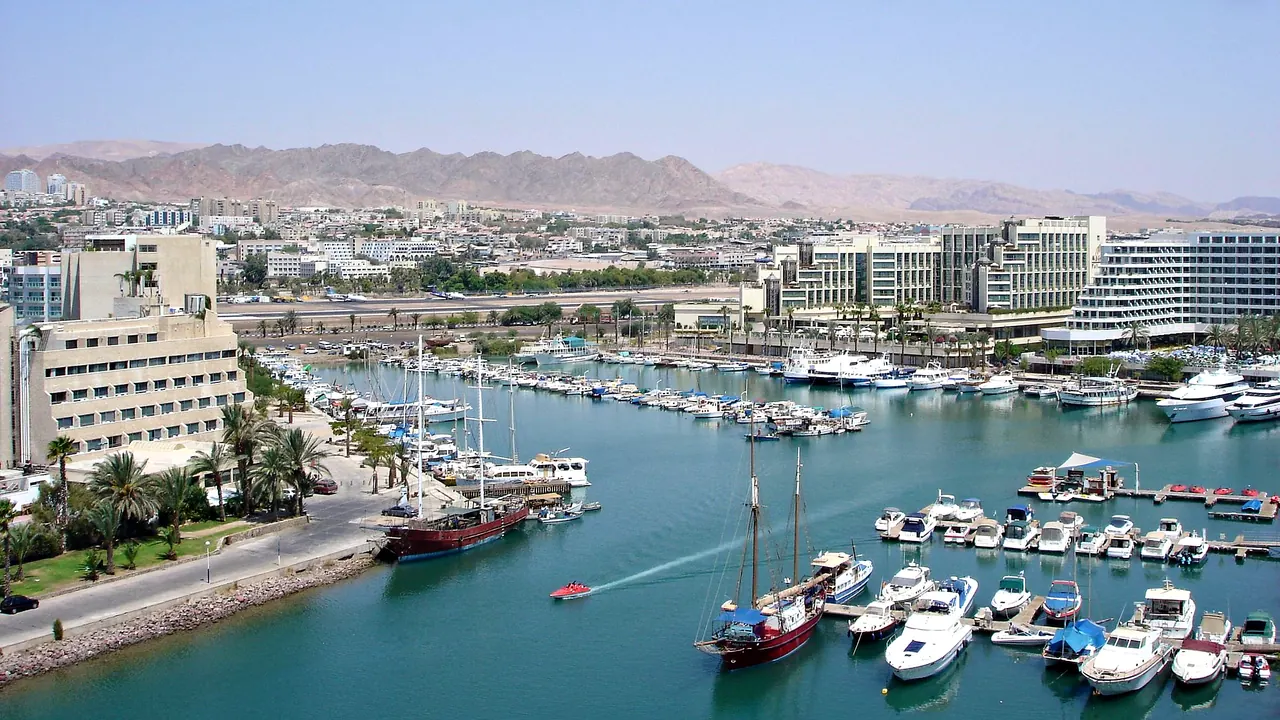
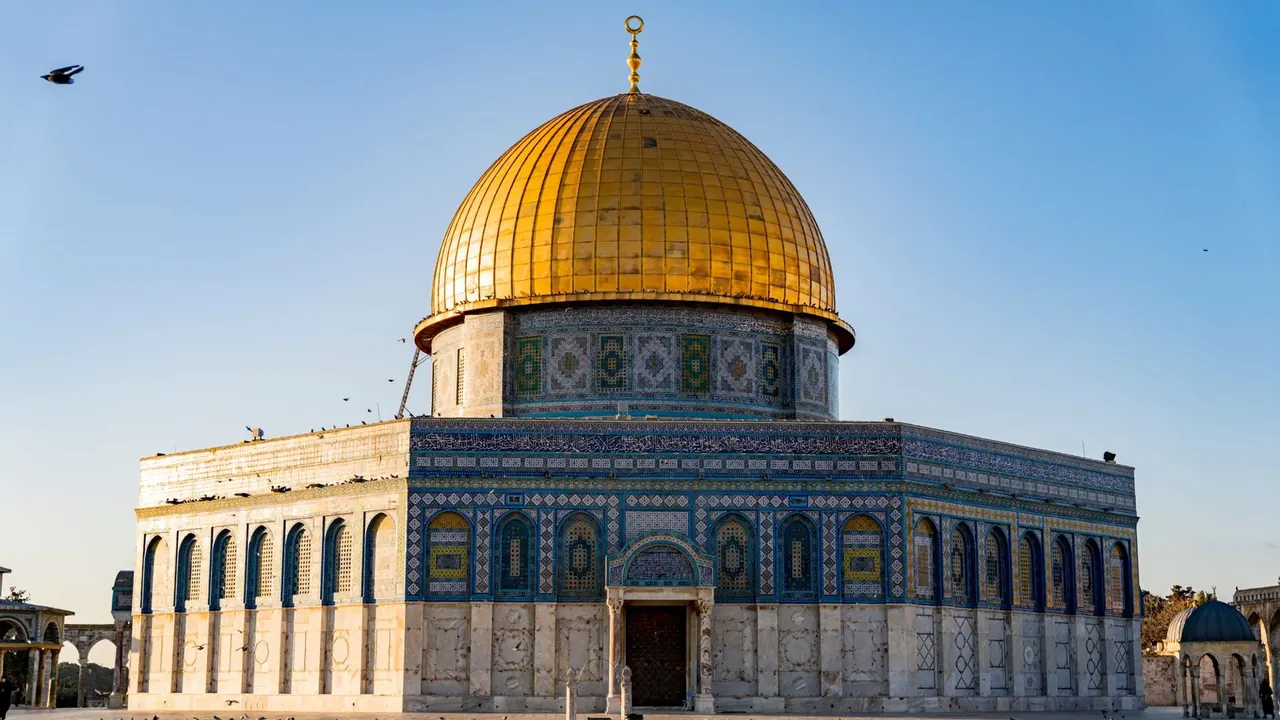
Photos: Eilat by Tango7000, Public domain; Jerusalem by Yasir Gürbüz, Pexels License.
Eilat or Jerusalem?
Our verdict in twelve categories, each scored against the same fixed benchmark cities, and the climate month by month, so you can choose for your trip.
Choose Eilat for
- beaches
- families
- nature and the outdoors
Eilat suits travellers who want sun and warm, clear water in the depths of winter, and who would rather snorkel off a jetty or dive the reef than tour monuments. It works well for families and for anyone happy with a resort routine of beach, pool and promenade. The town itself has almost no history, though, and little food worth the journey.
Choose Jerusalem for
- culture and sights
- day trips
- food and drink
Choose Jerusalem if the trip is about what people have built, believed and fought over. The Old City, the Israel Museum and Yad Vashem fill several days, and the market and the Arab bakeries feed you far better than any resort buffet. Bethlehem, Masada and Tel Aviv are all within a day's reach. Here the beach is an outing, not something you do every day.
Scoreboard
Twelve categories on one fixed scale from 0 to 100. The shaded stretch is the gap between the two.
Your match
Pick a travel style or drag the sliders, and both match scores follow your weighting.
Wins on beaches and families with your weighting.
Wins on culture and sights and day trips with your weighting.
What matters to you?
Category by category
What the scores mean for a trip.
Beaches & swimming
Eilat wins this one outright. Its town beaches face a calm, clear Red Sea that you can swim in all winter, and south of the centre the reserve beaches let you step off a jetty straight over living coral. The catch is a short, crowded strip of often coarse sand.
Jerusalem has no shore at all. A swim means taking the train to the long Mediterranean sands at Tel Aviv, which takes the whole day, or driving down to the Dead Sea, where you float off a rocky, salt-crusted edge rather than swim.
Food & drink
Jerusalem eats far better. Mahane Yehuda gives the city a real market at its heart, and the Old City adds morning hummus, ka'ak bread rings from carts and knafeh, with Kurdish, Iraqi and Yemenite dishes from the Jewish kitchens besides. Plan around Shabbat, when most of West Jerusalem closes but the Arab neighbourhoods keep cooking.
In Eilat most meals come from hotel buffets and promenade restaurants built for visitors. Red Sea fish and a good hummus counter in the older streets are the highlights, but a food lover will have tried everything within a few days.
Culture & sights
Few pairs of cities are further apart in this. Eilat is a modern port and resort with no old quarter and no museums of note. To see any history you have to go out to the copper workings at Timna or across the border to Petra.
Jerusalem is one of the world's great historic cities. The Western Wall, the Holy Sepulchre and the Dome of the Rock stand a short walk apart inside the walled Old City, with tunnels and excavations reaching down to the Bronze Age, and the Israel Museum and Yad Vashem need a day between them.
Nightlife
Eilat has the edge for a night out, but only in season. On summer weekends and in school breaks the lagoon and promenade fill with young Israelis, there are beach parties and a few clubs stay open late. Midweek in the quiet months there is much less going on.
Jerusalem's evenings are smaller and built around bars rather than dancing: drinks among the closed stalls of Mahane Yehuda and in the pubs of Nahalat Shiva and the German Colony. Friday nights are quiet in the west of the city, and anyone after real clubbing takes the train to Tel Aviv.
Nature & outdoors
Eilat comes out ahead, mostly because of what lies underwater. Its coral reef is among the easiest anywhere to reach, with diving centres along the coast road and the Dolphin Reef in its bay. The red granite canyons of the Eilat Mountains and the rock formations of Timna add desert walks, and spring and autumn bring the great bird migrations.
Jerusalem's outdoors is greener and further from the door: pine-covered trails around Sataf and Ein Karem, the canyon of Wadi Qelt, and the oasis of Ein Gedi with the dawn climb up to Masada. In summer, desert walking in either place means starting at sunrise.
Day trips
Jerusalem sits near the middle of the country, and that pays off. Bethlehem is next door, and Masada with Qumran makes a classic desert day. Tel Aviv and Jaffa are a short train ride away, and Caesarea, Acre and the Baha'i gardens in Haifa are all within about two hours.
Eilat has one great excursion, Petra across the Jordanian border, plus easy Aqaba and the copper mines of Timna. Beyond those, the empty Negev cuts it off from the rest of Israel, so even the Dead Sea is too far for a comfortable day.
Good for families
Eilat has the edge because it is set up for Israeli families on vacation, though almost everything a child will enjoy involves the water: the Dolphin Reef, glass-bottom boats and snorkelling off the jetties. There is also an ice rink in one of the malls for a hot afternoon. Beyond the sea there is little made for children. From June to September the heat keeps small children indoors except early and late, so late autumn to spring is the time to bring them.
Jerusalem has what Eilat lacks, which is things for children to do away from the water. There is a hillside zoo of animals from the Bible, the national aquarium next door and a science museum where children are meant to touch things. Wading through the water of Hezekiah's Tunnel or looking down from the Old City walls suits school-age children better than toddlers. Away from those, this is a city made for adults, and children are expected to keep quiet at the holy sites. Summer afternoons are milder than Eilat's but still hot enough to send families back indoors.
Getting around
You can get around the centre of either city on foot, but the obstacles are different. In Eilat the lagoon, North Beach and the malls are a short, flat walk apart and the reef beaches are a taxi ride south, though summer heat makes even short walks hard. Anything inland needs a car or a tour.
Jerusalem is hilly and stepped, but the light rail runs along Jaffa Road, a large bus network covers the rest, and a fast train goes to Tel Aviv and the airport. The weekly gap is Shabbat, when public transport stops completely.
Shopping & style
Neither city is worth the trip for shopping, but Jerusalem has more to take home. The Old City souq sells olive wood, embroidery and spices, the Armenian Quarter has its painted ceramics and the Jewish Quarter sells Judaica in silver and glass, while the international brands are at Mamilla.
Eilat's draw is its VAT-free malls of chain fashion and electronics, which matter more to Israelis than to visitors from abroad. Jewellery set with blue-green Eilat stone is the one local thing to buy.
Affordability
Both are expensive, and there is little to choose between them. Eilat's beach hotels charge the most at festivals and on summer weekends, and diving and tours add up quickly. The VAT exemption helps with meals and shopping, and rooms are cheaper midweek.
Jerusalem's hotels charge most during the festivals and pilgrimage seasons, but many of the holy sites are free and a market lunch in the Arab neighbourhoods costs little.
Live music & performing arts
Jerusalem has a real, if modest, season of music and drama. The Jerusalem Symphony Orchestra and the Jerusalem Theatre play through the year, the Israel Festival comes each year and summer concerts are held in the Sultan's Pool below the walls, though most plays are in Hebrew.
For most of the year Eilat has only hotel shows and musicians in the bars. Its long-running Red Sea jazz festival and the occasional big concert around the festivals are the exceptions.
Wellness & relaxation
The two are equally good for a rest, but in different ways. In Eilat it means hotel spas, pools and gardens and long days in warm winter sun, though festival weeks and school breaks bring crowds and noise.
Jerusalem itself is intense, but the Dead Sea spas, with mineral mud and sulphur pools, are an hour away. And once a week Shabbat brings West Jerusalem to a halt, with no traffic and the streets full of people out walking.
When should you go?
Pick your month. The climate figures are measured averages, not a forecast.
Eilat in July
Jerusalem in July
Daytime high, °C
Rainfall in the month, mm
Where the figures come from
Jerusalem has no rain gauge within 25 km of the centre, so its rainfall comes from a gridded climate dataset read at the city rather than from a gauge further away.
Temperature and rainfall are climate normals, averaged over the years shown. Eilat: 1991-2020 normals, Eilat (0.9 km from centre). Jerusalem: 1991-2020 (sunshine 1981-2010) normals, Jerusalem (1.8 km from centre).
Eilat is at its best from November to March. From December to February the highs are in the low twenties, around 21°C in January. November and March are warmer, in the high twenties, which is ideal beach weather. It almost never rains, and the sea is warm enough to swim in right through the winter. April and October are already hot. From June to September the desert heat reaches 40°C, which leaves only early mornings and evenings for the beach or anything else outdoors.
Jerusalem's year runs almost the other way. Winters are cool and wet, with highs near 12°C and about 109mm of rain in January, so the best walking weather comes in April and May and again in October. Summer is hot and dry but far milder than in Eilat, and you can still walk the streets outside the middle of the day. That is also when the Mediterranean off Tel Aviv reaches 28°C for a beach day. For a trip to both cities, April or October works best. Jerusalem is pleasant on foot then, and Eilat is hot but still comfortable outside midday.
Which traveller are you?
For a beach and sun trip, Eilat is the clear pick. The Red Sea stays calm, clear and warm through winter, and at Coral Beach the reef begins a few steps from the sand. Jerusalem's nearest swim means an hour's journey to Tel Aviv or the Dead Sea.
On a culture and arts trip, Jerusalem has no rival here. The holy sites of the Old City, the excavations beneath them, the Israel Museum and Yad Vashem could fill a week, with concerts and the Israel Festival for the evenings. Eilat offers almost nothing comparable.
On a family trip with young children, Eilat is easier. The sea has no surf, the hotels have pools and kids' clubs, and Coral World shows children the reef through glass. Jerusalem has its zoo and science museum, but a stroller is no use on the stepped lanes of the Old City.
Before you go
| Measure | Eilat | Jerusalem |
|---|---|---|
| Official language | Hebrew | Hebrew |
| Currency | New Israeli Sheqel (ILS) | New Israeli Sheqel (ILS) |
| Sockets | CHM230 V, 50 Hz | CHM230 V, 50 Hz |
| Driving side | Right | Right |
| Time zone | UTC+2, UTC+3 in summer | UTC+2, UTC+3 in summer |
| Emergency number | Police 100, fire 102 | Police 100, fire 102 |
| Elevation | 16 m | 754 m |
| Main airport | Ramon International Airport (ETM)20 km from centre2 non-stop destinations | Ben Gurion International Airport (TLV)42 km from centre111 non-stop destinations |
By the numbers
| Measure | Eilat | Jerusalem |
|---|---|---|
| City population | 51,935 | 1,050,151 |
| People per km² | 612 | 8,374 |
| Museums within 10 km | 6 | 69 |
| UNESCO World Heritage sites within 50 km | 2 | 7 |
| Swim season, months above 21 °C | 12 months | 7 months |
Where else could you go?
Every comparison below shares a destination with this one, so you can follow Eilat or Jerusalem somewhere new.