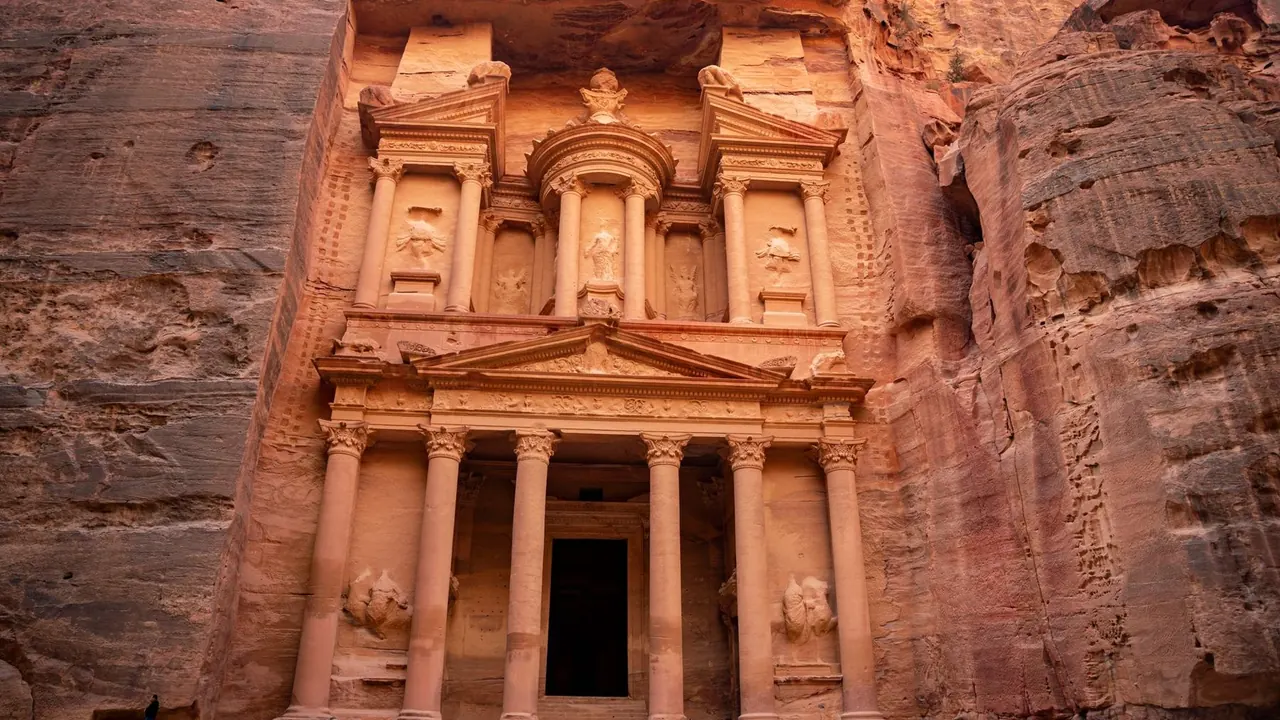
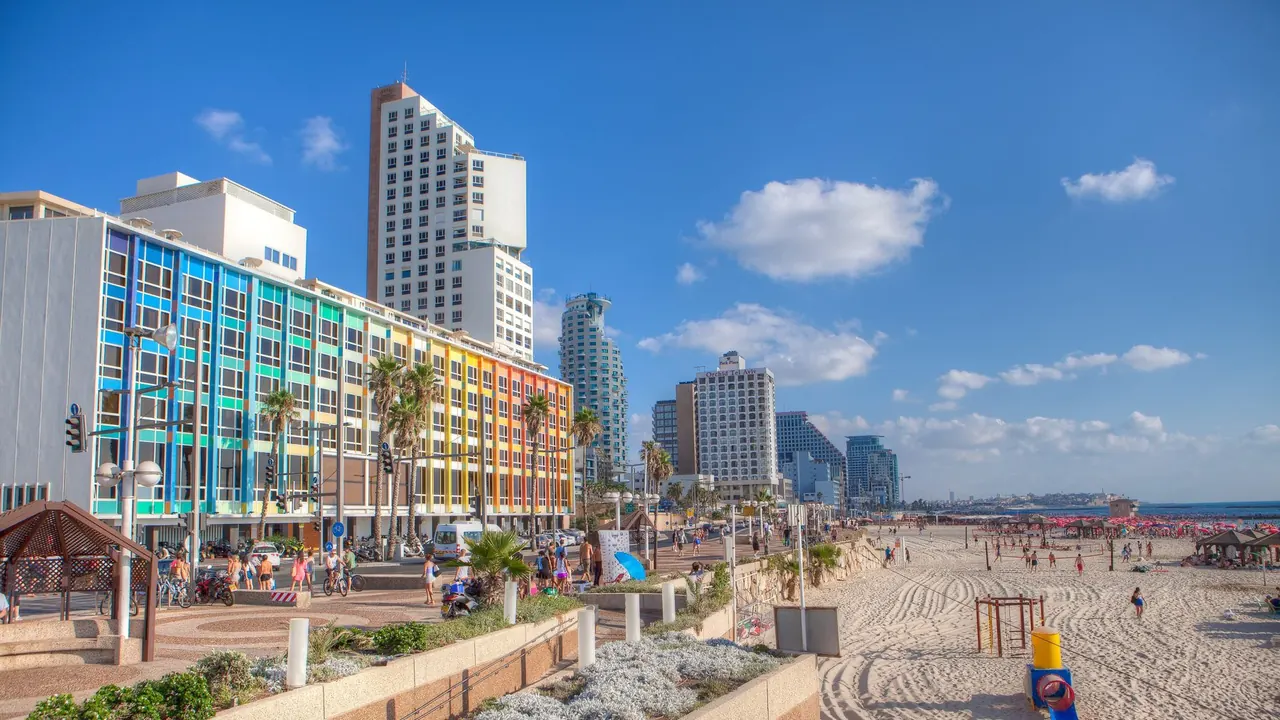
Photos: Petra by Yasir Gürbüz, Pexels License; Tel Aviv by israeltourism, CC BY-SA 2.0, cropped.
Petra or Tel Aviv?
Our verdict in twelve categories, each scored against the same fixed benchmark cities, and the climate month by month, so you can choose for your trip.
Choose Petra for
- prices
- culture and sights
- nature and the outdoors
Petra is for the traveller who wants one of the world's great ancient sites and the desert mountains around it, and is happy to make that the whole point of the stop. Give it two or three days of early starts on the Siq, the rock-cut stairs and the back trails, and expect quiet evenings, plain food and moderate costs once the entry ticket is paid.
Choose Tel Aviv for
- beaches
- nightlife
- live music and the arts
Anyone whose ideal trip mixes the sea, the table and late nights will be happier in Tel Aviv. A sand beach lies at the end of almost every street, the markets and restaurants are among the best in the region, and the bars run until dawn. The history the city itself lacks is easy to reach, with Jerusalem a short train ride away, but this is an expensive place to stay.
Scoreboard
Twelve categories on one fixed scale from 0 to 100. The shaded stretch is the gap between the two.
Your match
Pick a travel style or drag the sliders, and both match scores follow your weighting.
Wins on prices and culture and sights with your weighting.
Wins on beaches and nightlife with your weighting.
What matters to you?
Category by category
What the scores mean for a trip.
Beaches & swimming
There is no real contest. Petra has nowhere to swim except a hotel pool, and the Red Sea at Aqaba is two hours south. Its reefs are worth a separate stop on a tour of Jordan, but they are not a beach day from Petra.
Tel Aviv's entire western edge is fine pale sand, from the old port past Gordon and Frishman down to the rocks below Jaffa, and you can walk to it from most central hotels. Breakwaters and lifeguards keep many stretches calm, and locals swim there morning and evening, not only at weekends.
Food & drink
Eating in Petra is plain but honest. Wadi Musa's main road serves mansaf, maqluba and mezze, and the best moments are simple ones: sage tea at a stall inside the site, zarb lifted from a Bedouin pit oven or a cooking class. Alcohol is mostly confined to hotels.
Tel Aviv is one of the region's great places to eat. You can graze through Carmel Market and the Levinsky streets on Yemenite soups, Iraqi kubbeh and sabich, then sit down at a loud, chef-driven restaurant built around local produce. Breakfast is a serious meal, and the wine comes from the Galilee and Golan hills.
Culture & sights
Petra is the stronger sight by a long way. Walking through the Siq to the Treasury, then on past the Royal Tombs and the colonnaded street and up the steps to the Monastery, is one of the great experiences of the ancient world, and the outlying tombs and Little Petra fill several days.
Tel Aviv's culture is younger and quieter. Its highlights are the Bauhaus streets of the White City, Jaffa's old stone quarter and a handful of good museums such as ANU and the Museum of Art. The country's major historic sites lie outside the city.
Nightlife
After dark, Petra goes to sleep. Wadi Musa is conservative, and an evening there means dinner, a shisha on a terrace and bed before the next early start. Tel Aviv treats going out as part of who it is: wine bars around Lilienblum and Allenby spill onto the pavement past midnight, warehouse clubs play house and techno until dawn, and the gay scene is among the most open in the region.
Nature & outdoors
Petra comes out ahead, because the landscape is the destination. The Sharah mountains around it are full of trails through Wadi Muthlim and Wadi al-Farasa, up to Jebel Haroun and along the back route from Little Petra to the Monastery. Beyond them lie the juniper slopes and ibex of Dana and Wadi Rum's red sand valleys for climbing and desert camping.
Tel Aviv is flat and built up, and its outdoor life happens at the water's edge, with surfing, kitesurfing and cycling along the coast and in Yarkon Park. For real hills you drive an hour to the Carmel ridge or further to the canyons of Ein Gedi.
Day trips
Tel Aviv is the far better base. Jerusalem's Old City is about half an hour away by fast train, and Caesarea's Roman port, Haifa's Baha'i Gardens, Crusader Acre and the wineries around Zichron Ya'akov all make easy days out. Masada and the Dead Sea fill a longer one. The catch is Shabbat, when public transport stops and you need a car or a tour.
From Petra the choice is thin, and every outing needs a driver or a hire car. Shobak castle pairs with Dana village, Kerak is better seen on the way along the King's Highway, and Jerash and Madaba are too far for a day trip.
Good for families
Families have a much easier time in Tel Aviv. There are calm, guarded beaches, boating and Luna Park in Yarkon Park, the drive-through Ramat Gan Safari and the Children's Museum in Holon, and children are welcome in restaurants late into the evening. The flat centre suits a pushchair.
Petra can thrill older children who enjoy scrambling into tombs, but the walks are long, shade is scarce and pushchairs are of little use beyond the main path. Wadi Musa has nothing made for children, and the animals offered for rides are not always treated well.
Getting around
In Petra your own legs do most of the work. Inside the site everything is on foot over sand and steps, Wadi Musa climbs steeply away from the gate, and anywhere beyond town means a taxi, a hired driver or a road trip in a rental car.
Tel Aviv's centre is flat and walkable from the port to Jaffa. Bike-share, scooters, a light-rail line, buses and fast trains fill the gaps, so there is no need for a car. The exception is Shabbat, from Friday afternoon to Saturday night, when buses and trains largely stop.
Shopping & style
Petra's shopping is souvenirs: Bedouin silver and beadwork on the trails, and scarves and bottles of coloured sand in the town shops. The women's cooperative shops selling embroidery and handmade goods have the buys worth making.
Tel Aviv gives you far more to browse. Israeli designers fill the boutiques on Dizengoff and Sheinkin, the Nahalat Binyamin crafts fair sets up beside Carmel Market, and Jaffa has its flea market and vintage studios. Prices are high, though, and luxury brands are few.
Affordability
Petra is the cheaper stay, though not a bargain. The site's entry fee for foreigners is steep, and a multi-day ticket or a pass bought before you reach Jordan softens it. Wadi Musa has guesthouses and mid-range hotels at fair rates and cheap falafel counters, but the drivers you need for anything further afield add up.
Tel Aviv is among the most expensive cities in the Mediterranean, with costly rooms near the beach and restaurant bills to match Western Europe's priciest capitals. Hummus and sabich stalls, the free beaches and walks through the White City are what keep a budget in check.
Live music & performing arts
Petra has a single memorable performance. On Petra by Night, the Siq and the Treasury are lit by candles while Bedouin musicians play the rababa, and beyond that there are only hotel dinner shows.
Tel Aviv supports a real cultural calendar. It has the Israel Philharmonic, the Israeli Opera, Habima theatre and, above all, contemporary dance from Batsheva and at the Suzanne Dellal Centre, plus jazz and indie clubs and summer concerts in Yarkon Park. Hebrew-language theatre is the main limit for visitors.
Wellness & relaxation
Neither city is a place to unwind properly, and in both the serious bathing means a trip to the Dead Sea. The difference is in the kind of rest. In Petra it is recovery: a steam and scrub at a tourist bathhouse after a day on the trails, then a still desert evening.
Tel Aviv offers a little more in the way of ease. It has seafront hotel spas, yoga classes, slow mornings on the promenade and the quiet that falls over the streets on Shabbat. The rest of the week is noisy, though, and the Dead Sea's mud spas are closer from here.
When should you go?
Pick your month. The climate figures are measured averages, not a forecast.
Petra in July
Tel Aviv in July
Daytime high, °C
Rainfall in the month, mm
Where the figures come from
Petra's temperatures are measured 34 km from the centre, at Ma'An.
Petra's station stands 219 m above the city centre, so the centre is likely a little warmer than the figures say.
Petra has no rain gauge within 25 km of the centre, so its rainfall comes from a gridded climate dataset read at the city rather than from a gauge further away.
Temperature and rainfall are climate normals, averaged over the years shown. Petra: 1991-2020 normals, Ma'An (33.9 km from centre). Tel Aviv: 1991-2020 normals, Bet Dagan (9.5 km from centre).
Petra is at its best in spring and autumn. March is mild but still brings some showers, so the reliably dry, sunny walking weather runs from April to May and again from October into November. From June to September highs reach about 35°C with no rain at all and little shade on the trails, so hiking means very early starts. Winter is cool, around 14°C by day in January, with the wettest weeks of the year and nights cold enough for frost.
Tel Aviv has milder winters but much wetter ones, with about 140mm of rain in January and showers from November to March. Summer is hot and humid rather than scorching, and it is the beach season: the sea is swimmable from May into November and reaches about 28°C in August and September. April, May and October suit both cities, which makes them the easiest months to combine the two.
Which traveller are you?
On a beach and sun trip, Tel Aviv is the only choice. Its sandy shore runs the length of the city with lifeguards and calm water, while Petra sits in the mountains with nothing nearer than the Red Sea at Aqaba, two hours' drive away.
For a food and nightlife trip, Tel Aviv is far ahead. It has hummus counters, Carmel Market, Jaffa's fish restaurants and chef-led dining rooms, then cocktail bars and techno clubs into the small hours. Wadi Musa offers hotel buffets, shisha and an early night.
On an outdoors trip, Petra wins clearly. Its sandstone gorges and ridges make the site itself a hiking ground, from the High Place of Sacrifice to Jebel Haroun, with Dana's slopes and Wadi Rum's desert within easy reach. Tel Aviv's outdoor life is mostly the seafront.
Before you go
| Measure | Petra | Tel Aviv |
|---|---|---|
| Official language | Arabic | Hebrew |
| Currency | Jordanian Dinar (JOD) | New Israeli Sheqel (ILS) |
| Sockets | BCFGJ230 V, 50 Hz | CHM230 V, 50 Hz |
| Driving side | Right | Right |
| Time zone | UTC+3 | UTC+2, UTC+3 in summer |
| Emergency number | 911 | Police 100, fire 102 |
| Elevation | 850 m | 5 m |
| Main airport | King Hussein International Airport (AQJ)90 km from centre5 non-stop destinations | Ben Gurion International Airport (TLV)13 km from centre111 non-stop destinations |
By the numbers
| Measure | Petra | Tel Aviv |
|---|---|---|
| City population | - | 467,875 |
| People per km² | - | 8,998 |
| Museums within 10 km | 2 | 98 |
| UNESCO World Heritage sites within 50 km | 1 | 2 |
| Swim season, months above 21 °C | - | 7 months |
Where else could you go?
Every comparison below shares a destination with this one, so you can follow Petra or Tel Aviv somewhere new.