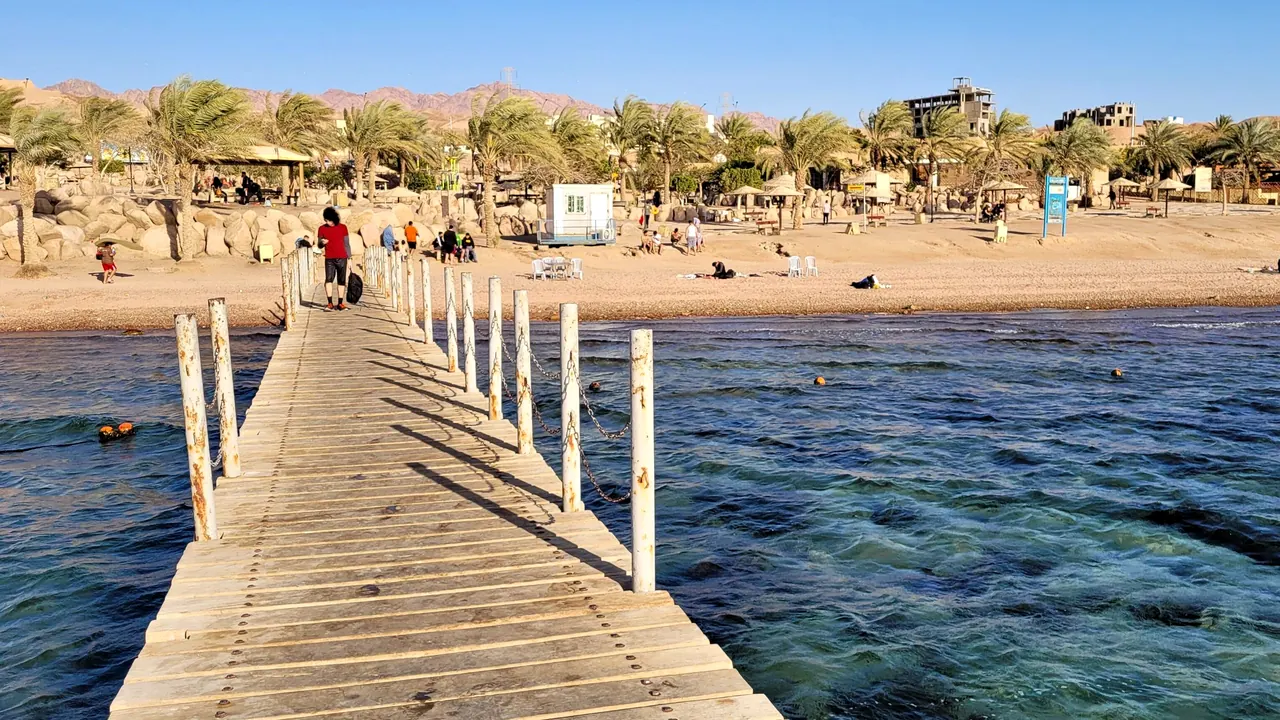
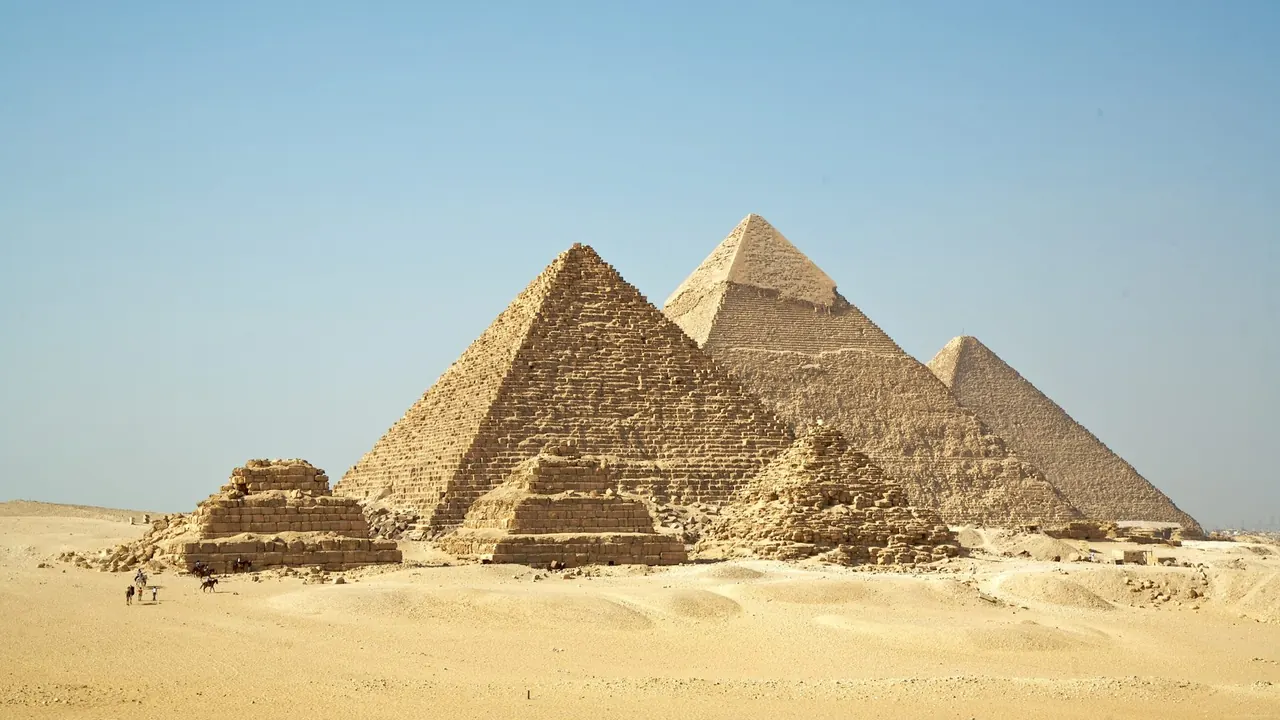
Photos: Aqaba by عباد ديرانية, CC BY-SA 4.0, cropped; Cairo by Ricardo Liberato, CC BY-SA 2.0, cropped.
Aqaba or Cairo?
Our verdict in twelve categories, each scored against the same fixed benchmark cities, and the climate month by month, so you can choose for your trip.
Choose Aqaba for
- beaches
- nature and the outdoors
- wellness
Aqaba suits a warm-weather break built around the water: reef swimming a few metres from shore, dives on sunken wrecks and a jeep ride into the red mountains of Wadi Rum, with Petra close enough for a long day out. It is the easier and slower of the two, and the better choice for families and for anyone who wants to rest more than sightsee.
Choose Cairo for
- culture and sights
- live music and the arts
- prices
Choose Cairo when history is the point of the trip. The pyramids, the great museums and the medieval streets of Islamic Cairo outweigh almost anything else in the region. Day to day the city is also far cheaper, with better street food and a real bazaar. You pay for it in noise, traffic and effort, so come ready to work at it rather than unwind.
Scoreboard
Twelve categories on one fixed scale from 0 to 100. The shaded stretch is the gap between the two.
Your match
Pick a travel style or drag the sliders, and both match scores follow your weighting.
Wins on beaches and nature and the outdoors with your weighting.
Wins on culture and sights and live music and the arts with your weighting.
What matters to you?
Category by category
What the scores mean for a trip.
Beaches & swimming
These two are not really competing here. Aqaba sits on the Gulf of Aqaba, where the water is calm and clear and coral reefs begin a few metres from South Beach, so even an ordinary swim comes with a snorkel. The town beaches are narrow and conservative, and most visitors use the resort stretches south of town and at Tala Bay.
In Cairo you swim in a hotel pool, since the Nile is not for swimming. The nearest sea is at Ain Sokhna, about 130km east, a coast of resort compounds that suits a weekend away better than a day trip.
Food & drink
Cairo is the better place to eat, mostly thanks to its street food: ful and taameya for breakfast, koshari shops that make nothing else, flaky feteer, stuffed pigeon and fresh sugar-cane juice, all taken at the pace of the ahwa. Neither city offers much fine dining.
Aqaba's choice is narrower. There is sayadieh and fish picked by weight near the old town, then the usual falafel, shawarma and grills, with resort buffets on top. It does better for a drink: alcohol is easier to find and cheaper in tax-free Aqaba, while in Cairo it stays outside everyday eating.
Culture & sights
This is the widest gap between the two. Aqaba's history fills a morning: the Mamluk fort, the low walls of early Islamic Ayla, an early church site and a small museum. Anyone serious about heritage saves it for the trip to Petra.
Cairo needs days. The pyramids and the Sphinx stand at Giza, Tutankhamun's treasures are in the Grand Egyptian Museum and the royal mummies are at Fustat. Islamic Cairo's mosques, madrasas and Citadel make up one of the great medieval cityscapes anywhere, with Coptic Cairo's churches and synagogue besides.
Nightlife
Neither city revolves around drinking, but Cairo's nights have far more life. The streets fill after dark, and the ahwas around downtown and Islamic Cairo stay crowded with shisha and backgammon past midnight. For a drink there are Zamalek's rooftop bars and a few clubs and party boats on the river.
Aqaba winds down early. An evening means a walk on the corniche, a shisha café, a resort bar or a divers' pub, with the odd DJ night at a south-coast beach club in winter.
Nature & outdoors
Aqaba is the outdoors destination of the two. Underwater there are shore dives at the Japanese Garden, coral shallow enough for snorkellers and wrecks sunk as artificial reefs. Inland, Wadi Rum's red sandstone valleys, arches and Bedouin camps are about an hour away.
Cairo's green space comes down to Al-Azhar Park, a felucca on the Nile and canyon hikes at Wadi Degla. For real landscape you drive two hours to the lakes and dunes of the Fayoum or further to the whale fossils of Wadi Al-Hitan. In both cities the summer heat puts most of this off until autumn.
Day trips
Aqaba has the single most famous outing: Petra, about two hours away, usually with Little Petra on the same day. After that the list is short, since Eilat and Sinai lie across borders.
Cairo has more variety. Saqqara, Dahshur and Memphis are under an hour south, Wadi Natrun's monasteries and Alexandria lie along the desert road, and the Fayoum adds oasis villages and pottery. Most of these need a driver or a tour, just as Petra does from Aqaba.
Good for families
Aqaba is the easier vacation with children. The sea is calm and shallow at the edges, glass-bottomed boats show off the reef, resorts have pools and kids' clubs, and a night in a Wadi Rum camp is often the highlight.
Cairo gives children bigger memories, such as the pyramids, a camel ride and Tutankhamun's gold. It is tiring to manage with them, though, with relentless traffic, missing pavements and touts at the sights. In both cities the winter months make a family trip far easier.
Getting around
Neither is easy, for opposite reasons. Aqaba is spread out rather than congested. The centre is small enough to walk, but the resorts and dive sites line the coast road south, so you rely on taxis, shuttles or a hire car on good, quiet roads.
Cairo has a metro that beats the traffic between Tahrir, Coptic Cairo and Heliopolis, but it does not reach the pyramids. Everything else means ride-hailing through some of the heaviest traffic anywhere, and walking works only in short stretches, such as along Al-Muizz Street or through Zamalek.
Shopping & style
Cairo is the stronger choice. Khan el-Khalili has traded since the fourteenth century, and alongside the tourist stock you can find real craft: hand-stitched appliqué on the Street of the Tentmakers, the coppersmiths' alley, and contemporary design boutiques in Zamalek.
Aqaba's market streets sell spices, dates and Dead Sea mud, with little genuine handwork. Its one advantage is the special economic zone, which makes perfume, electronics and alcohol cheaper than elsewhere in Jordan.
Affordability
Cairo is the cheaper trip by a wide margin. Street food, the metro, ride-hailing and comfortable hotels downtown or in Zamalek cost very little. Only site entry fees, alcohol and the luxury Nile hotels push the bill up.
Aqaba is cheap only at the local level. Once you add a south-coast resort, dive courses, desert tours and the entrance to Petra, a beach stay costs about as much as one on the Mediterranean.
Live music & performing arts
Cairo has a real stage and Aqaba barely has one. The Cairo Opera House on Gezira Island hosts the symphony orchestra, the ballet and Arabic music ensembles, and tanoura dancers whirl to live music in the Wikala of al-Ghouri. Plays there are almost all in Arabic, so an evening of music or dance works better for a foreign visitor than the theatre.
Aqaba has nothing like this, only the odd singer in a hotel lounge. The performance most people remember is Bedouin music around a campfire in Wadi Rum. For a concert or a play in Jordan, you have to go to Amman.
Wellness & relaxation
Aqaba is the place to rest. The pace is slow, the winters are warm and dry, the town still has working Turkish baths, and the south-coast resorts have full spas using Dead Sea mud and salt.
Cairo works against relaxation, with constant noise, traffic and dust, and most of its old hammams have fallen out of use. Rest there means a hotel spa or an evening felucca, which is why many visitors end a Cairo trip with a few days on the Red Sea.
When should you go?
Pick your month. The climate figures are measured averages, not a forecast.
Aqaba in July
Cairo in July
Daytime high, °C
Rainfall in the month, mm
Temperature and rainfall are climate normals, averaged over the years shown. Aqaba: 1991-2020 normals, Eilat (5.8 km from centre). Cairo: 1991-2020 normals, Helwan (21.9 km from centre).
Neither city gets more than a trace of rain, so the heat decides when to go. Aqaba is at its best from November to March. Afternoons are warm rather than harsh, from about 21°C in January, and the Gulf stays good for swimming and snorkelling, never falling much below 21°C. April and October are already hot. From May to September the town bakes at up to 40°C, and the sea, then at its warmest, is the only relief.
Cairo runs a few degrees cooler all year. November to March suits long days on foot at Giza and in Islamic Cairo, with January afternoons near 19°C. From June to September it stays around 35°C, so summer sightseeing means early starts and a long rest at midday. Both cities are sunny in every month, so a winter trip that takes in both works well.
Which traveller are you?
On a beach and sun trip, Aqaba is the clear pick. The Gulf is warm and clear all year, the reef starts a few metres off South Beach, and the resorts at Tala Bay have loungers and shade. Cairo's nearest sea is two hours away.
For a culture and arts trip, Cairo wins easily. Giza, the two great museums, Al-Muizz Street and the Citadel fill several days, and the evenings bring Sufi tanoura dancing or a concert at the Opera House. Aqaba's sights take a single morning.
On a trip on a tight budget, Cairo makes money go much further. Koshari, taameya and the metro cost very little, and good mid-range hotels are a bargain. Aqaba is cheap in town, but resorts, dive courses and desert tours soon add up.
Before you go
| Measure | Aqaba | Cairo |
|---|---|---|
| Official language | Arabic | Arabic |
| Currency | Jordanian Dinar (JOD) | Egyptian Pound (EGP) |
| Sockets | BCFGJ230 V, 50 Hz | CF220 V, 50 Hz |
| Driving side | Right | Right |
| Time zone | UTC+3 | UTC+2, UTC+3 in summer |
| Emergency number | 911 | Police 122, ambulance 123, fire 180 |
| Elevation | 6 m | 23 m |
| Main airport | King Hussein International Airport (AQJ)9 km from centre5 non-stop destinations | Cairo International Airport (CAI)17 km from centre127 non-stop destinations |
| Public holidays this year | - | 15 days |
By the numbers
| Measure | Aqaba | Cairo |
|---|---|---|
| City population | 140,000 | 9,801,536 |
| People per km² | 3,733 | 18,564 |
| Museums within 10 km | 5 | 48 |
| UNESCO World Heritage sites within 50 km | 2 | 2 |
| Swim season, months above 21 °C | 12 months | - |
Where else could you go?
Every comparison below shares a destination with this one, so you can follow Aqaba or Cairo somewhere new.