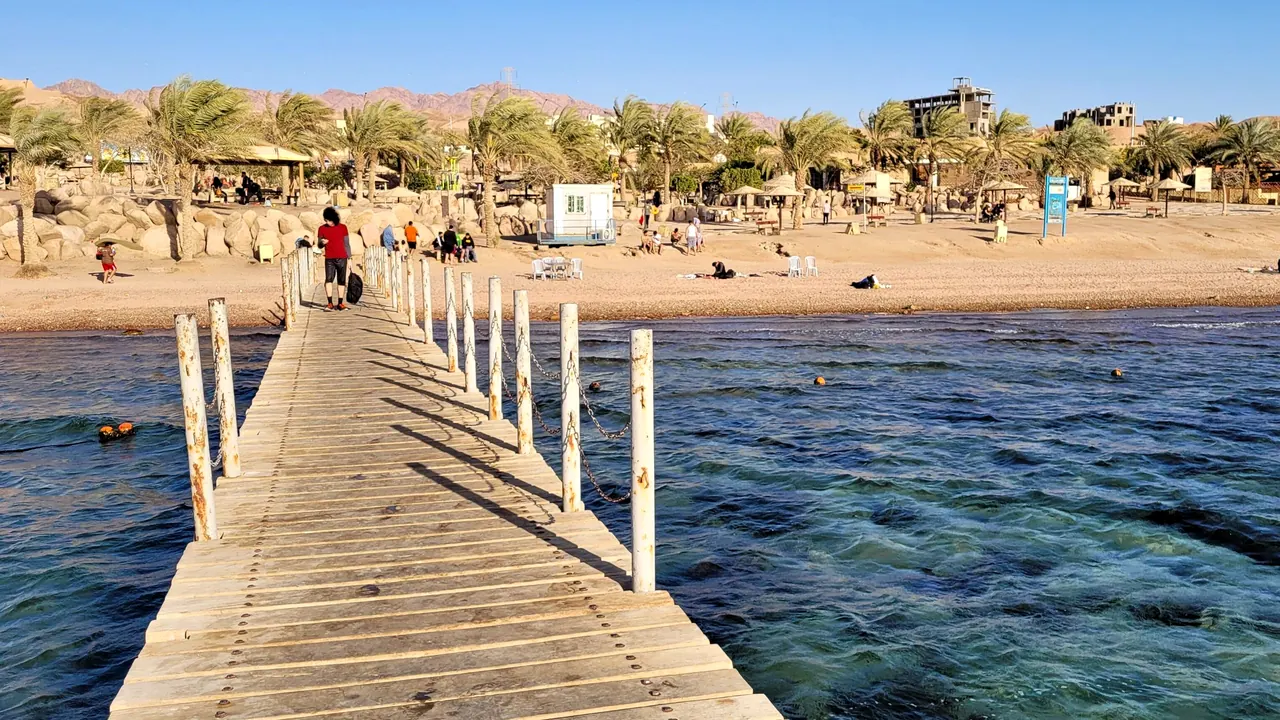
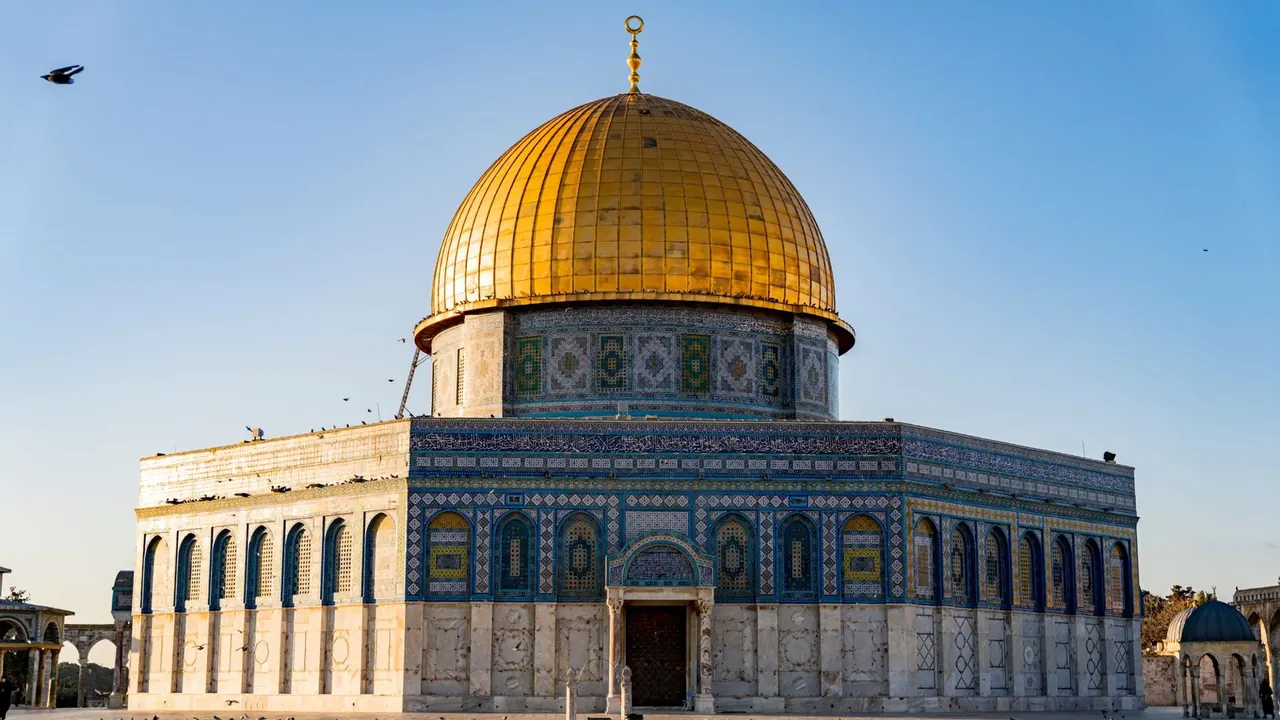
Photos: Aqaba by عباد ديرانية, CC BY-SA 4.0, cropped; Jerusalem by Yasir Gürbüz, Pexels License.
Aqaba or Jerusalem?
Our verdict in twelve categories, each scored against the same fixed benchmark cities, and the climate month by month, so you can choose for your trip.
Choose Aqaba for
- prices
- beaches
- nature and the outdoors
Aqaba suits a warm-weather escape built around water and desert: reef swimming and shore dives off the south coast, a night in a Wadi Rum camp, and Petra as the one big outing. Evenings are quiet and the town has little to see, so it works for travellers who want to snorkel, rest and see dramatic landscapes rather than fill their days with sights. Eating where local people eat also keeps the cost down.
Choose Jerusalem for
- culture and sights
- live music and the arts
- food and drink
Pick Jerusalem when history is the reason for the trip. The Old City, the Israel Museum and Yad Vashem can fill several days, the food around Mahane Yehuda and in the Arab neighbourhoods has far more range, and Bethlehem, Masada and Tel Aviv are all within a day's reach. It costs more, the beach is a day out rather than part of every day, and Shabbat shapes the week, but as a city vacation it gives you far more to do.
Scoreboard
Twelve categories on one fixed scale from 0 to 100. The shaded stretch is the gap between the two.
Your match
Pick a travel style or drag the sliders, and both match scores follow your weighting.
Wins on prices and beaches with your weighting.
Wins on culture and sights and live music and the arts with your weighting.
What matters to you?
Category by category
What the scores mean for a trip.
Beaches & swimming
Aqaba has the sea on its doorstep, and the swimming is good: warm, clear, calm water with coral close enough to the shore that a snorkel is worth more than a long beach. The public beaches in town are narrow and conservative, so most visitors use the resort strip to the south.
Jerusalem has no water of its own. Swimming means an hour to the long sandy beaches of Tel Aviv or a strange float in the Dead Sea, which has a rocky, salt-crusted shore. Either one takes a whole day.
Food & drink
Jerusalem is the better place to eat by some way. Mahane Yehuda turns from produce market to evening grills, hummus counters in the Old City sell out by late morning, and Kurdish, Iraqi, Yemenite and Armenian cooking all have a place. Kosher rules and the Shabbat closures in the west take some planning.
Aqaba's food is simple and good: sayadieh, fish chosen by weight near the old town, falafel breakfasts and shawarma. Beyond the hotel buffets there is not much range, though a drink with dinner costs less than it does in Jerusalem.
Culture & sights
This is where the two differ most. Jerusalem's walled Old City holds the Western Wall, the Church of the Holy Sepulchre and the Dome of the Rock within about a square kilometre. Below it, tunnels and the City of David go back to the Bronze Age, and the Israel Museum and Yad Vashem are major institutions in their own right.
Aqaba's history is mostly hidden. The Mamluk fort, the low walls of early Islamic Ayla, a small museum and the fenced remains of an early church fill a morning. Visitors who come for heritage spend their time on the two-hour drive to Petra.
Nightlife
Neither is a party city, but Jerusalem gives you more of an evening out. Mahane Yehuda's stalls turn into small bars after dark, there are pubs around Nahalat Shiva and the German Colony, and students keep a few places busy on weeknights. Friday nights go quiet with Shabbat, and anyone after clubs takes the train to Tel Aviv.
In Aqaba the evening means a walk along the corniche, a shisha café and a late meal with local families. Drinking is mostly in resort bars and divers' pubs, and most visitors are in bed early.
Nature & outdoors
Aqaba has the stronger outdoors, in two very different settings. Under the water there are shore dives at the Japanese Garden, coral shallow enough for snorkellers and wrecks sunk as artificial reefs. Inland, about an hour away, Wadi Rum's red sandstone mountains and arches can be explored by jeep, camel or climbing rope, with a night under dark skies to follow.
Jerusalem's landscapes are gentler and further away: the forest trails around Sataf and Ein Karem, the canyon of Wadi Qelt, and Ein Gedi's waterfalls and ibex down by the Dead Sea. There is nothing in the water to match Aqaba's reefs.
Day trips
Jerusalem has far more within reach. Bethlehem is just to the south, Tel Aviv and Jaffa are half an hour by train, and Masada with Qumran makes a classic desert day. Caesarea, Acre and the Baha'i gardens in Haifa are also possible, though some West Bank sites mean a checkpoint.
Aqaba really has one great trip, but it is Petra, with Little Petra added on the same day. Eilat and Sinai are close on the map, but the border crossings make them awkward for a day out.
Good for families
The two are fairly evenly matched for children, but in different ways. Aqaba is a resort vacation: shallow, calm water, glass-bottomed boats over the reef, kids' clubs and pools, with a desert camp as the high point for older children.
Jerusalem has more that is made for children, with the Biblical Zoo, the aquarium beside it and the Bloomfield Science Museum, and older children enjoy wading through Hezekiah's Tunnel. Its Old City lanes are full of steps, though, so a stroller is useless there, and the mood at the holy sites is serious.
Getting around
Jerusalem is the easier place to manage without a car. The Old City, Jaffa Road and Mahane Yehuda are walkable, although hilly, and the light rail and buses cover the rest. The exception is Shabbat, when public transport stops.
Aqaba's centre is small, but the resorts, dive sites and Tala Bay are strung out along the coast road, so you rely on taxis, shuttles or a hire car. Petra and Wadi Rum need a tour or a driver, though the roads are easy to drive.
Shopping & style
Jerusalem has more worth taking home: hand-painted ceramics from the Armenian Quarter, silver and glass Judaica, olive wood and embroidery from the souq, and the brand shops along Mamilla.
Aqaba's markets mostly sell spices, dates, layered sand bottles and mass-produced souvenirs. Its tax-free status makes perfume, electronics and alcohol cheaper, and Dead Sea mud and salts are the usual thing to buy.
Affordability
Aqaba is clearly the cheaper of the two, as long as you eat and sleep in town. Local meals, taxis and simple central hotels cost little. Dive courses, desert tours, beach-club passes and Petra are where the money goes.
Jerusalem is expensive almost across the board, with hotels at their dearest around the Jewish festivals and pilgrim seasons. The free holy sites, reasonable public transport and cheaper food in the Arab neighbourhoods help only so much.
Live music & performing arts
Jerusalem has a modest but real programme. It includes the Jerusalem Symphony Orchestra, the Jerusalem Theatre, concerts in Old City churches and the YMCA auditorium, the annual Israel Festival and summer shows at the Sultan's Pool. Most drama is in Hebrew.
Aqaba has almost nothing. A singer in a hotel lounge or Bedouin music around a Wadi Rum campfire is about as far as it goes.
Wellness & relaxation
Neither is a spa destination in itself, and both point you to the Dead Sea for a real mineral cure. From Jerusalem it is about an hour away, while from Aqaba it means heading north.
The difference is in pace. Aqaba's simple Turkish baths, its resort spas using Dead Sea mud and its warm, dry winter days make the whole stay unhurried. Jerusalem is crowded and intense, and its calm comes in pockets: the Shabbat hush over the western city and the gardens on the Mount of Olives.
When should you go?
Pick your month. The climate figures are measured averages, not a forecast.
Aqaba in July
Jerusalem in July
Daytime high, °C
Rainfall in the month, mm
Where the figures come from
Jerusalem has no rain gauge within 25 km of the centre, so its rainfall comes from a gridded climate dataset read at the city rather than from a gauge further away.
Temperature and rainfall are climate normals, averaged over the years shown. Aqaba: 1991-2020 normals, Eilat (5.8 km from centre). Jerusalem: 1991-2020 (sunshine 1981-2010) normals, Jerusalem (1.8 km from centre).
Aqaba is at its best from late autumn to spring. It hardly ever rains, winter highs sit in the low to mid twenties, and the Gulf is warm enough to swim in all year. From May to September the heat climbs to about 40°C, which makes desert trips, town walks and anything at midday hard going. The sea is at its warmest in that heat, around 28°C in August, so summer suits only those who plan to stay in the water.
Jerusalem's year runs the other way. Winter is cool and wet, with January highs near 12°C and about 109mm of rain, so December to February is its weakest stretch. April and May, and then late September and October, are the best months for the steps and lanes of the Old City. Summer is dry and warm but much gentler than in Aqaba, and from June to October the Mediterranean off Tel Aviv is warm enough for a beach day.
Which traveller are you?
On a beach and sun trip, Aqaba is the clear choice. The Red Sea stays calm, clear and warm all year, reefs start a few metres off South Beach, and Tala Bay has shaded loungers. From Jerusalem, a swim takes a day trip to Tel Aviv.
For a culture and arts trip, choose Jerusalem. The holy sites of the Old City, the excavations beneath them, the Dead Sea Scrolls at the Israel Museum and summer concerts at the Sultan's Pool fill several days. Aqaba's fort and Ayla take a morning.
On a trip on a tight budget, Aqaba lets a small sum last longer. Stay in town rather than on the resort strip, snorkel off the shore instead of booking dives, and save up for Petra. In Jerusalem, a shorter, tightly planned stay makes more sense.
Before you go
| Measure | Aqaba | Jerusalem |
|---|---|---|
| Official language | Arabic | Hebrew |
| Currency | Jordanian Dinar (JOD) | New Israeli Sheqel (ILS) |
| Sockets | BCFGJ230 V, 50 Hz | CHM230 V, 50 Hz |
| Driving side | Right | Right |
| Time zone | UTC+3 | UTC+2, UTC+3 in summer |
| Emergency number | 911 | Police 100, fire 102 |
| Elevation | 6 m | 754 m |
| Main airport | King Hussein International Airport (AQJ)9 km from centre5 non-stop destinations | Ben Gurion International Airport (TLV)42 km from centre111 non-stop destinations |
By the numbers
| Measure | Aqaba | Jerusalem |
|---|---|---|
| City population | 140,000 | 1,050,151 |
| People per km² | 3,733 | 8,374 |
| Museums within 10 km | 5 | 69 |
| UNESCO World Heritage sites within 50 km | 2 | 7 |
| Swim season, months above 21 °C | 12 months | 7 months |
Where else could you go?
Every comparison below shares a destination with this one, so you can follow Aqaba or Jerusalem somewhere new.