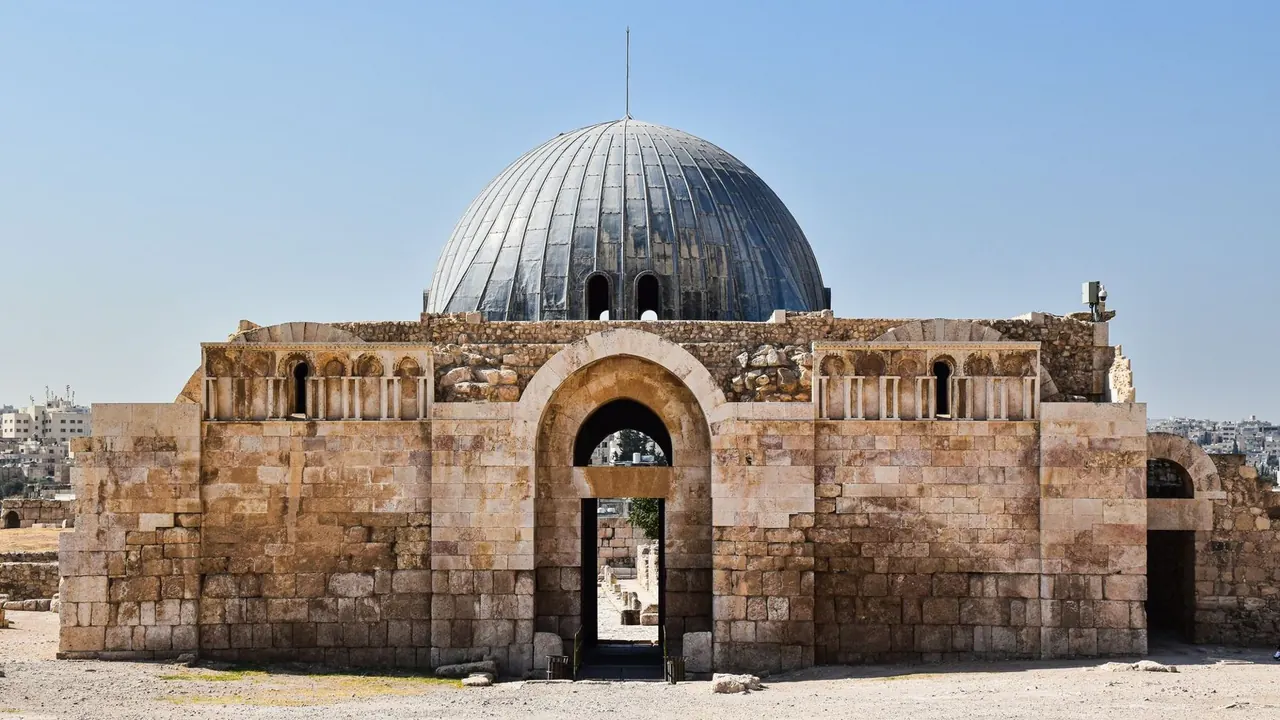
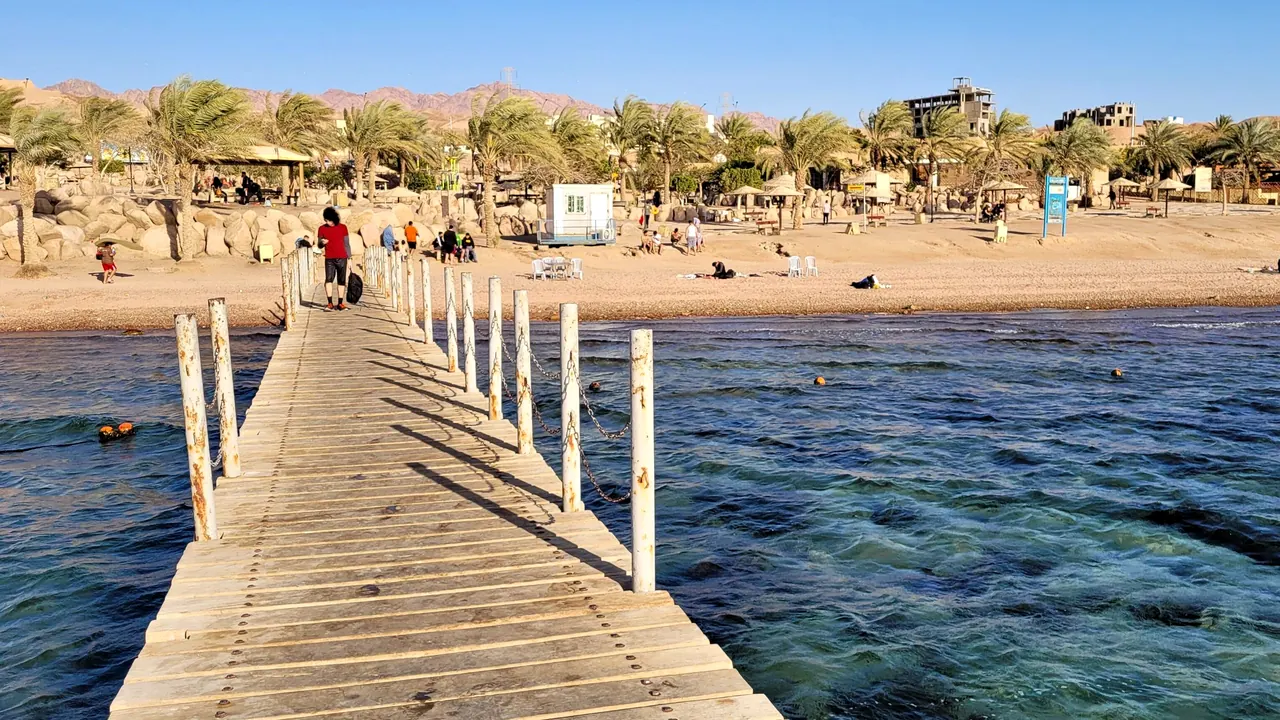
Photos: Amman by AXP Photography, Pexels License; Aqaba by عباد ديرانية, CC BY-SA 4.0, cropped.
Amman or Aqaba?
Our verdict in twelve categories, each scored against the same fixed benchmark cities, and the climate month by month, so you can choose for your trip.
Choose Amman for
- culture and sights
- day trips
- food and drink
Amman is the better choice for travellers who come to Jordan for its history and its food. The city has the Citadel, the Roman Theatre and the Jordan Museum, and it is the natural base for Jerash, Madaba and the desert castles. Its downtown bakeries, knafeh counters and hill-top cafés give you more to eat and more to do in the evening. It suits a heritage-led trip in spring or autumn, best done with a driver.
Choose Aqaba for
- beaches
- nature and the outdoors
- families
Aqaba is for anyone who wants warm, clear water and the desert. Coral starts a few metres off the shore and Wadi Rum is an hour inland, so days here are spent snorkelling, diving or out among the red sandstone, with Petra as the one big outing. The town itself has little to see, but in winter it is a mild, sunny place to swim when Amman is cold and wet.
Scoreboard
Twelve categories on one fixed scale from 0 to 100. The shaded stretch is the gap between the two.
Your match
Pick a travel style or drag the sliders, and both match scores follow your weighting.
Wins on culture and sights and day trips with your weighting.
Wins on beaches and nature and the outdoors with your weighting.
What matters to you?
Category by category
What the scores mean for a trip.
Beaches & swimming
This is Aqaba's clear advantage. The Gulf of Aqaba is calm, clear and warm, and the reefs off South Beach mean that a mask and snorkel bring coral within a few strokes of the shore. The town beaches are narrow and conservative, so most visitors use the resort strips south of town and at Tala Bay.
Amman has no shore of its own. The closest water is the Dead Sea, an hour downhill, where you float on brine and cover yourself in mud. It makes a memorable afternoon, but it is not a beach vacation.
Food & drink
Amman eats better and more widely. Downtown has crowded fuul and falafel breakfasts, manakish bakeries and queues for hot knafeh, while Jabal Amman and Weibdeh add rooftop terraces and modern Arab cooking. Mansaf eaten at a family-style table is reason enough to stay a night or two.
Aqaba's best meal is sayadieh, or fish you choose by weight near the old town. After that it is mostly shawarma, grills and resort buffets, though beer and wine cost less here because of the town's tax-free status.
Culture & sights
Amman has far more to see in town. Within a day you can see the Temple of Hercules and the Umayyad Palace on the Citadel, the Roman Theatre below, and the Dead Sea Scrolls and 'Ain Ghazal statues in the Jordan Museum.
Aqaba's sights, the Mamluk fort, the low walls of Ayla and a small museum, fill a single morning. Its heritage really means Petra, two hours away by road.
Nightlife
Neither city is a party destination, but Amman gives you more to do after dark. Rainbow Street and the lanes of Jabal Amman stay lively late, there are rooftop bars in Weibdeh and Abdoun, and a few DJ nights run at weekends.
In Aqaba the evening means a walk along the corniche and a shisha café, plus resort bars and the odd beach-club night in the cooler months. Most people turn in early before a dive or a desert start.
Nature & outdoors
Aqaba sits between two of Jordan's great landscapes. Underwater there are shore dives at the Japanese Garden and wrecks laid down as artificial reefs. Inland lies Wadi Rum, with its arches and red valleys, which you can explore by jeep or camel and stay overnight in a Bedouin camp.
Amman's best scenery is the steep drop to the Dead Sea. From the city you can wade up the Wadi Mujib gorge in the warmer months or walk the oak and pine trails of Ajloun in spring. The city itself has bare hillsides and little green space.
Day trips
Amman is the stronger base by a wide margin. Jerash's colonnaded Roman streets are under an hour north, Ajloun castle and Umm Qais can be added on the same side of the country, and to the south Madaba's mosaic map, Mount Nebo and the Baptism Site lie close together. The frescoed desert castles lie to the east.
Aqaba has one outstanding trip, Petra with Little Petra, and little else. Eilat and Sinai are close on the map, but the border crossings make them awkward outings.
Good for families
Aqaba is the easier choice with children. The sea is calm and shallow at the edges, glass-bottomed boats show off the reef to children who don't want to swim, and many resorts have pools and kids' clubs. A night in a Wadi Rum camp often wins over older children.
Amman is just as welcoming to families, but it has less for children to do, mainly a children's museum and malls with play areas. Steep, broken pavements also make pushchairs hard work. In both cities summer heat limits what you can do in the middle of the day.
Getting around
Both cities rely on taxis, but for different reasons. In Amman, the hills, patchy pavements and rush-hour traffic make walking impractical beyond downtown and the stairways up to Weibdeh, so visitors use yellow taxis and ride-hailing apps.
Aqaba's centre is flat and small enough to walk, but the heat and the spread of resorts along the southern coast road push you towards shuttles, taxis or a hire car. Its roads to Petra and Wadi Rum are also easy to drive.
Shopping & style
Amman has the better buying. Women's craft cooperatives around Rainbow Street sell Palestinian embroidery, Hebron glass and Bedouin rugs, the downtown souks include a gold souk, and Souk Jara runs on summer Fridays.
Aqaba's markets lean towards spices, dates, sand bottles and mass-produced souvenirs. Its real draw is tax-free pricing on perfume, electronics and alcohol rather than anything made locally.
Affordability
Costs come out much the same, and both cities run on two levels: cheap falafel, shawarma and taxis for locals, and much higher prices for comfortable visitor stays. What makes a trip expensive differs. In Amman it is western-district hotels, private drivers for day trips and expensive alcohol.
In Aqaba the bill grows with resort rooms, beach-club passes, dive courses and desert tours, although drinks there are noticeably cheaper.
Live music & performing arts
Amman has at least some performance. The Royal Cultural Centre puts on concerts and Arabic theatre, Weibdeh and downtown have small stages for oud and Arab indie music, and each summer the Jerash Festival fills the Roman theatres with singers and folk troupes.
Aqaba has essentially nothing beyond a hotel lounge band. The one performance most visitors remember is Bedouin music around a fire in Wadi Rum.
Wellness & relaxation
Amman wins this on account of what lies below it. The Dead Sea resort spas, with their mud, salt water and floating, are an easy half-day trip, and the Ma'in hot springs fall through a canyon nearby. The city itself, with its traffic and car horns, is not restful.
Aqaba is more relaxing to stay in, especially on warm, dry winter days, and it has simple local Turkish baths and resort spas using Dead Sea products. Anyone wanting the real bathing cure still has to travel north.
When should you go?
Pick your month. The climate figures are measured averages, not a forecast.
Amman in July
Aqaba in July
Daytime high, °C
Rainfall in the month, mm
Temperature and rainfall are climate normals, averaged over the years shown. Amman: 1994-2020 (sunshine 1981-2010, rainfall 1981-2010) normals, Amman Airport (6 km from centre). Aqaba: 1991-2020 normals, Eilat (5.8 km from centre).
The two cities follow almost opposite calendars. Amman is at its best in April, May, September and October, when the days are warm and dry and good for walking between the hills and the ruins. Summer is hot but rainless. In winter, days fall to about 13°C and February brings around 71mm of rain, so the city can feel grey and chilly.
Aqaba is the winter destination. January days reach about 21°C under steady sun, almost no rain falls all year, and the sea stays near 22°C, warm enough to snorkel in every month. Spring and autumn are already hot. From June to September the heat climbs to around 40°C, which makes midday on land hard going, even though the sea peaks near 28°C in August.
Which traveller are you?
On a culture and arts trip, Amman is the clear pick. The Citadel, the Roman Theatre and the Jordan Museum are all in town, Jerash and Madaba are easy outings, and the small stages in Weibdeh give you more to see than Aqaba's hotel lounges.
For a beach and sun trip, choose Aqaba. The Red Sea is warm all year and coral begins right off South Beach, with resort stretches at Tala Bay. From Amman, the nearest water is a float in the Dead Sea an hour away.
On a food and nightlife trip, Amman offers far more. You get falafel breakfasts downtown, mansaf, hot knafeh and rooftop terraces, and Rainbow Street stays busy late. In Aqaba the evening is usually fish by the old town and an early night.
Before you go
| Measure | Amman | Aqaba |
|---|---|---|
| Official language | Arabic | Arabic |
| Currency | Jordanian Dinar (JOD) | Jordanian Dinar (JOD) |
| Sockets | BCFGJ230 V, 50 Hz | BCFGJ230 V, 50 Hz |
| Driving side | Right | Right |
| Time zone | UTC+3 | UTC+3 |
| Emergency number | 911 | 911 |
| Elevation | 776 m | 6 m |
| Main airport | Queen Alia International Airport (AMM)26 km from centre98 non-stop destinations | King Hussein International Airport (AQJ)9 km from centre5 non-stop destinations |
By the numbers
| Measure | Amman | Aqaba |
|---|---|---|
| City population | 4,007,526 | 140,000 |
| People per km² | 2,385 | 3,733 |
| Museums within 10 km | 8 | 5 |
| UNESCO World Heritage sites within 50 km | 3 | 2 |
| Swim season, months above 21 °C | - | 12 months |
Where else could you go?
Every comparison below shares a destination with this one, so you can follow Amman or Aqaba somewhere new.