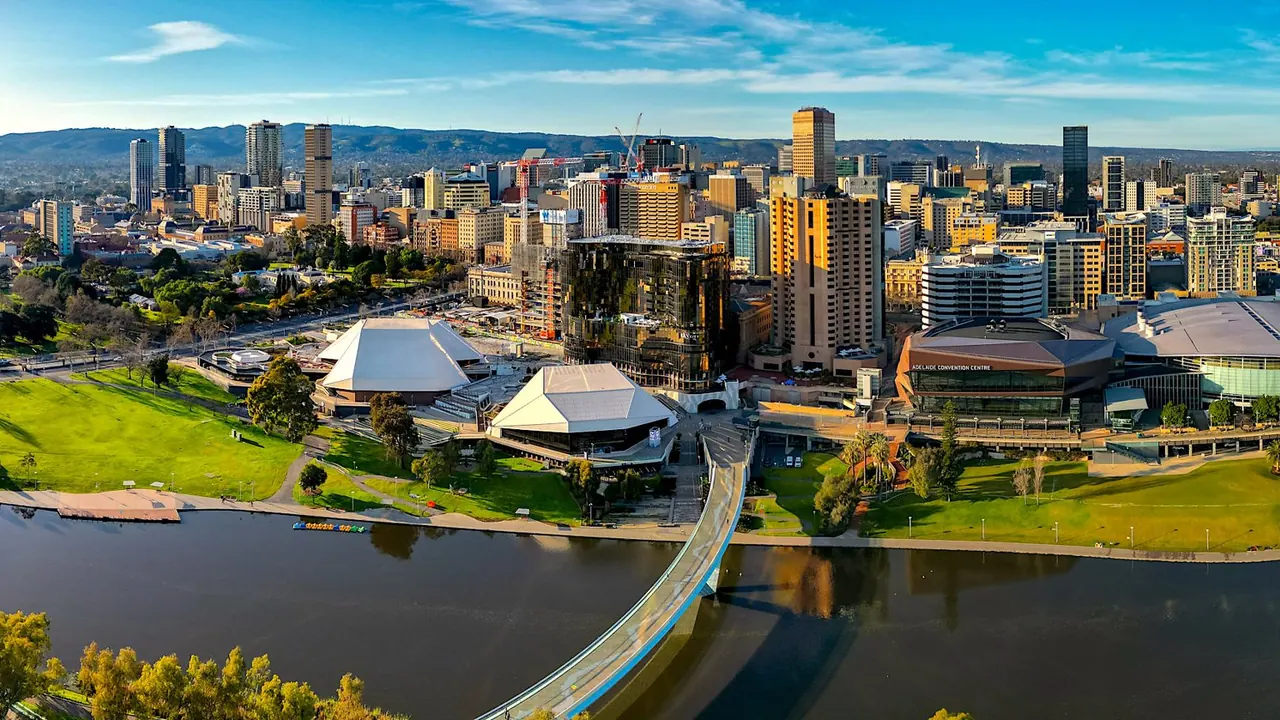
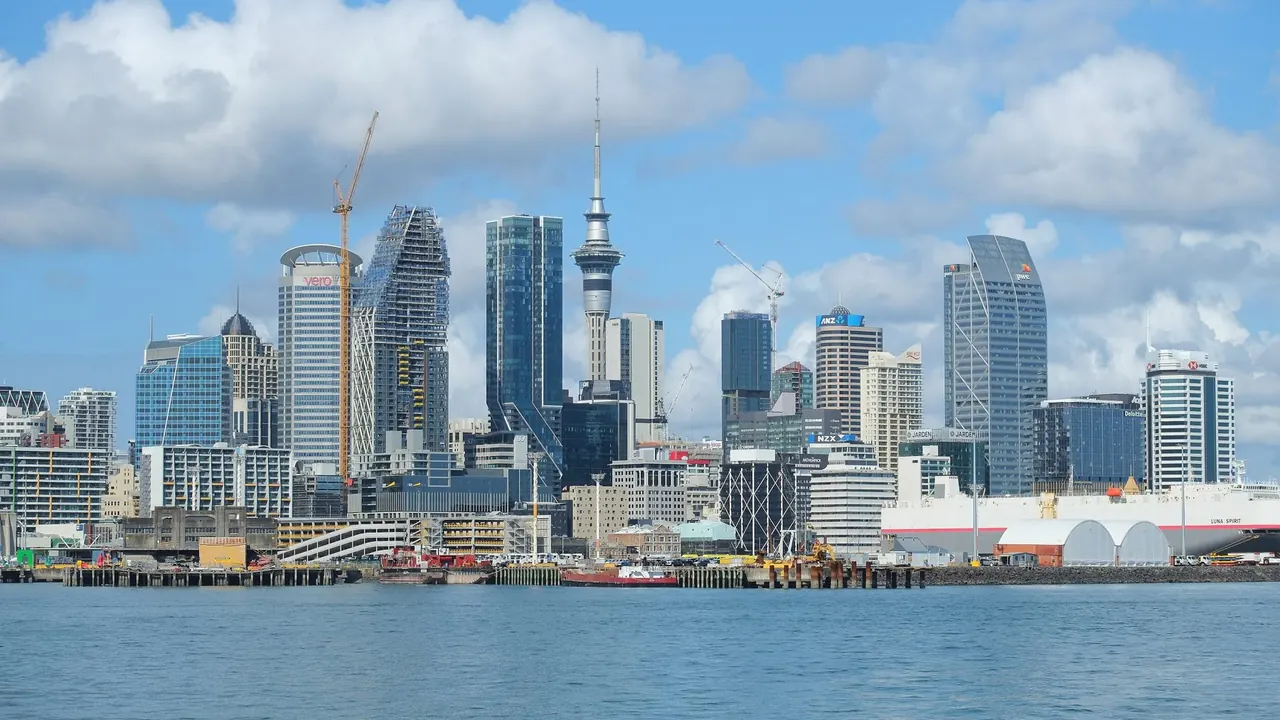
Photos: Adelaide by Ardash Muradian, CC BY-SA 2.0, cropped; Auckland by Pseudopanax at English Wikipedia, Public domain.
Adelaide or Auckland?
Our verdict in twelve categories, each scored against the same fixed benchmark cities, and the climate month by month, so you can choose for your trip.
Choose Adelaide for
- live music and the arts
- getting around
- food and drink
Adelaide suits travellers who plan a trip around eating and drinking. The Barossa, McLaren Vale and the Adelaide Hills wineries sit within an hour, the Central Market is the city's real centrepiece, and in late summer the Fringe and the Adelaide Festival fill the parklands. The flat, compact grid is easy to get around, and the stay costs a little less than across the Tasman.
Choose Auckland for
- nature and the outdoors
- wellness
- shopping
Pick Auckland if you would rather spend your days outdoors. Volcanic cones rise between the suburbs and ferries run out to Rangitoto and Waiheke. West of the city there is kauri rainforest and a wild surf coast, and the Hauraki Gulf is fine sailing water. Expect to pay more and to spend more time in a car or taxi, but the landscape on the doorstep is far more dramatic than Adelaide's.
Scoreboard
Twelve categories on one fixed scale from 0 to 100. The shaded stretch is the gap between the two.
Your match
Pick a travel style or drag the sliders, and both match scores follow your weighting.
Wins on live music and the arts and getting around with your weighting.
Wins on nature and the outdoors and wellness with your weighting.
What matters to you?
Category by category
What the scores mean for a trip.
Beaches & swimming
These two are well matched for a beach stay, but the coastlines feel very different. Adelaide has one long, even run of sand on the sheltered gulf, with jetties at Glenelg, Henley and Semaphore. You can take the tram straight to the sand, and because the beaches face west you get sunsets over the water.
Auckland has more variety. There are calm bays along Tamaki Drive and on the North Shore, black-sand surf beaches at Piha and Muriwai on the west coast, where you swim only between the flags, and white-sand coves on Waiheke a ferry ride away.
Food & drink
Adelaide has the better food. Its Central Market brings Spencer Gulf prawns, King George whiting, cheese from the Hills and charcuterie from the Barossa under one roof. Wine from regions an hour away is part of everyday drinking, though kitchens close fairly early in the evening.
Auckland's strength is the range of its immigrant cooking, with regional Chinese, Korean and Malaysian food along Dominion Road and Pacific Island food at the markets. It also has fine mussels and oysters and a serious flat-white café culture, but it lacks Adelaide's regional produce tied to place.
Culture & sights
Neither city needs more than a couple of days of sightseeing, and the two are about level. What differs is how the sights are laid out. In Adelaide almost everything sits along North Terrace: the Art Gallery with its Australian and Aboriginal art, the South Australian Museum's major Aboriginal collection and the State Library's ornate Mortlock Wing. Sandstone churches and Ayers House stand in the planned 1830s grid around them.
Auckland's sights are more scattered, and they focus on Māori and Pacific heritage. The War Memorial Museum on the Domain holds a carved meeting house and a war canoe, the Maritime Museum tells the story of Polynesian voyaging, and the volcanic cones still carry the earthworks of old pā. What Auckland lacks is a historic streetscape to match Adelaide's orderly colonial centre.
Nightlife
Both cities offer relaxed evenings rather than big club nights, and both are quiet midweek. In Adelaide most of it happens in a walkable area, with small laneway bars around Peel and Leigh Streets and a younger club crowd on Hindley Street at weekends. The festival weeks of late summer are the time the city stays out late.
Auckland's nightlife is spread over separate strips: polished cocktail bars on Ponsonby Road, harbourside drinking at the Viaduct, and Karangahape Road with late bars and the city's queer scene. A taxi is often needed to move between them.
Nature & outdoors
This is where Auckland pulls well ahead. The city is built across a field of volcanoes, so you can climb a grassy cone between meetings, or take a ferry to Rangitoto and walk its lava fields. You can see takahē on predator-free Tiritiri Matangi, walk the Waitākere kauri forest down to the gannets at Muriwai, and spend summer days sailing or kayaking on the Hauraki Gulf.
Adelaide's outdoors is gentler: eucalypt walks up to Mount Lofty, the gorge at Morialta, and wild koalas and kangaroos in the Hills. You can also kayak with dolphins in the Port River. Hot summers push serious walking into spring and autumn, and Kangaroo Island, its best wildlife destination, needs more than a day.
Day trips
The day trips are about level, but Adelaide offers more of one thing. The Barossa, McLaren Vale, the Hills and the Clare Valley all sit within two hours by road, and between them you get German-settler villages, very old vines and Prussian-era Hahndorf. Once you leave wine country there is little else.
Auckland's best outings go by water, with Waiheke's vineyards and beaches and Victorian Devonport each a short ferry ride away. Matakana's wineries and market are to the north, and Hobbiton is a long but popular day to the south. Rotorua and Waitomo work better as overnight trips.
Good for families
Both are easy, safe cities for children, but they suit different families. Adelaide is flat and compact, which is easy on small legs. It has kangaroos and koalas up close at Cleland, open-range African animals at Monarto, and shallow beaches reached by tram. There is no theme park, and summer heatwaves can wear children out.
Auckland has more organised attractions, including the aquarium tunnel with its sharks and penguins, the trams and planes at MOTAT, and the modest Rainbow's End theme park. Volcanic cones and short ferry trips fill the rest of the time, but you will often drive between attractions.
Getting around
Adelaide is the easier of the two. Its centre is a flat grid you can cover on foot or by bike, the loop bus and the central tram are free, and the tram runs all the way to Glenelg beach. You will want a car for the wine regions, but the roads are quiet and driving is easy.
Auckland's centre is walkable but hilly, and its harbour ferries are a real pleasure to use. Away from the water the city spreads out and is built around the car, motorway traffic is heavy at peak hours, and the west coast and the northern wineries are hard to reach without driving.
Shopping & style
Shopping is modest in both cities, and you can't really choose between them on it, but the souvenirs are different. In Adelaide you shop in Rundle Mall and its old arcades, and the things to take home are wine from the cellar door, South Australian opal and Aboriginal art from desert communities. In Auckland the focus is New Zealand design in Ponsonby and Newmarket, with merino knitwear, pounamu carvings and the Pacific stalls of the Ōtara market.
Affordability
Adelaide costs noticeably less, although Australia is still not a cheap country. Hotels are easier on the pocket, public transport around the centre is free, and Chinatown and the market keep meals sensible. The extra cost comes from hire cars or tours to reach the wineries.
Auckland is expensive across the board. Waterfront hotels in summer, bar prices, ferries and tours all add up. Its free volcanic cones, beaches and coastal walks do soften the bill.
Live music & performing arts
In late summer Adelaide has the stronger arts calendar by a wide margin. The Fringe fills tents and pubs with comedy and cabaret, the Adelaide Festival brings international theatre and opera, and WOMADelaide puts world music in the Botanic Park. The rest of the year the Festival Centre and the symphony orchestra provide a solid regular programme.
Auckland's arts year is steady but smaller. You can hear the Philharmonia in the Town Hall's fine acoustics or see touring shows under the starry ceiling of the Civic. Its distinctive offering is Pacific and Māori performance, at the Pasifika Festival and at kapa haka events.
Wellness & relaxation
Neither city has a bathing tradition, and both are restful mainly because life there moves at an easy pace. Auckland does have natural hot springs at Parakai, about an hour away, with Rotorua's geothermal pools further on. In Adelaide, slowing down means vineyard retreats, garden walks and long lunches in the Hills rather than a soak in thermal water.
When should you go?
Pick your month. The climate figures are measured averages, not a forecast.
Adelaide in July
Auckland in July
Daytime high, °C
Rainfall in the month, mm
Where the figures come from
Auckland's station stands 189 m below the city centre, so the centre is likely a little cooler than the figures say.
Temperature and rainfall are climate normals, averaged over the years shown. Adelaide: 1991-2020 normals, Adelaide (West Terrace / ngayirdapira) (3.1 km from centre). Auckland: 1961-1990 normals, Auckland Aerodrome Aws (17 km from centre).
Both cities are in the southern hemisphere, so summer is December to March, and that is when the sea is warm enough to swim in either place. Adelaide's summer is hot and dry, with highs around 30°C in January and February, very little rain and long hours of sunshine. That suits the beach, but it makes walking the streets in the afternoon hard work. Auckland stays milder at about 24°C, which is more comfortable for walking, though it gets steady rain even in summer. In late summer the sea reaches about 22°C at Adelaide and only a little less at Auckland.
The two differ most from late autumn onwards. Adelaide's rain arrives in May and peaks at about 78mm in June, but it remains a fairly dry city with mild days. Auckland's winter is much wetter, reaching about 135mm in July. For walking and the hills, spring and autumn are the best seasons in Adelaide. In Auckland the summer months are the most reliable for anything outdoors.
Which traveller are you?
For an outdoors trip, choose Auckland. You can climb volcanic cones in the city, walk the lava fields on Rangitoto, see rare birds on Tiritiri Matangi, and hike the Waitākere rainforest tracks down to the Tasman coast. Adelaide's hills are pleasant but much gentler.
On a food and nightlife trip, Adelaide is the better choice. Its Central Market, South Australian seafood and wine regions an hour away beat Auckland's eating. The nightlife is about level, with relaxed laneway wine bars in Adelaide and late bars along K Road in Auckland.
On a trip on a tight budget, Adelaide stretches further. The gallery and museum on North Terrace are free to enter, the Botanic Garden fills an afternoon, and rooms are easy to find outside the festival weeks. In Auckland, come outside summer, when hotels are less expensive.
Before you go
| Measure | Adelaide | Auckland |
|---|---|---|
| Official language | English | English, New Zealand Sign Language, Māori |
| Currency | Australian Dollar (AUD) | New Zealand Dollar (NZD) |
| Sockets | I230 V, 50 Hz | I230 V, 50 Hz |
| Driving side | Left | Left |
| Time zone | UTC+9:30, UTC+10:30 in summer | UTC+12, UTC+13 in summer |
| Emergency number | 000 | 111 |
| Elevation | 1 m | 196 m |
| Main airport | Adelaide International Airport (ADL)6 km from centre35 non-stop destinations | Auckland International Airport (AKL)18 km from centre63 non-stop destinations |
| Public holidays this year | 12 days | 12 days |
By the numbers
| Measure | Adelaide | Auckland |
|---|---|---|
| City population | 1,387,290 | 1,470,100 |
| People per km² | 1,071 | 2,630 |
| Museums within 10 km | 13 | 15 |
| UNESCO World Heritage sites within 50 km | 0 | 0 |
| Swim season, months above 21 °C | 3 months | 1 month |
Where else could you go?
Every comparison below shares a destination with this one, so you can follow Adelaide or Auckland somewhere new.