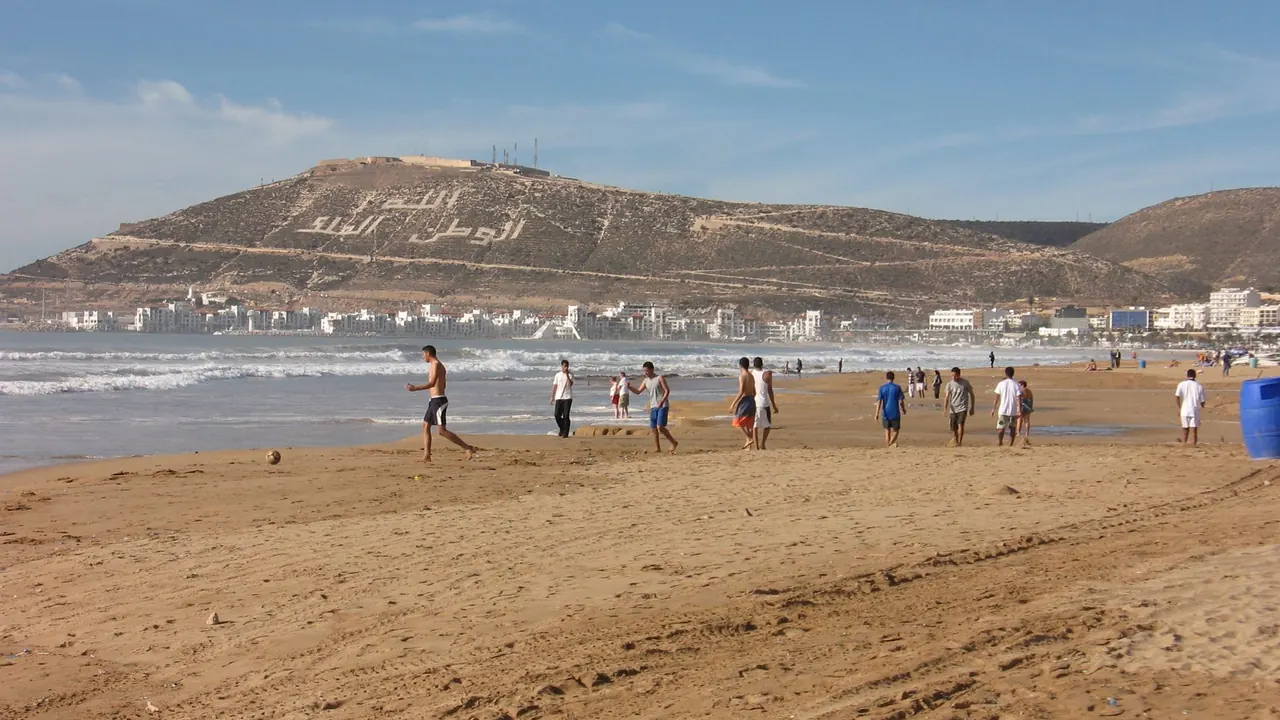
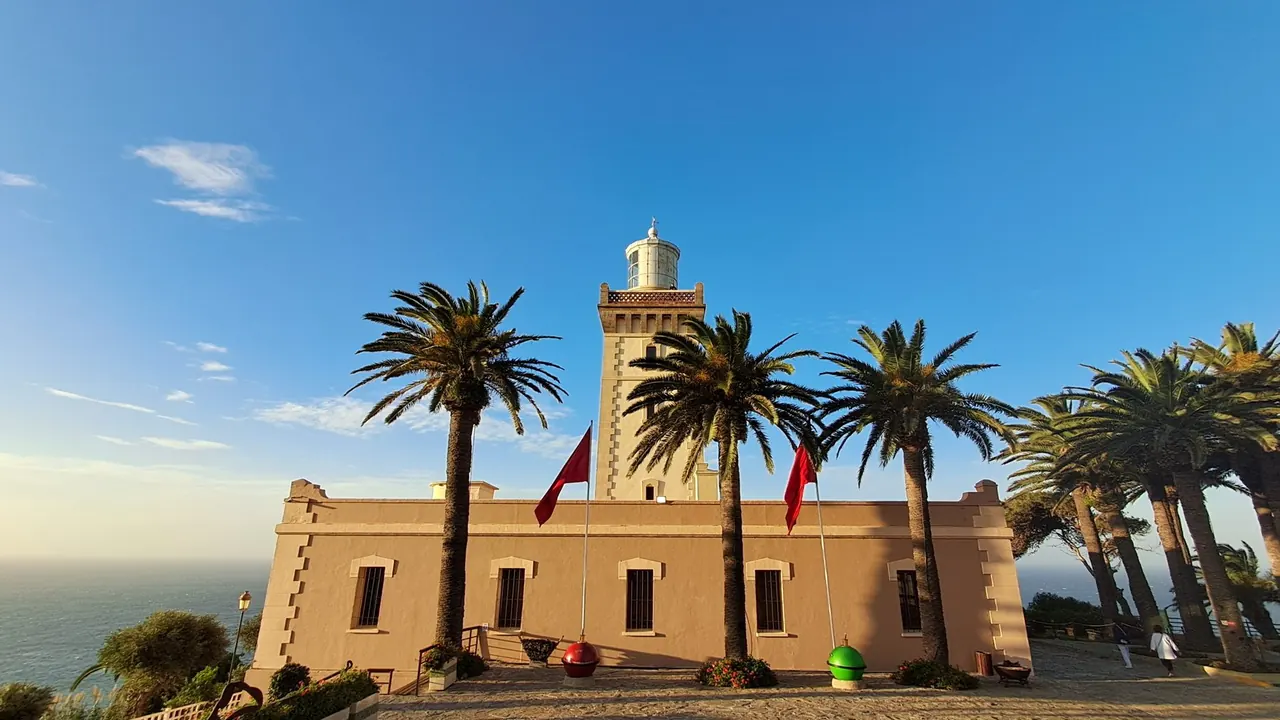
Photos: Agadir by michiel1972, CC BY-SA 3.0, cropped; Tangier by Ideophagous, CC BY-SA 4.0, cropped.
Agadir or Tangier?
Our verdict in twelve categories, each scored against the same fixed benchmark cities, and the climate month by month, so you can choose for your trip.
Choose Agadir for
- families
- beaches
- nature and the outdoors
Agadir is the choice for a sun-and-sand week. It has a long, sheltered bay of fine sand, warmth through the winter, resort hotels with pools and spas, and the surf coast and Paradise Valley close by. It suits families and anyone who wants to switch off, as long as they accept that the city, rebuilt after its earthquake, has little history to explore.
Choose Tangier for
- culture and sights
- day trips
- live music and the arts
Tangier rewards travellers who come for a place rather than a sunlounger. Its kasbah, its steep whitewashed medina and its past as an international city give it a character Agadir lacks. It is also a far better base for getting around, with Asilah, Tetouan, Chefchaouen, Rabat and a ferry to Spain all within reach. The beach and the options for children are weaker, and winter is wet.
Scoreboard
Twelve categories on one fixed scale from 0 to 100. The shaded stretch is the gap between the two.
Your match
Pick a travel style or drag the sliders, and both match scores follow your weighting.
Too close to call, 2 points apart
Wins on families and beaches with your weighting.
Wins on culture and sights and day trips with your weighting.
What matters to you?
Category by category
What the scores mean for a trip.
Beaches & swimming
Agadir is the stronger beach destination by some distance. Its crescent of fine sand runs for close to 10km around a sheltered bay, and the water near town is usually calm enough for easy swimming. The surf beaches at Tamraght and Taghazout are within half an hour.
Tangier's own city beach is more for looking at than swimming from. The better sand lies out west at Achakar and Cap Spartel, or down the coast at Asilah. Beach life there is a local summer affair where people dress modestly, whereas Agadir is set up as a beach resort all year.
Food & drink
In both cities the best meal is often at the fishing port, with sardines picked from the catch and grilled, but Tangier has more of a food culture around that. Its medina grill counters, bakeries and msemen stalls, bissara at breakfast and long hours over mint tea on terraces above the Strait give eating there a daily rhythm.
Agadir has the Souss flavours of argan oil, amlou and slow-cooked Amazigh tagines, and Souk El Had is a fine market. Beyond that, though, most of the eating happens in hotels and along the promenade, where the cooking is uneven.
Culture & sights
This is where the two cities differ most. Tangier has a kasbah with the old sultan's palace museum and a whitewashed medina running between the Petit and Grand Socco. It also has the American Legation, Art Deco and Spanish colonial streets in the Ville Nouvelle, and its links with Paul Bowles and the Beat writers, which is enough for two or three days.
Agadir lost almost all of its old town in the earthquake. What remains are the kasbah walls on Agadir Oufella, worth the climb mostly for the view, the rebuilt Medina Polizzi and a small Amazigh heritage museum, all of which fit into a day.
Nightlife
Neither city is the place for a big night out, but evenings feel different in each. Agadir's are resort evenings: hotel bars, a few nightclubs, lounges around the marina and beach clubs at sunset, livelier in summer and during European school breaks.
Tangier's evenings are quieter and more local, spent on café terraces and along the seafront. Drinking is limited to a few old bars from the international era, hotel lounges and summer beach clubs on the bay. Agadir is better for dancing, and Tangier for a quiet drink in a bar with some history.
Nature & outdoors
Agadir has the wilder setting, where the High Atlas meets the Atlantic. The surf breaks north of town, the palm-filled gorge of Paradise Valley, argan plains with goats climbing the trees and the bald ibis of Souss-Massa National Park are all within easy reach, with the Anti-Atlas further out for trekking.
Tangier's outdoors centres on the Cap Spartel headland, with its cliffs, pine woods and the Caves of Hercules, and on the wooded Perdicaris park. Its particular draw is the spring and autumn migration of storks and birds of prey across the Strait. Serious hiking in the Rif needs an overnight stay.
Day trips
Tangier is much the better base for day trips. Asilah and Tetouan are about an hour away, Chefchaouen makes a long day, and the high-speed train reaches Rabat in well under two hours. A ferry puts you in Tarifa, in Spain, in about an hour.
From Agadir the good day trips are Taroudant, with its ochre ramparts and calm souks, Tiznit for silver jewellery, and the surf villages up the coast. Marrakech and Essaouira are three hours or more away and are better visited with a night's stay.
Good for families
Agadir is the easier choice with children. It has a wide, gentle beach, a flat promenade for buggies and plenty of all-inclusive hotels with pools and kids' clubs. The crocodile park, the Vallée des Oiseaux and boat trips from the marina fill the odd afternoon away from the sand.
Tangier is just as warm towards children and stays cooler in summer, but there is little made for them, and the steep, stepped medina is hard going with a pushchair. Families there tend to rely on a hotel pool, the Perdicaris park and a day trip by ferry to Spain.
Getting around
Both cities run on cheap petit taxis, orange in Agadir and blue in Tangier, and neither has a metro or tram. The difference is in how each city is laid out. In Agadir, visitors spend much of their time on one flat promenade, but the souk, the kasbah hill and the port are each a taxi ride away. The surf coast and Paradise Valley need a grand taxi, a hired car or a tour.
In Tangier you can walk between the medina, the kasbah and the Ville Nouvelle, though the medina's stairways take some getting used to. Its train links to Rabat and Casablanca and its ferry port in the centre make it the better connected of the two.
Shopping & style
Agadir keeps its shopping in one place, the walled Souk El Had. It is a huge working market where locals buy produce, spices and household goods, and the selling is fairly relaxed. The things to take home are argan oil from the Souss women's cooperatives, Amazigh silver and woven rugs.
In Tangier the shopping runs through the medina lanes around the Petit Socco and up towards the kasbah, with leather slippers, lanterns, ceramics and the red-and-white striped cloth worn by Rif women. The Saturday markets by the Grand Socco and a few antique shops from the expatriate era add to it, but expect bargaining and a harder sell. Both offer less than Morocco's great souk cities.
Affordability
Both cities are inexpensive, and Tangier is slightly more so. Its medina guesthouses and riads, street food and café terraces keep a stay cheap, and costs rise mainly at hotels with sea views and places that serve alcohol.
Agadir's local cafés, fish at the port and taxis are cheap too, and all-inclusive packages out of season can be a bargain. Its seafront strip, however, is aimed at tourists, and room rates climb during European school breaks. In both cities alcohol is the one thing that is not cheap.
Live music & performing arts
Neither city has a theatre or opera scene, but Tangier has more musical depth. It has its musical past from the international era, the Jajouka musicians of the nearby Rif hills, a long-running jazz festival, and Andalusian music and gnawa at festivals. The historic art-house cinema on the Grand Socco also gives an evening out more to work with.
Agadir's big event is the Timitar festival of Amazigh music each summer, with large free stages. The rest of the year, live performance mostly means hotel entertainment and folk shows put on for visitors.
Wellness & relaxation
Agadir is built for a restful week. Resort hotels have their own hammams and spas offering the black-soap scrub and argan-oil massage, thalassotherapy centres line the bay, and yoga and surf retreats lie up the coast.
In Tangier the hammam is part of everyday life, mostly simple neighbourhood bathhouses with separate hours or rooms for men and women, plus spas in riads and larger hotels. Slowing down there means riad rooftops and mint tea over the Strait, though the port and the traffic keep the city from ever being truly calm.
When should you go?
Pick your month. The climate figures are measured averages, not a forecast.
Agadir in July
Tangier in July
Daytime high, °C
Rainfall in the month, mm
Where the figures come from
Agadir has no rain gauge within 25 km of the centre, so its rainfall comes from a gridded climate dataset read at the city rather than from a gauge further away.
Temperature and rainfall are climate normals, averaged over the years shown. Agadir: 1945-2025 (rainfall 1991-2020) normals, Agadir (4.5 km from centre). Tangier: 1991-2020 normals, Tanger Aerodrome (9.5 km from centre).
Agadir's climate changes little through the year. Daytime highs sit in the low to mid twenties from autumn to spring and reach about 28°C in July and August. That is warm enough for the beach in every month and never too hot for walking the streets. Its wettest stretch runs from November to February, with December the wettest month at 42mm, while May to September is almost completely dry. The drawback is the sea, which stays cool all year, around 17°C in winter and only a little warmer by late summer.
Tangier changes much more with the seasons. From October to April it is cooler and often wet, and November and December bring well over 100mm each, far more than Agadir's wettest months. Winter there is a time for city walks with an umbrella rather than the beach. June to September is dry, long and sunny, with highs of about 30°C in August, and at its summer peak the sea is slightly warmer than Agadir's. May and September, mild and mostly dry, are the best months for walking the steep medina.
Which traveller are you?
On a beach and sun trip, Agadir is the clear choice. Its long, sheltered sandy bay is good for easy swimming, the surf coast is close, and the weather stays warm and mostly dry through winter. Tangier's city beach is better to look at than to swim from.
For a culture and arts trip, Tangier wins comfortably. The kasbah museum, the medina, the American Legation and the city's literary past fill several days, and Tetouan, Asilah and Rabat are near. Agadir has little history left to see.
On a family trip with young children, Agadir is far easier. The gentle bay, the flat promenade and the hotels with pools and kids' clubs make for simple days. Tangier's steep medina is hard work with a pushchair, and the city has little made for children.
Before you go
| Measure | Agadir | Tangier |
|---|---|---|
| Official language | Arabic, Standard Moroccan Tamazight | Arabic, Standard Moroccan Tamazight |
| Currency | Moroccan Dirham (MAD) | Moroccan Dirham (MAD) |
| Sockets | CE50 Hz | CE50 Hz |
| Driving side | Right | Right |
| Time zone | UTC+1 | UTC+1 |
| Emergency number | Police 19/112, ambulance 15, fire 15 | Police 19/112, ambulance 15, fire 15 |
| Elevation | 74 m | 56 m |
| Main airport | Al Massira Airport (AGA)20 km from centre75 non-stop destinations | Tangier Ibn Battuta Airport (TNG)11 km from centre50 non-stop destinations |
| Public holidays this year | 11 days | 11 days |
By the numbers
| Measure | Agadir | Tangier |
|---|---|---|
| City population | 538,000 | 1,275,428 |
| People per km² | - | 6,393 |
| Museums within 10 km | 1 | 6 |
| UNESCO World Heritage sites within 50 km | 0 | 1 |
| Swim season, months above 21 °C | None | 3 months |
Where else could you go?
Every comparison below shares a destination with this one, so you can follow Agadir or Tangier somewhere new.