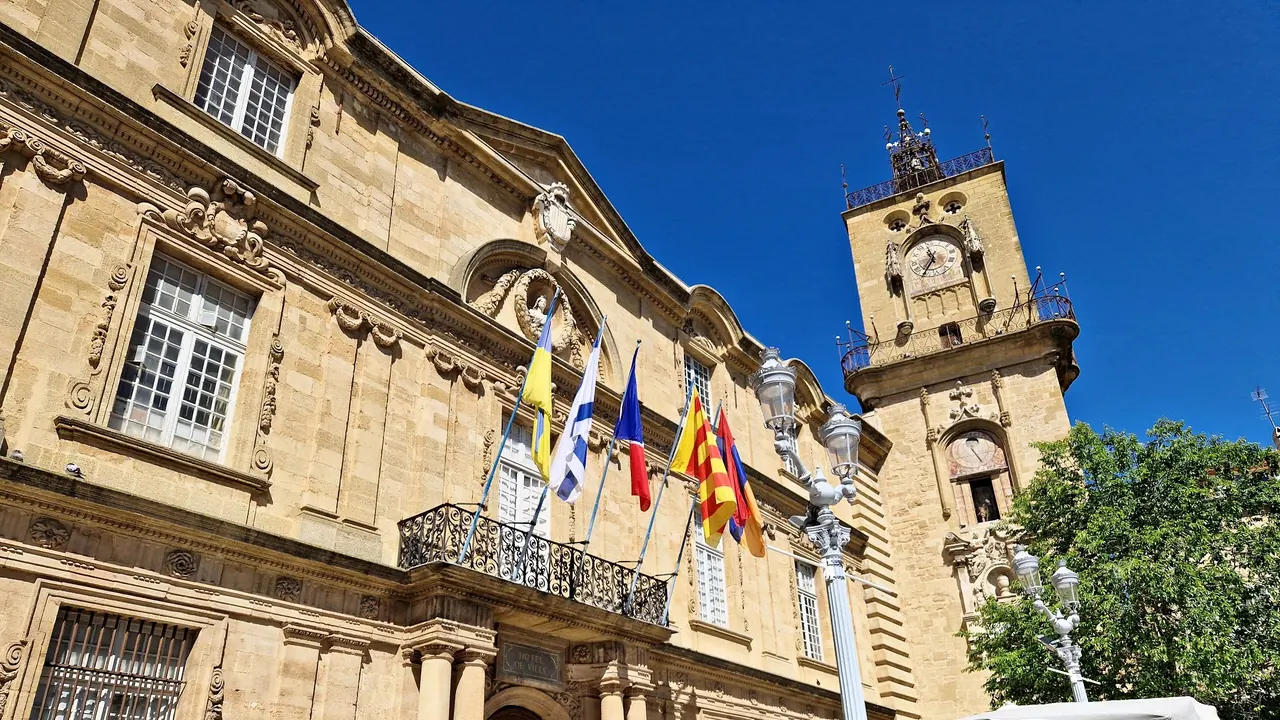
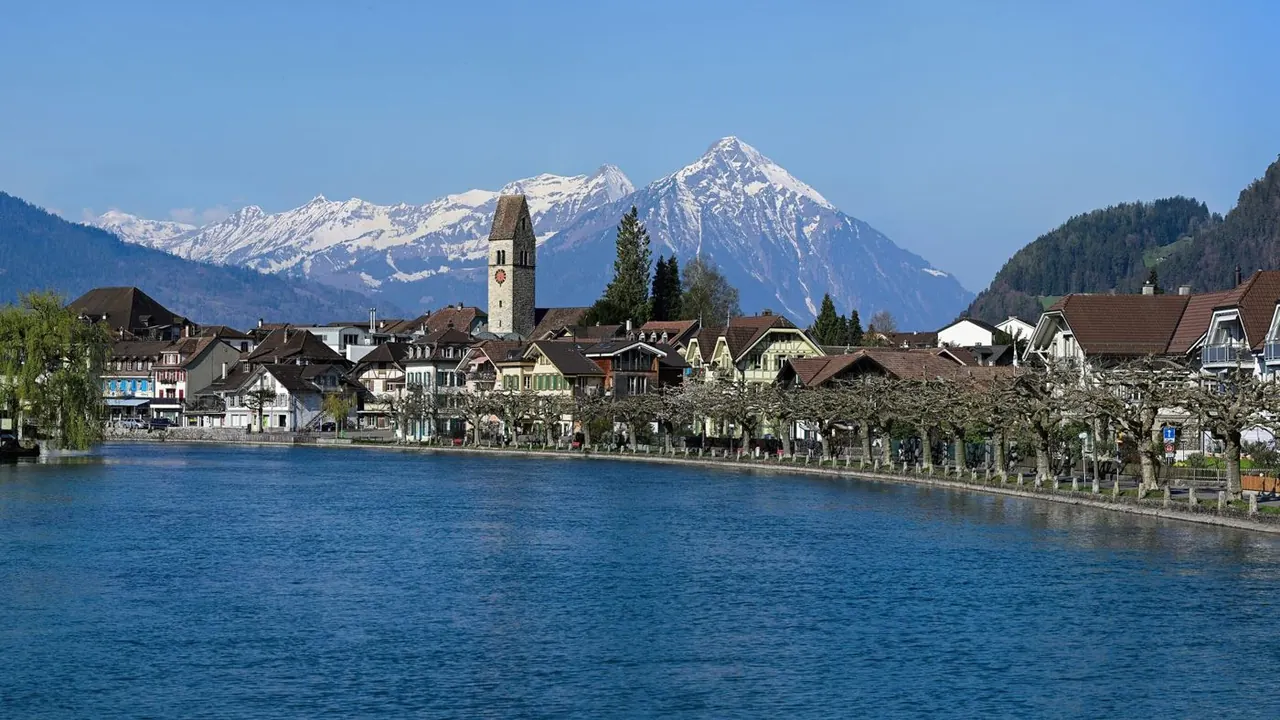
Photos: Aix-en-Provence by Hanay, CC BY-SA 4.0, cropped; Interlaken by Roy Egloff, CC BY-SA 4.0, cropped.
Aix-en-Provence or Interlaken?
Our verdict in twelve categories, each scored against the same fixed benchmark cities, and the climate month by month, so you can choose for your trip.
Choose Aix-en-Provence for
- culture and sights
- live music and the arts
- food and drink
Aix-en-Provence suits travellers who want a handsome town to settle into: morning markets, long terrace lunches, Cezanne's studio and the Mazarin mansions, with Roman towns and Luberon villages close by. It wins on food, sightseeing, evenings out and performance, and although it is expensive for France, a stay there costs less than one in the Bernese Oberland.
Choose Interlaken for
- families
- nature and the outdoors
- getting around
If the mountains are the reason for going, choose Interlaken. The Eiger, Mönch and Jungfrau, the Lauterbrunnen valley and a tight network of trains, gondolas and lake steamers bring high trails, paragliding and glacier views within an hour, all without a car, and children love the rack railways. In return you get plain food, early nights and very high costs.
Scoreboard
Twelve categories on one fixed scale from 0 to 100. The shaded stretch is the gap between the two.
Your match
Pick a travel style or drag the sliders, and both match scores follow your weighting.
Wins on culture and sights and live music and the arts with your weighting.
Wins on families and nature and the outdoors with your weighting.
What matters to you?
Category by category
What the scores mean for a trip.
Beaches & swimming
Neither is a beach destination. Aix has the edge because it can reach real sea. The coves of the Cote Bleue, Cassis and the calanques are all within an hour, though they are small, pebbly and crowded in August, and without a car the trip takes two connections.
Interlaken can only offer its two lakes. Lake Thun has grassy lidos and shingle at Neuhaus, and the glacial turquoise of Lake Brienz is lovely but cold. It makes a good swim after a hike, and the swimming season is short.
Food & drink
Aix eats far better. Its daily markets on Place Richelme, its lunches of daube, tians and Coteaux d'Aix rosé, and its calissons give meals a real sense of place, even if the choice beyond French cooking is narrow.
Interlaken feeds hikers rather than food lovers: fondue, rösti and a run of Indian and Asian places for the international crowd. The best eating there is up in the mountains, with cheese from an Alpine dairy or lunch on a hut terrace above Mürren.
Culture & sights
The gap here is wide. Aix rewards two or three days of slow looking: the plane-shaded Cours Mirabeau, the honey-coloured mansions of the Mazarin quarter, the cathedral with its Merovingian baptistery, and everything tied to Cezanne, from his studio at Les Lauves to the Musee Granet.
Interlaken was built as a base for the mountains and has little of its own beyond the grand hotels on the Höheweg and a few timber houses in Unterseen. For history and museums you take the train to Bern or Thun.
Nightlife
On a warm night in Aix, students and locals fill the outdoor tables around the Forum des Cardeurs and the lanes behind the town hall. There are a few wine and cocktail bars and some small clubs, and it all goes quiet in the university breaks. For a proper club night you go to Marseille.
Interlaken goes to bed early, because people are up for the first train or a morning paragliding flight. There are backpacker pubs, a couple of basement clubs and the casino in the Kursaal, and not much more.
Nature & outdoors
Both have superb scenery on the doorstep, and Interlaken's is in another league. The Jungfrau massif, Trümmelbach's falls inside the rock and the Aletsch glacier seen from the Jungfraujoch are all reached by train. The town is also a centre for paragliding, canyoning and rafting, and in winter for skiing.
Aix offers gentler, sun-baked country: trails up Sainte-Victoire, coastal walks and kayaking in the Calanques, cycling in the Luberon and the Verdon gorge further off. Summer heat and fire closures limit it, and you will want a car.
Day trips
From Aix the outings are Roman and Provençal. Marseille's old port is half an hour away, Avignon's papal palace is twenty minutes by TGV, and Arles, Nimes and the Pont du Gard make a chain of Roman sites. With the Luberon villages of Gordes and Roussillon close by too, it is the richer base, though you need a car for the villages.
Interlaken's outings are about lakes and castles: arcaded Bern within the hour, Thun and Oberhofen by paddle steamer, woodcarving in Brienz and the open-air museum at Ballenberg. Lucerne is a longer trip over the Brünig Pass.
Good for families
Aix is safe and easy with small children. The centre is mostly pedestrian, and the fountains and market stalls make natural places to stop. Little in town is meant for them, though, and the long, hot summer afternoons are hard on younger ones. Aix suits older children who like to walk best: the trails up Sainte-Victoire and the cliff paths of the Calanques make proper family hikes in spring or autumn.\n\nInterlaken gives children of every age more to do, because the outing is the mountain landscape itself, with a lake or a valley walk always close at hand.
Plan around its limits. There are no zoos, aquariums or science museums to fall back on when it rains. At 3,454m the Jungfraujoch can be too high for very young children, and pushchairs manage best on the valley floor and the gentler panoramic paths.
Getting around
Both towns are small enough to cross on foot. The difference lies beyond them. Around Interlaken, mainline trains, narrow-gauge mountain lines, cog railways, gondolas and steamers connect so neatly that a car is pointless, and Wengen and Mürren are car-free anyway.
Aix's local trains and buses reach Marseille easily, but the TGV station is out on the plateau and the Provencal villages are poorly served, so most visitors who want the countryside hire a car and deal with tight parking.
Shopping & style
Aix is much the better place to browse. French fashion and shoe boutiques line Rue d'Italie and Rue Fabrot, the markets add flowers and bric-a-brac, and santons, olive-wood ware and Provencal fabrics make good presents.
Interlaken's Höheweg sells watches, army knives, cuckoo clocks and chocolate to coach groups, plus outdoor gear for anyone short of a rain jacket. Carved wood from Brienz is the only real local craft.
Affordability
In Aix the bed is the big cost. Hotels in the old town are few and pricey, especially in July, but back-street lunch menus, market picnics and cheap regional buses keep daily spending down. The total is high for France but well below what the Alps ask.
In Interlaken, beds, meals and drinks all cost full Swiss prices. On top of that come the mountain railways and the Jungfraujoch, which are what you came for and cost far more than most visitors expect. Passes and supermarket picnics help, but they don't make it cheap.
Live music & performing arts
Aix has a serious arts life. Each July its opera festival in the Archbishop's Palace courtyard draws the opera world. Ballet Preljocaj is based at the Pavillon Noir, and the Grand Theatre de Provence brings in touring orchestras through the year.
Interlaken's stage is mostly folklore: alphorns and yodelling evenings, and the long-running amateur open-air William Tell in the woods each summer. Bern's theatre and orchestra are the nearest step up.
Wellness & relaxation
Aix has the edge, and it goes back to Roman times. Warm water still runs from the fountains, and the Thermes Sextius spa sits on the site of the old baths. Add the town's slow rhythm of markets and long lunches, and outside July it is easy to unwind there.
Interlaken has no springs, so it relies on hotel spas along the Höheweg and on its setting. Early lake mornings and steamer crossings calm the mind, but the centre is geared to activity, and quiet is easier to find up in Wengen or Mürren.
When should you go?
Pick your month. The climate figures are measured averages, not a forecast.
Aix-en-Provence in July
Interlaken in July
Daytime high, °C
Rainfall in the month, mm
Where the figures come from
Interlaken has no rain gauge within 25 km of the centre, so its rainfall comes from a gridded climate dataset read at the city rather than from a gauge further away.
Interlaken's sunshine is measured 66 km from the centre, at Sion.
Temperature and rainfall are climate normals, averaged over the years shown. Aix-en-Provence: 1991-2020 normals, Marseille / Marignane (19.2 km from centre). Interlaken: 2005-2020 (sunshine 1961-1990, rainfall 1991-2020) normals, Meiringen / Unterbach (19.3 km from centre).
Aix is warm, dry and very sunny for much of the year. May and June are the best months for walking the old town and the hills, and September is pleasant once the worst heat has gone. July and August reach about 31°C, too hot for sightseeing in the afternoon, and fire risk can close the massifs. The sea near Marseille is warmest in August at about 22°C, so swimming runs from July to September. The autumn rains begin in September with around 82mm, and winters are mild but cool.
Interlaken is much cooler and wetter, and it gets far less sun. Its season runs from June to September, when highs reach about 24°C and walking at altitude is comfortable. May to August are also its wettest months, with more than 120mm in June and July, so low cloud can hide the peaks. September is drier. Winter is cold and dark in town, and that is when the ski areas take over. In spring and autumn Aix is the better choice. In high summer, Interlaken's mountain air is easier to bear than the heat of Provence.
Which traveller are you?
On a culture and arts trip, Aix is the clear choice. It has Cezanne's studio and the Bibemus quarries, the Musee Granet, fountain-filled squares, the 17th-century Mazarin quarter and the July opera festival. Interlaken has little to see in town and sends you to Bern for theatre.
For an outdoors trip, go to Interlaken. Trains and cable cars climb straight to high trails below the Eiger and the Jungfrau, and paragliding, canyoning and rafting all start from town. Aix has Sainte-Victoire and the Calanques, but often needs a car.
On a family trip with children, Interlaken works better. Rack railways, gondolas and steamers are an adventure in themselves, the summit stations have playgrounds and toboggan runs, and Ballenberg and the St Beatus caves fill whole days. In Aix, families mostly stay by a pool and drive out.
Before you go
| Measure | Aix-en-Provence | Interlaken |
|---|---|---|
| Official language | French | French, German, Italian, Romansh |
| Currency | Euro (EUR) | Swiss Franc (CHF) |
| Sockets | CE230 V, 50 Hz | CJ230 V, 50 Hz |
| Driving side | Right | Right |
| Time zone | UTC+1, UTC+2 in summer | UTC+1, UTC+2 in summer |
| Emergency number | 112 | 112 |
| Elevation | 73 m | 571 m |
| Main airport | Marseille Provence Airport (MRS)21 km from centre126 non-stop destinations | Zürich Airport (ZRH)100 km from centre226 non-stop destinations |
| Public holidays this year | 11 days | 10 days |
By the numbers
| Measure | Aix-en-Provence | Interlaken |
|---|---|---|
| City population | 149,695 | 6,123 |
| People per km² | 804 | 1,424 |
| Museums within 10 km | 8 | 3 |
| UNESCO World Heritage sites within 50 km | 1 | 2 |
| Swim season, months above 21 °C | 2 months | - |
Where else could you go?
Every comparison below shares a destination with this one, so you can follow Aix-en-Provence or Interlaken somewhere new.
- Marseillevs Aix-en-Provence
- Bernvs Interlaken
- Lucernevs Interlaken
- Avignonvs Aix-en-Provence
- Zermattvs Interlaken
- Zurichvs Interlaken