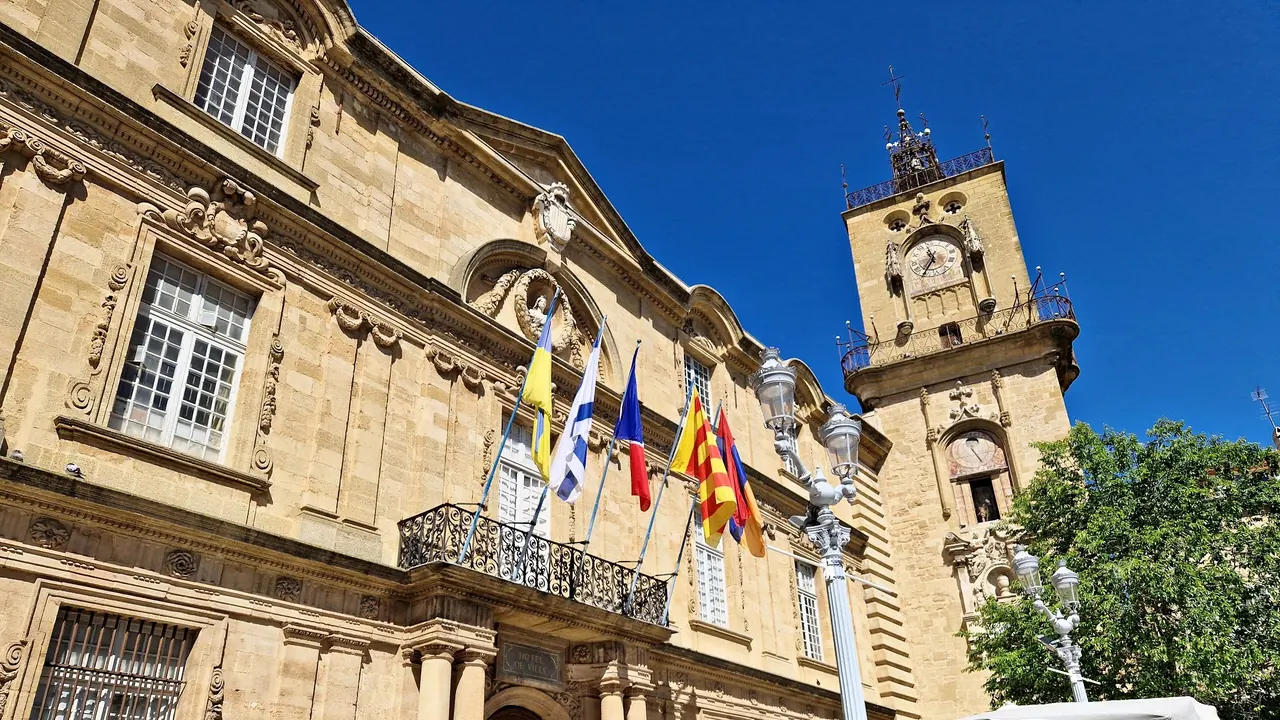
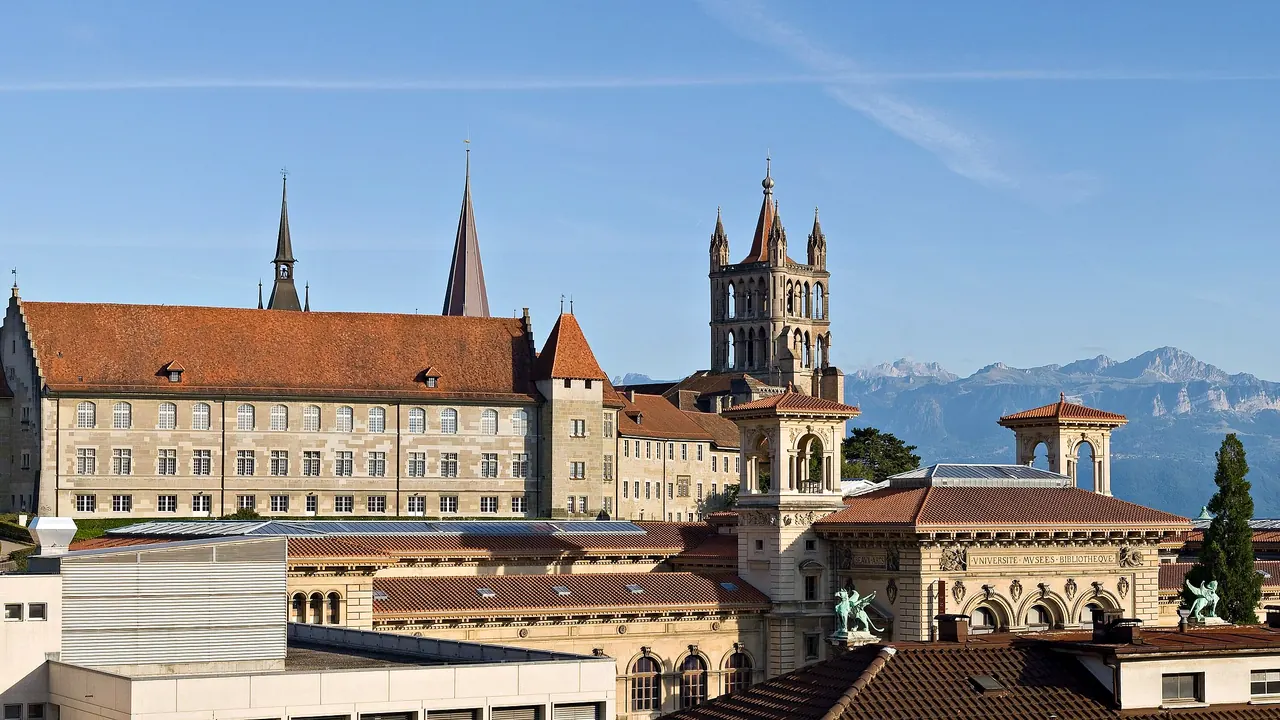
Photos: Aix-en-Provence by Hanay, CC BY-SA 4.0, cropped; Lausanne by Christian Mehlführer, CC BY-SA 3.0, cropped.
Aix-en-Provence or Lausanne?
Our verdict in twelve categories, each scored against the same fixed benchmark cities, and the climate month by month, so you can choose for your trip.
Choose Aix-en-Provence for
- prices
- shopping
- food and drink
Aix-en-Provence suits travellers who want Provence at their door and a slower, sunnier southern rhythm. The morning markets, long terrace lunches, Cezanne's town and the Luberon villages make it the better choice for food, a gentle round of sights and browsing the old-town boutiques. It is also noticeably kinder on the wallet, although you will want a car for the countryside.
Choose Lausanne for
- families
- getting around
- nature and the outdoors
Lausanne is for those who would rather leave the car at home and let trains, boats and a metro do the work. The lake, the Lavaux terraces and the Alps within an hour give it the edge outdoors, and its museums, parks and paddle steamers make it far easier with children. The price of that polish is high: almost everything costs a good deal more than in Provence.
Scoreboard
Twelve categories on one fixed scale from 0 to 100. The shaded stretch is the gap between the two.
Your match
Pick a travel style or drag the sliders, and both match scores follow your weighting.
Too close to call, level with your weighting
Wins on prices and shopping with your weighting.
Wins on families and getting around with your weighting.
What matters to you?
Category by category
What the scores mean for a trip.
Beaches & swimming
Neither is a beach destination, and the swimming differs in kind. From Aix the sea is a day out: an hour's drive to the pebbly coves of the Cote Bleue or the calanques near Cassis, saltwater and limestone cliffs, but crowded in August and awkward without a car.
Lausanne has no sea, yet the lake is right in town. You can swim off the lawns and piers at Vidy or spend an afternoon at the old Bellerive lido, all reachable on foot or by metro, though the shores are grass, steps and shingle and the season is short.
Food & drink
Aix has the more rewarding everyday table. Its life runs on the daily market at Place Richelme and long Provencal lunches of daube, tians and Coteaux d'Aix rosé, with calissons as the local treat, though the cooking rarely strays beyond French and Mediterranean.
Lausanne eats more heartily and more expensively: lake perch, papet vaudois and winter fondue. Its strengths sit at the extremes, with Lavaux Chasselas tasted in village caveaux and some celebrated top-end tables, while the middle ground is ordinary.
Culture & sights
Aix gives a little more to the visitor who likes to look at a town. The Cours Mirabeau, the honey-stone mansions of the Mazarin quarter and the fountains on nearly every square make the streets themselves the sight, and Cezanne's studio, the Bibemus quarries and the Musée Granet give it a clear artistic thread.
Lausanne's interest sits more in its museums than in its streets. The Olympic Museum at Ouchy, the Plateforme 10 cluster by the station and the Collection de l'Art Brut lead, with the Gothic cathedral and its night watchman crowning a steep old town. Either fills two or three days.
Nightlife
Both are student towns with modest evenings, but the style differs. Aix is a terrace town: people drink outside around Place des Cardeurs on warm nights, there are only a handful of small clubs, and real club nights mean a trip to Marseille.
Lausanne has an actual clubbing quarter in the Flon, where late bars and clubs fill old warehouses at weekends, plus summer evenings on the Ouchy waterfront. Weeknights are quiet and drinks are dear.
Nature & outdoors
Lausanne has the edge, chiefly because of its range and how easy it is to reach. The Lavaux terrace path drops through vineyards to the lake, there is sailing and paddleboarding on the water, and the Vaud Alps and the Jura are each about an hour away by train for hiking in summer and skiing in winter.
Aix's landscapes are drier and just as striking: Sainte-Victoire on the edge of town, the white cliffs of the Calanques and the Gorges du Verdon. Spring and autumn suit them best, as summer heat and fire closures can shut the massifs, and a car is close to essential.
Day trips
Both are first-rate bases, and the difference lies in how you travel. From Aix the great pull is Roman and rural Provence, with Avignon, Arles, Nîmes and the Pont du Gard, plus perched villages such as Gordes and Roussillon, and those villages really need a car.
Lausanne's trips run on rails and boats: Montreux and Chillon along the shore, Geneva, Bern, Fribourg and Gruyères inland, and Évian across the water, almost none of which needs a car.
Good for families
Lausanne is clearly the better family base. The Olympic Museum is built for hands-on visits, the aquarium-vivarium and Sauvabelin's animals, pedal boats and lookout tower are made for children, and lake steamers turn a crossing into an outing. Steep streets and costly meals are the main drawbacks.
Aix is safe and pleasant to stroll with children, with fountains and ice cream, but its sights are mansions and museums and summer afternoons are hot. Most families end up at a pool and drive to La Barben zoo or the coast.
Getting around
Lausanne is easier to move around, despite its hills. The m2 metro climbs from the lakeshore to the upper town, and the Swiss rail network and lake boats carry you onward without a car.
Aix is flatter and simpler on foot, with the old town and Cours Mirabeau in one compact pedestrian area. Beyond it things get harder: the TGV station sits out on the plateau, the villages are poorly served, and most visitors end up hiring a car and hunting for parking.
Shopping & style
Aix makes the better browse. The lanes around Rue d'Italie and Rue Fabrot hold French fashion boutiques and delicatessens, and market days bring textiles, bric-a-brac and flowers to the squares, with santons, olive wood and Provencal fabrics to carry home.
Lausanne's range is narrower: watches, jewellery and chocolate on Rue de Bourg, international names around Saint-François and a few design shops in the Flon. It is good for a specific Swiss purchase, less so for an afternoon's wandering.
Affordability
Neither is cheap, but Aix is far more manageable. Its hotels are pricey, especially during July's opera festival, yet back-street lunch menus, market picnics and regional buses keep daily spending reasonable, and the main extra is a hire car.
Lausanne is costly at every turn, from rooms and meals to wine and taxis, and the efficient transport hardly dents the total. Supermarket picnics, free lakeside promenades and a glass in a Lavaux caveau are the ways to soften it.
Live music & performing arts
The two are closely matched, but they peak at different times. Aix's stage life is built around July, when the opera festival fills the Archbishop's Palace courtyard. Through the rest of the year there is Ballet Preljocaj at the Pavillon Noir and touring companies at the Grand Théâtre de Provence.
Lausanne spreads its offer more evenly across the year: Béjart Ballet, the Prix de Lausanne, contemporary theatre at Vidy, a full opera season and a respected chamber orchestra, with the Montreux Jazz Festival a short ride away in July.
Wellness & relaxation
Both are calm places rather than spa resorts, and the thermal water sits in different places. In Aix it is part of the town itself: warm fountains on the Cours Mirabeau and the Thermes Sextius on the Roman bath site, with market mornings and long lunches setting the slow pace.
In Lausanne the spas are in the grand lakeside hotels, and the thermal springs are a train ride away at Yverdon-les-Bains and Lavey-les-Bains. The calm is found on the lake promenades and in the Lavaux vines rather than in the steep centre.
When should you go?
Pick your month. The climate figures are measured averages, not a forecast.
Aix-en-Provence in July
Lausanne in July
Daytime high, °C
Rainfall in the month, mm
Where the figures come from
Lausanne's temperatures are measured 40 km from the centre, at Payerne.
Lausanne has no rain gauge within 25 km of the centre, so its rainfall comes from a gridded climate dataset read at the city rather than from a gauge further away.
Temperature and rainfall are climate normals, averaged over the years shown. Aix-en-Provence: 1991-2020 normals, Marseille / Marignane (19.2 km from centre). Lausanne: 1991-2020 (sunshine 1961-1990) normals, Payerne (39.7 km from centre).
Aix is warm, dry and sunny for much of the year. May and June are the best months, warm enough for terrace lunches and a day on the coast without the full weight of July, when afternoons reach 31°C and walking the streets at midday is hard going. The sea is warmest in August at about 22°C. The rain arrives in autumn, and September is the wettest month at 82mm, though it stays warm. Winters are mild, but from November to January the days are shorter on sun, with grey spells common, even if they are still brighter than Lausanne's.
Lausanne is cooler and wetter all year. July is the warmest month at about 26°C, so late June to early September is the comfortable window for lake swimming and walking, and summer never brings oppressive heat. Rain falls through every month rather than in one season. December and January sit at about 4°C with very little sunshine, and in those months the main draw is the snow in the mountains.
Which traveller are you?
On a family trip with children, Lausanne is the easier choice. What children enjoy is in the city itself and within reach by metro or boat, so days need little planning. Aix is a town built for adult pleasures, and keeping children busy there usually means a pool and a car.
For a trip on a tight budget, Aix is the realistic option. In Lausanne the high prices touch every part of the day, so even a careful plan costs a lot. In Aix the room is the main expense, and everyday Provencal life can be kept modest.
On an outdoors trip, Lausanne wins on its range of seasons and how easy it is to get out. Lake, vineyards and mountains are all within reach by public transport in summer and winter alike. Aix's walking country is superb, but it is best in spring and autumn, and you need a car.
Before you go
| Measure | Aix-en-Provence | Lausanne |
|---|---|---|
| Official language | French | French, German, Italian, Romansh |
| Currency | Euro (EUR) | Swiss Franc (CHF) |
| Sockets | CE230 V, 50 Hz | CJ230 V, 50 Hz |
| Driving side | Right | Right |
| Time zone | UTC+1, UTC+2 in summer | UTC+1, UTC+2 in summer |
| Emergency number | 112 | 112 |
| Elevation | 73 m | 495 m |
| Main airport | Marseille Provence Airport (MRS)21 km from centre126 non-stop destinations | Geneva International Airport (GVA)52 km from centre150 non-stop destinations |
| Public holidays this year | 11 days | 9 days |
By the numbers
| Measure | Aix-en-Provence | Lausanne |
|---|---|---|
| City population | 149,695 | 144,873 |
| People per km² | 804 | 3,499 |
| Museums within 10 km | 8 | 31 |
| UNESCO World Heritage sites within 50 km | 1 | 3 |
| Swim season, months above 21 °C | 2 months | - |
Where else could you go?
Every comparison below shares a destination with this one, so you can follow Aix-en-Provence or Lausanne somewhere new.
- Marseillevs Aix-en-Provence
- Genevavs Lausanne
- Avignonvs Aix-en-Provence
- Chamonixvs Lausanne
- Bernvs Lausanne
- Annecyvs Lausanne