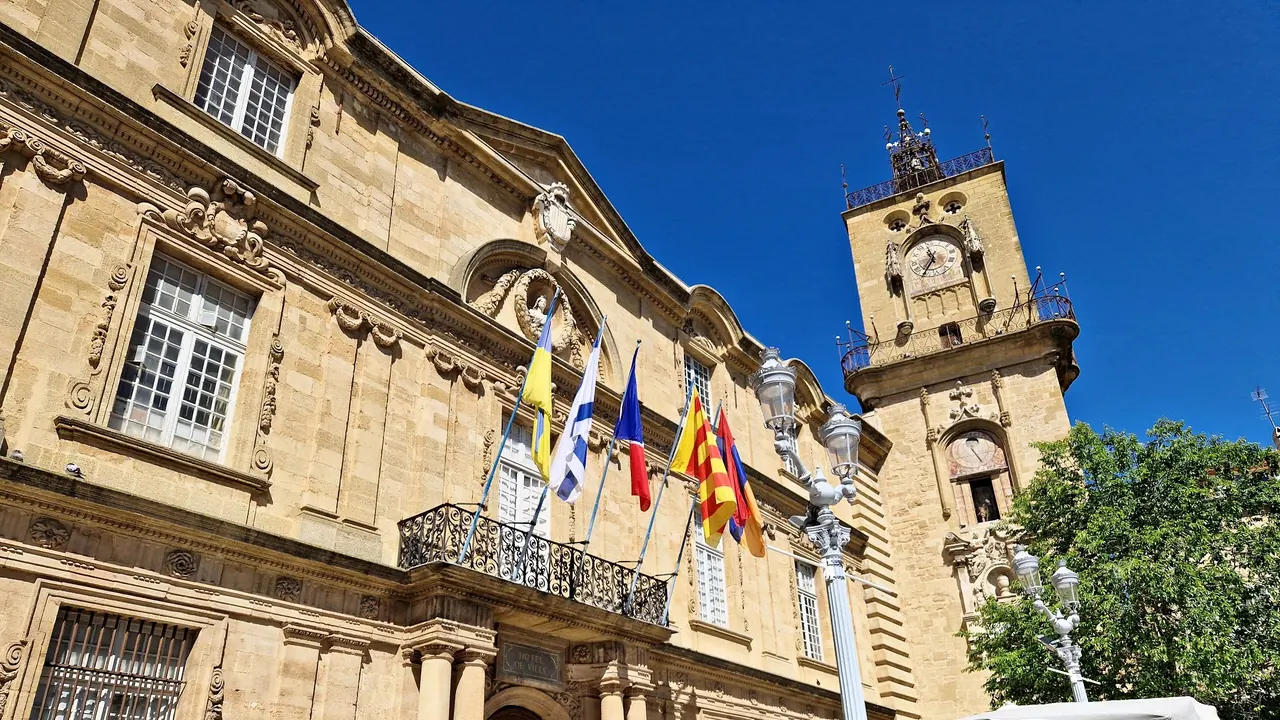
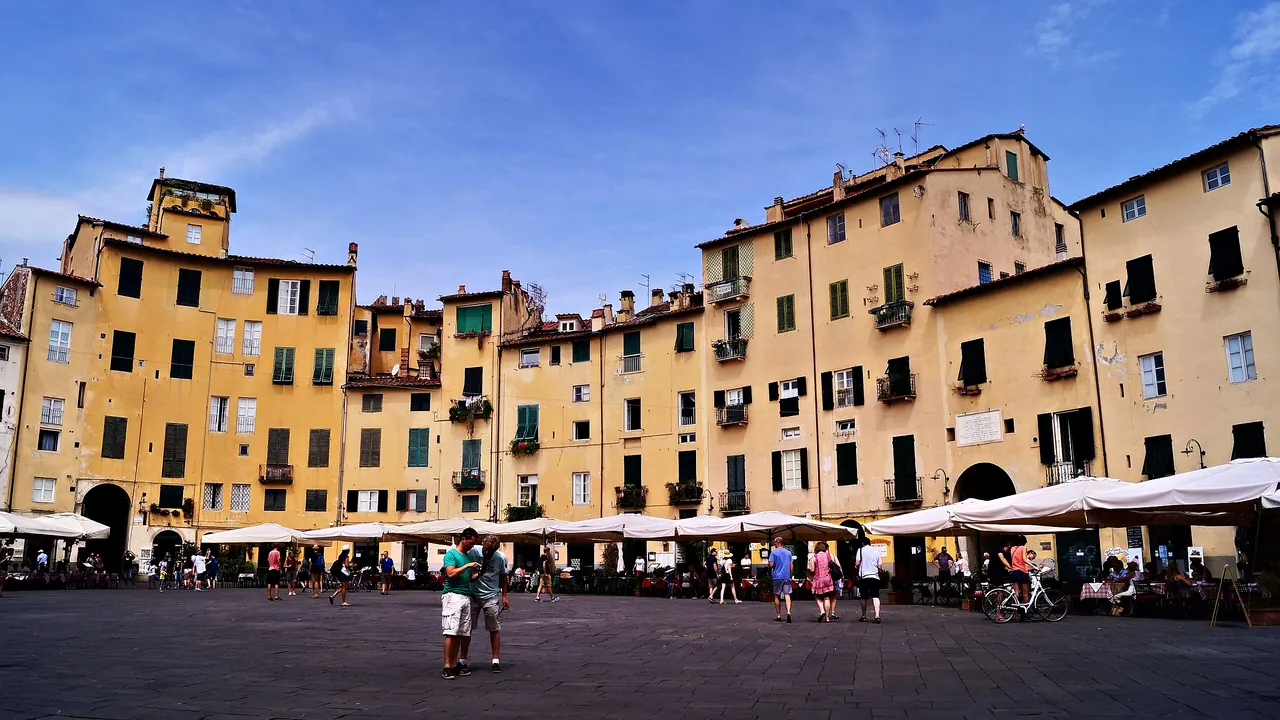
Photos: Aix-en-Provence by Hanay, CC BY-SA 4.0, cropped; Lucca by Stefano Sansavini, CC BY-SA 4.0, cropped.
Aix-en-Provence or Lucca?
Our verdict in twelve categories, each scored against the same fixed benchmark cities, and the climate month by month, so you can choose for your trip.
Choose Aix-en-Provence for
- nightlife
- shopping
- nature and the outdoors
Aix-en-Provence is the better pick for travellers who want landscape on the doorstep and a bit more going on in town. Sainte-Victoire rises just east of the centre and the Calanques are within an hour. The old-town lanes are better for shopping, the student bars keep the evenings livelier, and Cezanne's studio and quarries give art lovers a clear reason to come. Expect higher costs, and you will want a car for the hill villages.
Choose Lucca for
- beaches
- families
- prices
Lucca suits an easier, cheaper and largely car-free stay. Inside its intact walls everyone walks or cycles. Trains from the station by the ramparts run to Pisa, Florence and the sandy Versilia beaches, so a morning of Romanesque churches can end with an afternoon swim. Families and anyone watching their spending will find it the more relaxed of the two.
Scoreboard
Twelve categories on one fixed scale from 0 to 100. The shaded stretch is the gap between the two.
Your match
Pick a travel style or drag the sliders, and both match scores follow your weighting.
Too close to call, 1 point apart
Wins on nightlife and shopping with your weighting.
Wins on beaches and families with your weighting.
What matters to you?
Category by category
What the scores mean for a trip.
Beaches & swimming
Lucca is clearly better for swimming. Viareggio is about 25 minutes away by train, and from there broad sandy beaches run north towards Forte dei Marmi. The water shelves gently and gets warmer in summer, and the pine-backed dunes of the Lecciona are there if you want a free stretch of sand away from the beach clubs.
From Aix the sea is a proper outing. The coves of the Cote Bleue, Cassis and the calanques are beautiful but small, pebbly or rocky, and about an hour away by car. Without a car the journey goes via Marseille, so many visitors simply use the pool.
Food & drink
The food is equally good in both, but each sticks to its own regional cooking. Aix is organised around its morning markets and the long Provencal lunch: tapenade, daube and vegetable tians on a terrace, rosé from the vineyards at the edge of town, and calissons from the old confiseries. It also has a few more serious restaurants.
Lucca's cooking is plainer and more rustic: spelt soup from the Garfagnana, tordelli in ragù, chickpea cecina and buccellato. It is eaten in family trattorias at fairer prices. In both, the choice beyond the local cuisine is narrow.
Culture & sights
There is about as much to see in each, and each takes two or three unhurried days. Aix appeals to the eye and to painting lovers: plane-shaded Cours Mirabeau, mossy fountains, the honey-coloured mansions of the Mazarin quarter, and Cezanne's studio, family house and quarries, plus old masters at the Musee Granet.
Lucca is more medieval and more about churches. Its complete Renaissance walls enclose towers, the carved arcades of San Michele in Foro, the mosaic façade of San Frediano and the oval Piazza dell'Anfiteatro, though its museums are more modest than Aix's.
Nightlife
Aix has the livelier evenings, largely because of its students. Bars around the Forum des Cardeurs and the lanes behind the town hall fill outdoors on warm nights, and there are a few small clubs, although it goes quiet during term breaks.
Lucca's evening is an aperitivo in Piazza San Michele, dinner and a stroll on the walls, and the centre is calm by midnight. For a real night out, both send you elsewhere: Marseille from Aix, the Versilia beach discos from Lucca.
Nature & outdoors
Aix has the more dramatic outdoors close at hand. Cezanne's limestone ridge of Sainte-Victoire starts just east of town, and the white cliffs and turquoise inlets of the Calanques, the Luberon cycling and the Gorges du Verdon are all within reach. In midsummer, high fire risk can close the massifs.
Lucca's everyday outdoors is gentler: the 4km tree-lined ring of the walls, river paths along the Serchio and olive-covered hills. The serious terrain, the marble peaks of the Apuan Alps and the beech woods of the Garfagnana, is about an hour north.
Day trips
Both are excellent bases, though for different kinds of outing. From Aix you explore Roman and papal Provence: Marseille, Avignon by TGV, Arles, Nimes and the Pont du Gard. The prize, though, is the Luberon villages such as Gordes and Roussillon, which really need a car.
Lucca has a slight edge for anyone without a car. Pisa, Pistoia, Montecatini and Florence are all on the regular line from the station by the walls. The garden villas at Marlia and Collodi are close, and an early start puts the Cinque Terre or San Gimignano within reach.
Good for families
Lucca is the easier choice with children. The flat, traffic-free centre is easy to get around, and riding the walls on a rented quadricycle is the classic outing. The Pinocchio Park is about 20 minutes away and the beach under half an hour, and Lucca Comics & Games in autumn delights older children.
Aix is safe and largely pedestrian, and the fountains and ice cream help, but its sights are mansions and museums and summer afternoons are fierce. Families usually rely on a pool and drive out to La Barben zoo or the coast.
Getting around
Lucca is simpler. Inside the walls it is compact, flat and largely closed to traffic, so walking or cycling covers everything, and the railway station sits just outside the southern ramparts.
Aix's centre is just as walkable, but Cezanne's studio is a climb or a bus ride away. The TGV station is out on the plateau and needs a shuttle. In both places the countryside is poorly served by buses and calls for a hire car, which you will want to park outside the old centre.
Shopping & style
Aix gives you more to browse. The lanes around Rue d'Italie and Rue Fabrot are lined with French fashion boutiques, delicatessens and homeware shops, the Allees Provencales add the chains, and daily produce markets, flower stalls and textile stalls fill the squares. Santons, olive wood, Marseille soap and printed fabrics are the things to take home.
Lucca's shopping is mostly along Via Fillungo, with its old Liberty-style shopfronts, and in delis selling olive oil and farro. Its standout is the monthly antiques market around the cathedral. Neither has luxury shopping.
Affordability
Lucca is the cheaper stay. Trattoria meals and regional trains are fairly priced, the walls and many churches are free, and B&Bs just outside the walls keep accommodation costs down.
Aix is one of the dearer towns in the south of France. Its few central hotels lean towards boutique prices, especially during the July opera festival, and terraces on the Cours Mirabeau charge for the view. Back-street lunch menus and market picnics help, but the hire car most visitors need adds to the bill.
Live music & performing arts
The two are about level, but the music is different. Aix's highlight is the July opera festival, with productions in the Archbishop's Palace courtyard that sell out early. For the rest of the year it has contemporary dance from Ballet Preljocaj at the Pavillon Noir and touring orchestras at the Grand Theatre de Provence.
Lucca is all about Puccini. Recitals of his arias in a central church let even a short stay include opera on almost any evening, and the Teatro del Giglio has a season of its own. In summer, open-air opera beside the lake at Torre del Lago and big pop concerts in Piazza Napoleone widen the choice.
Wellness & relaxation
Both towns relax you through their pace: market mornings and plane trees in Aix, quiet traffic-free streets and evening walks on the walls in Lucca. The difference is the water. Aix was founded on warm springs, and the Thermes Sextius spa in town stands on the site of the Roman baths.
Lucca has no baths inside the walls. A spa day means a half-hour train to the belle époque halls of Montecatini, or a trip to the cave pools at Monsummano or the steam grottoes of Bagni di Lucca.
When should you go?
Pick your month. The climate figures are measured averages, not a forecast.
Aix-en-Provence in July
Lucca in July
Daytime high, °C
Rainfall in the month, mm
Temperature and rainfall are climate normals, averaged over the years shown. Aix-en-Provence: 1991-2020 normals, Marseille / Marignane (19.2 km from centre). Lucca: 1991-2020 normals, Pisa / S. Giusto (21.4 km from centre).
Through the year the two towns follow almost the same temperatures. Aix and Lucca are both pleasant for walking in spring, peak at around 30°C in July and August, when the middle of the day is too hot for sightseeing, and are cool but mild in winter. The sea is at its best for swimming from July to August in both, but the water off the Versilia reaches 25°C and stays comfortable from June into September, while the sea near Marseille is a few degrees cooler and takes longer to warm up.
Rain and sunshine are where they differ. Aix gets more sunshine every month and is very dry in high summer, but the rain arrives with autumn: September is its wettest month at 82mm, and October and November are not much drier. Lucca is cloudier and wetter all year, and October and November are its rainiest months, each with more than 120mm. For both, late spring and early summer are the best time to go. May and June in Aix bring sunshine, little rain and comfortable warmth, and the same months in Lucca avoid the autumn rain and the heat of high summer.
Which traveller are you?
For a beach and sun trip, Lucca wins. Long sandy Versilia beaches with gently shelving water are about 25 minutes away by train. From Aix you need a car and close to an hour to reach small pebbly coves that fill up in August.
On an outdoors trip, Aix is stronger. Trails up Sainte-Victoire start at the edge of town, the Calanques offer some of the Mediterranean's best coastal walking and kayaking, and the Gorges du Verdon are within a day's reach. Lucca's Apuan Alps are good but further away.
On a family trip with children, Lucca is easier. Children can cycle the walls on a family quadricycle, climb the tree-topped Torre Guinigi, visit the Pinocchio Park and go to the beach by train. Aix is safe and pedestrian but has little aimed at children.
Before you go
| Measure | Aix-en-Provence | Lucca |
|---|---|---|
| Official language | French | Italian |
| Currency | Euro (EUR) | Euro (EUR) |
| Sockets | CE230 V, 50 Hz | CFL230 V, 50 Hz |
| Driving side | Right | Right |
| Time zone | UTC+1, UTC+2 in summer | UTC+1, UTC+2 in summer |
| Emergency number | 112 | 112 |
| Elevation | 73 m | 19 m |
| Main airport | Marseille Provence Airport (MRS)21 km from centre126 non-stop destinations | Pisa International Airport (PSA)21 km from centre82 non-stop destinations |
| Public holidays this year | 11 days | 13 days |
By the numbers
| Measure | Aix-en-Provence | Lucca |
|---|---|---|
| City population | 149,695 | 88,798 |
| People per km² | 804 | 478 |
| Museums within 10 km | 8 | 20 |
| UNESCO World Heritage sites within 50 km | 1 | 4 |
| Swim season, months above 21 °C | 2 months | 4 months |
Where else could you go?
Every comparison below shares a destination with this one, so you can follow Aix-en-Provence or Lucca somewhere new.
- Pisavs Lucca
- Marseillevs Aix-en-Provence
- Florencevs Lucca
- La Speziavs Lucca
- Avignonvs Aix-en-Provence
- Sienavs Lucca