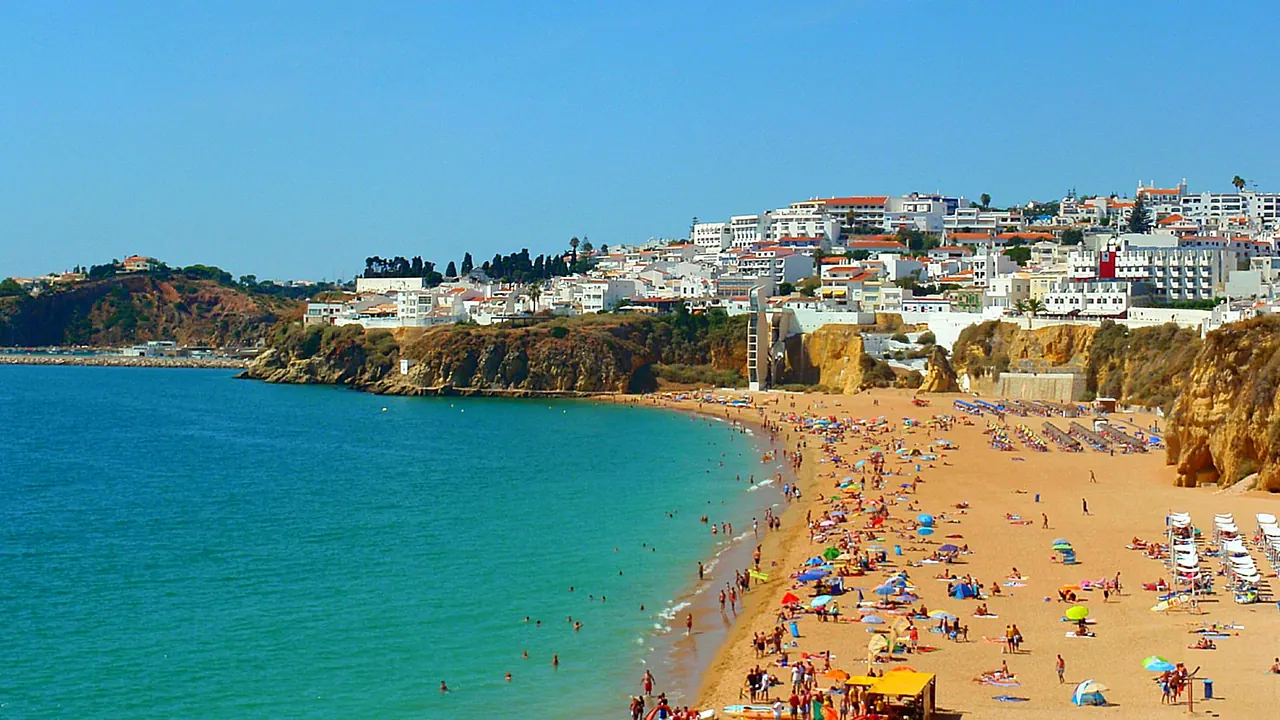
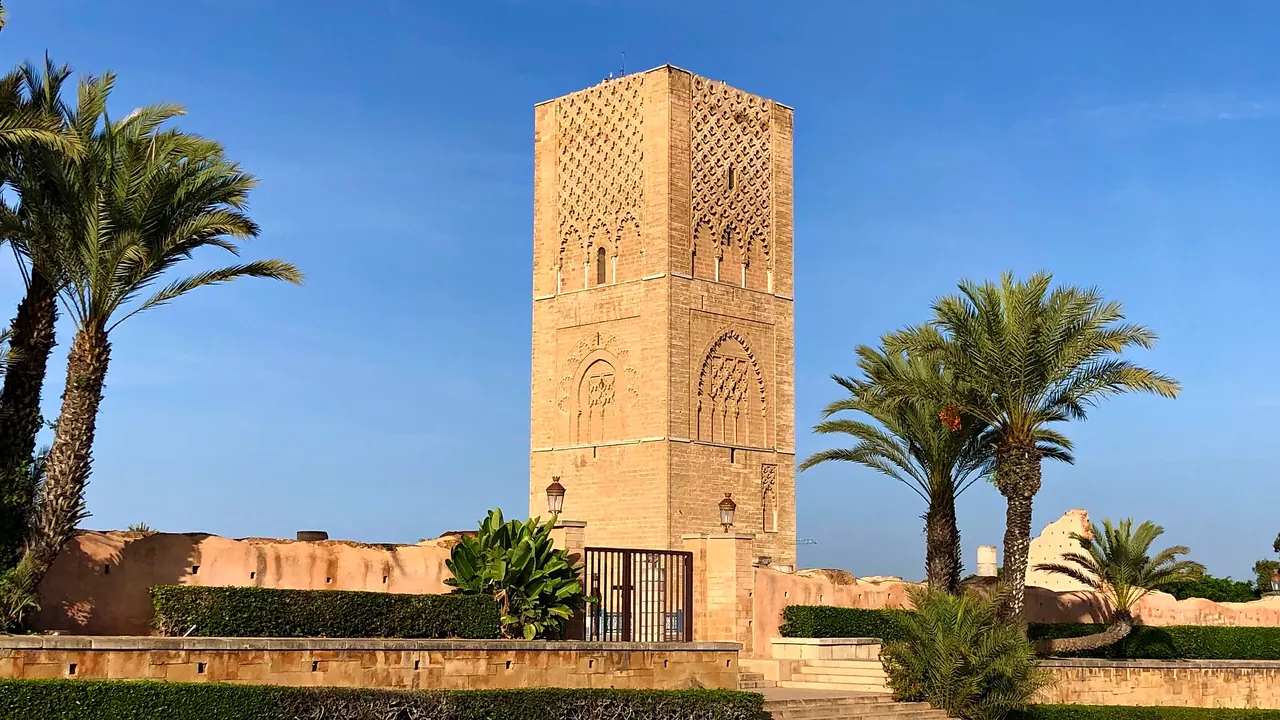
Photos: Albufeira by Jose A., CC BY 2.0, cropped; Rabat by Aemazy, CC BY-SA 4.0, cropped.
Albufeira or Rabat?
Our verdict in twelve categories, each scored against the same fixed benchmark cities, and the climate month by month, so you can choose for your trip.
Choose Albufeira for
- nightlife
- beaches
- nature and the outdoors
Albufeira is the better choice for a summer vacation built around sand and sea. It has long golden beaches and calm coves below ochre cliffs, family resorts with pools and kids' clubs, boat trips into the sea caves at Benagil, and the Strip for anyone who wants loud nights out. It suits families, groups of friends and anyone who would rather swim than sightsee, especially with a hire car for the cliff walks and inland towns.
Choose Rabat for
- culture and sights
- live music and the arts
- getting around
Travellers who want a city with a story will get more from Rabat. Its UNESCO-listed sights, from the Kasbah of the Udayas to the Chellah, need a few unhurried days, and the medina is calm, with gentle haggling and a hammam close by. Daily costs are low and the centre is flat and walkable. The train puts Casablanca, Meknes and Tangier within reach without a car. It is a quiet capital for culture and easy exploring, not for beach days or late nights.
Scoreboard
Twelve categories on one fixed scale from 0 to 100. The shaded stretch is the gap between the two.
Your match
Pick a travel style or drag the sliders, and both match scores follow your weighting.
Too close to call, 2 points apart
Wins on nightlife and beaches with your weighting.
Wins on culture and sights and live music and the arts with your weighting.
What matters to you?
Category by category
What the scores mean for a trip.
Beaches & swimming
The two cities share an ocean but offer very different beaches. Albufeira is built on its sand. Praia dos Pescadores lies right below the old town, and Falésia and Oura stretch east beneath sandstone cliffs. Lifeguards, sunbeds and generally calm, clear water make it easy to spend whole days by the sea, as long as you walk past the crowded central stretches in high summer.
Rabat's city beach under the kasbah walls is a local scene of football, surf lessons and family outings, and the currents keep swimmers close to shore. The calmer sand at Temara, Harhoura and Skhirat is a taxi ride south. Swimwear is also more modest there, so it is more of an afternoon out than a beach vacation.
Food & drink
Rabat eats better, mainly because its everyday cooking is the real thing: tagines, Friday couscous, harira, and msemen and snail broth from evening stalls, with café terraces and pastry shops in between. Alcohol is the catch, as it is served mostly in hotels and a few restaurants.
In Albufeira you have to pick your way through the multilingual menus of full breakfasts and curry around the Strip. Once you do, there are grilled sardines, clam cataplana and octopus in plain places near the fishermen's beach, and local wine with every meal.
Culture & sights
This is the widest gap between them. Rabat's monuments are listed by UNESCO as an ensemble. They include the blue-and-white Kasbah of the Udayas with its Andalusian garden, the unfinished Hassan Tower beside the Mausoleum of Mohammed V, and the stork-topped ruins of Roman Sala at the Chellah, set between an old medina and an art deco Ville Nouvelle.
Albufeira's whitewashed lanes, clock tower and two small museums make a pleasant early-evening wander, but nothing more. Visitors with an interest in the past get in the car for Silves or Tavira.
Nightlife
Albufeira is made for a night out and Rabat is not. Along the Strip in Montechoro, neon bars, karaoke and clubs run until dawn in summer for a young crowd that includes many stag and hen groups, while Oura and the old town square offer a gentler mix. Much of the Strip shuts in winter.
Rabat's evenings are spent over mint tea, on walks along the Bou Regreg and on strolls through the medina. Drinks are found in hotel bars and a few lounges in Agdal, and anyone wanting a club goes to Casablanca.
Nature & outdoors
Albufeira has the more dramatic landscape. Its limestone coast of arches, sinkholes and sea caves can be explored by kayak from the marina or on foot along the Seven Hanging Valleys trail, and the cork-oak hills of Monchique are about an hour inland.
Rabat's setting is gentler: the estuary for paddling, surf schools at the river mouth, easy cycling in the vast Maamora cork forest and birdwatching at Sidi Boughaba. Its real mountains are several hours away.
Day trips
Both cities make good bases, but you reach the day trips in different ways. From Albufeira the outings are mainly by car, to small Algarve towns such as Moorish Silves with its red castle, Loulé's market hall and Tavira's Roman bridge. They are pleasant but much alike, and the slow buses make a hire car almost essential.
From Rabat the train does the work, and the places are bigger and more varied: the Hassan II Mosque in Casablanca, the kasbah in Tangier, the imperial gates of Meknes, and Salé's medina, a short tram ride away.
Good for families
Albufeira is set up for a family week by the pool and the sea. Zoomarine is just outside town, several water parks are a short drive away, and many hotels have kids' clubs and shallow pools. The steep old town and the noise of the Strip are the drawbacks, which is why most families stay at Galé or Falésia.
Rabat is calm and friendly towards children, and the tram makes outings easy, but beyond the zoo and the gardens there is little aimed at them. The rough city beaches also need close watching.
Getting around
Rabat is far easier to get around. The medina, the kasbah, the Hassan Tower and the Ville Nouvelle lie close together on flat ground, the tram and blue petit taxis cover the rest, and Rabat Ville station is in the centre.
Albufeira's centre is walkable but steep, with a lift and an escalator to help you up from the beach. The town stretches for kilometres of hotel zones with patchy buses, and the station is about 6km inland. Taxis in the evening and a hire car for exploring are the norm.
Shopping & style
Rabat gives you more to buy that is worth taking home. Rue des Consuls is lined with dealers in deep-coloured local pile carpets, leather, brass and embroidery, the bargaining is relaxed, and Salé across the river is known for its pottery.
Albufeira's lanes mostly sell beachwear, souvenirs and football shirts. The better buys are painted pottery, cork goods and medronho, and for everyday fashion people drive to the mall at Guia.
Affordability
Rabat costs less day to day. Medina meals, café stops, the tram and taxis are all cheap, and the main sights charge little. Hotels and drinks are the exceptions, since as a capital it has more business hotels than budget riads and alcohol is expensive.
Albufeira is reasonable for a Western European resort, with cheap set menus, beer and local wine. Its costs swing hard with the seasons, though: July and August are expensive, while the same apartments are a bargain from October to May.
Live music & performing arts
Rabat has the stages. The Mohammed V National Theatre and the Grand Theatre on the river put on Arab music and theatre, though not to a regular schedule, and the annual Mawazine festival fills open-air stages across the city with pop, Gnawa and African acts.
Albufeira offers tribute bands, hotel cabaret and fado dinner shows, plus free concerts by the fishermen's beach in summer. Anyone wanting real fado goes elsewhere.
Wellness & relaxation
Rabat is more restful in both ritual and pace. Neighbourhood hammams in the medina and Salé offer steam and a black-soap scrub, and hotel spas offer gentler versions. The city's tidy boulevards, the kasbah garden and evening walks by the river keep the pace slow.
Albufeira has no bathing tradition, so wellness means resort spas. Calm depends on staying at the cliff-top hotels or visiting in winter, and the thermal waters at Caldas de Monchique are an hour away.
When should you go?
Pick your month. The climate figures are measured averages, not a forecast.
Albufeira in July
Rabat in July
Daytime high, °C
Rainfall in the month, mm
Where the figures come from
Albufeira's temperatures are measured 26 km from the centre, at Faro / Aeroporto.
Albufeira has no rain gauge within 25 km of the centre, so its rainfall comes from a gridded climate dataset read at the city rather than from a gauge further away.
Temperature and rainfall are climate normals, averaged over the years shown. Albufeira: 1991-2020 normals, Faro / Aeroporto (26.4 km from centre). Rabat: 1991-2020 normals, Rabat-Sale (7.6 km from centre).
Albufeira has the stronger beach summer. From June to September it is dry and very sunny, and the sea is comfortable for swimming from June to early October. The peak is hot, though. July and August reach about 29°C, which makes the old town's steep lanes and the cliff walks hard work at midday, so sightseeing belongs to the early morning and evening. Rabat's summer is a degree or two milder and better for walking the medina and the ruins. Its sea is actually the warmer of the two, reaching about 23°C in August, but Albufeira gets noticeably more sunshine.
The rain comes back to both in October and is heaviest in November and December, with about 95mm in Albufeira's wettest month and slightly more in Rabat's. Rabat's winter days are a couple of degrees warmer, at around 18°C in January, so it is the better choice for sightseeing on foot from November to March. Albufeira's quiet, sunny winter is for walks along the sand rather than swimming. Spring and autumn suit both: the cliff walks in one, the medina and the Chellah in the other.
Which traveller are you?
For a beach and sun trip, Albufeira is the clear pick. It has a whole coastline of golden sand, sheltered coves and generally calm, lifeguarded water. Rabat's beaches face strong swell and are better for surfing or an afternoon stroll than for a week of sunbathing.
For a culture and arts trip, choose Rabat. Its Almohad gates, the Hassan Tower, the Chellah ruins and a modern art museum fill several days, and its national theatres host concerts. In Albufeira the sights take a single morning, so history means day trips by car.
On a family trip with young children, Albufeira is the easier choice. Zoomarine, water parks, shallow hotel pools and calm beaches keep children busy for a week. Rabat is welcoming and low-stress, with a zoo and gardens, but offers little else aimed at children.
Before you go
| Measure | Albufeira | Rabat |
|---|---|---|
| Official language | Portuguese | Arabic, Standard Moroccan Tamazight |
| Currency | Euro (EUR) | Moroccan Dirham (MAD) |
| Sockets | CF230 V, 50 Hz | CE50 Hz |
| Driving side | Right | Right |
| Time zone | UTC, UTC+1 in summer | UTC+1 |
| Emergency number | 112 | Police 19/112, ambulance 15, fire 15 |
| Elevation | 22 m | 87 m |
| Main airport | Faro - Gago Coutinho International Airport (FAO)26 km from centre91 non-stop destinations | Rabat-Salé Airport (RBA)9 km from centre45 non-stop destinations |
| Public holidays this year | 14 days | 11 days |
By the numbers
| Measure | Albufeira | Rabat |
|---|---|---|
| City population | 44,168 | 515,619 |
| People per km² | 314 | 4,370 |
| Museums within 10 km | 1 | 7 |
| UNESCO World Heritage sites within 50 km | 0 | 1 |
| Swim season, months above 21 °C | None | 4 months |
Where else could you go?
Every comparison below shares a destination with this one, so you can follow Albufeira or Rabat somewhere new.
- Farovs Albufeira
- Lagos, Portugalvs Albufeira
- Casablancavs Rabat
- Fesvs Rabat
- Cadizvs Albufeira
- Chefchaouenvs Rabat