Photos: Albufeira by Jose A., CC BY 2.0, cropped; Salamanca by Jiuguang Wang, CC BY-SA 3.0 ES, cropped.
Albufeira or Salamanca?
Our verdict in twelve categories, each scored against the same fixed benchmark cities, and the climate month by month, so you can choose for your trip.
Choose Albufeira for
- beaches
- families
- nature and the outdoors
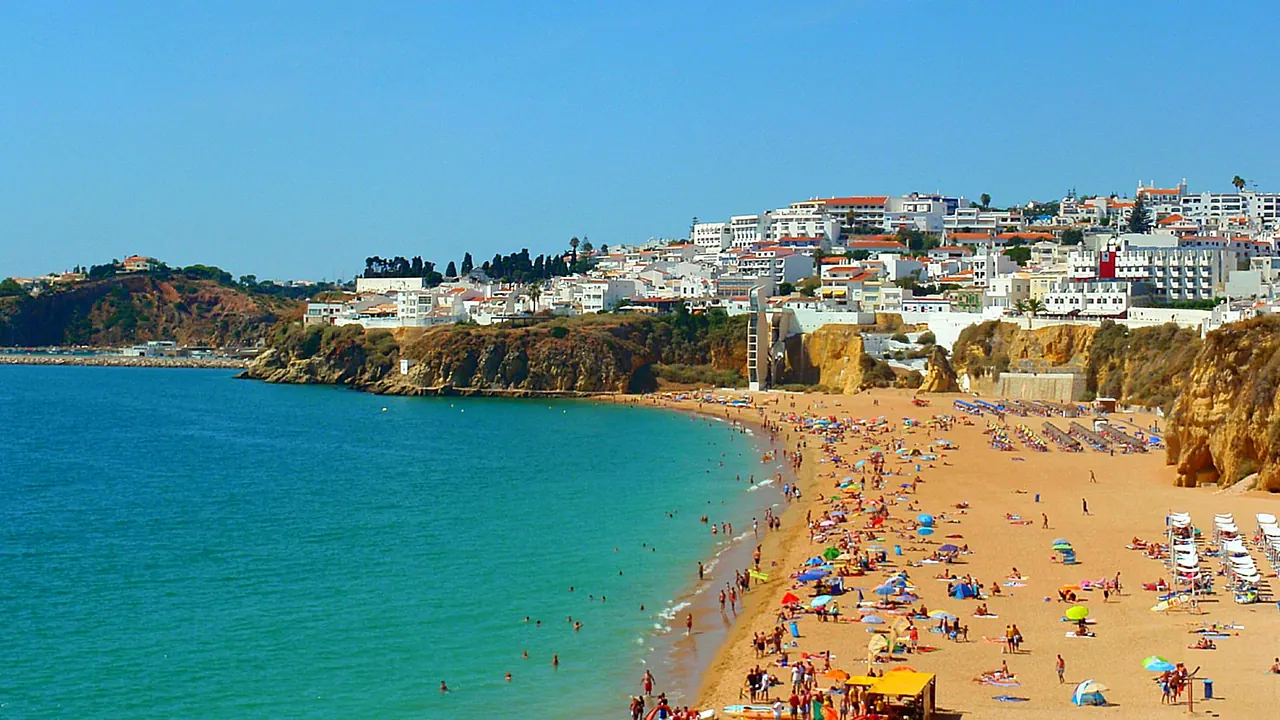
Albufeira is the choice for a beach vacation. Golden sand and sandstone coves lie right below the town, the water is calm from June into early October, and cliff walks and cave boat trips are close by. Its resort hotels are built around families with children, and groups who want a loud night out have the Strip. If you want history, you'll find it on outings to other towns rather than on your doorstep.
Choose Salamanca for
- culture and sights
- getting around
- live music and the arts
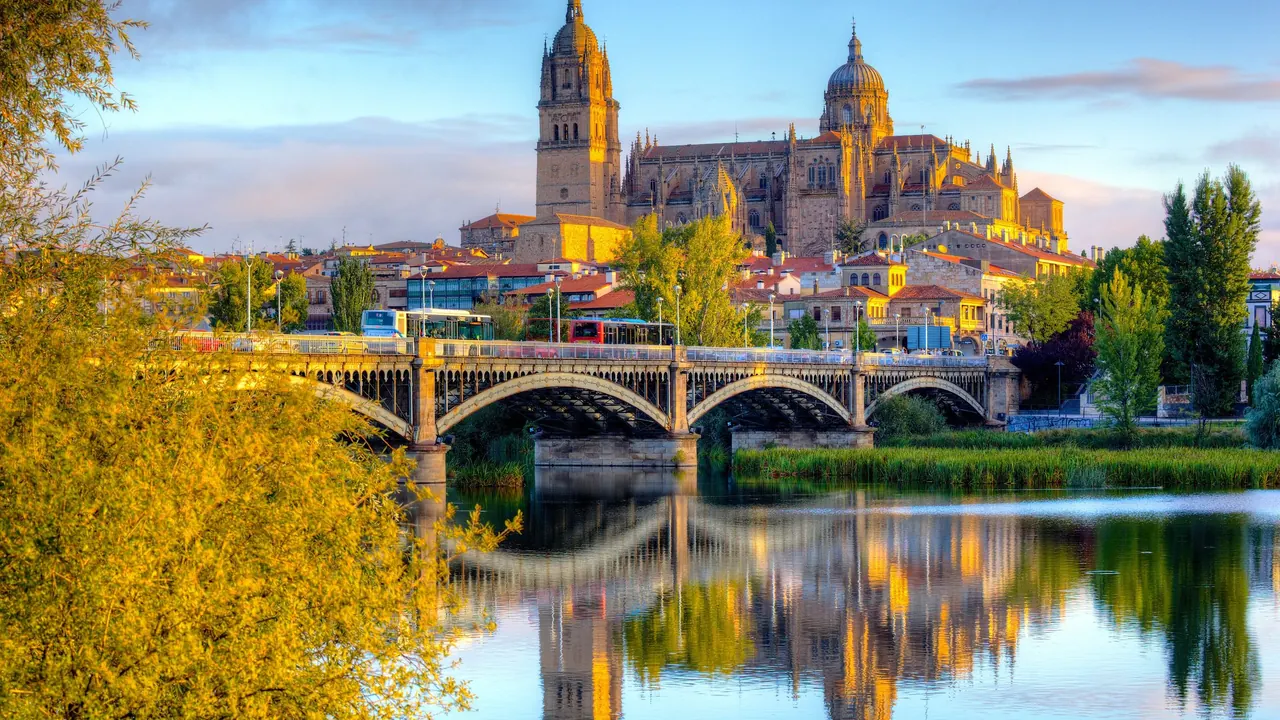
Travellers who want a city to explore on foot should pick Salamanca. The golden-stone old town, the Plaza Mayor, the University and the twin cathedrals fill a few unhurried days, and tapas bars and ham fill the evenings. Ávila, Zamora and the mountain villages make strong outings. There is no sea, though, and children will find little made for them.
Scoreboard
Twelve categories on one fixed scale from 0 to 100. The shaded stretch is the gap between the two.
Your match
Pick a travel style or drag the sliders, and both match scores follow your weighting.
Wins on beaches and families with your weighting.
Wins on culture and sights and getting around with your weighting.
What matters to you?
Category by category
What the scores mean for a trip.
Beaches & swimming
This is where the two differ most. Albufeira has golden sand at the foot of the old town at Pescadores and Peneco, with long beaches running east through Oura to Falésia and small coves such as São Rafael to the west. Most beaches have lifeguards and the water is usually calm in summer.
Salamanca lies far inland on the Castilian plain. Summer swimming there means a municipal pool or a river beach on the Tormes, fine for a hot afternoon but no reason to go.
Food & drink
Salamanca eats better. Its evenings are built around tapas counters near the Plaza Mayor and Calle Van Dyck, with ibérico ham from nearby Guijuelo, hornazo, suckling pig and wines from Toro and Ribera del Duero. The weak spot is seafood.
That happens to be Albufeira's strength: grilled sardines, bream, octopus and cataplana near the fishermen's beach and in the old town backstreets. The catch is that much of the town feeds a package-tour crowd, so you have to look for the good meals.
Culture & sights
Salamanca is a heritage city in its own right. Its UNESCO-listed old town of golden sandstone has the baroque Plaza Mayor, the carved University façade, two cathedrals side by side and the Casa de las Conchas, and floodlighting brings the stone to life after dark.
Albufeira's whitewashed lanes, Moorish wall remnants, clock tower and two small museums take about a morning. Visitors interested in history spend most of their time in older towns elsewhere in the Algarve.
Nightlife
Both cities have late, cheap nights out for a young crowd, but the crowds differ. Albufeira's nightlife centres on the Strip in Montechoro, with neon bars, karaoke, sports pubs and clubs full of British and Irish stag and hen groups until dawn in summer. Much of it shuts from November to March.
Salamanca runs on students. The night starts with tapas, moves to packed bars around the Plaza Mayor and Calle Bordadores, and ends in small clubs open past 3am, from Thursday to Saturday in term time. It goes quiet in high summer, just when Albufeira is at its loudest.
Nature & outdoors
Albufeira has the more striking landscape close at hand. Its limestone coast has eroded cliffs, arches and sea caves, the Seven Hanging Valleys trail is about half an hour away, and boat or kayak trips go to the Benagil grotto. The Ria Formosa lagoons and the Monchique hills add birdwatching and gentle hikes.
Right around Salamanca there is only the flat Meseta and the paths along the river. The wilder country, the forests of the Sierra de Francia and Las Batuecas and the granite canyon of the Arribes del Duero, starts about an hour away and needs a car.
Day trips
Salamanca has the stronger list. Ávila's medieval walls, Zamora's Romanesque churches, fortified Ciudad Rodrigo and the half-timbered villages of La Alberca and Mogarraz are all within about an hour, and Segovia is possible on a long day.
Albufeira's outings are pleasant rather than memorable: Silves with its red castle, Loulé's market hall, Faro's walled centre and Tavira's Roman bridge. In both regions, a car makes the villages much easier to reach.
Good for families
Albufeira is the easier family base. Zoomarine and several water parks are a short drive away, wide lifeguarded beaches such as Oura and Galé are usually calm, and many hotels have kids' clubs and shallow pools. Families should stay away from the Strip, and the steep old town is hard work with a pushchair.
Salamanca is safe and largely pedestrian, and children are welcome on the café terraces late in the evening. Apart from hunting for the carved frog and astronaut and climbing the cathedral towers, though, there is little aimed at them. It works best as a stop of a day or two.
Getting around
Salamanca is far simpler. Almost everything lies in a pedestrian old town you can cross on foot in about 20 minutes, and trains link the city with Madrid and Valladolid.
Albufeira's walkable centre is small and steep, with stairs, a lift and an escalator up from the beach. The resort spreads for kilometres through Montechoro, Oura and Galé, and buses link these areas only patchily. The station is 6km inland, so most visitors rely on taxis or a hire car.
Shopping & style
Neither city is a shopping destination, though Salamanca offers a little more. It has high-street chains and a department store on the streets north of the Plaza Mayor, ibérico ham and cheese from the Mercado Central, and charro silver filigree jewellery. Albufeira's lanes sell mostly beachwear and souvenirs, painted pottery, cork goods and medronho are the better buys, and for everyday shopping people drive to the mall at Guia.
Affordability
Salamanca is easier on the wallet. Its many students keep tapas and drinks cheap, a free tapa often comes with a drink, and walking everywhere saves on transport, although admission to the sights adds up.
Albufeira is reasonable for a Western European resort, with cheap set menus and plenty of self-catering apartments. In July and August, though, room prices rise sharply and taxis and car hire add up. Out of season, its apartments are a real bargain.
Live music & performing arts
Salamanca has a modest but real stage life. Touring theatre, dance and flamenco play at the Teatro Liceo, the university holds choral concerts in its historic halls, and caped student tunas sing under the Plaza Mayor arcades. Albufeira offers resort entertainment instead: cover bands, hotel cabaret and fado dinner shows, plus free summer concerts on the square by the fishermen's beach.
Wellness & relaxation
Neither city has a spa tradition of its own, but Salamanca suits a slow stay a little better. Long lunches, a real siesta and quiet cloisters at San Esteban and Las Dueñas set the pace. The old spa hotel at Ledesma is about half an hour away, and Baños de Montemayor, used since Roman times, is further south.
In Albufeira, how calm it feels depends on where you stay. The cliff-top resorts and Galé are restful, and the area around the Strip is not. Hotel spas and the mild, sunny winter suit a quiet stay, and the thermal waters of Caldas de Monchique are about an hour inland.
When should you go?
Pick your month. The climate figures are measured averages, not a forecast.
Albufeira in July
Salamanca in July
Daytime high, °C
Rainfall in the month, mm
Where the figures come from
Albufeira's temperatures are measured 26 km from the centre, at Faro / Aeroporto.
Albufeira has no rain gauge within 25 km of the centre, so its rainfall comes from a gridded climate dataset read at the city rather than from a gauge further away.
Temperature and rainfall are climate normals, averaged over the years shown. Albufeira: 1991-2020 normals, Faro / Aeroporto (26.4 km from centre). Salamanca: 1991-2020 normals, Salamanca / Matacan (13.9 km from centre).
Albufeira's swimming season runs from June to early October. The days are hot and the Atlantic reaches about 20°C, which feels fresh rather than warm. Summer is almost rainless and very sunny. Rain sets in from October and is heaviest in December, at about 95mm. Winters stay mild, around 16°C in January. That is good weather for coastal walks and quiet stays, but not for the beach.
Salamanca, up on the plain, has much bigger swings. July reaches about 31°C, too hot for long afternoons of sightseeing, and January highs of about 9°C bring cold, clear days. For walking the streets, June and early September are the best balance: warm, sunny and fairly dry. May is pleasant but showery, and October is the city's wettest month. From November to March, Albufeira is much milder and sunnier than Salamanca.
Which traveller are you?
On a beach and sun trip, Albufeira is the obvious pick. Days on the sand pair easily with a kayak trip into the sea caves or a dolphin-watching boat. Salamanca, hot in July but far from any coast, cannot compete.
For a culture and arts trip, Albufeira sends you driving to other towns for history, while Salamanca keeps it on your doorstep. Afternoons climbing the cathedral towers end with tunas singing under floodlit arcades, and Ávila or Zamora make easy outings.
On a family trip with young children, Albufeira is the better base if you stay in a quieter beach area away from the Strip and hire a car. Salamanca is easier on foot, but its July afternoons are scorching.
Before you go
| Measure | Albufeira | Salamanca |
|---|---|---|
| Official language | Portuguese | Spanish |
| Currency | Euro (EUR) | Euro (EUR) |
| Sockets | CF230 V, 50 Hz | CF230 V, 50 Hz |
| Driving side | Right | Right |
| Time zone | UTC, UTC+1 in summer | UTC+1, UTC+2 in summer |
| Emergency number | 112 | 112 |
| Elevation | 22 m | 798 m |
| Main airport | Faro - Gago Coutinho International Airport (FAO)26 km from centre91 non-stop destinations | Adolfo Suárez Madrid–Barajas Airport (MAD)184 km from centre241 non-stop destinations |
| Public holidays this year | 14 days | 12 days |
By the numbers
| Measure | Albufeira | Salamanca |
|---|---|---|
| City population | 44,168 | 146,110 |
| People per km² | 314 | 3,690 |
| Museums within 10 km | 1 | 13 |
| UNESCO World Heritage sites within 50 km | 0 | 1 |
| Swim season, months above 21 °C | None | - |
Where else could you go?
Every comparison below shares a destination with this one, so you can follow Albufeira or Salamanca somewhere new.
- Farovs Albufeira
- Lagos, Portugalvs Albufeira
- Segoviavs Salamanca
- Madridvs Salamanca
- Toledovs Salamanca
- Cadizvs Albufeira