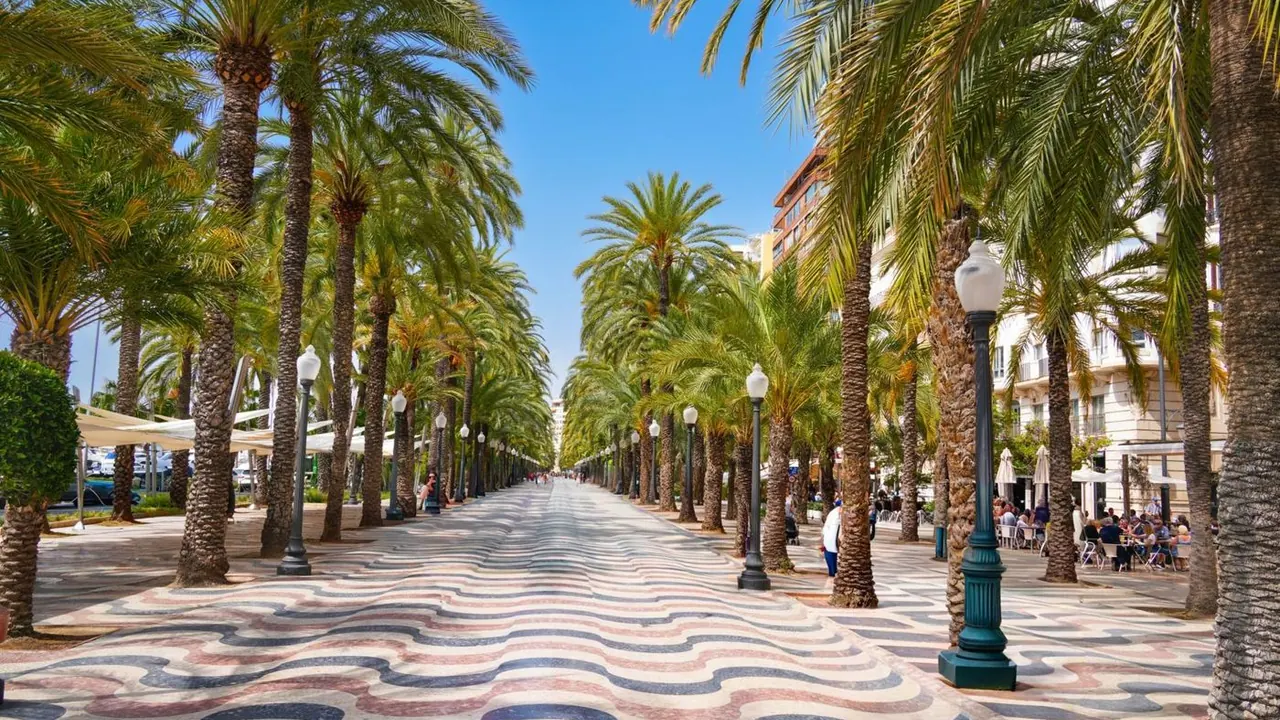
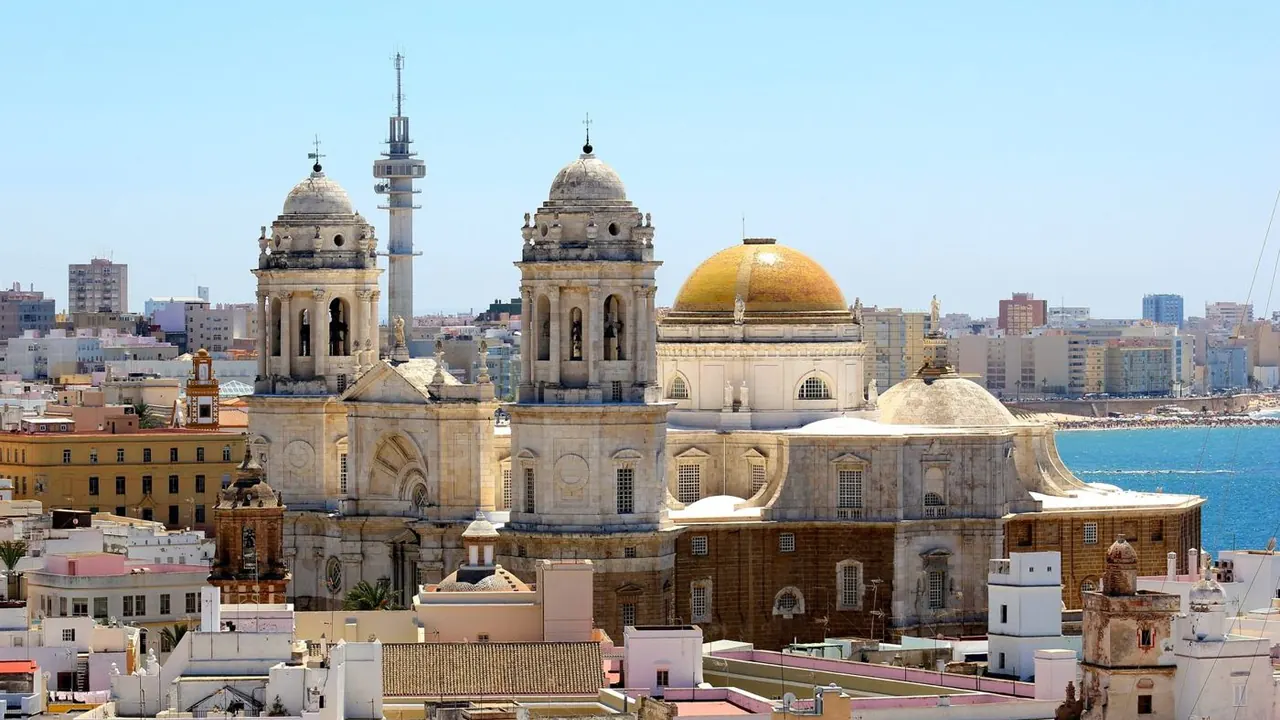
Photos: Alicante by Emilio Sánchez Hernández, Pexels License; Cadiz by Bronch, CC BY-SA 3.0 ES, cropped.
Alicante or Cadiz?
Our verdict in twelve categories, each scored against the same fixed benchmark cities, and the climate month by month, so you can choose for your trip.
Choose Alicante for
- nightlife
- shopping
- families
Alicante suits travellers who want the easy Mediterranean version of a beach stay: warm, calm water a short walk or tram ride from the centre, a livelier evening scene in El Barrio and around the port, and more for children within reach, from the shallow sands of San Juan to the parks near Benidorm. It is the more practical choice for families and for groups who want to go out after dinner, though its sights are covered in a couple of days.
Choose Cadiz for
- culture and sights
- live music and the arts
- day trips
Cadiz rewards those who come for the place itself. The old town on its peninsula carries three thousand years of history, flamenco is still sung in the peñas of Santa María, and Jerez, Seville and the white towns make it the stronger base for exploring. Choose it for a slower, more atmospheric trip of fried fish, sherry and Atlantic sunsets, and accept quieter nights outside summer and Carnival.
Scoreboard
Twelve categories on one fixed scale from 0 to 100. The shaded stretch is the gap between the two.
Your match
Pick a travel style or drag the sliders, and both match scores follow your weighting.
Too close to call, 1 point apart
Wins on nightlife and shopping with your weighting.
Wins on culture and sights and live music and the arts with your weighting.
What matters to you?
Category by category
What the scores mean for a trip.
Beaches & swimming
On sand alone the two are a close match, and the difference is the sea. Alicante's Mediterranean is warmer and calmer, with Postiguet right below the castle and the long shallow stretch of San Juan a tram ride away, plus a boat to Tabarca for clear water and rocks. Its city beaches do get packed in high summer.
Cadiz looks out on the Atlantic, which is cooler and livelier, and the levante wind can make some days hard work. In return, La Caleta has real old-town character, Playa Victoria is wide and walkable, and the wild strands of the Costa de la Luz down to Bolonia are far emptier than anything on the Costa Blanca.
Food & drink
The two eat equally well, but around different things. Alicante is a rice city, with arroz a banda, black rice and the egg-crusted arroz con costra shared at long lunches, and its modernist market hall sells red prawns from Dénia, mojama and Jijona turrón. Tapas rounds in the old town come with wines from the Alicante and Valencian denominations.
Cadiz is about fried fish and tuna: paper cones from the freidurías, shrimp fritters and almadraba bluefin in the bars of La Viña, with manzanilla and fino from the sherry towns nearby. Its range is narrower, though, so anyone who tires of seafood and tapas will find few alternatives inside the city.
Culture & sights
Cadiz has much more to see. As one of the oldest cities in Western Europe, it layers Phoenician sarcophagi, a half-buried Roman theatre, the watchtowers of its Americas trading days, the gold-domed cathedral and the room where the 1812 constitution was signed into a compact, walkable peninsula.
Alicante's highlights are the Santa Bárbara fortress, the flowerpot steps of Santa Cruz and the well-presented MARQ. These are enjoyable, but they make a shorter list, and the city works better as a beach base with sights than as a sightseeing destination.
Nightlife
Alicante is the better place to go out. El Barrio's small bars fill the steps under the castle until late, the port and marina add bigger bars and clubs for a dressier crowd, and a student and international population keeps things going outside summer too. The Hogueras in late June bring several nights of street parties.
Cadiz is gentler: tapas rounds in La Viña, squares full on warm evenings and seafront terraces along Playa Victoria in summer. Its great exception is February Carnival, a ten-day costumed party that is livelier than anything in Alicante. Outside that, the nights are quiet.
Nature & outdoors
There is little between them, but the landscapes differ. Alicante has dry mountains close behind the coast, with hiking on Puig Campana and the Sierra de Aitana, climbing at Sella, and snorkelling and diving in the Tabarca marine reserve.
Cadiz looks to water and wind: the salt marshes of the bay for birdwatching and kayaking, kitesurfing and whale-watching out of Tarifa, the cliff-top pines of La Breña and the Doñana wetlands, with the Sierra de Grazalema for mountain walks further off.
Day trips
Cadiz is the stronger base. Jerez with its bodegas and riding school is half an hour by train, the ferry reaches El Puerto de Santa María, Seville is an easy day out, and by car Vejer, Arcos and the Roman ruins of Baelo Claudia are all close.
Alicante has good options too: Elche's UNESCO palm grove, the painted houses of Villajoyosa, Altea and the castle village of Guadalest. But its biggest draw, Valencia, takes longer to reach than Seville does from Cadiz, and nothing nearby matches the sherry towns and white villages.
Good for families
Alicante does more for children. The shallow, calm water at San Juan suits small swimmers, the palm-lined promenade is good for scooters, and the theme park, water parks and marine park near Benidorm plus the animal park outside Elche fill the days when the beach palls.
Cadiz is pleasant with toddlers, thanks to its flat, car-light old town, shady parks such as the Genovés and the wide Playa Victoria. But there is no zoo, aquarium or theme park, and older children will have to make do with castle walls and the camera obscura.
Getting around
Both are easy without a car, in different ways. Alicante's centre is a short walk end to end, and its coastal tram runs on to San Juan and up the Costa Blanca to Benidorm and Dénia, which is handy for beach-hopping.
Cadiz has the flatter, more traffic-free old town, trains leave straight from it for Jerez and Seville, and a catamaran crosses the bay. Its weak point is the Costa de la Luz and the white villages, which really need a hire car.
Shopping & style
Neither city is a shopping destination, but Alicante goes a little further. The streets around Avenida Maisonnave have department stores and Spanish chains, and Elche's shoe factory outlets are half an hour away.
Cadiz keeps to family-run shops off Calle Ancha and the flower stalls by the market, with fans, flamenco fashion and sherry as its best souvenirs. Serious shopping means going to Seville.
Affordability
Costs are much the same, and so is the pattern: eating out is cheap and rooms are the main expense. In Alicante that means set lunches and rice dishes away from the seafront, while in Cadiz it means freidurías, market counters and cheap glasses of sherry.
Both get expensive at the same seasons, high summer plus their own big festival, the Hogueras in June or Carnival in February. Cadiz's old town has few hotels, so staying out by Playa Victoria saves money, whereas Alicante's off-season rooms are easy to find.
Live music & performing arts
Cadiz has a living tradition that visitors come for. It is a cradle of flamenco, with alegrías sung in the members' peñas of the Santa María quarter, and the Gran Teatro Falla stages the satirical chirigota contest at Carnival as well as an autumn Ibero-American theatre festival.
Alicante's scene is smaller and mostly in Spanish, with plays and musicals at the Teatro Principal. Its one advantage is classical music: the ADDA auditorium has a resident symphony orchestra, something Cadiz lacks.
Wellness & relaxation
Neither city has its own bathing culture, and rest in both means a long lunch, a siesta and a sunset walk. The difference is in the extras close by. From Alicante, the Roman-era thermal springs of Archena and Fortuna take about an hour by car.
From Cadiz, the sea-water spas of Novo Sancti Petri and the Arab-style baths in Jerez are both nearer. The sea walls and La Caleta at dusk also make the slower days feel more of an occasion.
When should you go?
Pick your month. The climate figures are measured averages, not a forecast.
Alicante in July
Cadiz in July
Daytime high, °C
Rainfall in the month, mm
Temperature and rainfall are climate normals, averaged over the years shown. Alicante: 1991-2020 normals, Alicante (2.8 km from centre). Cadiz: 1991-2020 normals, Cadiz Bay / Puntales (5.2 km from centre).
Both cities are made for summer by the sea, but they feel different in it. Alicante gets hotter, reaching about 31°C in August, and its Mediterranean warms to around 26°C, so swimming is comfortable from June well into October. Cadiz stays a little fresher at about 28°C, with an Atlantic that tops out near 23°C, which many find more pleasant for walking the streets in July and August. Both are almost rainless and very sunny through midsummer.
The real gap is in the cooler half of the year. Alicante stays dry and bright all winter, which makes it a good choice for mild sightseeing between November and March. Cadiz turns wet from October, with rain peaking at about 89mm in November, so late spring and early autumn are its best months for walking, while its winters are milder in temperature than they are dry.
Which traveller are you?
On a culture and arts trip, Cadiz is the clear pick. Its Phoenician and Roman past, the cathedral, the 1812 constitution and the camera obscura give more depth than Alicante, and flamenco peñas and the Gran Teatro Falla add evenings to match.
For a food and nightlife trip, Alicante has the edge. The rice dishes and tapas are as good as the fish in Cadiz, but the bars of El Barrio and the clubs around the port keep going all year rather than mainly in summer and at Carnival.
On a family trip with children, Alicante works better. Playa de San Juan has shallow, calm water, the tram makes beach days easy, and theme, water and animal parks lie within reach, whereas Cadiz has almost nothing built for children.
Before you go
| Measure | Alicante | Cadiz |
|---|---|---|
| Official language | Spanish | Spanish |
| Currency | Euro (EUR) | Euro (EUR) |
| Sockets | CF230 V, 50 Hz | CF230 V, 50 Hz |
| Driving side | Right | Right |
| Time zone | UTC+1, UTC+2 in summer | UTC+1, UTC+2 in summer |
| Emergency number | 112 | 112 |
| Elevation | 3 m | 11 m |
| Main airport | Alicante-Elche Miguel Hernández Airport (ALC)10 km from centre126 non-stop destinations | Jerez Airport (XRY)31 km from centre25 non-stop destinations |
| Public holidays this year | 13 days | 12 days |
By the numbers
| Measure | Alicante | Cadiz |
|---|---|---|
| City population | 366,221 | 109,950 |
| People per km² | 1,819 | 9,087 |
| Museums within 10 km | 8 | 11 |
| UNESCO World Heritage sites within 50 km | 2 | 0 |
| Swim season, months above 21 °C | 5 months | 3 months |
Where else could you go?
Every comparison below shares a destination with this one, so you can follow Alicante or Cadiz somewhere new.