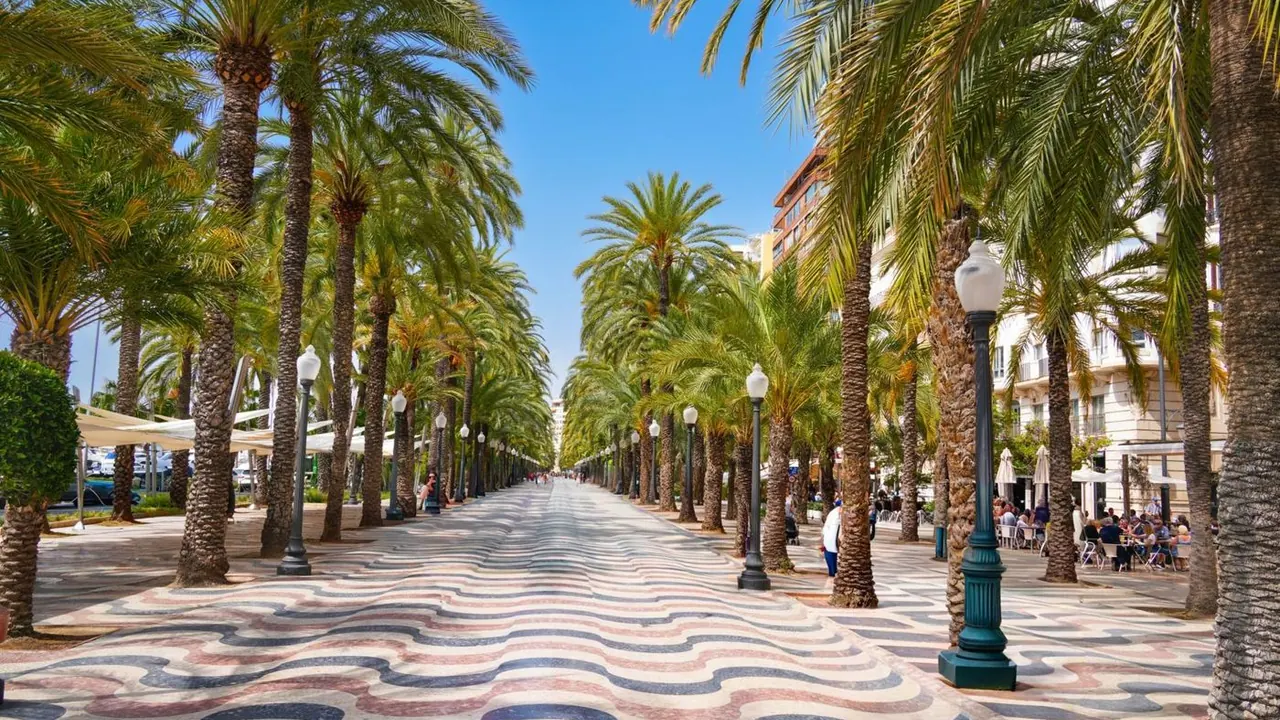
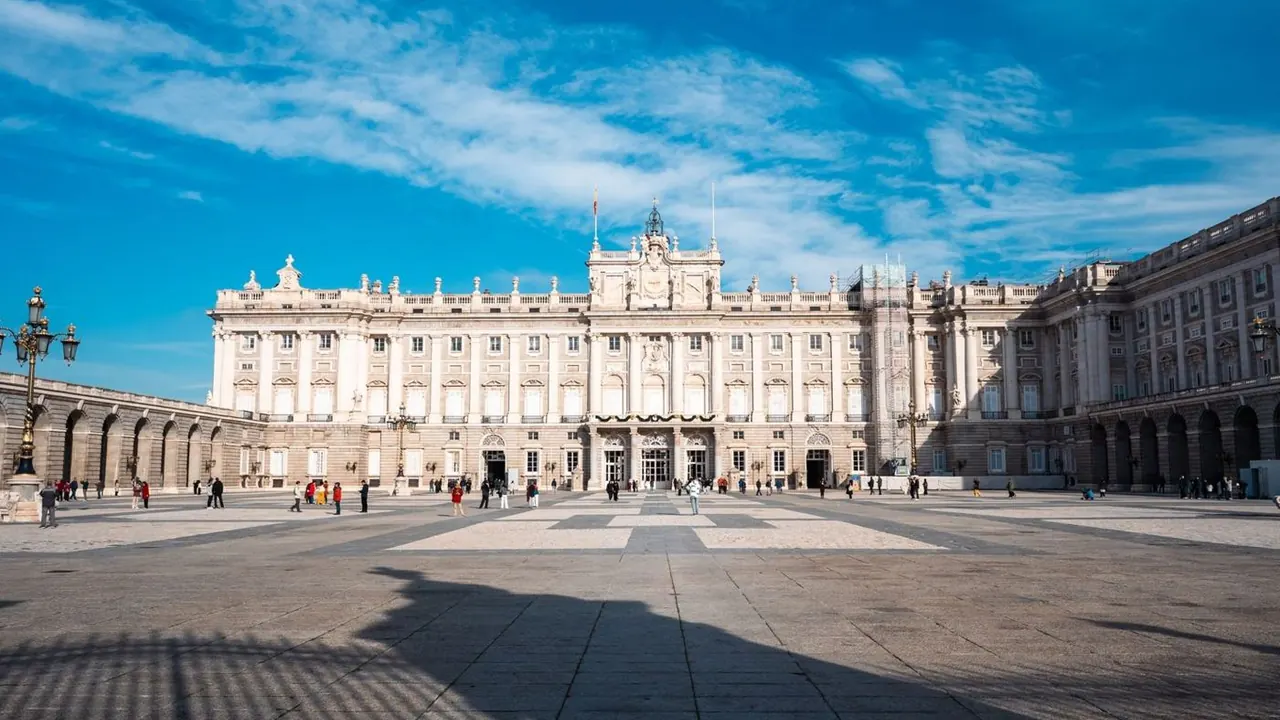
Photos: Alicante by Emilio Sánchez Hernández, Pexels License; Madrid by Mert Ocak, Pexels License.
Alicante or Madrid?
Our verdict in twelve categories, each scored against the same fixed benchmark cities, and the climate month by month, so you can choose for your trip.
Choose Alicante for
- beaches
- prices
- wellness
Alicante suits a trip built around the sea and the sun. The city beaches are a walk or a short tram ride from the old town, the water stays warm well into autumn, and the winters are mild enough for a slow off-season stay. It is also easier on the wallet. Two days cover the sights in its compact centre, which leaves the rest of the stay for swimming, long rice lunches and the coast.
Choose Madrid for
- culture and sights
- live music and the arts
- shopping
For a city break with real depth, Madrid is the stronger choice. The Prado, the Reina Sofía and the Thyssen give it painting that Alicante cannot come close to. The evenings also run later and offer more, from tapas counters to opera, flamenco and clubs that close after dawn. With fast trains to Toledo, Segovia and Salamanca as well, a week here never runs short of things to do, as long as you don't need a beach.
Scoreboard
Twelve categories on one fixed scale from 0 to 100. The shaded stretch is the gap between the two.
Your match
Pick a travel style or drag the sliders, and both match scores follow your weighting.
Wins on beaches and prices with your weighting.
Wins on culture and sights and live music and the arts with your weighting.
What matters to you?
Category by category
What the scores mean for a trip.
Beaches & swimming
Here the gap could hardly be wider. In Alicante the beach is part of the city. Postiguet lies at the foot of the castle, and the tram reaches Playa de San Juan, about 7km of pale sand with calm, shallow water. The boat to Tabarca and the coves up the Costa Blanca add variety, though high summer brings real crowds.
Madrid has no beach within day-trip range. In summer people swim in the big municipal open-air pools and the reservoirs below the Sierra de Guadarrama. If you want a beach on a Madrid trip, you have to add days on the coast, and Alicante could easily be that coast.
Food & drink
Madrid offers far more range. There are tapas crawls through La Latina, Santa Ana and Lavapiés, and hearty Castilian dishes such as cocido and callos. As the capital, it also draws Galician seafood, Basque grills and high-end tasting menus, a breadth Alicante doesn't try to match.
Alicante's strength is narrower and more local: rice. Arroz a banda, black rice and arroz con costra fill long lunches, red prawns are sold at the modernist Mercado Central, and turrón comes from nearby Jijona. It is a fine place to eat, just with fewer styles to choose from.
Culture & sights
For sights, Madrid is in another league. Together, the Prado, the Reina Sofía and the Thyssen-Bornemisza can fill several days, and the Royal Palace, Plaza Mayor and Gran Vía give the city a grand, monumental setting.
Alicante's highlights are the Castillo de Santa Bárbara on its rock, the flowerpot-lined steps of the Barrio de Santa Cruz and the well-presented MARQ archaeological museum. They are worth seeing, but two days covers them, while Madrid's museums alone could take that long.
Nightlife
Both cities eat late and go out later, but Madrid takes it much further. Its nights run past dawn, and each neighbourhood has its own character: rock and indie bars in Malasaña, the gay scene in Chueca, terraces in La Latina and big clubs around Gran Vía and Sol. It keeps going all year.
In Alicante, evenings centre on the small bars of El Barrio under the castle, dressier places by the marina and summer beach bars at San Juan. It is busiest from June to September and during the Hogueras, but there is little club culture.
Nature & outdoors
The two are fairly even outdoors, but the landscapes are very different. Alicante pairs sea with mountains. You can snorkel and dive in the Tabarca marine reserve, kayak in the bay and watch flamingos on the Santa Pola salt lagoons. Within an hour inland there is hiking and climbing around Puig Campana, Aitana and Sella, though you will mostly need a car.
Madrid's outdoors is inland and higher. The granite of La Pedriza and the glacial lakes below Peñalara in the Sierra de Guadarrama are about an hour away, with modest skiing in winter. In town, the Retiro, Casa de Campo and Madrid Río are good for running and cycling.
Day trips
Both make good bases, but Madrid's ring of historic cities is hard to beat. Toledo and Segovia are about half an hour away by high-speed train. Ávila, Salamanca, Cuenca, El Escorial and Aranjuez are all within easy reach, so you could see a different historic town on most days of a week.
Alicante's trips offer fewer monuments and more coast: Elche's UNESCO palm grove, the painted houses of Villajoyosa, white Altea, Guadalest on its rock and the boat to Tabarca. Valencia, about two hours away by train, is the one big-city outing.
Good for families
Families do equally well in both cities, but the trips look different. Alicante is a beach stay, with shallow water at Playa de San Juan, a promenade for scooters, and theme parks and water parks near Benidorm if you have a car.
Madrid is a city outing, with rowing boats and puppet shows in the Retiro, a zoo, aquarium and funfair in Casa de Campo, and lifts at many metro stations. In both, children out late are welcome, and you'll need to plan around the heat of July and August.
Getting around
Madrid is easier to get around over longer distances. Its large, air-conditioned metro reaches every district and runs to the airport, and Atocha and Chamartín stations connect straight to the high-speed network. You won't need a car at all.
Alicante's centre is smaller and easy to walk. The old quarter, port, market and Postiguet are about fifteen minutes apart, and a lift takes you up to the castle. The coastal tram is slow but scenic. You only really need a car for the inland mountains and the more remote coves.
Shopping & style
Madrid is a real shopping destination. It has luxury houses on Calle Serrano in the Salamanca district, flagship stores and department stores around Gran Vía and Preciados, independent and vintage shops in Malasaña and Chueca, and El Rastro on Sundays. Hand-painted fans, guitars and espadrilles add a traditional touch.
Shopping in Alicante is more practical: Spanish chains around Avenida Maisonnave, edible souvenirs from the Mercado Central and esparto baskets at the street markets. The best bargains are out of town, at the shoe outlets in Elche.
Affordability
Your budget goes further in Alicante. Set lunches, rice dishes away from the seafront and cheap trams keep daily costs modest, and the castle grounds are free. Rooms are the main expense, and they get much cheaper between October and May.
Madrid sits in the middle for a capital. Eating out is good value thanks to the menú del día and tapas, and the great museums have free entry at set times. Hotels, though, cost what a major city charges and go up around big events.
Live music & performing arts
Madrid's stage life is far richer. There is opera at the Teatro Real, orchestras at the Auditorio Nacional, zarzuela at its own theatre, musicals along Gran Vía and flamenco in the old-centre tablaos every night, so filling an evening is easy.
Alicante has the nineteenth-century Teatro Principal and the ADDA concert hall, home to the provincial orchestra, with most performances in Spanish, plus street music during the Hogueras. That is enough for a night out, but not a reason to choose the city.
Wellness & relaxation
Neither city is built for rest, and neither has a bathing culture of its own. Relaxing in Alicante is slower and happens outdoors: a seafront walk, the shaded Explanada and a siesta. The Roman-era thermal springs at Archena and Fortuna are about an hour away by car.
In Madrid, relaxing is indoor and urban. You can visit one of the Arab-style bathhouses under brick vaults in the old centre, or spend a quiet afternoon in the Retiro or the Botanical Garden, away from the city's noisy pace.
When should you go?
Pick your month. The climate figures are measured averages, not a forecast.
Alicante in July
Madrid in July
Daytime high, °C
Rainfall in the month, mm
Temperature and rainfall are climate normals, averaged over the years shown. Alicante: 1991-2020 normals, Alicante (2.8 km from centre). Madrid: 1991-2020 normals, Madrid (1.7 km from centre).
Alicante is a coastal city you can visit all year. Winter days are mild, around 17°C in January, and spring warms up steadily. The sea is warm enough for swimming from June into October and reaches about 26°C in August. July and August are hot, very dry and the sunniest weeks of the year, so sightseeing is best done early in the morning. What little rain the city gets falls mostly in September and through the autumn.
Madrid sits on a high plateau, and its seasons swing much further. Winters are cool, with highs near 10°C in January. Summer brings dry heat of around 33°C in July, which makes long walks between districts hard work. Spring and early autumn are the comfortable months for walking the city, although October is the wettest month at about 64mm and late spring can be showery too. For winter sun, Alicante is clearly the warmer choice.
Which traveller are you?
On a beach and sun trip, Alicante wins outright. Postiguet lies below the castle, the tram runs to the long sands of Playa de San Juan, and Tabarca adds clear water, while Madrid has only pools and reservoirs.
For a culture and arts trip, Madrid is the obvious choice. The Prado, the Reina Sofía and the Thyssen stand on one avenue, and evenings bring opera at the Teatro Real, zarzuela and serious flamenco, which Alicante's small theatre scene cannot match.
On a shopping trip, Madrid gives you far more: luxury labels on Calle Serrano, flagship stores along Gran Vía, independent design in Malasaña and El Rastro on Sundays. Alicante has chain stores, market souvenirs and Elche's shoe outlets.
Before you go
| Measure | Alicante | Madrid |
|---|---|---|
| Official language | Spanish | Spanish |
| Currency | Euro (EUR) | Euro (EUR) |
| Sockets | CF230 V, 50 Hz | CF230 V, 50 Hz |
| Driving side | Right | Right |
| Time zone | UTC+1, UTC+2 in summer | UTC+1, UTC+2 in summer |
| Emergency number | 112 | 112 |
| Elevation | 3 m | 663 m |
| Main airport | Alicante-Elche Miguel Hernández Airport (ALC)10 km from centre126 non-stop destinations | Adolfo Suárez Madrid–Barajas Airport (MAD)14 km from centre239 non-stop destinations |
| Public holidays this year | 13 days | 12 days |
By the numbers
| Measure | Alicante | Madrid |
|---|---|---|
| City population | 366,221 | 3,506,730 |
| People per km² | 1,819 | 5,801 |
| Museums within 10 km | 8 | 88 |
| UNESCO World Heritage sites within 50 km | 2 | 4 |
| Swim season, months above 21 °C | 5 months | - |
Where else could you go?
Every comparison below shares a destination with this one, so you can follow Alicante or Madrid somewhere new.