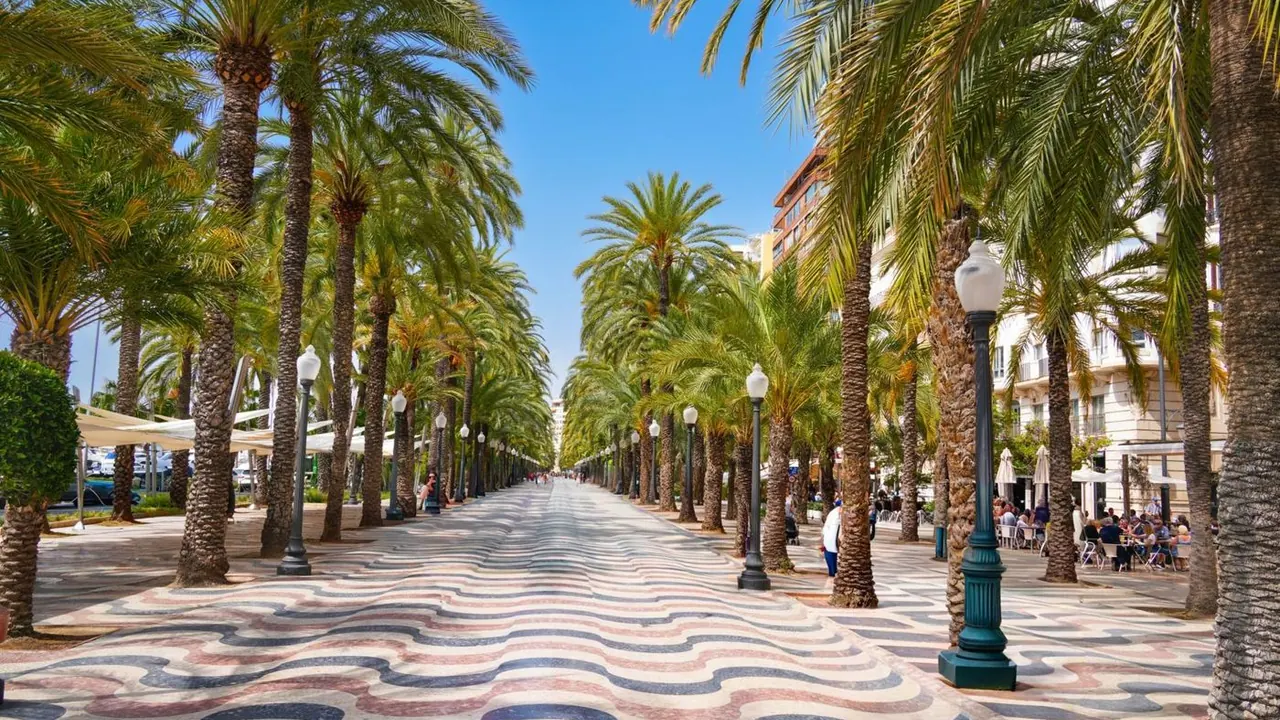
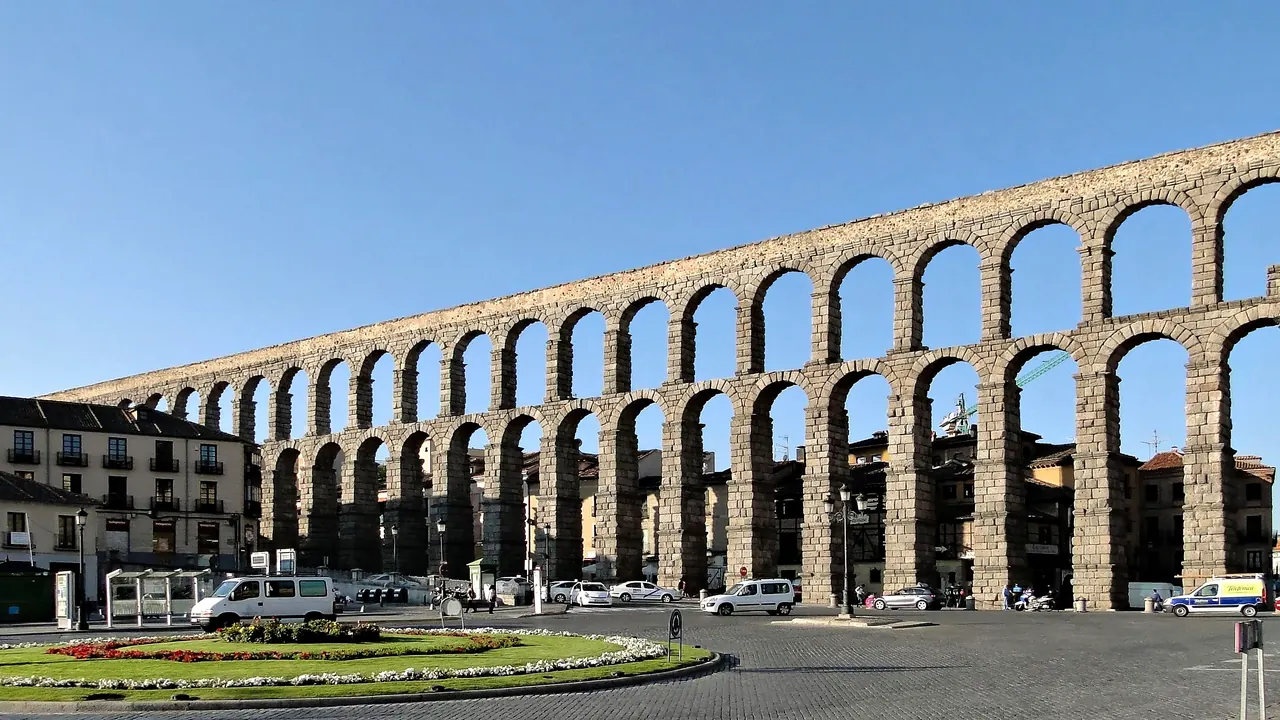
Photos: Alicante by Emilio Sánchez Hernández, Pexels License; Segovia by Bernard Gagnon, CC BY-SA 3.0, cropped.
Alicante or Segovia?
Our verdict in twelve categories, each scored against the same fixed benchmark cities, and the climate month by month, so you can choose for your trip.
Choose Alicante for
- beaches
- nightlife
- families
Alicante is the choice when the sea matters. Its beaches start at the foot of the old town, the water stays warm enough to swim from early summer well into autumn, and evenings run late in El Barrio and along the seafront. Families with children, and anyone who wants sun, rice dishes and late nights with a little sightseeing on the side, will be happier here.
Choose Segovia for
- culture and sights
- day trips
- nature and the outdoors
Segovia suits travellers who come for history and landscape rather than sand. The Roman aqueduct, the cathedral and the Alcázar sit along one ridge, the Sierra de Guadarrama rises behind it, and La Granja, Ávila and Madrid are all close. It rewards a short, unhurried stay of walking, long roast lunches and quiet evenings, but it cannot do a beach trip at all.
Scoreboard
Twelve categories on one fixed scale from 0 to 100. The shaded stretch is the gap between the two.
Your match
Pick a travel style or drag the sliders, and both match scores follow your weighting.
Wins on beaches and nightlife with your weighting.
Wins on culture and sights and day trips with your weighting.
What matters to you?
Category by category
What the scores mean for a trip.
Beaches & swimming
There is no real contest. Alicante has a city beach within walking distance of the old town and the long, calm sweep of Playa de San Juan a tram ride away, with Tabarca and the Costa Blanca coves beyond. In high summer Postiguet gets crowded.
Segovia is far inland on the Castilian plateau. In summer, swimming means a pool or a cold reservoir in the Guadarrama foothills. If the sea matters to you, Alicante is the only one of the two that offers it.
Food & drink
Alicante gives you more variety from one meal to the next. Rice is at the centre of it: arroz a banda cooked in fish stock and black rice with squid ink come from the sea, while arroz con costra is a heavier inland dish of sausage and chicken baked under an egg crust. Most are shared at lunch. The Mercado Central adds red prawns from Santa Pola and Dénia, salted fish and mojama, and the old-town tapas bars pour local Alicante wines.
Segovia's food has a narrower range but a clear centrepiece: cochinillo and roast lamb from wood-fired ovens, with La Granja beans and ponche segoviano alongside. It is a place for one big Castilian lunch with a Ribera del Duero. In Alicante you could eat something different every day for a week.
Culture & sights
Segovia is the richer place for sightseeing. The aqueduct, the late Gothic cathedral, the Alcázar on its clifftop, the Romanesque churches and the old Jewish quarter make the whole ridge a single UNESCO site, and these monuments are on a scale the coast does not match.
Alicante's highlights are the Castillo de Santa Bárbara with its views over the bay, the flowerpot-lined steps of Santa Cruz and the mosaic Explanada. The MARQ is actually a better museum than anything in Segovia, but it does not outweigh the aqueduct and the Alcázar.
Nightlife
Alicante stays out far later. Small bars fill El Barrio and spill onto the steps under the castle, the port has bigger bars and clubs for a dressier crowd, and in summer the beach bars at San Juan stay busy late. Serious club culture is limited, but students and international residents keep the scene going all year.
In Segovia, an evening means a tapas round near Plaza Mayor. It is busy on summer terraces and quiet early on winter weeknights. For a real late night out, people go to Madrid.
Nature & outdoors
Segovia has the edge outdoors, mainly because the mountains start so close. The Valsaín pine forests and the passes of Navacerrada and Cotos are within half an hour, with trails up towards Peñalara's glacial lakes and snow in winter. Further out, griffon vultures circle over the Hoces del Duratón gorge.
Alicante's outdoors are drier and face the sea: snorkelling and diving in the Tabarca reserve, kayaking in the bay, flamingos on the salt lagoons and climbing around Sella. Its mountain hiking needs a car, and the summer heat limits outdoor activity to the mornings. Segovia's trails are good from spring right through to autumn.
Day trips
Both are good bases, but there are more major sights around Segovia. The palace and fountains of La Granja are twenty minutes away, high-speed trains reach Madrid in under half an hour, and Ávila, Pedraza, Sepúlveda and El Escorial fill more days.
From Alicante, the standout trip is the palm grove at Elche. Beyond that there is the tram up the coast to Villajoyosa and Altea, Guadalest inland, and Valencia two hours away by train. It is a pleasant mix of coast and towns, but few of them match Segovia's royal palaces and walled cities.
Good for families
Alicante is the easier city with children, mostly because of its beaches: shallow water at San Juan, Postiguet within walking distance, and a flat promenade for scooters. For bigger outings there are theme and water parks near Benidorm and an animal park outside Elche.
Segovia works for a day or two. The Alcázar and the aqueduct genuinely impress children, and the gardens at La Granja give them room to run. But there is no zoo or theme park, and the steep cobbles are hard going with a pushchair.
Getting around
Both centres are easy to walk, but they are laid out differently. In Alicante, the old quarter, the port, the market and the beach are all within about fifteen minutes of each other. The only steep part is the climb to the castle, which has a lift, and the coastal tram carries on to the beaches and to the towns further north.
Segovia's sights line one steep, cobbled ridge that you can cover in a morning, but the high-speed station is several kilometres out and needs a bus. In both places, the mountain villages and trailheads are far easier with a car.
Shopping & style
Neither city is a reason to go shopping, but Alicante has more to offer. Avenida Maisonnave and Calle Castaños have Spanish chains and department stores, and the Mercado Central has turrón, saffron and olive oil to take home. Elche's shoe outlets are half an hour away.
In Segovia, shopping comes down to souvenirs on Calle Real, local ceramics and embroidery, and boxed ponche or La Granja beans. If you want fashion, you have to go to Madrid.
Affordability
Overall the two cost about the same, but the costs rise at different times. In Alicante, rooms near the beaches cost much more in July, August and during the Hogueras, while October to May is cheaper and still mild. Tapas, set lunches and the tram are fair value all year.
In Segovia, prices go up at weekends and in summer, when visitors from Madrid arrive, and the famous roasts by the aqueduct are a meal to budget for. Midweek and in winter it is inexpensive, with plenty of small family-run guesthouses.
Live music & performing arts
Alicante has more on through the year. The nineteenth-century Teatro Principal stages drama, musicals and dance, and the ADDA auditorium hosts the provincial symphony orchestra and visiting classical and jazz performers, though most of the programme is in Spanish.
Segovia's live arts are concentrated in its festivals: Titirimundi, the puppet festival in spring, and summer concerts in churches and palace gardens. Teatro Juan Bravo hosts touring shows. Outside those weeks little is on, and for opera you have to leave either city.
Wellness & relaxation
Neither city has a bathing tradition of its own, but Alicante gives you more ways to unwind. It has hotel and day spas, a warm sea, and the slow routine of a seafront walk, a long lunch and a siesta. The thermal springs at Archena and Fortuna, used since Roman times, are about an hour's drive away.
Segovia's way of resting is quieter and cooler. The old town empties in the late afternoon, there are evening walks along the walls and pine-scented air from the sierra, and spa treatments are limited to a few hotels.
When should you go?
Pick your month. The climate figures are measured averages, not a forecast.
Alicante in July
Segovia in July
Daytime high, °C
Rainfall in the month, mm
Temperature and rainfall are climate normals, averaged over the years shown. Alicante: 1991-2020 normals, Alicante (2.8 km from centre). Segovia: 1991-2020 normals, Segovia (0.3 km from centre).
Alicante is warm for most of the year. Winter days reach around 17°C and are usually sunny, so January and February work well for walking the old town and the coast. The sea is warm enough to swim from June into October and reaches 26°C in August, when afternoons of 31°C push most people to the beach or into the shade. Rain is scarce all year. September is the wettest month, but even then it is modest.
Segovia sits high on the Castilian plateau and has proper seasons. In winter it is cold, with January highs near 8°C, which makes a long day on the cobbles chilly. Spring and autumn are the best seasons for sightseeing and the sierra, though May and October are also its wettest months. July and August reach about 30°C with long, sunny days. In winter Alicante is clearly the more comfortable of the two. In high summer both are hot, and only Alicante has the sea.
Which traveller are you?
On a beach and sun trip, Alicante wins outright. Postiguet sits right beside the old town, the tram runs to the long, shallow sands of Playa de San Juan, and Tabarca is a short boat ride away. Landlocked Segovia offers only pools and chilly reservoirs.
For a culture and arts trip, Segovia is the stronger choice. The Roman aqueduct, the Gothic cathedral, the Alcázar and a run of Romanesque churches fill a compact UNESCO old town. Alicante's castle and the MARQ are worth seeing, but they fill fewer days.
On a food and nightlife trip, Alicante has more variety and much later nights. Rice dishes, the counters of the Mercado Central and old-quarter tapas lead on to the bars of El Barrio and the port. Segovia's roast pig is memorable, but its evenings end early.
Before you go
| Measure | Alicante | Segovia |
|---|---|---|
| Official language | Spanish | Spanish |
| Currency | Euro (EUR) | Euro (EUR) |
| Sockets | CF230 V, 50 Hz | CF230 V, 50 Hz |
| Driving side | Right | Right |
| Time zone | UTC+1, UTC+2 in summer | UTC+1, UTC+2 in summer |
| Emergency number | 112 | 112 |
| Elevation | 3 m | 1,002 m |
| Main airport | Alicante-Elche Miguel Hernández Airport (ALC)10 km from centre126 non-stop destinations | Adolfo Suárez Madrid–Barajas Airport (MAD)68 km from centre241 non-stop destinations |
| Public holidays this year | 13 days | 12 days |
By the numbers
| Measure | Alicante | Segovia |
|---|---|---|
| City population | 366,221 | 52,375 |
| People per km² | 1,819 | 320 |
| Museums within 10 km | 8 | 11 |
| UNESCO World Heritage sites within 50 km | 2 | 2 |
| Swim season, months above 21 °C | 5 months | - |
Where else could you go?
Every comparison below shares a destination with this one, so you can follow Alicante or Segovia somewhere new.
- Benidormvs Alicante
- Madridvs Segovia
- Toledovs Segovia
- Valenciavs Alicante
- Salamancavs Segovia
- Bilbaovs Segovia