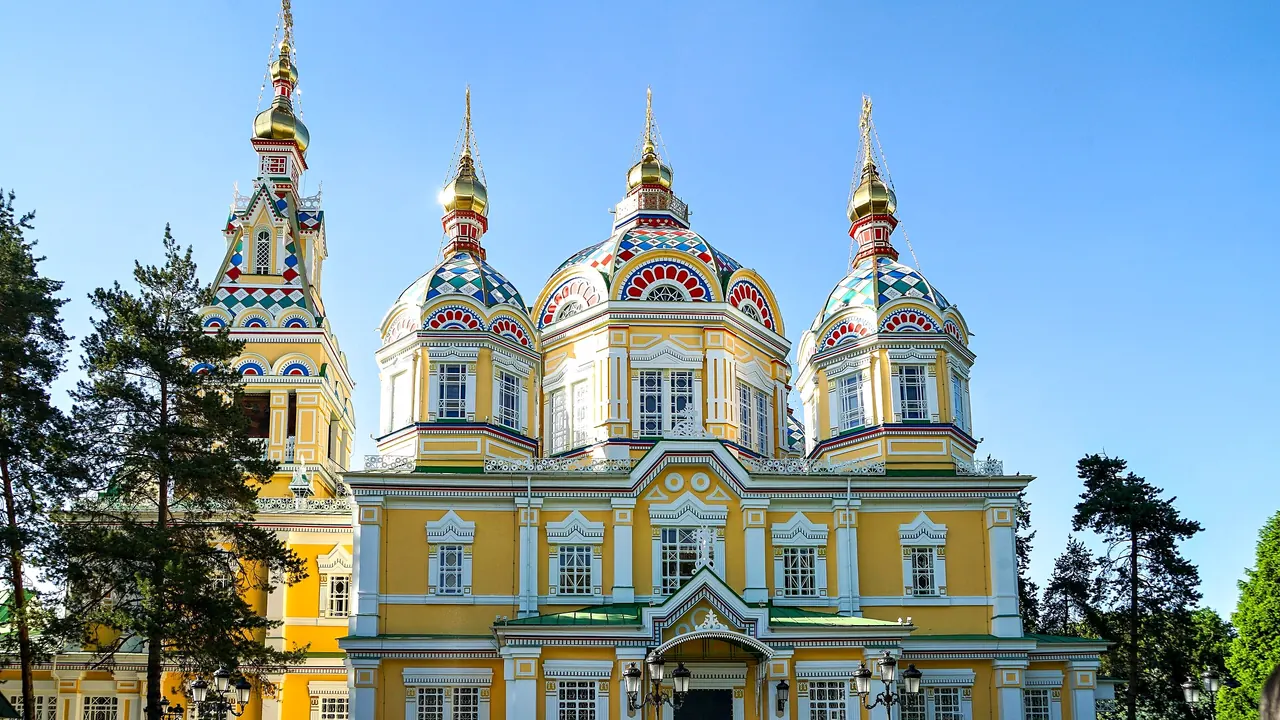
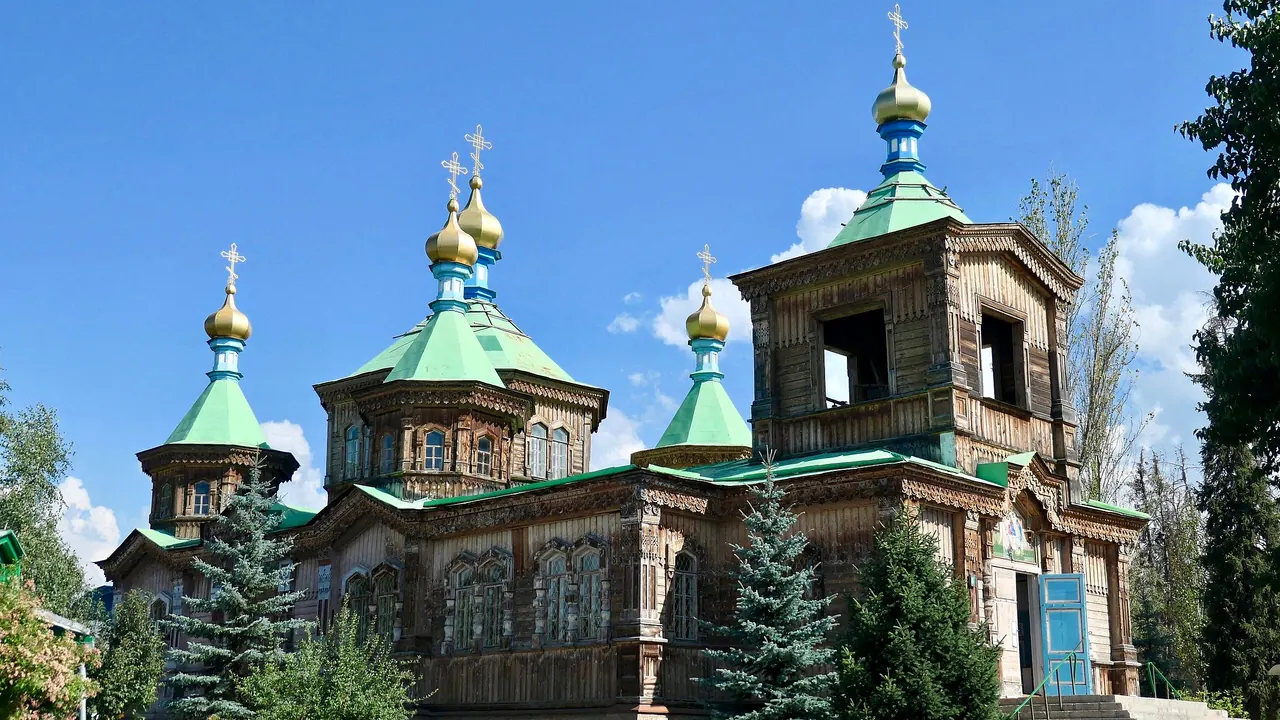
Photos: Almaty by Kalpak Travel, CC BY 2.0, cropped; Karakol by Bruno Rijsman, CC BY 2.0, cropped.
Almaty or Karakol?
Our verdict in twelve categories, each scored against the same fixed benchmark cities, and the climate month by month, so you can choose for your trip.
Choose Almaty for
- live music and the arts
- nightlife
- food and drink
Almaty suits travellers who want the mountains with a proper city attached. The Trans-Ili Alatau rises at the edge of town and a gondola takes you up to Shymbulak. In the evening you come back down to Uyghur noodle houses, the Green Bazaar, a night at the Abai opera house and bars that stay open late at weekends. It is also the easier choice with children, or for anyone who wants some comfort between hikes.
Choose Karakol for
- prices
- beaches
- nature and the outdoors
Karakol is for people who come to walk, ride or ski and are happy with a quiet town as their base. The point is the Altyn-Arashan and Ala-Kul loop, horse treks to herders' yurts and a hot-spring soak after a long day. Guesthouses, canteens and shared minibuses cost even less than in Almaty. Evenings are early and simple, and for many visitors that is part of the appeal.
Scoreboard
Twelve categories on one fixed scale from 0 to 100. The shaded stretch is the gap between the two.
Your match
Pick a travel style or drag the sliders, and both match scores follow your weighting.
Wins on live music and the arts and nightlife with your weighting.
Wins on prices and beaches with your weighting.
What matters to you?
Category by category
What the scores mean for a trip.
Beaches & swimming
Neither is a place for a beach vacation, but Karakol at least has Issyk-Kul close by. The shore near town is reedy, but the sandy beaches at Tamga, Barskoon and on the north shore are within a few hours' drive. The clear lake is warm enough for a swim in late July and August.
Almaty has only the Kapchagay reservoir out on the steppe, a weekend escape for locals. Otherwise swimming means a pool, and the mountain lakes above the city are too cold to swim in.
Food & drink
Both cities cook the same Central Asian staples of lagman, manty and plov, but Almaty offers far more choice. The Green Bazaar with its free tastings, Uyghur noodle houses, Korean salads, cafés with good coffee all over the central grid and a range of modern restaurants make eating part of the trip.
Karakol's speciality is the cold, sour Dungan ashlan-fu, served in canteens by the bazaar. Better still is a home-cooked Dungan dinner. Beyond that the choice is small, with little for vegetarians and hardly any coffee culture.
Culture & sights
Neither city is old, and each has its own painted wooden Orthodox cathedral, but Almaty has more to see beyond it. The Central State Museum's Scythian gold and nomadic history, the Kasteyev museum's Kazakh painting and the Soviet modernist mosaics and buildings fill two or three days.
Karakol's highlight is the Chinese-style Dungan Mosque, with its pagoda-like minaret, a short walk from the Holy Trinity Cathedral. Add the Przhevalsky memorial at Pristan and the Sunday animal market, and the sights take a relaxed half-day.
Nightlife
Almaty is the only one of the two with a real night out. It has cocktail bars and craft beer pubs around Panfilov Park and Abylai Khan, and a few clubs stay open until morning at weekends, though weeknights are quiet. In Karakol an evening means dinner, a beer at the guesthouse and perhaps karaoke. The town is dark by mid-evening, and after-ski drinks happen only in winter.
Nature & outdoors
Both sit below 4,000m peaks in the Tian Shan and are excellent for the mountains. The difference is how easy they are to reach. From Almaty, buses and gondolas take you to Medeu, Shymbulak and towards the Talgar Pass without a car, and Big Almaty Lake and the spruce gorges are a short drive away. Charyn Canyon and the Kolsai lakes need an overnight trip.
Karakol is rougher and more remote. Lightly marked trails lead into the Karakol, Altyn-Arashan and Jeti-Oguz valleys, and the classic multi-day loop crosses a high pass down to Ala-Kul. Horse trekking with herders is easy to arrange, and in winter the forest ski runs are emptier than Almaty's developed slopes.
Day trips
Both are bases for landscapes rather than other towns, so most day trips mean more mountains. Almaty's few cultural outings are archaeological: the Golden Man burial mounds at Esik and the Tamgaly petroglyphs. Karakol's lead along the south shore of Issyk-Kul to its villages and the eagle-hunting demonstrations near Bokonbaevo. Cholpon-Ata is better as an overnight stop.
Good for families
Almaty has more easy days out with children. There is the Kok-Tobe cable car with its petting zoo and rides, Central Park with boats and the zoo next door, and skating at Medeu. Fast traffic and long walks between places make it tiring with a pushchair, though.
Karakol has nothing built for children, travel is by minibus on rough roads and medical care is basic. It suits only families with adventurous older children, who will enjoy horse rides and a night in a yurt camp.
Getting around
Almaty is the easier of the two to get around, mainly because ride-hailing apps take you anywhere in the city quickly and cheaply. The leafy central grid is pleasant on foot, and the mountains always show which way is south. Buses with a contactless card cost little, but their routes take some working out. The single metro line is of little use, and beyond the centre distances are long and rush-hour traffic is heavy.
Karakol is simple within town and harder beyond it. Its small, flat grid puts the cathedral, mosque, bazaar and guesthouses within twenty minutes' walk of one another. To reach the valleys, you take a shared minibus from the bazaar, which leaves when full, has Cyrillic signs and usually means haggling over the fare. The alternative is a taxi for the day, which is cheap and easy to hire. Altyn-Arashan and the higher valleys need a sturdy four-wheel drive or your own legs.
Shopping & style
Almaty offers more choice, even if it isn't a reason to go. The Green Bazaar is the best place for dried fruit, spices and tea to take home, and the sprawling Barakholka market is worth seeing even if you buy nothing. Large malls stock international brands, and felt work, carpets and silver jewellery make good souvenirs.
In Karakol, shopping really comes down to felt. Craft cooperatives sell bold shyrdak rugs, slippers and kalpak hats, and these are the best thing to buy on either side of the border. The bazaar is better for wandering than for buying.
Affordability
In Almaty, most of your money goes on the room. Good central hotels cost close to international rates, and imported wine and cocktails add up quickly. Noodle houses, ride-hailing, buses and even opera tickets cost very little.
Karakol is cheaper again. Family guesthouses include breakfast, and canteen meals and shared minibuses cost almost nothing. There, the money goes on the mountains: guides, horses, four-wheel-drive transfers and hired gear. Even so, a week of trekking stays modest.
Live music & performing arts
Almaty has a full season in the old Soviet repertory tradition. The Abai State Opera and Ballet Theatre stages classic ballet and opera, and the Kazakh State Philharmonic puts on orchestral and dombra concerts. Drama, a puppet theatre and a few jazz venues add to this, and tickets are easy to get, though most theatre is not in English.
Karakol has only a small regional drama theatre, with little a visitor can follow. You are more likely to hear the three-stringed komuz or a recital of the Manas epic at a yurt camp or a guesthouse evening.
Wellness & relaxation
Both have a tradition of hot baths, but of different kinds. Almaty's is urban: the Arasan baths beside Panfilov Park, with banya whisking, Finnish saunas and a domed hammam under one roof. Out of town there are the hot springs of the Alma-Arasan gorge and saunas at the mountain resorts.
Karakol's is outdoors and simple. There are thermal pools at the Ak-Suu sanatorium, and spring-fed pools at Altyn-Arashan at the end of a trek. There are no spas or massage culture, but the quiet town is an easy place to rest between hikes.
When should you go?
Pick your month. The climate figures are measured averages, not a forecast.
Almaty in July
Karakol in July
Daytime high, °C
Rainfall in the month, mm
Temperature and rainfall are climate normals, averaged over the years shown. Almaty: 1991-2020 normals, Almaty (1.7 km from centre). Karakol: 1991-2020 normals, Kyzyl-Suu / Chelpek (16 km from centre).
Almaty has a hot continental summer. Highs reach about 31°C in July, which makes midday walking on the broad avenues tiring, but this is the sunniest part of the year and a good time to head up into the mountains. Spring is the wettest season, with about 108mm of rain in April. The most comfortable months for combining the city with hikes are late May, June and September, when days are warm, long and drier. From December to February daytime highs stay around freezing, which is the season for Shymbulak and the Medeu rink.
Karakol sits higher and stays milder. Summer highs settle at about 24°C, which is pleasant for walking all day, and its June to September hiking season matches its warmest months. Rain is light all year, though summer brings a little more than winter. Winters are as cold as Almaty's, which suits its ski slopes. Spring and autumn turn chilly sooner than they do across the border.
Which traveller are you?
For a food and nightlife trip, Almaty wins easily. Uyghur lagman and manty, the tasting stalls of the Green Bazaar and the cocktail and craft beer bars around Panfilov Park, open late at weekends, fill the evenings. Karakol is asleep by mid-evening.
On a trip on a tight budget, Karakol makes money go further. Family guesthouses with breakfast, bowls of ashlan-fu and shared minibuses cost very little, and even guides and horses stay modest. Almaty is cheap too, but central hotels push costs up.
For an outdoors trip, both have superb mountains, but Karakol is the wilder choice. Multi-day loops past Ala-Kul, horse treks with herders and hot pools at Altyn-Arashan reward hikers who can manage with basic services. Almaty's gondolas to Shymbulak suit day hikers.
Before you go
| Measure | Almaty | Karakol |
|---|---|---|
| Official language | Russian, Kazakh | Kyrgyz |
| Currency | Tenge (KZT) | Som (KGS) |
| Sockets | CF220 V, 50 Hz | CF220 V, 50 Hz |
| Driving side | Right | Right |
| Time zone | UTC+5 | UTC+6 |
| Emergency number | 112 | 161 |
| Elevation | 893 m | 1,690 m |
| Main airport | Almaty International Airport (ALA)16 km from centre93 non-stop destinations | Manas International Airport (BSZ)326 km from centre42 non-stop destinations |
| Public holidays this year | 13 days | - |
By the numbers
| Measure | Almaty | Karakol |
|---|---|---|
| Population | 2,228,675 | 85,588 |
| People per km² | 3,268 | 1,779 |
| Museums within 10 km | 20 | 1 |
| UNESCO World Heritage sites within 50 km | 1 | 0 |
Where else could you go?
Every comparison below shares a destination with this one, so you can follow Almaty or Karakol somewhere new.