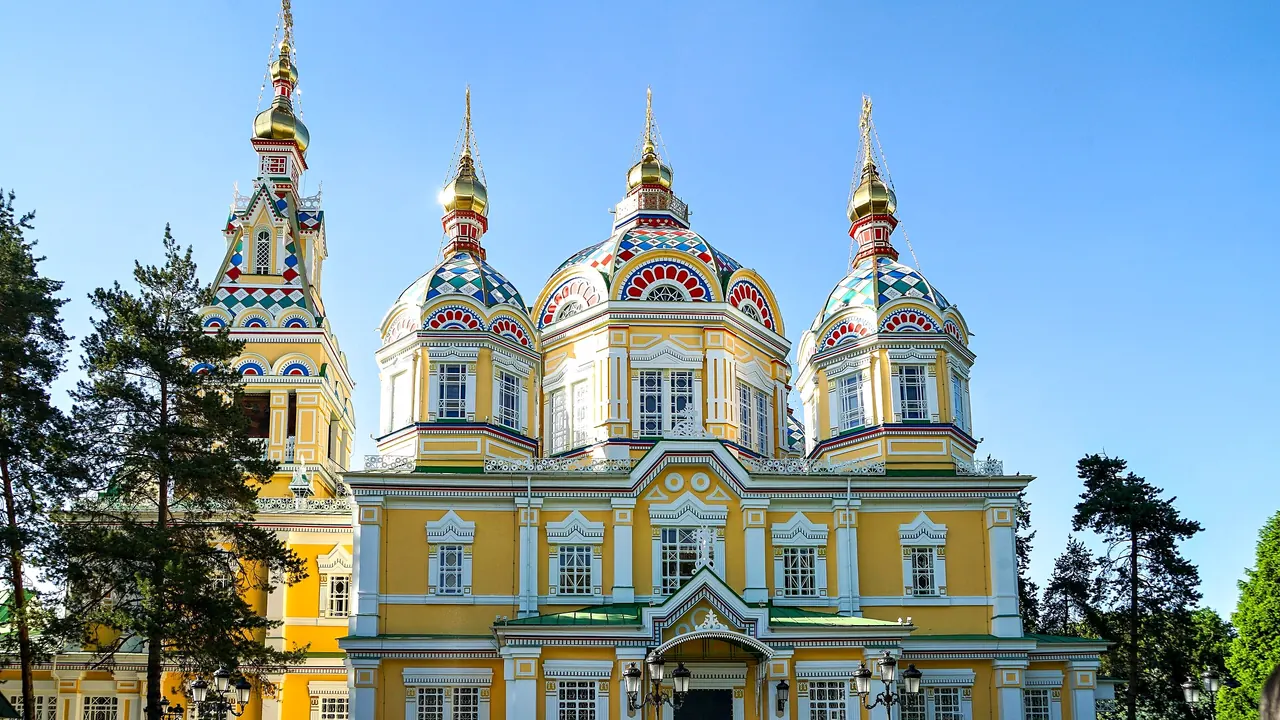
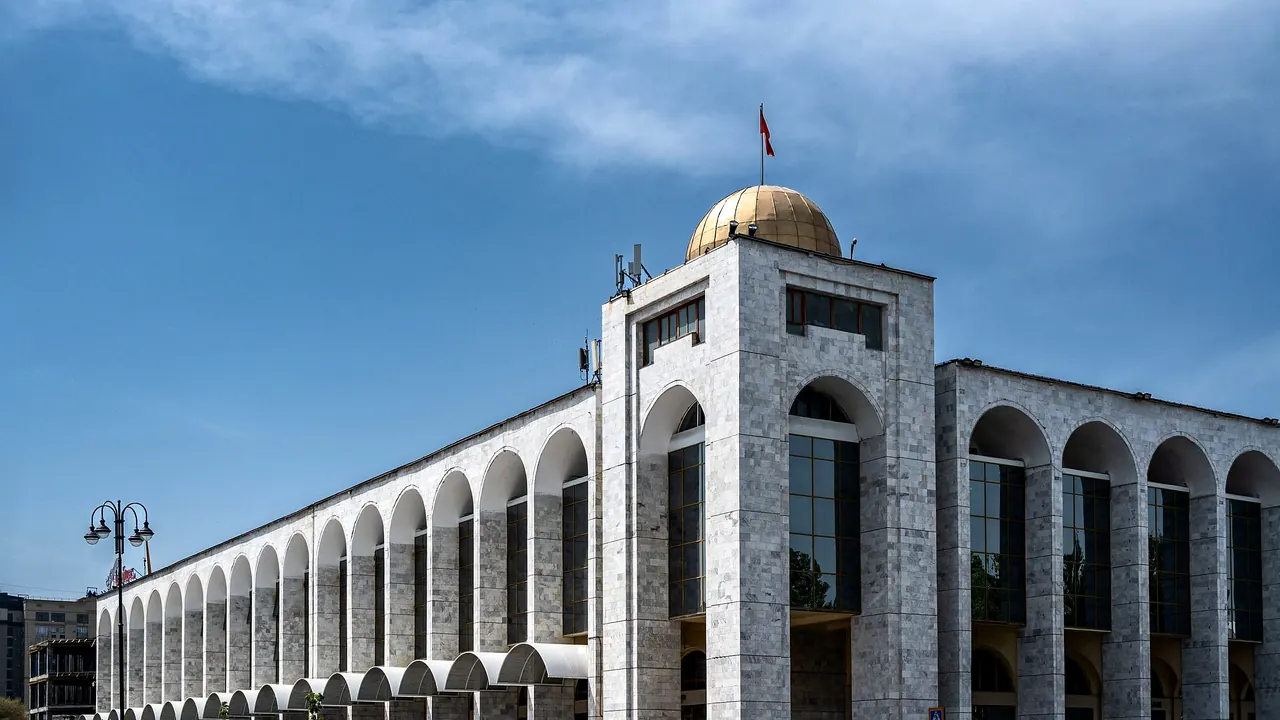
Photos: Almaty by Kalpak Travel, CC BY 2.0, cropped; Bishkek by xiquinhosilva, CC BY 4.0, cropped.
Almaty or Bishkek?
Our verdict in twelve categories, each scored against the same fixed benchmark cities, and the climate month by month, so you can choose for your trip.
Choose Almaty for
- families
- live music and the arts
- food and drink
Almaty suits travellers who want the mountains with a fuller city around them. You can take a gondola to Shymbulak in the morning, then spend the evening at the Abai opera or in a bar on a tree-lined street that stays busy late at the weekend. It also eats better, keeps children busier and has a proper bathhouse in Arasan, so it works for families and for a longer, more comfortable stay.
Choose Bishkek for
- prices
- day trips
Bishkek is the better choice when the mountains are the whole point and the budget is tight. Ala-Archa's glacier trails, the yurt camps in the nearby gorges and the start of the Tien Shan treks are close by. Guesthouses, hired drivers and meals cost very little. The city itself is smaller and plainer, with fewer sights and quieter nights, but it is an easy, cheap base between treks, and few people come for the city alone.
Scoreboard
Twelve categories on one fixed scale from 0 to 100. The shaded stretch is the gap between the two.
Your match
Pick a travel style or drag the sliders, and both match scores follow your weighting.
Wins on families and live music and the arts with your weighting.
Wins on prices and day trips with your weighting.
What matters to you?
Category by category
What the scores mean for a trip.
Beaches & swimming
Neither city has a beach, but Almaty has a swim within reach. The Kapchagay reservoir, about an hour and a half away across the steppe, has sandy shores and warm summer water, and locals go there at weekends. It is not worth the journey on its own, but it makes a summer outing.
From Bishkek, the cold rivers south of town are only good for paddling. The country's real lake shore is Issyk-Kul, about four hours east, so a swim there needs several days of your trip.
Food & drink
Both cities cook lagman, manty, plov and beshbarmak, but Almaty has the wider range and more ways to eat. Uyghur cooking is the reason to linger, and around it sit Kazakh horse-meat kazy with baursak and tea, Uzbek plov and the Korean salads of the Soviet-era Korean community. The leafy central grid has more coffee and contemporary cooking than Bishkek can match, and the Green Bazaar's halls of honey, nuts and horse meat are a meal in themselves.
Bishkek's table is plainer and more communal. A typical evening is a long, generous dinner in a teahouse or a family restaurant, often in a room set aside for the group, with mutton in almost everything and little for vegetarians. Uyghur and Dungan cooks add spicier noodles and their own dumplings, and Osh Bazaar has kymyz in summer. Neither city has much fine dining.
Culture & sights
Almaty's best-known sight is a survivor. The painted wooden Zenkov Cathedral in Panfilov Park came through the 1911 earthquake largely intact. Add the Scythian gold in the Central State Museum, the Kazakh painting at the Kasteyev museum and the mosaic-covered modernist façades of the grid, and you have enough for two or three days.
Bishkek's interest is civic and monumental. There is the Manas statue and the changing of the guard on Ala-Too Square, the State Historical Museum behind it, and the felt and embroidery in the Fine Arts Museum. These fit into a day or two, and the Victory Monument and the late-Soviet avenues fill the gaps.
Nightlife
Almaty is the city in the region where people go out. On Fridays and Saturdays its cocktail bars and craft beer pubs around Panfilov and Abylai Khan fill with a young, well-dressed crowd, and a few clubs stay open until morning.
Bishkek's version is smaller and more sociable than wild. Hookah lounges, pubs near the university and karaoke rooms make a good evening after a trek. Most of the social life, though, happens over long dinners.
Nature & outdoors
Both cities sit right under snow-capped walls of 4,000m peaks, so the difference lies in how you reach the mountains. Almaty has the infrastructure. A bus goes up to the Medeu rink, a gondola continues to Shymbulak for proper skiing or high summer walks, and Big Almaty Lake is a short drive away.
Bishkek's mountains are wilder. Ala-Archa, about 40km out, has juniper valleys and a trail to the Ak-Sai glacier, and gorges such as Alamedin offer yurt camps and horse riding. It is the usual starting point for long Tien Shan treks, but don't expect groomed paths or lifts.
Day trips
Both cities are better bases for landscapes than for visiting other towns, and each is too far from the other for a comfortable day out. From Almaty, the heritage outings are Esik, where the Golden Man was found, and the Bronze Age carvings at Tamgaly, which take a long half day.
Bishkek's one real outing is the Burana Tower, the stump of an 11th-century minaret on the site of Silk Road Balasagun. Stone balbal figures stand in the field around it.
Good for families
Almaty is the easier city with children. A cable car goes up to Kok-Tobe's small rides and petting zoo. Central Park has boats and the zoo next door, and winter brings open-air skating at Medeu and beginner slopes at Shymbulak. It still has no big theme park, and its wide, fast roads make walking with a pushchair tiring.
Bishkek has little built for children beyond the old rides in Panfilov Park, picnics in the Ala-Archa valley and a poor zoo. Cramped minibuses and hot summers make it best for families who are already coming to trek or ride.
Getting around
In both cities most visitors rely on cheap ride-hailing apps, but the layouts differ. Almaty's grid rises gently towards the mountains, distances beyond the centre are long, and the metro is a single short line. Its real advantage is that buses and gondolas take you all the way up to Shymbulak without a car.
Bishkek has no metro, but its centre is flat and compact, and most sights are within half an hour's walk of Ala-Too Square. The catch is getting out of town, since the mountains need a taxi or a hired driver, and the marshrutka routes are hard to work out without help.
Shopping & style
Neither city is worth the trip for shopping, and both centre on a big bazaar and a vast market on the outskirts that is more spectacle than shop. Almaty has more malls, some with luxury brands, and the Green Bazaar is the place to buy nuts, honey and tea to take home.
Bishkek's strength is felt. Shyrdak rugs, felt slippers and white ak-kalpak hats from the craft cooperatives in the centre are better souvenirs than most of what Almaty sells.
Affordability
Both are cheap by Western standards, but Bishkek is cheaper. Guesthouses and hostels cost very little, and even a day in the mountains with a hired driver is good value.
In Almaty, bazaar meals, buses and opera tickets are just as kind to the wallet. Good central hotels, though, are priced close to international levels, so where you sleep decides most of the difference between the two.
Live music & performing arts
Almaty has the more dependable stage. The neoclassical Abai theatre runs Russian-tradition ballet and opera through the season, and the Philharmonic adds orchestral and dombra concerts. A puppet theatre and a few jazz bars round it out. Tickets are cheap, though most drama is not in English.
Bishkek's halls have plenty of atmosphere, but the standard varies and the programme thins out in summer. What it has that Almaty lacks is Kyrgyz music for the three-stringed komuz and recitals of the Manas epic, which are worth catching at a concert or festival if your dates allow.
Wellness & relaxation
Almaty has the stronger bathing culture, centred on Arasan beside Panfilov Park. This huge Soviet-era complex puts banya steam rooms, Finnish saunas and a domed hammam under one roof. The hot springs and old sanatoria of the Alma-Arasan gorge are close by.
Bishkek has the everyday banya, easy to book by the hour, and a few hotel spas. For a proper soak you need to go to Issyk-Ata, a couple of hours away, so most people do their unwinding in the mountains.
When should you go?
Pick your month. The climate figures are measured averages, not a forecast.
Almaty in July
Bishkek in July
Daytime high, °C
Rainfall in the month, mm
Temperature and rainfall are climate normals, averaged over the years shown. Almaty: 1991-2020 normals, Almaty (1.7 km from centre). Bishkek: 1991-2020 normals, Bishkek (3.3 km from centre).
The two cities share the same continental pattern: freezing winters, hot summers and short, pleasant seasons in between. Almaty is wetter in spring, with April the rainiest month at around 108mm and May not much drier. That makes June and September its best months for walking the grid and hiking the foothills. July is hot, reaching about 31°C, but the mountains are only a short ride away for cooler air. Winter brings snow to Shymbulak for skiing, but the city streets are cold and often smoggy.
Bishkek gets hotter and drier in summer, with highs near 33°C in July and only about 17mm of rain. It also gets more sunshine from May to September, which suits treks into the high passes but makes midday walks in the city tiring. May and September are the most comfortable months for the city itself. In both places, July and August are the only months warm enough for swimming, at the Kapchagay reservoir or at Issyk-Kul.
Which traveller are you?
On a family trip with children, Almaty is the easier choice. Kok-Tobe's cable car and petting zoo, the boating lake in Central Park, skating at Medeu and gentle beginner slopes give children more to do than Bishkek's old park rides and riverside picnics.
For a food and nightlife trip, Almaty wins on both. Its Uyghur noodle houses, Korean salads and Green Bazaar tastings come with a real café culture, and its weekend clubs run until morning. In Bishkek, evenings are mostly long dinners and karaoke.
On a trip on a tight budget, Bishkek goes further. Its guesthouses and hostels cost very little, and so do bazaar meals, theatre tickets and a driver for a day in the mountains. In Almaty, central hotels and smart bars quickly add up.
Before you go
| Measure | Almaty | Bishkek |
|---|---|---|
| Official language | Russian, Kazakh | Kyrgyz |
| Currency | Tenge (KZT) | Som (KGS) |
| Sockets | CF220 V, 50 Hz | CF220 V, 50 Hz |
| Driving side | Right | Right |
| Time zone | UTC+5 | UTC+6 |
| Emergency number | 112 | 161 |
| Elevation | 893 m | 750 m |
| Main airport | Almaty International Airport (ALA)16 km from centre93 non-stop destinations | Manas International Airport (BSZ)23 km from centre42 non-stop destinations |
| Public holidays this year | 13 days | - |
By the numbers
| Measure | Almaty | Bishkek |
|---|---|---|
| Population | 2,228,675 | 1,191,000 |
| People per km² | 3,268 | 9,378 |
| Museums within 10 km | 20 | 6 |
| UNESCO World Heritage sites within 50 km | 1 | 2 |
Where else could you go?
Every comparison below shares a destination with this one, so you can follow Almaty or Bishkek somewhere new.
- Karakolvs Almaty
- Karakolvs Bishkek
- Tashkentvs Bishkek
- Tashkentvs Almaty
- Dushanbevs Bishkek
- Samarkandvs Bishkek