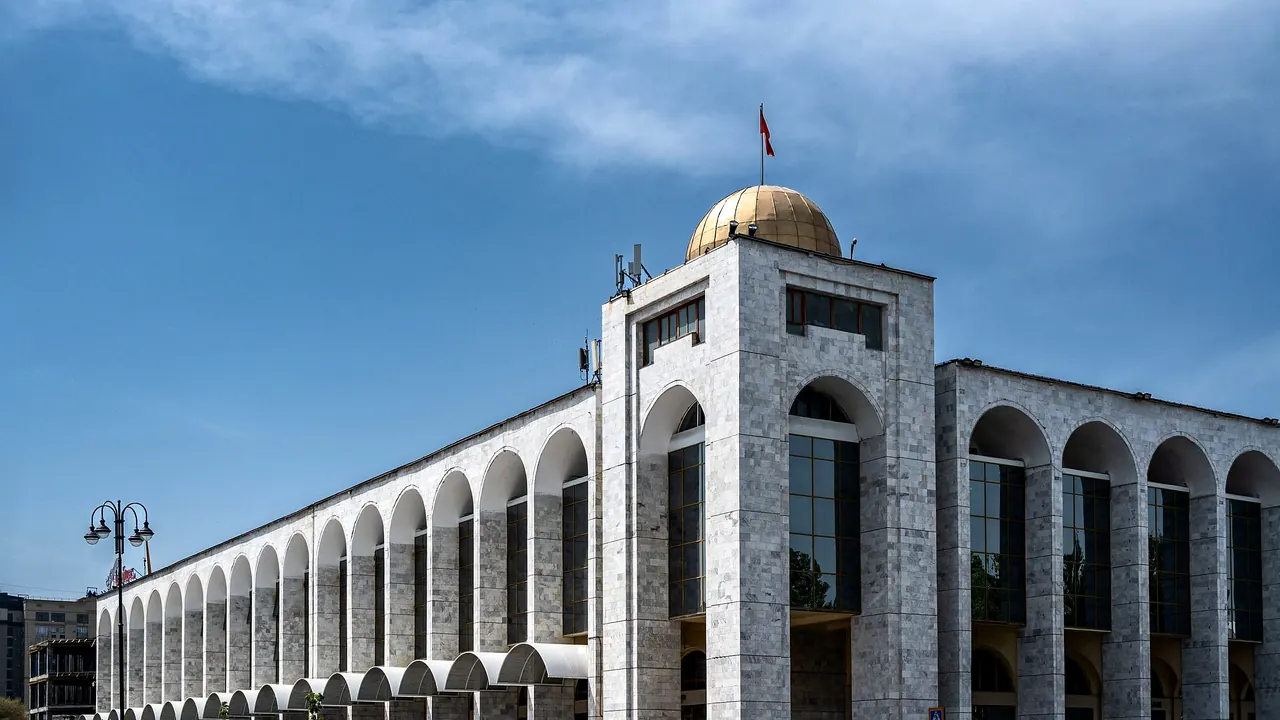
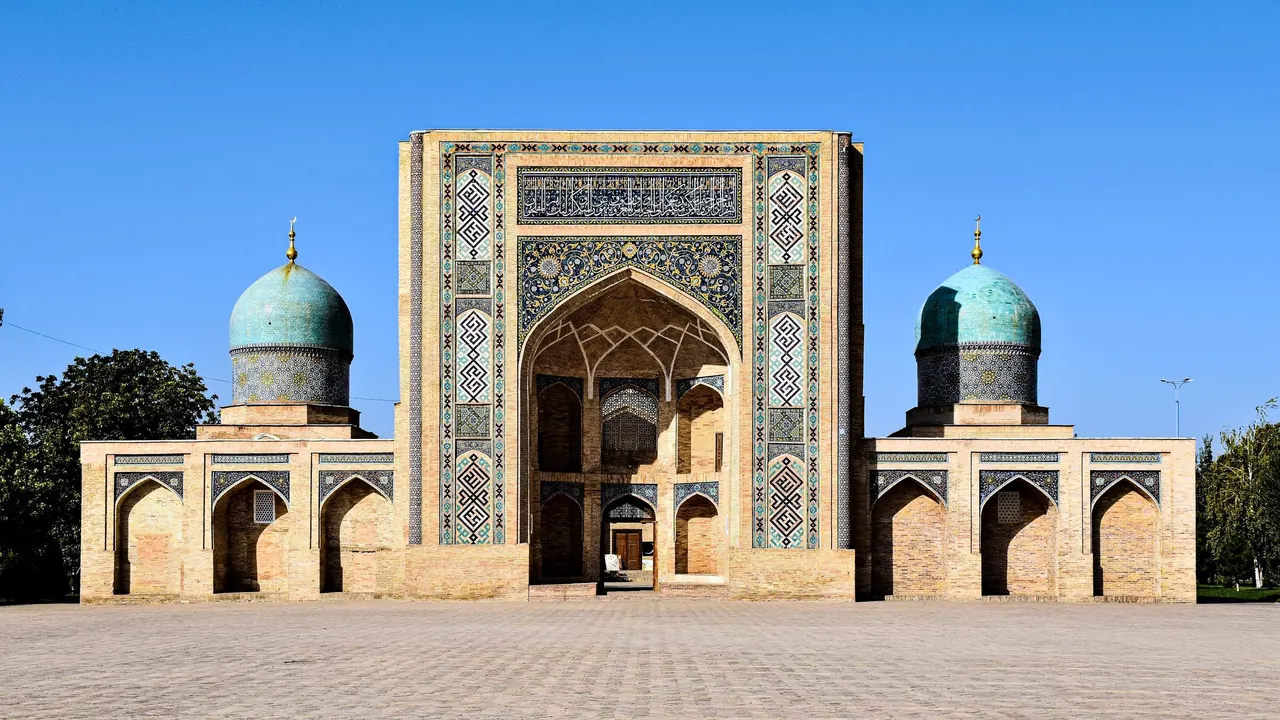
Photos: Bishkek by xiquinhosilva, CC BY 4.0, cropped; Tashkent by AXP Photography, Pexels License.
Bishkek or Tashkent?
Our verdict in twelve categories, each scored against the same fixed benchmark cities, and the climate month by month, so you can choose for your trip.
Choose Bishkek for
- nature and the outdoors
- wellness
- prices
Bishkek is the choice when the mountains are the point of the trip. The Kyrgyz Ala-Too stands straight above the streets, Ala-Archa's glacier trails are less than an hour away, and the city works as a cheap, easy base for trekking, riding and yurt camps in the Tien Shan. Come for the outdoors, finish the day in a banya, and accept that the city's own sights take only a day or two.
Choose Tashkent for
- day trips
- culture and sights
- families
Travellers who want more from the city itself will do better in Tashkent. Its old town keeps real Islamic heritage around the Hazrat Imam complex, the metro is both useful and a sight in its own right, and the Alisher Navoi Theatre makes a fine night out. The high-speed train puts Samarkand within reach for a day, which gives it the edge for a first trip to Central Asia, for families, and for anyone who wants mountains only as an occasional escape.
Scoreboard
Twelve categories on one fixed scale from 0 to 100. The shaded stretch is the gap between the two.
Your match
Pick a travel style or drag the sliders, and both match scores follow your weighting.
Wins on nature and the outdoors and wellness with your weighting.
Wins on day trips and culture and sights with your weighting.
What matters to you?
Category by category
What the scores mean for a trip.
Beaches & swimming
Neither city has a coast, but Tashkent comes out slightly ahead because swimming there is a realistic day out. The Charvak reservoir, about an hour and a half away in the foothills, has pebbly shores and clear mountain water, and the city's big water parks take care of the summer heat.
From Bishkek the cold rivers south of town are for paddling more than swimming, so it is pools or nothing. Issyk-Kul is the country's real lake shore, but at four hours' drive it belongs to a separate trip of several days.
Food & drink
The two share much of the same table, with plov, hand-pulled lagman, tandoor samsa and charcoal shashlik, but Tashkent makes more of it. Plov there is a midday ritual served from great communal kitchens, stamped non bread is treated with reverence, and the green-domed Chorsu Bazaar and shaded tea-house platforms give meals a real setting.
Bishkek's strength is variety within the region: Kyrgyz beshbarmak, spicier Uyghur and Dungan noodles and dumplings, and kymyz at Osh Bazaar in summer. In both cities mutton dominates, vegetarians have little to choose from and fine dining is scarce.
Culture & sights
Both are Soviet-built capitals, but Tashkent has an older layer that Bishkek lacks. The Hazrat Imam complex, with its madrasa and one of the oldest surviving Qurans, the brick Kukeldash Madrasa above Chorsu and the carved rooms of the Museum of Applied Arts give it genuine heritage, and its chandeliered metro stations are worth riding for their own sake.
Bishkek's interest is the monumental Soviet layout itself: Ala-Too Square with the Manas statue and changing of the guard, the felt collection at the Fine Arts Museum, and mosaic-fronted blocks along leafy avenues. It is a pleasant walk through late-Soviet modernism, but it fills a day or two where Tashkent fills three.
Nightlife
Going out is modest in both, and neither is worth the trip for it. Bishkek leans towards craft beer pubs, cocktail bars and hookah lounges near the main avenues and the university, with a few clubs open late at weekends.
Tashkent's evenings are more about beer gardens and summer terraces in the parks once the heat breaks, mostly around Amir Timur Square, and things wind down around midnight. In both, karaoke and long restaurant dinners matter more than dancing.
Nature & outdoors
This is where Bishkek pulls far ahead. The snow-capped Kyrgyz Ala-Too is visible from the city streets, Ala-Archa National Park with trails up to the Ak-Sai glacier is about 40km away, and gorges such as Kegeti and Chunkurchak add waterfalls and yurt camps. The trails are wild rather than groomed, which is the appeal for serious trekkers.
Tashkent sits on a flat oasis plain, and its mountains begin about an hour and a half away, where Big Chimgan rises above Charvak in the Ugam-Chatkal National Park. It offers gentler ridge walks, paragliding and spring tulips, and its Chimgan and Amirsoy ski resorts are more developed than Bishkek's small slopes.
Day trips
Tashkent has one outstanding day trip: Samarkand, just over two hours away by high-speed train, with the Registan, the Gur-e-Amir and the Shah-i-Zinda necropolis. It is a long day, but it is one of the great sights of the Silk Road.
From Bishkek the only real town outing is the Burana Tower near Tokmok, an 11th-century minaret stump with stone balbal figures on the site of Balasagun. Everything else lies in the mountains or calls for an overnight stay.
Good for families
Tashkent is the more rewarding city with children. It has a large zoo, amusement parks, summer water parks and the Botanical Garden, and local families fill the big parks in the evening. The heat and the long, wide avenues are the main strain, so spring and autumn are much easier.
Bishkek offers Panfilov Park's old fairground rides and riverside picnics in the Ala-Archa valley, but little else is designed for children. Uneven pavements, busy roads and cramped minibuses make it best for families who are coming for the mountains anyway.
Getting around
Tashkent's metro gives it the edge: clear lines, frequent trains and stations near the old town and main squares, with cheap app taxis filling the gaps. On foot it is harder work, as the Soviet-scale blocks and avenues make distances long, especially in summer.
Bishkek has no metro, and its marshrutka routes are hard to follow without help, but its flat, compact grid means most sights are within a 30-minute walk of Ala-Too Square. Ride-hailing covers the rest, and the mountains need a taxi or hired driver.
Shopping & style
Shopping is on a similar level in both cities, and the bazaar is the main event in each. The crafts differ, though. Bishkek is the place for felt: shyrdak rugs, slippers, toys and white ak-kalpak hats from central cooperatives, while the vast Dordoi container market is worth seeing as a spectacle.
Tashkent's speciality is textiles and ceramics, with suzani embroidery, ikat silk, Rishtan blue pottery and knives around Chorsu and in the madrasa workshops, though the finest pieces cost less in Bukhara or the Fergana Valley. Both have malls of chain stores and nothing in the way of luxury streets.
Affordability
Both are very cheap, and Bishkek is slightly cheaper still. Guesthouses, ride-hailing and theatre tickets cost little, and even a day in the mountains with a hired driver is good value.
Tashkent's metro rides, plov and opera seats are similarly modest. Its weak spot is the international business hotels, which are priced well above everything else, so simple guesthouses and mid-range hotels make the difference to a budget.
Live music & performing arts
Tashkent offers the stronger evening programme. The Alisher Navoi Theatre, with halls decorated in the styles of different Uzbek regions, is a pleasure in itself, and the conservatory, an independent theatre tradition and maqom singing add range.
Bishkek has the same Soviet set of opera, ballet, philharmonic and drama houses, but the standard varies and the programme thins out in summer. Its distinctive draw is the three-stringed komuz and recitals of the Manas epic, which visitors can sometimes catch at concerts and festivals.
Wellness & relaxation
Bishkek has the more rewarding bathing culture. The banya, with steam, birch-branch whisking and a cold plunge, is an everyday local ritual that visitors can book by the hour, and the Issyk-Ata hot springs, a couple of hours away, have old sanatoriums for a longer soak.
In Tashkent the hammam-style bathhouses play little part in a visit, and most spa-goers use hotel facilities. Relaxation there means slow afternoons on a tea-house platform or in the Botanical Garden, with the Chimgan sanatoria for a proper retreat.
When should you go?
Pick your month. The climate figures are measured averages, not a forecast.
Bishkek in July
Tashkent in July
Daytime high, °C
Rainfall in the month, mm
Temperature and rainfall are climate normals, averaged over the years shown. Bishkek: 1991-2020 normals, Bishkek (3.3 km from centre). Tashkent: 1991-2020 normals, Tashkent (5.1 km from centre).
Both cities have hot, dry summers and cold winters, but Tashkent runs several degrees warmer all year. For walking the streets, May and September suit both, and Tashkent is also pleasant in April and October. By July it reaches about 36°C and goes almost without rain, which makes sightseeing on foot heavy going, while Bishkek peaks nearer 33°C and stays very sunny from May to September. That long, bright, dry summer is exactly when Bishkek's high trails and passes open, so July and August, too hot for the city streets, are the best months to head up into the mountains.
The wet seasons differ. Bishkek's rain comes mostly in spring, peaking at about 77mm in April, while Tashkent is wettest in late winter, around 73mm in February, with grey, short days from November to February. Winter in both is cold, especially in Bishkek, where daytime highs barely rise above freezing in January, so it is best kept for skiing in the nearby mountains.
Which traveller are you?
On an outdoors trip, Bishkek wins clearly. Ala-Archa's juniper valleys and glacier trails are under an hour away, gorges like Alamedin offer waterfalls and horse riding, and the city is the natural starting point for treks across the Tien Shan.
For a culture and arts trip, Tashkent offers far more. The Hazrat Imam complex, the Museum of Applied Arts, the ornate metro stations and evenings at the Navoi Theatre fill two or three days, and Samarkand's Registan is a train ride away.
On a family trip with children, Tashkent is the easier choice. A large zoo, amusement parks, summer water parks and a metro where children are made a fuss of help a lot, whereas Bishkek's poor zoo and cramped minibuses suit only families already coming to trek.
Before you go
| Measure | Bishkek | Tashkent |
|---|---|---|
| Official language | Kyrgyz | Uzbek |
| Currency | Som (KGS) | Uzbekistan Sum (UZS) |
| Sockets | CF220 V, 50 Hz | CFI220 V, 50 Hz |
| Driving side | Right | Right |
| Time zone | UTC+6 | UTC+5 |
| Emergency number | 161 | 112 |
| Elevation | 750 m | 455 m |
| Main airport | Manas International Airport (BSZ)23 km from centre42 non-stop destinations | Tashkent International Airport (TAS)6 km from centre113 non-stop destinations |
By the numbers
| Measure | Bishkek | Tashkent |
|---|---|---|
| Population | 1,191,000 | 2,956,384 |
| People per km² | 9,378 | 8,830 |
| Museums within 10 km | 6 | 27 |
| UNESCO World Heritage sites within 50 km | 2 | 1 |
Where else could you go?
Every comparison below shares a destination with this one, so you can follow Bishkek or Tashkent somewhere new.
- Almatyvs Bishkek
- Samarkandvs Tashkent
- Dushanbevs Tashkent
- Karakolvs Bishkek
- Bukharavs Tashkent
- Almatyvs Tashkent