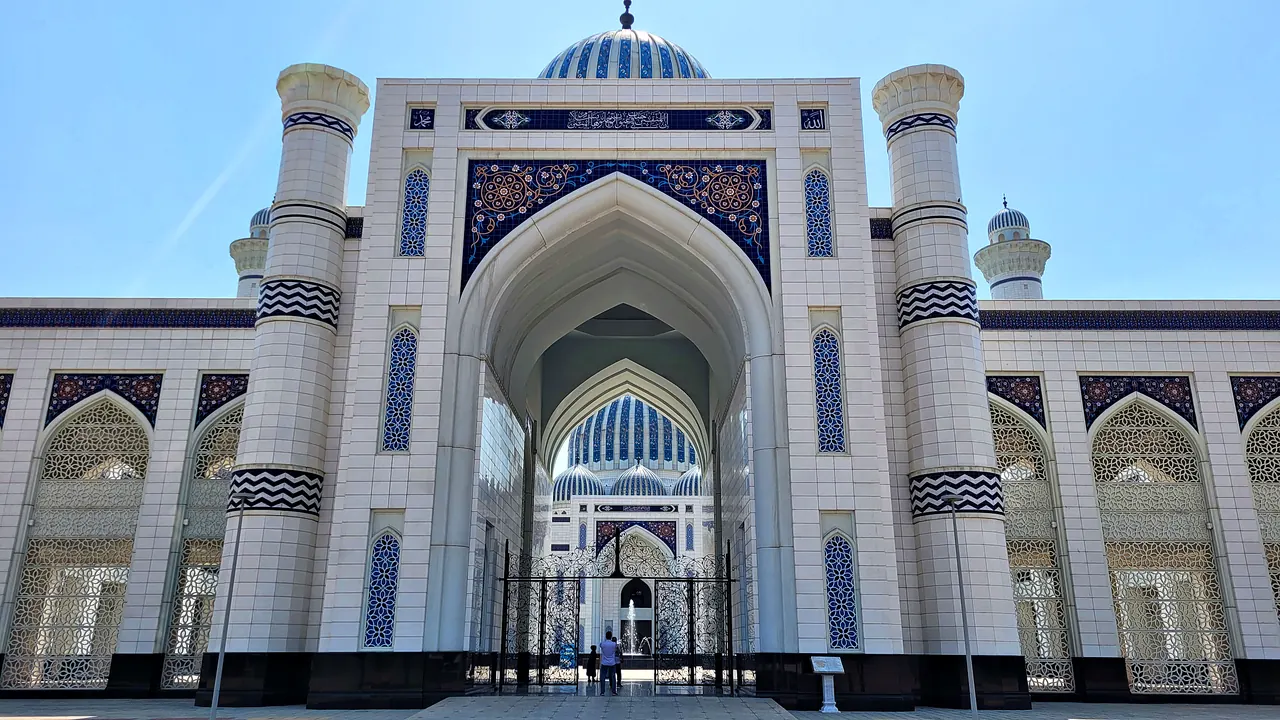
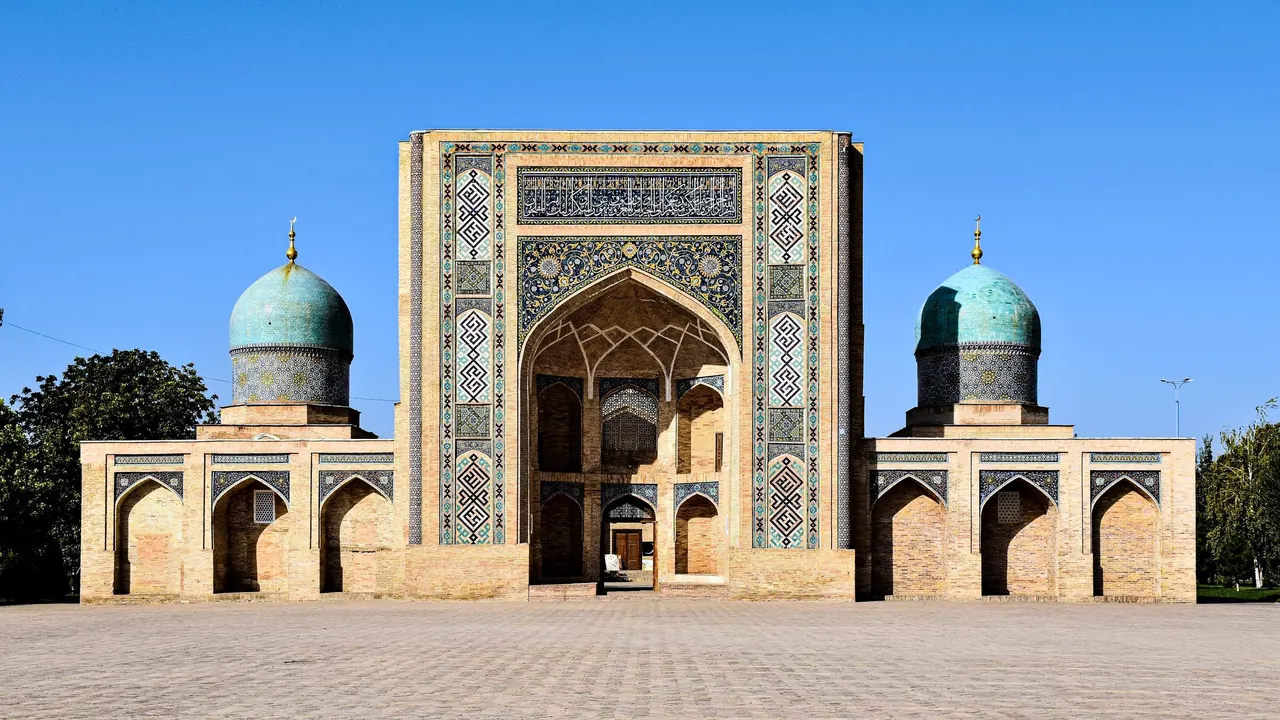
Photos: Dushanbe by Michael Kabus, Pexels License; Tashkent by AXP Photography, Pexels License.
Dushanbe or Tashkent?
Our verdict in twelve categories, each scored against the same fixed benchmark cities, and the climate month by month, so you can choose for your trip.
Choose Dushanbe for
- nature and the outdoors
- prices
Dushanbe suits the traveller who comes for the mountains and wants to spend as little as possible. The Varzob gorge begins almost at the edge of town, the Fann Mountains are within reach for an overnight trip, and day-to-day spending barely registers. In return you get a young Soviet capital with one remarkable museum, quiet evenings and a city you can see in two days, so it works best as a base for the outdoors rather than as a destination in itself.
Choose Tashkent for
- day trips
- live music and the arts
- food and drink
Tashkent is the better pick for a rounded city trip. It has more to see, a proper opera house with an easy evening out, a clear metro, a wider choice of food and Samarkand a fast train ride away. Families and first-timers to Central Asia will find it easier work. The mountains are a longer drive, but Chimgan and Charvak still make a good escape from the summer heat.
Scoreboard
Twelve categories on one fixed scale from 0 to 100. The shaded stretch is the gap between the two.
Your match
Pick a travel style or drag the sliders, and both match scores follow your weighting.
Wins on nature and the outdoors and prices with your weighting.
Wins on day trips and live music and the arts with your weighting.
What matters to you?
Category by category
What the scores mean for a trip.
Beaches & swimming
Neither city has a sea, but Tashkent offers a little more water to play in. Its outdoor water parks fill up in summer, and the Charvak reservoir, about an hour and a half away, has pebbly shores, lakeside resorts and cool mountain water. Dushanbe's options are an artificial lake, hotel pools and the cold Varzob rivers, and the turquoise Norak reservoir takes a full day to reach.
Food & drink
Both cities cook plov in great cauldrons at midday and grill shashlik on every corner, but Tashkent gives you more to work through. There are hand-pulled lagman noodles, stamped non bread and communal plov kitchens that sell out by early afternoon, and the green-domed Chorsu Bazaar has whole halls of bread and meat.
Dushanbe's dish to try is qurutob, flatbread soaked in dried-yoghurt sauce and eaten from a shared wooden platter. Its bazaars are at their best in late summer, piled with apricots and melons. Outside Tajik cooking the choice is thin, and in both cities vegetarians and wine lovers will struggle.
Culture & sights
Tashkent has more history to walk through, even after the 1966 earthquake. The Hazrat Imam complex keeps one of the oldest surviving Qurans, the Kukeldash Madrasa stands above Chorsu, and the Museum of Applied Arts sits in a painted merchant's house. Even the metro, with its chandeliers and mosaics, counts as a sight.
Dushanbe has no old town at all, since it was a village until Soviet times. You come for monumental Rudaki Avenue, the gilded Somoni statue and the Museum of Antiquities, whose 13m reclining Buddha from Ajina Tepa is the one thing here Tashkent cannot match.
Nightlife
Neither is a party city, but Tashkent at least gives you a choice. It has beer gardens, a few cocktail and lounge bars and some clubs around Amir Timur Square, and terraces stay busy on summer nights until about midnight. In Dushanbe the evening means tea, a meal and a family stroll past the fountains on Rudaki Avenue, with only a handful of quiet hotel bars and karaoke rooms after that.
Nature & outdoors
Dushanbe sits closer to wilder country. The Varzob gorge, with the Kondara and Siama side valleys, starts about half an hour north. Further on are the Fann Mountains, the Seven Lakes of Marguzor and Iskanderkul, though trails are unmarked and a guide helps.
Tashkent's mountains are about an hour and a half away, on a flat oasis plain. Once you get there they are more set up for visitors: ridge walks below Big Chimgan in the Ugam-Chatkal National Park, horse riding, paragliding and proper ski resorts, compared with Dushanbe's simple slopes at Takob and Safed Dara.
Day trips
Tashkent has one outstanding day trip, Samarkand, just over two hours away by high-speed train. A long day there takes in the Registan, Gur-e-Amir and Shah-i-Zinda.
From Dushanbe the classic outing is the rebuilt Hisor fortress, about 30km west, which takes half a day. Penjikent, Khujand and Ajina Tepa each need long drives and an overnight stay, so most excursions head into the mountains instead.
Good for families
Children are welcome in both cities, but Tashkent has more built for them. It has a large zoo, fairy-tale amusement parks and water parks for the hot months, and families with small children are fussed over on the metro. Its wide avenues make for tiring walks, though cheap taxis help.
Dushanbe's centre is calmer and greener, with small funfairs in the parks, a modest zoo and the lawns of Victory Park. Beyond that there is little organised entertainment, few changing facilities and summers above 40°C. It suits families who are relaxed about travel.
Getting around
Tashkent is easier to get around, mainly thanks to its metro. Trains are frequent, the lines are easy to follow, and stations sit close to the old town and main squares. That matters in a city of long Soviet blocks that are hard going on foot in summer.
Dushanbe has no metro, but the part a visitor uses is compact and strung along flat, shaded Rudaki Avenue, so walking covers a lot. Buses and minibuses are hard for newcomers to read, so app taxis fill the gaps in both cities, and in Dushanbe the valleys mean hiring a driver.
Shopping & style
Bazaars are the point in both cities, and Tashkent's offers a wider range of crafts. Around Chorsu you'll find Rishtan blue ceramics, ikat silk, knives and suzani, and there are workshops inside the old madrasas, though the finest pieces cost less in Bukhara or the Fergana Valley.
Dushanbe's Mehrgon market and Green Bazaar are mostly food and household goods. At their edges, stalls sell quilted chapan robes, atlas silk and skullcaps. Both cities fall back on chain-store malls for anything modern.
Affordability
Both are very cheap, and Dushanbe is cheaper still for everyday spending. Bazaar food and teahouse meals cost a fraction of Western prices, museum entry is almost nominal, and a car with driver for a mountain day costs little.
Where Tashkent pulls back is accommodation. It has a fair choice of mid-range hotels that keep a comfortable stay cheap. In Dushanbe there is little between basic guesthouses and overpriced international hotels.
Live music & performing arts
Tashkent's Alisher Navoi Theatre is a real reason to book an evening. It stages ballet and opera through most of the season in halls decorated in different regional styles, and tickets are easy to get. Conservatory concerts and a long-standing Russian-language drama scene add more.
Dushanbe's pastel Ayni opera house puts on ballet and Tajik opera too, but programmes are poorly publicised. Its more distinctive music is shashmaqom and the mountain falak, which you are more likely to hear at a festival or wedding than at a booked concert.
Wellness & relaxation
Dushanbe's treatment centres on one place outside town: Khoja Obi Garm, a hillside sanatorium built around hot radon springs about an hour up the Varzob valley. In the city itself there are Russian-style banyas and a few hotel spas.
Tashkent's bathing is in the hammam tradition, with old neighbourhood bathhouses and a few spa complexes, and for a proper retreat locals go to the mountain sanatoria around Chimgan. In both cities, though, the slow pace and long teahouse afternoons will relax you more than any spa.
When should you go?
Pick your month. The climate figures are measured averages, not a forecast.
Dushanbe in July
Tashkent in July
Daytime high, °C
Rainfall in the month, mm
Temperature and rainfall are climate normals, averaged over the years shown. Dushanbe: 1991-2020 normals, Dushanbe (2.6 km from centre). Tashkent: 1991-2020 normals, Tashkent (5.1 km from centre).
Dushanbe and Tashkent follow the same pattern through the year. Winters are cool and damp and spring is short. Summers are so hot that walking the streets at midday is hard work, with July highs in the mid-30s in both. From June to September both cities are almost completely dry. Neither has a sea, so in the warm months you swim in reservoirs and pools.
Dushanbe has the wetter spring. March and April are its rainiest months, with April bringing around 154mm, and May is warm but can still be showery. Its best window is late September and October, when the heat has gone and the mountain roads are dry. Tashkent's spring is drier than Dushanbe's, though March and April still bring regular rain, and May is the more pleasant spring month there. Its most settled season is also autumn, as the long, very sunny summer gives way to clear October days of about 22°C. Winters are a touch colder in Tashkent.
Which traveller are you?
On an outdoors trip, Dushanbe has the edge. Walnut and juniper valleys in the Varzob gorge are half an hour away, and the Fann Mountains with Iskanderkul are within reach, though you'll need a driver or a local guide for them.
For a trip on a tight budget, Dushanbe stretches money further. Bazaar meals, teahouse lunches, app taxis and even a car with driver cost very little. The catch is that comfortable mid-range rooms are scarce, so plan on simple guesthouses.
On a culture and arts trip, Tashkent is clearly the stronger choice. It has the Hazrat Imam complex, the carved rooms of the Museum of Applied Arts, mosaic-lined metro stations and ballet at the Alisher Navoi Theatre, with Samarkand's Registan an easy day out.
Before you go
| Measure | Dushanbe | Tashkent |
|---|---|---|
| Official language | Tajik | Uzbek |
| Currency | Somoni (TJS) | Uzbekistan Sum (UZS) |
| Sockets | CFI220 V, 50 Hz | CFI220 V, 50 Hz |
| Driving side | Right | Right |
| Time zone | UTC+5 | UTC+5 |
| Emergency number | 112 | 112 |
| Elevation | 706 m | 455 m |
| Main airport | Dushanbe International Airport (DYU)5 km from centre44 non-stop destinations | Tashkent International Airport (TAS)6 km from centre113 non-stop destinations |
By the numbers
| Measure | Dushanbe | Tashkent |
|---|---|---|
| Population | 948,251 | 2,956,384 |
| People per km² | 7,610 | 8,830 |
| Museums within 10 km | 4 | 27 |
| UNESCO World Heritage sites within 50 km | 0 | 1 |
Where else could you go?
Every comparison below shares a destination with this one, so you can follow Dushanbe or Tashkent somewhere new.
- Samarkandvs Dushanbe
- Samarkandvs Tashkent
- Bukharavs Dushanbe
- Bukharavs Tashkent
- Bishkekvs Tashkent
- Almatyvs Tashkent