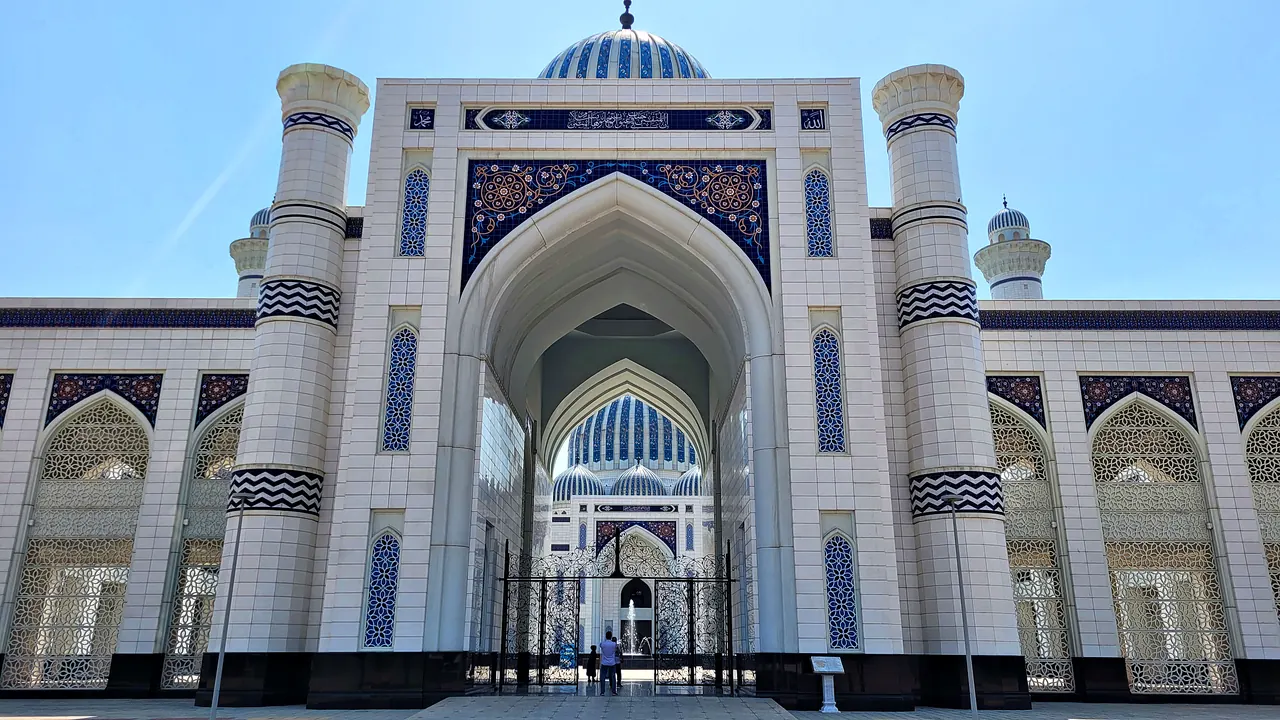
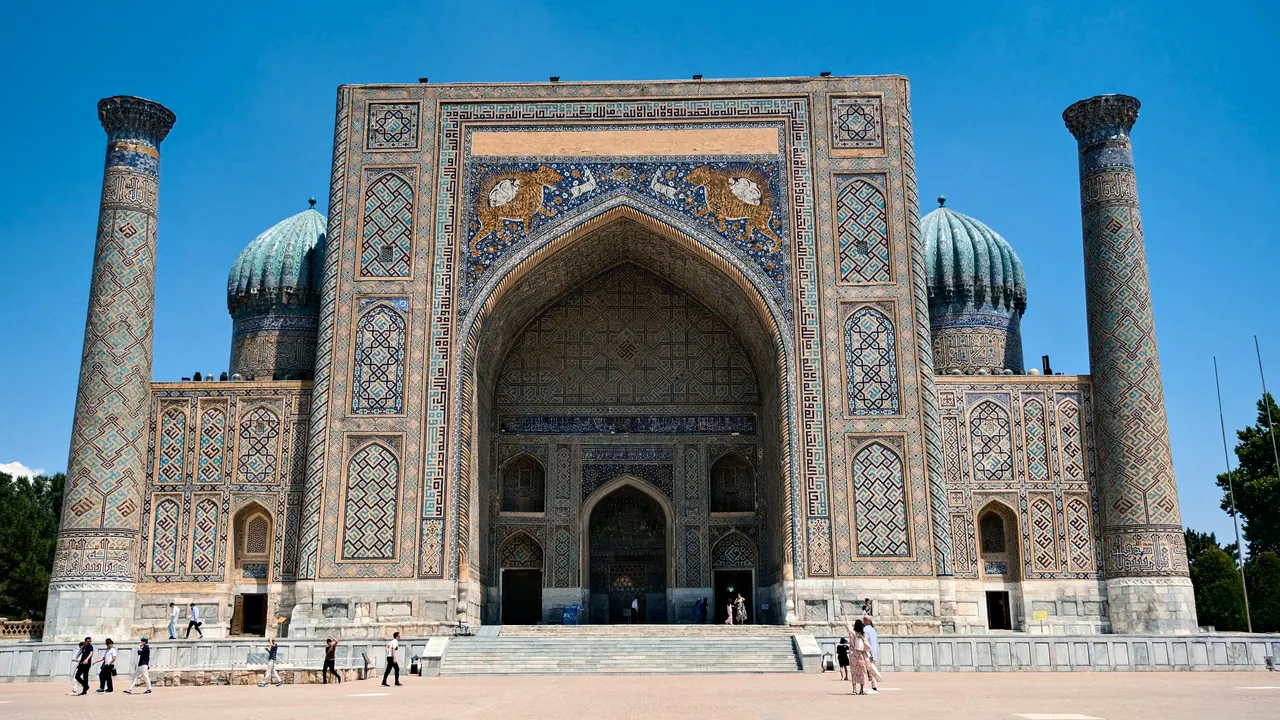
Photos: Dushanbe by Michael Kabus, Pexels License; Samarkand by Yaşar Başkurt, Pexels License.
Dushanbe or Samarkand?
Our verdict in twelve categories, each scored against the same fixed benchmark cities, and the climate month by month, so you can choose for your trip.
Choose Dushanbe for
- nature and the outdoors
- prices
- live music and the arts
Dushanbe is the pick for travellers who care more about mountains than monuments. The Varzob gorge and its walnut and juniper side valleys start barely half an hour from the centre, the Fann Mountains are within reach for an overnight trip, and daily costs are among the lowest you will find. The city itself is a short, calm stop of Soviet boulevards, parks and one excellent antiquities museum. It works best as a base for the hills rather than a sightseeing destination in its own right.
Choose Samarkand for
- day trips
- culture and sights
- getting around
Anyone drawn by architecture should choose Samarkand. The Registan, Shah-i-Zinda and Gur-e-Amir are among the great sights of the Islamic world, and most of them sit along one walkable street. Bukhara and Shakhrisabz are easy day trips, so a few days here make a full Silk Road itinerary in a way Dushanbe cannot. Walkers will find the surrounding hills gentle rather than grand, but for history and tilework it is the stronger city by a long way.
Scoreboard
Twelve categories on one fixed scale from 0 to 100. The shaded stretch is the gap between the two.
Your match
Pick a travel style or drag the sliders, and both match scores follow your weighting.
Wins on nature and the outdoors and prices with your weighting.
Wins on day trips and culture and sights with your weighting.
What matters to you?
Category by category
What the scores mean for a trip.
Beaches & swimming
You can't plan a beach trip in either city, as both are deep inside Central Asia. Dushanbe offers slightly more ways to cool off: the cold rivers of the Varzob valley, an artificial lake on the edge of town, and the turquoise Norak reservoir as a full day out. In Samarkand a hotel pool is really the only option, since the shallow Zarafshan river is not somewhere visitors swim.
Food & drink
The two kitchens are close relatives, with plov cooked in big cauldrons at lunchtime, somsa or sambusa from the tandoor, shashlik and endless green tea. Samarkand eats a little better. Its layered local plov and famous glazed non bread are reasons in themselves to sit down, Siab Bazaar beside Bibi-Khanym makes a fine food stop, and a historic winery adds a tasting.
Dushanbe's dish to look for is qurutob, flatbread soaked in dried-yoghurt sauce and shared from a wooden platter. Its bazaars are full of apricots, mulberries and melons in late summer. Neither city has fine dining, and in both the menus get repetitive after a few days.
Culture & sights
This is where the two differ most. Samarkand has the Registan's three facing madrasas, the climbing avenue of tombs at Shah-i-Zinda, the gold-lit interior of Gur-e-Amir, the vast Bibi-Khanym mosque, and Ulugh Beg's observatory and the Afrasiyab murals as well. Plan three or four days to do it justice.
Dushanbe was a village until Soviet times, so its sights are state monuments along Rudaki Avenue, the Somoni statue and the pastel opera house. Its real treasure is the Museum of Antiquities with its 13m reclining Buddha. Two days covers the city comfortably.
Nightlife
Neither city does nightlife, and both empty out early. What differs is the evening ritual. In Samarkand it is a long dinner in a big restaurant where wedding parties dance to live bands, followed by a walk past the lit-up Registan. In Dushanbe it is families strolling the fountains and parks on Rudaki Avenue, with a few pubs, hookah lounges and karaoke rooms for anyone who wants a drink.
Nature & outdoors
Dushanbe has the real mountains, starting almost at the city limits. The Varzob gorge is half an hour north, with walnut and juniper valleys for walking and the small Takob and Safed Dara ski slopes further up. Over a high pass lie the Fann Mountains, Iskanderkul and the Seven Lakes of Marguzor, though trails are unmarked and a driver or guide helps.
Samarkand's countryside is gentler. Aman-Kutan and the hills above Urgut offer juniper woods, streams and village paths about an hour away, and the Nuratau range suits homestay treks. Those big Fann peaks are actually across the border, on the Tajik side.
Day trips
Samarkand is the much better base for excursions. The high-speed train reaches Bukhara's intact old town in about an hour and a half, and Shakhrisabz, Timur's birthplace, is a scenic drive over a pass. Urgut's Sunday bazaar and the mulberry-paper village of Konigil are close by.
From Dushanbe there is really just the Hisor fortress, about 30km west, which takes half a day. Penjikent, Khujand and Ajina Tepa are long drives that work better as overnight trips, which is why most outings head into the mountains instead.
Good for families
Both cities are warm towards children, safe and calm, and neither has much built for them. Summer heat is the big obstacle in both. Dushanbe has more for young children: big parks with funfairs and fountains, a modest zoo, a botanical garden and Victory Park's lawns. Samarkand suits older children who will be won over by tilework and the stories behind Timur's monuments.
Getting around
Samarkand is easier to get around on foot. A single pedestrian street links the Registan, Bibi-Khanym, Siab Bazaar and Shah-i-Zinda, and Gur-e-Amir is a short walk the other way. App taxis at fixed fares cover the observatory and the station, and the train network takes you on to Bukhara and Tashkent.
Dushanbe's centre is just as compact, strung along flat, shaded Rudaki Avenue, and app taxis are plentiful. But there is no useful rail, so the valleys and other towns mean hiring a driver or squeezing into a shared taxi.
Shopping & style
Both are craft-and-bazaar cities rather than places to shop for fashion, and Samarkand has the better selection. Workshops in the madrasa cells of the Registan and Shah-i-Zinda sell suzani, ikat silk, ceramics, knives and miniatures, carpets are knotted in town, and Konigil makes mulberry paper, though you need to look past the cheap souvenirs.
In Dushanbe the Mehrgon and Green bazaars are mainly for food and household goods. Skullcaps, chapan robes, atlas silk and suzani turn up around their edges and in a few small craft shops.
Affordability
Both are very cheap, and Dushanbe is slightly cheaper day to day. Teahouse meals, app taxis, nominal museum fees and an inexpensive driver for a mountain day keep spending low. Its weak spot is hotels, with few decent mid-range options and costly international ones. Samarkand's family-run guesthouses make a comfortable stay easier on a modest budget, while upscale rooms near the Registan and imported drinks are where its costs rise.
Live music & performing arts
Dushanbe has a little more formal stage life. The Ayni Opera and Ballet Theatre puts on ballet and Tajik opera, and shashmaqom and mountain falak music can be heard at concerts if you ask around. Samarkand's performances are mostly put on for visitors, with folk-costume shows and sound-and-light displays on the Registan. Its highlight is the Sharq Taronalari festival, held in the square in some years.
Wellness & relaxation
Neither city is a spa destination, and in both the calm comes from long teahouse afternoons on raised platforms. Dushanbe has a more serious retreat about an hour away, the hot radon springs of the Khoja Obi Garm sanatorium in the Varzob valley, plus banya saunas in town. Samarkand keeps an old domed hammam near Bibi-Khanym, and its old-quarter courtyards grow quiet once the tour groups leave.
When should you go?
Pick your month. The climate figures are measured averages, not a forecast.
Dushanbe in July
Samarkand in July
Daytime high, °C
Rainfall in the month, mm
Temperature and rainfall are climate normals, averaged over the years shown. Dushanbe: 1991-2020 normals, Dushanbe (2.6 km from centre). Samarkand: 1991-2020 normals, Samarkand (10 km from centre).
Neither city has a beach season, so timing comes down to heat and rain. Both are at their best in spring and autumn. Midsummer is fiercely hot and dry in both, with Dushanbe reaching about 37°C in July and Samarkand a few degrees cooler. That is too hot for long walks between monuments or along Rudaki Avenue. Winters are cool and grey in both, and Samarkand is slightly the colder of the two.
The big difference is the spring rain. Dushanbe gets a lot of it from February to April, peaking at around 154mm in April, so late spring hikes in the Varzob valley can be muddy. May and especially late September to October are its safest walking months. Samarkand's spring is far drier, at most around 69mm in a month, and from May to September it is very sunny. So April, May and October are reliable months for its courtyards and squares.
Which traveller are you?
For a culture and arts trip, Samarkand wins without much argument. The Registan, Shah-i-Zinda's tiled mausoleums and Timur's tomb are world-class, and Bukhara is a train ride away. Dushanbe has the fine Museum of Antiquities but no historic old town at all.
On an outdoors trip, Dushanbe is the clear choice. The Varzob gorge, Kondara and Siama sit just outside town, there is simple winter skiing about an hour up the road, and Iskanderkul and the Seven Lakes are reachable overnight. Samarkand's nearby hills are pleasant but mild.
For a trip on a tight budget, both are cheap, but Dushanbe stretches money slightly further. Bazaar meals, taxis and a driver for a mountain day cost very little. Samarkand's family guesthouses are better value than Dushanbe's thin choice of mid-range hotels, though.
Before you go
| Measure | Dushanbe | Samarkand |
|---|---|---|
| Official language | Tajik | Uzbek |
| Currency | Somoni (TJS) | Uzbekistan Sum (UZS) |
| Sockets | CFI220 V, 50 Hz | CFI220 V, 50 Hz |
| Driving side | Right | Right |
| Time zone | UTC+5 | UTC+5 |
| Emergency number | 112 | 112 |
| Elevation | 706 m | 702 m |
| Main airport | Dushanbe International Airport (DYU)5 km from centre44 non-stop destinations | Samarkand International Airport (SKD)5 km from centre30 non-stop destinations |
By the numbers
| Measure | Dushanbe | Samarkand |
|---|---|---|
| Population | 948,251 | 546,303 |
| People per km² | 7,610 | 5,058 |
| Museums within 10 km | 4 | 11 |
| UNESCO World Heritage sites within 50 km | 0 | 1 |
Where else could you go?
Every comparison below shares a destination with this one, so you can follow Dushanbe or Samarkand somewhere new.
- Bukharavs Samarkand
- Tashkentvs Samarkand
- Tashkentvs Dushanbe
- Bukharavs Dushanbe
- Khivavs Samarkand
- Bishkekvs Dushanbe