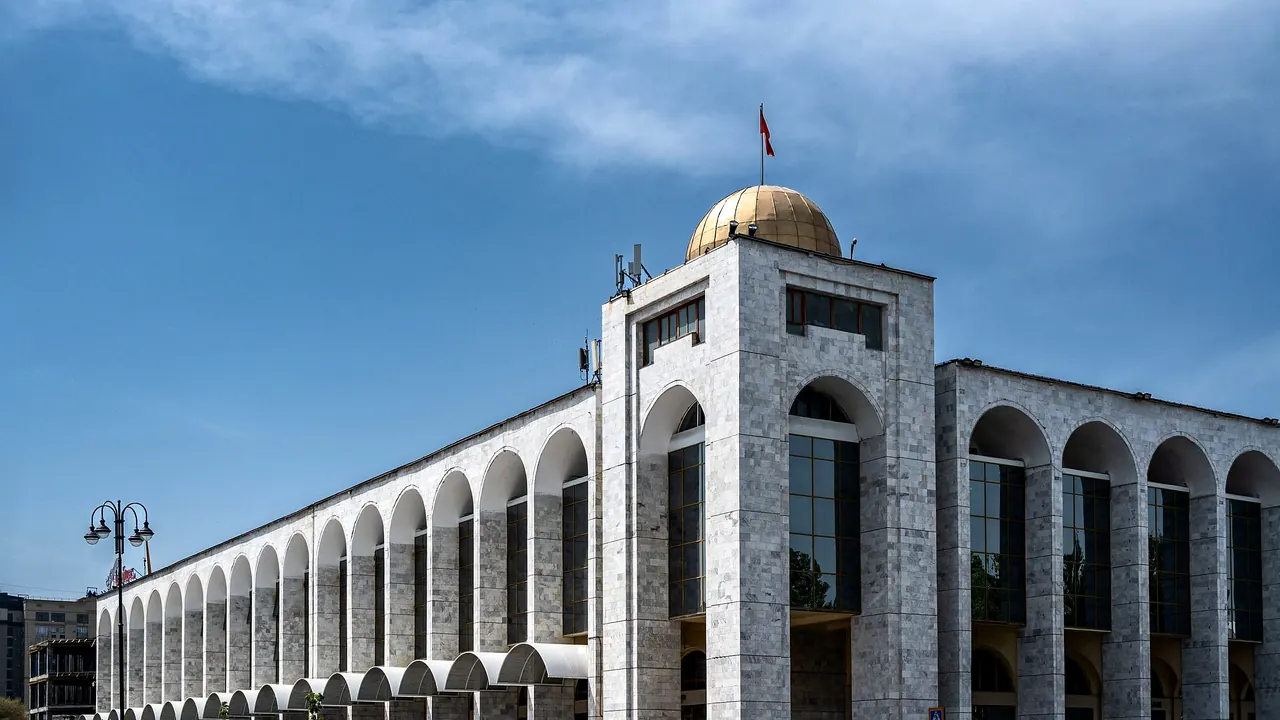
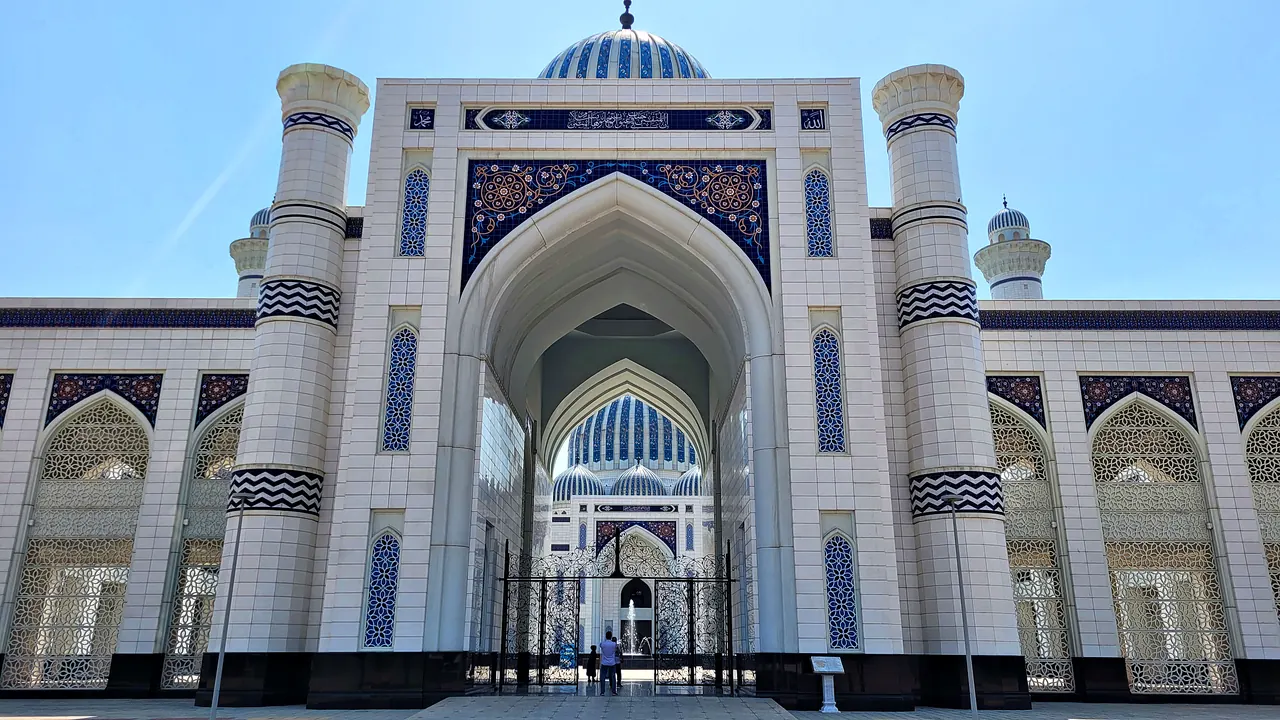
Photos: Bishkek by xiquinhosilva, CC BY 4.0, cropped; Dushanbe by Michael Kabus, Pexels License.
Bishkek or Dushanbe?
Our verdict in twelve categories, each scored against the same fixed benchmark cities, and the climate month by month, so you can choose for your trip.
Choose Bishkek for
- nightlife
- nature and the outdoors
- wellness
Bishkek is the better base for an active trip into the mountains. The Ala-Too range rises right behind the city, Ala-Archa's glacier trails are under an hour away, and the long Tien Shan treks start here. Back in town there is more to do in the evening: craft beer pubs, a few late clubs, ballet and opera through the autumn-to-spring season, and a banya to soak tired legs. Choose it if you want hiking, riding and some city life after a day on the trails.
Choose Dushanbe for
- culture and sights
- beaches
If you are curious about Central Asia's deep past and happy at a slower pace, Dushanbe gives you more. Its Museum of Antiquities, with Buddhist and Sogdian treasures, is the most rewarding single sight in either city. Evenings are tea, plov and family strolls along Rudaki Avenue. The Varzob gorge is half an hour away for an easy walk among walnut and juniper, but the grander Fann Mountains and their lakes lie several hours over a high pass and need an overnight stay. With milder winters, it suits a quiet, unhurried trip more than a night out or serious trekking.
Scoreboard
Twelve categories on one fixed scale from 0 to 100. The shaded stretch is the gap between the two.
Your match
Pick a travel style or drag the sliders, and both match scores follow your weighting.
Wins on nightlife and nature and the outdoors with your weighting.
Wins on culture and sights and beaches with your weighting.
What matters to you?
Category by category
What the scores mean for a trip.
Beaches & swimming
Neither city has a beach. Both are landlocked, and in the summer heat locals in each use hotel pools and cold mountain rivers rather than anywhere you could lie on sand.
Where they differ is the nearest water worth the trip. Bishkek's is Issyk-Kul, a vast alpine lake around four hours east that needs several days. Dushanbe has an artificial lake on its edge and the turquoise Norak reservoir to the south, which you can reach on a long day out.
Food & drink
The two kitchens overlap a lot, with plov from huge cauldrons, tandoor pastries and shashlik in both, and Bishkek has a slight edge for range. Uyghur and Dungan cooks bring spicier noodles and dumplings to its lagman and beshbarmak, and there are more cafés and international kitchens around the centre. Osh Bazaar, with kymyz in summer, is the place to see what the city eats.
Dushanbe's signature is qurutob, flatbread soaked in dried-yoghurt sauce and shared from a wooden platter, eaten in chaikhanas where you sit on raised platforms over green tea. Its bazaars are at their best with late-summer melons and apricots. Outside local cooking the choice is narrower than in Bishkek, and vegetarians will struggle in both.
Culture & sights
Both are young Soviet-planned capitals with no old town, and either can be seen in a couple of days. Dushanbe has more to show you. The Museum of Antiquities holds Greco-Bactrian, Sogdian and Buddhist finds, including the long reclining Buddha from Ajina Tepa, and Rudaki Avenue adds the gilded Somoni statue, the pastel Ayni opera house and a small museum of musical instruments.
Bishkek's appeal is the urban landscape itself. You get Ala-Too Square with Manas and the changing of the guard, felt and embroidery in the Fine Arts Museum, the sculpture garden in Oak Park, and mosaic-fronted blocks that make a good walk through late-Soviet modernism.
Nightlife
Bishkek is clearly the better place to go out. Craft beer pubs, cocktail bars and hookah lounges cluster around the central avenues and the university streets, karaoke is popular, and a few clubs stay open late at weekends. It is modest, but you can make a proper night of it.
Dushanbe has very little after dinner. There are a few hotel bars and small expat clubs with thin crowds that close early. The real evening is a family stroll past the lit fountains of Rudaki Avenue.
Nature & outdoors
Both capitals have mountains at their edge, but Bishkek's are bigger and easier to reach. Ala-Archa, about 40km away, leads up to the Ak-Sai glacier beneath peaks above 4,000m, and gorges such as Alamedin and Chunkurchak add waterfalls, yurt camps and riding. In summer the high passes open for treks across the Tien Shan.
Dushanbe's Varzob gorge, with walnut and juniper side valleys, is a lovely half-hour escape. Its great sights, the Fann Mountains, Iskanderkul and the Seven Lakes, sit several hours away over a high pass. Valley heat also pushes its best walking into spring and autumn.
Day trips
Each city has essentially one historic outing, and in both cases most excursions are really into the mountains. From Bishkek it is the Burana Tower, the stump of an 11th-century minaret on the Silk Road site of Balasagun, ringed by stone balbal figures about an hour and a half east.
Dushanbe's is closer. The rebuilt Hisor fortress gateway, with its madrasa and caravanserai, is about 30km west and fills half a day. Further sites like Penjikent and Khujand, like Issyk-Kul and Karakol from Bishkek, need overnight stays.
Good for families
Both are equally manageable with children. Each has a warm local attitude to kids and evening parks with funfair rides, and neither has much built for them. Bishkek has Panfilov Park and easy riverside picnics in Ala-Archa, but busy roads, uneven pavements and cramped minibuses make it hard going with small children.
Dushanbe's centre is calmer to walk, and it adds a botanical garden, Victory Park's lawns and a modest zoo. Its summer heat often passes 40°C, though, and mountain trips involve long, winding drives.
Getting around
Getting around works the same way in both: no metro, hard-to-read minibuses, and cheap app taxis that most visitors rely on. The difference is the shape of the centre. Bishkek is a flat grid of shaded avenues with most sights within half an hour's walk of Ala-Too Square, though rush-hour traffic and patchy pavements spoil it a little.
Dushanbe's visitor area is strung along one long boulevard, Rudaki Avenue, so it is easy to find your way around. Its summer heat limits walking more. In both cities the mountains mean hiring a driver, and in Dushanbe shared taxis are the usual way to other towns.
Shopping & style
Shopping in both comes down to bazaars and crafts, with only chain-store malls beyond that, and Bishkek has a little more to it. Osh Bazaar has spices and traditional hats, Dordoi is a vast container market worth seeing as a spectacle, and the felt is the real find: shyrdak rugs, slippers and white ak-kalpak hats.
Dushanbe's Mehrgon and Green Bazaar markets lean towards textiles. Look for embroidered skullcaps, quilted chapan robes, bright atlas silk and suzani embroideries.
Affordability
Both are very cheap. Bazaar food, teahouse meals, app taxis, museum tickets and a mountain day with a driver all cost little in either city.
The difference is in where you sleep. Bishkek has a wider spread of comfortable hotels between hostels and the top end. In Dushanbe, good mid-range rooms are scarce, and the international hotels charge far more than the rest of the city would suggest.
Live music & performing arts
Both kept their Soviet opera houses, but Bishkek's stage is easier for a visitor to use. The colonnaded Opera and Ballet Theatre runs a full autumn-to-spring season, the Philharmonic mixes orchestral programmes with Kyrgyz folk music, and tickets are simple to buy. Komuz music and Manas epic recitals are its local speciality.
Dushanbe's Ayni theatre stages ballet and Tajik opera, and its traditional sound of shashmaqom court music and mountain falak is distinctive. Programmes are poorly publicised, though, so you often have to ask around to catch a performance.
Wellness & relaxation
Bishkek offers more for unwinding in town. The banya, with birch-branch whisking and a cold plunge, is an everyday ritual you can book by the hour, and Issyk-Ata's hot springs and sanatoriums are a couple of hours away.
Dushanbe has saunas but no bathing tradition to build a stay around. Its best option is Khoja Obi Garm, a hillside radon-spring sanatorium an hour up the Varzob valley. In the city itself, long teahouse sessions and slow evening walks set the restful pace.
When should you go?
Pick your month. The climate figures are measured averages, not a forecast.
Bishkek in July
Dushanbe in July
Daytime high, °C
Rainfall in the month, mm
Temperature and rainfall are climate normals, averaged over the years shown. Bishkek: 1991-2020 normals, Bishkek (3.3 km from centre). Dushanbe: 1991-2020 normals, Dushanbe (2.6 km from centre).
The two cities run on different calendars. Bishkek has a proper continental winter, with January highs around 3°C, and most of its rain falls from March to May. May is warm and sunny but still showery. The dry, very sunny stretch runs from June to September, when July reaches about 33°C. Late May and September are the most comfortable months for walking the city, and June to September is the season for the high trails, which only open fully in summer. Dushanbe is milder in winter, near 10°C in January, but winter and spring bring most of its rain, peaking at around 154mm in April.
Dushanbe's summer is almost completely dry and hotter than Bishkek's, at about 37°C in July, which makes walking the streets hard work in the middle of the day. That leaves late April, May, late September and October as its best months. Spring is the wetter of the two, and autumn is drier and more settled. In short, Bishkek is better in high summer, and Dushanbe is better either side of it.
Which traveller are you?
For an outdoors trip, Bishkek is the stronger choice. Ala-Archa's juniper valleys and glacier trails are under an hour away, several gorges have yurt camps and horses, and the city is the usual starting point for Tien Shan treks.
On a culture and arts trip, go to Dushanbe for the museums. The Museum of Antiquities and its giant reclining Buddha outclass anything in Bishkek's Soviet set pieces, though Bishkek's opera and ballet stage is the more reliable night at the theatre.
For a food and nightlife trip, Bishkek pulls ahead. Its Uyghur and Dungan noodle kitchens widen the menu, and its pubs, cocktail bars and weekend clubs give you a real evening out. Dushanbe's nights mostly end at the teahouse.
Before you go
| Measure | Bishkek | Dushanbe |
|---|---|---|
| Official language | Kyrgyz | Tajik |
| Currency | Som (KGS) | Somoni (TJS) |
| Sockets | CF220 V, 50 Hz | CFI220 V, 50 Hz |
| Driving side | Right | Right |
| Time zone | UTC+6 | UTC+5 |
| Emergency number | 161 | 112 |
| Elevation | 750 m | 706 m |
| Main airport | Manas International Airport (BSZ)23 km from centre42 non-stop destinations | Dushanbe International Airport (DYU)5 km from centre44 non-stop destinations |
By the numbers
| Measure | Bishkek | Dushanbe |
|---|---|---|
| Population | 1,191,000 | 948,251 |
| People per km² | 9,378 | 7,610 |
| Museums within 10 km | 6 | 4 |
| UNESCO World Heritage sites within 50 km | 2 | 0 |
Where else could you go?
Every comparison below shares a destination with this one, so you can follow Bishkek or Dushanbe somewhere new.
- Almatyvs Bishkek
- Samarkandvs Dushanbe
- Tashkentvs Dushanbe
- Karakolvs Bishkek
- Bukharavs Dushanbe
- Tashkentvs Bishkek