Photos: Karakol by Bruno Rijsman, CC BY 2.0, cropped; Leh by Rayan Naqash, CC BY-SA 3.0, cropped.
Karakol or Leh?
Our verdict in twelve categories, each scored against the same fixed benchmark cities, and the climate month by month, so you can choose for your trip.
Choose Karakol for
- beaches
- wellness
- families
Karakol suits the traveller who wants mountains without much fuss and without much expense. Spruce valleys, herders' yurts and the Ala-Kul loop start a short drive from a flat, walkable frontier town, and the days end in hot-spring pools. It is also the gentler place for adventurous families, it has a winter life on its quiet ski slopes, and it is the cheaper of the two.
Choose Leh for
- day trips
- culture and sights
- shopping
Leh is for someone who wants the mountains and a living Buddhist culture together. The palace and old town fill the first days while you acclimatise, and then come the monasteries along the Indus, from Thiksey and Hemis to the painted temples of Alchi, which Karakol has nothing to match. The price is the altitude, the long drives and a harder time with children.
Scoreboard
Twelve categories on one fixed scale from 0 to 100. The shaded stretch is the gap between the two.
Your match
Pick a travel style or drag the sliders, and both match scores follow your weighting.
Too close to call, 2 points apart
Wins on beaches and wellness with your weighting.
Wins on day trips and culture and sights with your weighting.
What matters to you?
Category by category
What the scores mean for a trip.
Beaches & swimming
Karakol at least has a lake. Issyk-Kul's sandy shores around Tamga, Barskoon and the north coast are a drive of a couple of hours, and in high summer the water is warm enough for a refreshing swim between treks.
Leh has nothing comparable. Its rivers and high lakes run on snowmelt and stay far too cold to enter, so water there means rafting or scenery, never a swim.
Food & drink
Neither town is a reason to travel for food, and both feed you cheaply and well enough. The difference is in character. Karakol's interest lies in the Dungan kitchen: sour, chilli-dark ashlan-fu in bazaar canteens and, best of all, a home-cooked dinner with a Dungan family.
Leh eats from the Tibetan and Ladakhi tradition, with momos, thukpa and skyu, and it has a far more comfortable traveller scene of rooftop cafés, bakeries and decent coffee around the Main Bazaar and Changspa, though much of it shuts outside summer.
Culture & sights
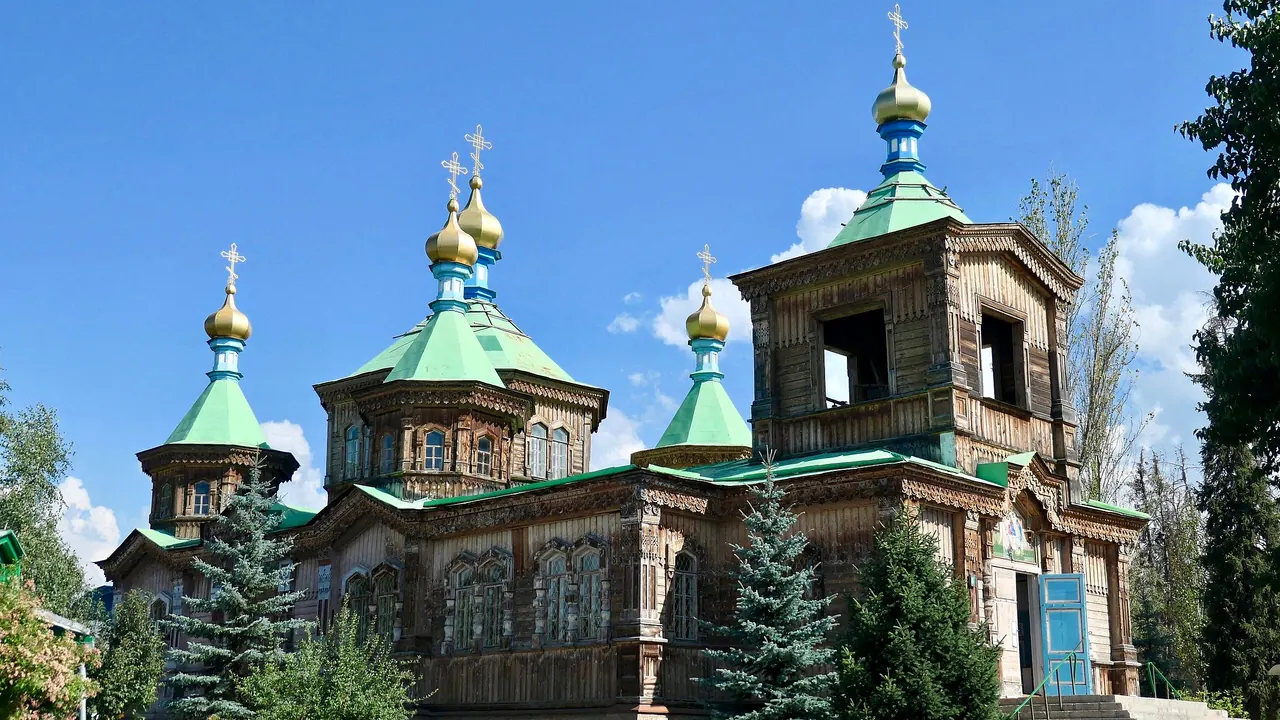
Karakol's sights are a pair of fine curiosities: the wooden Holy Trinity Cathedral and the nail-free, pagoda-roofed Dungan Mosque, with the Przhevalsky memorial and the Sunday animal market as extras. Together they make a pleasant half-day.
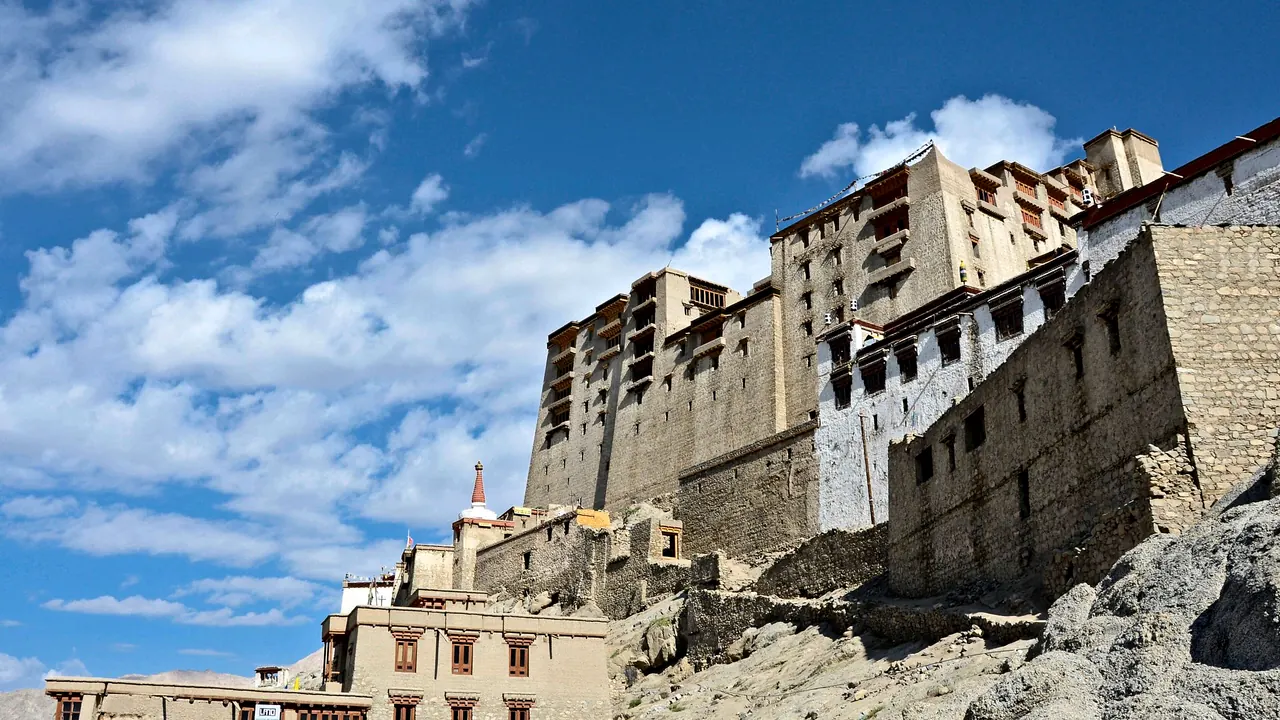
Leh has more substance in town. The nine-storey palace, the Namgyal Tsemo ridge above it, the mud-brick old town and an active monastery at Sankar give a day or two of real interest, and Shanti Stupa adds the sunset view.
Nightlife
There is no night out to be had in either town. Karakol offers a guesthouse beer, a few cafés and local karaoke, plus some après-ski drinking in winter. Leh's evenings end even earlier, over a late rooftop dinner, with altitude, cold and dawn starts sending everyone to bed.
Nature & outdoors
Both are first-rate mountain bases, but the landscapes look nothing alike. Karakol's Terskey Ala-Too is green, with spruce forest, summer pastures and turquoise Ala-Kul, plus horse trekking and empty winter ski runs. All of it starts at a comfortable altitude.
Leh is high desert: bare, many-coloured ridges, the Markha valley, the Khardung La road, rafting in the Indus and Zanskar gorges, and further out the dunes of Nubra and Pangong Tso. It asks for days of acclimatisation first.
Day trips
Here Leh is far ahead. Thiksey and Shey lie under half an hour away, Hemis about an hour, and a western day takes in Likir, Basgo and Alchi's painted temples. The range is narrow, nearly all monasteries, but the quality is exceptional.
From Karakol, outings mean valleys and the lake shore rather than other places. The south-shore villages and the eagle hunters near Bokonbaevo make one good day, and Cholpon-Ata works better as an overnight stop.
Good for families
Karakol is the more workable of the two with children. It sits at a manageable height, and horse rides, yurt nights, short valley walks and quiet ski slopes suit adventurous older children, though toddlers will struggle and nothing in town is made for them.
Leh adds a serious problem: you arrive at altitude in a single flight, and children need careful acclimatisation. After that the outings are long mountain drives, so only robust teenagers keen on trekking or rafting really fit.
Getting around
Karakol's flat grid is easy on foot, with cathedral, mosque and bazaar all close together. Shared minibuses and cheap day taxis reach the valley mouths and the ski area, though you will haggle over prices and read Cyrillic.
Leh's centre is walkable too, but the slopes feel steep in the thin air. Beyond town buses are sparse, so you depend on the fixed-fare taxi union, hired motorbikes or shared jeeps for long drives, and some passes close in winter.
Shopping & style
Leh offers more to browse. Its Main Bazaar is lined with pashmina, thangkas, turquoise jewellery and singing bowls, and it is a good place to buy trekking gear, though stock repeats and quality needs checking.
Karakol's shopping comes down to felt: shyrdak rugs, slippers and kalpak hats from local cooperatives. Those are worth buying, but beyond them the bazaar is better for wandering than buying.
Affordability
Both are cheap places to sleep and eat, but Karakol stretches money further. Guesthouses, canteen meals, minibuses and even a private taxi for the day cost very little, and the only real outlay is guides, horses and transfers to the high valleys.
In Leh the cheap homestays and noodle soups are offset by transport. The taxi union's fixed fares are high, car hire is the norm for days out, the outer valleys need permits, and hotels charge more in summer.
Live music & performing arts
Whatever you see in either town comes down to luck and timing, not a programme. Karakol has a small regional drama theatre with plays in Kyrgyz and Russian, but its real music is the komuz and Manas recitation, heard at yurt camps and guesthouse evenings.
Leh has no stage at all. Its tradition is religious, and a stay timed to the masked cham dances at the Hemis festival or around Losar can be deeply moving.
Wellness & relaxation
Karakol has an actual bathing tradition. You can soak in the outdoor thermal pools at the Ak-Suu sanatorium after skiing, or in the hot-spring baths in Altyn-Arashan's pine valley after a trek. None of it is polished, but it is restorative.
Leh offers stillness rather than soaking: meditation courses, amchi medicine and slow guesthouse mornings. The dry, thin air and broken early sleep make it better for reflection than for real rest.
When should you go?
Pick your month. The climate figures are measured averages, not a forecast.
Karakol in July
Leh in July
Daytime high, °C
Rainfall in the month, mm
Where the figures come from
Leh has no weather station within reach, so its figures come from a gridded climate model rather than a measured record, and read a broad area rather than one spot.
Temperature and rainfall are climate normals, averaged over the years shown. Karakol: 1991-2020 normals, Kyzyl-Suu / Chelpek (16 km from centre). Leh: 1991-2020 normals, TerraClimate 4 km grid at the town, no weather station within 90 km.
Both towns have a short warm season and long, hard winters. Karakol is at its best for walking from June to September, when the valleys are open and the town reaches the low to mid twenties by day. The lake comes later: only in late July and August does the water near the Issyk-Kul shore warm enough for a swim between treks. Summer is also the wettest stretch, at around 48mm a month, so expect showers in the mountains.
From December to February the town sits close to freezing, and that is when the ski slopes above it take over.\n\nLeh follows a similar curve but stays dry all year, with no month much above 13mm, so its summer days of around 25°C rarely bring rain. June to September is the season for passes, lakes and treks. Winters are harsher than Karakol's, with January highs near -3°C, and suit only travellers who come for the snow leopards or the frozen-river trek.
Which traveller are you?
On a culture and arts trip, Leh is the clear choice. Its palace, old town and Sankar gompa are only the start, because Thiksey, Hemis and Alchi's thousand-year-old murals lie within a day's drive. Karakol's cathedral and Dungan Mosque fill a half-day.
For a relaxing and wellness trip, Karakol does better. The thermal pools at Ak-Suu and the hot-spring baths at Altyn-Arashan give real soaks after walking, and the low altitude lets you sleep well. In Leh the rest is mostly meditation and rooftop quiet, with thin air working against it.
On a family trip with children, Karakol is the easier of two demanding places. Horse rides to yurts, short valley walks and quiet ski runs work for adventurous older children. Leh's sudden altitude and long mountain drives make it hard going for anyone young.
Before you go
| Measure | Karakol | Leh |
|---|---|---|
| Official language | Kyrgyz | Hindi, English |
| Currency | Som (KGS) | Indian Rupee (INR) |
| Sockets | CF220 V, 50 Hz | CM230 V, 50 Hz |
| Driving side | Right | Left |
| Time zone | UTC+6 | UTC+5:30 |
| Emergency number | 161 | 108 or 112 |
| Elevation | 1,690 m | 3,500 m |
| Main airport | Manas International Airport (BSZ)326 km from centre42 non-stop destinations | Leh Kushok Bakula Rimpochee Airport (IXL)5 km from centre5 non-stop destinations |
By the numbers
| Measure | Karakol | Leh |
|---|---|---|
| Population | 85,588 | 30,870 |
| People per km² | 1,779 | - |
| Museums within 10 km | 1 | 2 |
| UNESCO World Heritage sites within 50 km | 0 | 0 |
Where else could you go?
Every comparison below shares a destination with this one, so you can follow Karakol or Leh somewhere new.