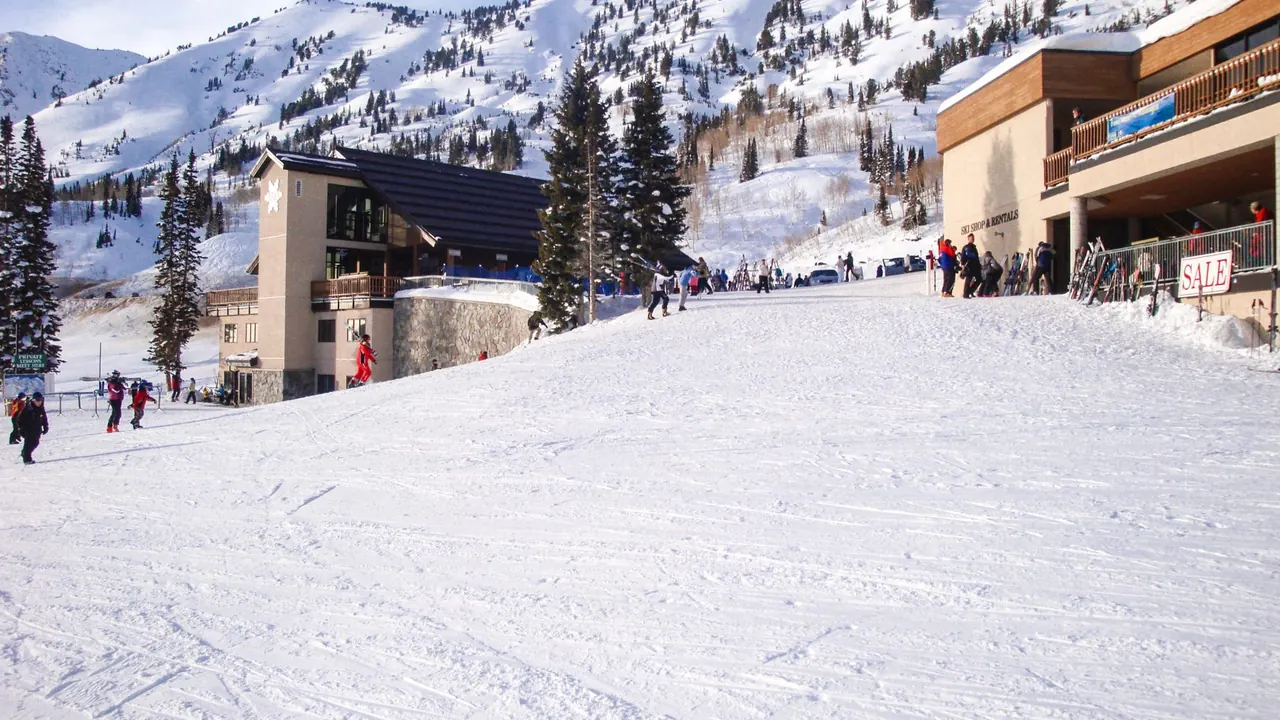
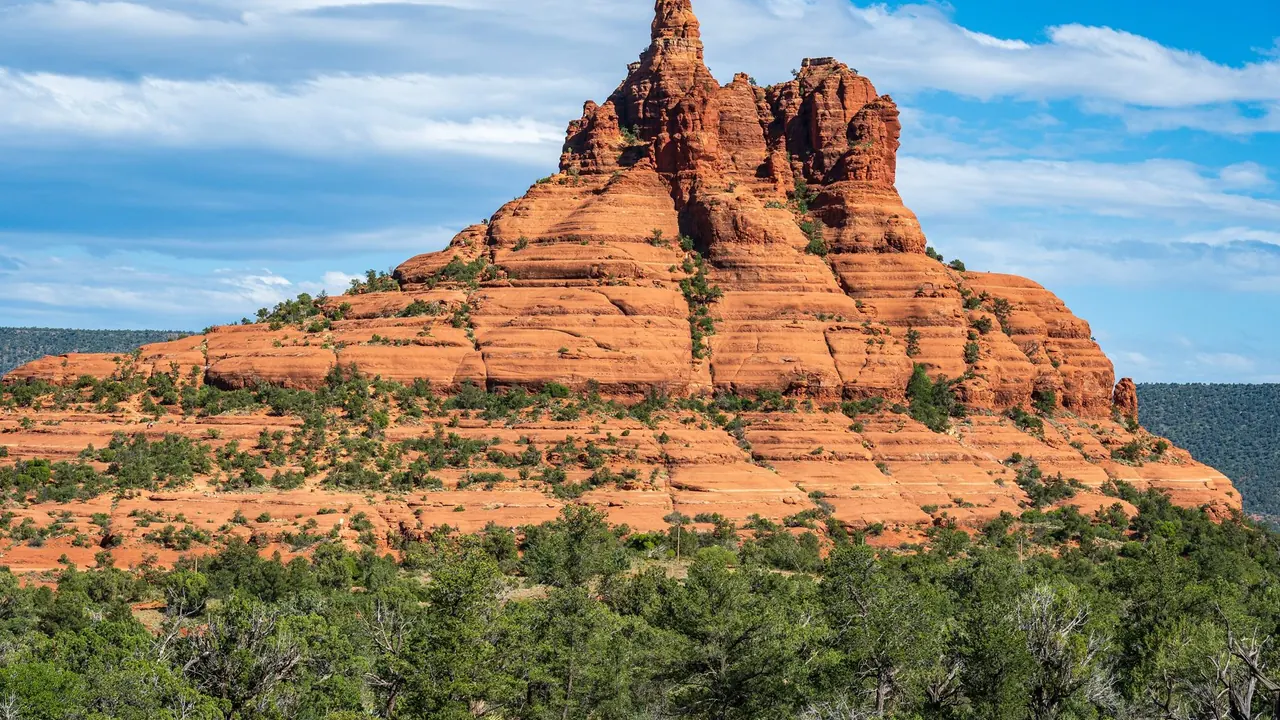
Photos: Alta, Utah by Sumanch, CC BY 3.0, cropped; Sedona by dconvertini, CC BY-SA 2.0, cropped.
Alta, Utah or Sedona?
Our verdict in twelve categories, each scored against the same fixed benchmark cities, and the climate month by month, so you can choose for your trip.
Choose Alta, Utah for
- getting around
Alta is for the skier who wants nothing between them and the snow. It sits at the head of Little Cottonwood Canyon, with lodges at the foot of the lifts, deep dry powder, steep terrain and almost nothing else to do, which is the point. Choose it for a winter of skiing or backcountry touring, or a quiet summer of wildflower walks. Expect to go down to Salt Lake City for good food, sights and evenings out.
Choose Sedona for
- wellness
- shopping
- food and drink
Sedona suits a broader trip built around red rock and slowing down. Its hiking and mountain biking match Alta's skiing, and the town adds what Alta lacks: spas, yoga and retreat culture, galleries and Native American crafts, Sinagua cliff dwellings, and wine country and old mining towns a short drive away. It works for much of the year, for couples, for families who like being outside and for anyone pairing it with the Grand Canyon.
Scoreboard
Twelve categories on one fixed scale from 0 to 100. The shaded stretch is the gap between the two.
Your match
Pick a travel style or drag the sliders, and both match scores follow your weighting.
Wins on getting around with your weighting.
Wins on wellness and shopping with your weighting.
What matters to you?
Category by category
What the scores mean for a trip.
Beaches & swimming
Neither is a swimming destination, but Sedona at least has water to get into. Oak Creek has the sandstone chute at Slide Rock and deeper pools at Grasshopper Point and Red Rock Crossing. They are cold and crowded on hot weekends, but a real pleasure after a hike.
Alta has nothing comparable. The Great Salt Lake is not for swimming, and in summer a swim means a lodge pool or hot tub.
Food & drink
Alta's meals happen almost entirely inside the lodges. You usually eat on half board at long communal tables and have cafeteria lunches on the mountain, and for anything different you drive down the canyon to Salt Lake City, weather and road permitting.
Sedona has more choice, though it is still limited. Resort terraces look out on the red rocks, kitchens cook Southwestern food with chilli and corn, and vegetarians are well catered for. The Verde Valley tasting rooms add a few good afternoons, and breakfast and lunch around a hike are what the town does best.
Culture & sights
Sedona has a handful of real sights, while Alta has almost none. The Chapel of the Holy Cross built into a butte, the Sinagua cliff dwellings at Palatki and Honanki, the V Bar V petroglyphs and the many galleries are enough for a day or two of looking.
Alta's past as a silver-mining camp survives only in old mine workings on the slopes. There is no museum or historic building to visit, so for culture you go to Salt Lake City.
Nightlife
Both go to bed early, and neither is a place for a night out. The difference is in the kind of evening. In Alta it is a drink in a lodge bar after skiing, with the livelier après scene at the neighbouring resort. Sedona has brewpubs, wine bars and resort lounges in Uptown, and a night sky dark enough for serious stargazing.
Nature & outdoors
Both are among the great outdoor settings of the American West, and the difference lies in what you do there. Alta is about snow, often more than 12m in a winter, with steep skiing and serious backcountry touring in avalanche terrain. In summer there are Albion Basin's wildflower meadows and the walk to Cecret Lake.
Sedona is red rock country, and it is at its best in spring and autumn. Trails lead to Cathedral Rock and Devil's Bridge and up West Fork, mountain bikers ride the slickrock singletrack, jeep roads run into the backcountry, and the Grand Canyon's South Rim is about two hours away. Go to Alta to ski, and to Sedona to hike and bike in its mild seasons.
Day trips
Sedona has more within easy reach, and more variety. Jerome's hillside mining streets, the Verde Canyon Railroad, Montezuma Castle and Tuzigoot, Flagstaff and the wineries around Cottonwood fill several days, though all of them are small places.
From Alta the choices are Salt Lake City, Park City's old Main Street and Ogden. In winter every one of them depends on a canyon road that can close after storms.
Good for families
Sedona suits more kinds of family. Slide Rock, short trails around Bell Rock and jeep tours over the slickrock keep children busy, and the town is easy to combine with the Grand Canyon, though summer heat and exposed trails need care.
Alta works for families who all ski, with a ski school and gentle slopes near the base. For children who don't ski there is very little, and the altitude of around 2,600m, the cold and storm days spent indoors make it harder still.
Getting around
Alta is easier once you are there. The lodges sit at the lifts, many with ski-in, ski-out access, a winter shuttle links the village, and Salt Lake City airport is only about 50km away by shuttle or ski bus. The catch is the single canyon road, which backs up on powder mornings and closes after storms.
Sedona stretches along two highways from the junction called the Y. Apart from a walk around Uptown, almost everything needs a car. Parking at popular trailheads fills early, and the drive from Phoenix takes about two hours.
Shopping & style
Sedona is a real place to browse, and Alta is not. Tlaquepaque's courtyards and the galleries along the main road sell Western painting, sculpture and Native American jewellery, pottery and rugs, and the crystal and metaphysical shops are part of the town's character.
Alta's shops deal in ski rental, tuning and outdoor gear. For anything else you go to Park City or Salt Lake City.
Affordability
Both are costly, for different reasons. In Alta the problem is the small number of lodge beds, often sold with dinner included because there is nowhere else to eat, though lift tickets are moderate for a major American resort. The budget option is to stay in the Salt Lake valley and ride the bus up.
In Sedona the cost comes from resort hotels and restaurants, plus extras such as jeep tours, balloon flights and spa treatments. The trails cost almost nothing, which helps, and Cottonwood and Flagstaff are the cheaper places to stay.
Live music & performing arts
For a play or a concert, Alta sends you down the canyon to Salt Lake City, because the village has no venue of any kind. Sedona's calendar is small, but it does exist. The long-running Sedona International Film Festival, chamber concerts, local theatre and Native American flute players at the resorts are enough for an evening or two.
Wellness & relaxation
This is where the two differ most. Sedona is a retreat town, with destination spas facing the canyons, yoga, meditation and breathwork, alternative therapies, and walks to the vortexes at sunrise.
In Alta, wellness means a steaming outdoor hot tub, a sauna and perhaps a massage in a lodge spa after a day on the slopes. The quiet of the snowbound village is restful, but it is recovery from skiing rather than a spa vacation.
When should you go?
Pick your month. The climate figures are measured averages, not a forecast.
Alta, Utah in July
Sedona in July
Daytime high, °C
Rainfall in the month, mm
Where the figures come from
Alta, Utah has no weather station within reach, so its figures come from a gridded climate model rather than a measured record, and read a broad area rather than the city itself.
Sedona's station stands 153 m above the city centre, so the centre is likely a little warmer than the figures say.
Sedona has no rain gauge within 25 km of the centre, so its rainfall comes from a gridded climate dataset read at the city rather than from a gauge further away.
Temperature and rainfall are climate normals, averaged over the years shown. Alta, Utah: 1991-2020 normals, TerraClimate 4 km grid at the town, no weather station within 90 km. Sedona: 2009-2025 (rainfall 1991-2020) normals, Sedona / West Sedona (1.3 km from centre).
Alta is a winter place in the plainest sense. Daytime highs stay around 0°C from December through February and near freezing into March, which keeps the snow deep and dry through the ski season. Rain and snow are spread evenly through the year, with no real dry season. Summer is short. July and August reach about 22°C, the warmest and most comfortable time for hiking at altitude, and by October it is cold again.
Sedona's best seasons fall at different times. Winter days are mild enough for walking. Spring is the classic season, with April and May dry and May taking only about 14mm, and October and November bring warm, settled days again. June to August are hot, near 34°C, so hikes need dawn starts. July and August are also the wettest months, peaking at 56mm. If both are on one itinerary, Alta in winter and Sedona in spring or autumn is the natural split.
Which traveller are you?
For a relaxing and wellness trip, Alta's quiet suits a skier winding down after hard days on the slopes, but its lodge spas are small. Sedona is for travellers who want the retreat to be the trip itself, with treatments, classes and slow mornings filling every day.
On a shopping trip, Alta has nothing beyond ski gear. Sedona is no place for fashion, but it suits someone who buys art and crafts, happy to spend an afternoon browsing and to take home a piece of Southwestern or Native American work.
For skiers, only Alta makes sense. The mountain is run for skiers alone, the powder is famous and the beds sit at the lifts, so the whole stay revolves around the snow. Sedona's winters bring crisp hiking weather and the odd dusting of snow, not skiing.
Before you go
| Measure | Alta, Utah | Sedona |
|---|---|---|
| Currency | US Dollar (USD) | US Dollar (USD) |
| Sockets | AB120 V, 60 Hz | AB120 V, 60 Hz |
| Driving side | Right | Right |
| Time zone | UTC-7, UTC-6 in summer | UTC-7 |
| Emergency number | 911 | 911 |
| Elevation | 2,610 m | 1,319 m |
| Main airport | Salt Lake City International Airport (SLC)37 km from centre108 non-stop destinations | Phoenix Sky Harbor International Airport (PHX)160 km from centre149 non-stop destinations |
| Public holidays this year | 12 days | 12 days |
By the numbers
| Measure | Alta, Utah | Sedona |
|---|---|---|
| City population | 228 | 9,684 |
| People per km² | 19 | 195 |
| Museums within 10 km | 0 | 0 |
| UNESCO World Heritage sites within 50 km | 0 | 0 |
Where else could you go?
Every comparison below shares a destination with this one, so you can follow Alta, Utah or Sedona somewhere new.