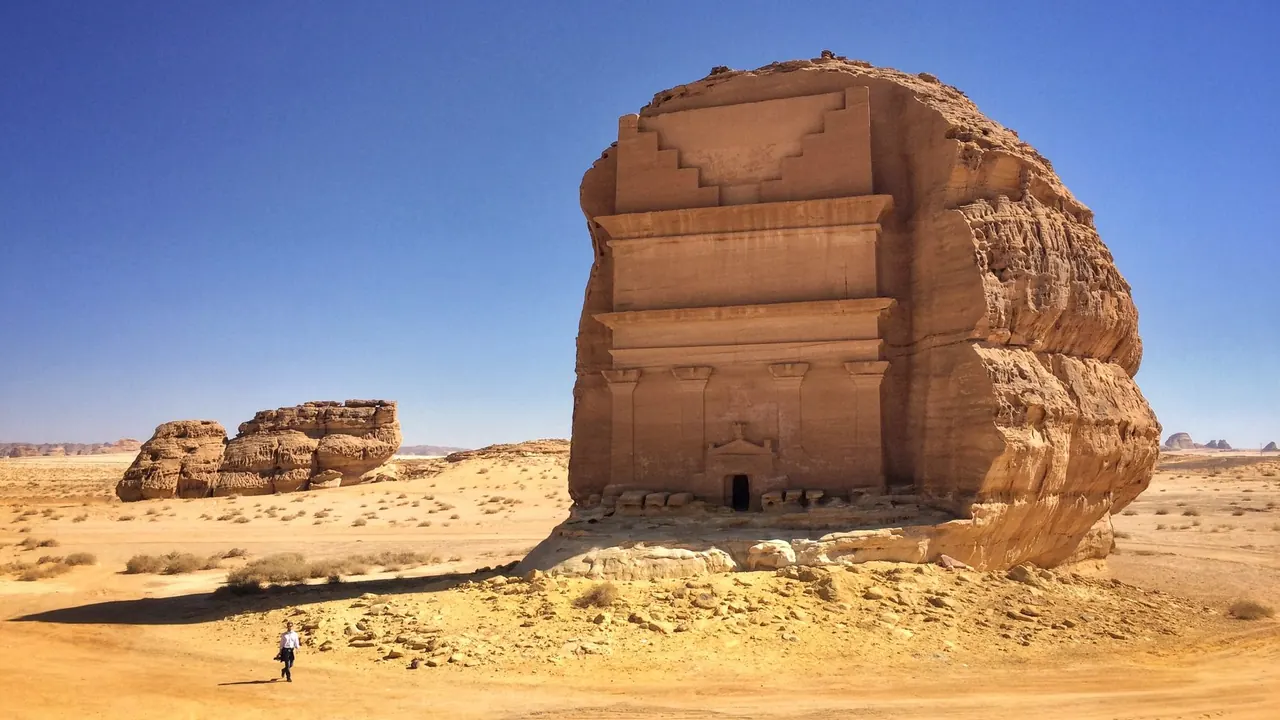
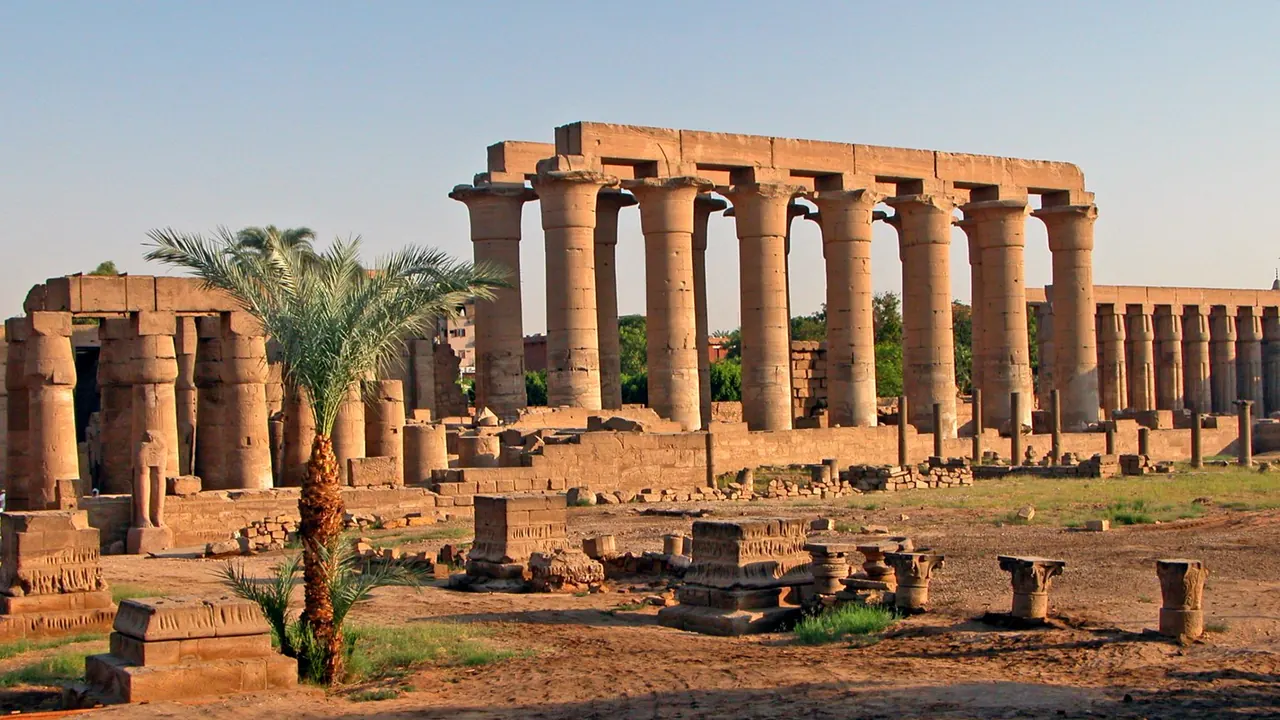
Photos: AlUla by Richard.hargas, CC BY-SA 4.0, cropped; Luxor by Dennis G. Jarvis, CC BY-SA 2.0, cropped.
AlUla or Luxor?
Our verdict in twelve categories, each scored against the same fixed benchmark cities, and the climate month by month, so you can choose for your trip.
Choose AlUla for
- nature and the outdoors
- live music and the arts
- wellness
AlUla suits travellers who come for landscape as much as for history. You can hike its canyons, watch Elephant Rock at dusk, fly in a balloon over the palm groves and spend nights under a dark desert sky, with the Nabataean tombs at Hegra as the cultural centrepiece. It is a calmer, resort-based stay. It works best for people happy to pay for comfort, plan each day around cars and guided shuttles, and perhaps time the visit to the winter concerts at Maraya.
Choose Luxor for
- prices
- day trips
- culture and sights
For sheer weight of ancient monuments, Luxor is by far the stronger choice. Karnak, the Valley of the Kings and Hatshepsut's temple fill several days, and Dendera, Esna and Edfu stretch them further. It also costs far less to stay and eat. The trade-offs are a plain modern town, persistent touts and scenery that comes down to the Nile and its cliffs, with no wider desert to explore.
Scoreboard
Twelve categories on one fixed scale from 0 to 100. The shaded stretch is the gap between the two.
Your match
Pick a travel style or drag the sliders, and both match scores follow your weighting.
Wins on nature and the outdoors and live music and the arts with your weighting.
Wins on prices and day trips with your weighting.
What matters to you?
Category by category
What the scores mean for a trip.
Beaches & swimming
Neither city is a place to swim, and in both the hotel pool does the job. The difference is what lies beyond. From AlUla the Red Sea coast is a long drive over the mountains, too far for a beach day. From Luxor the resorts around Hurghada are about four hours away, close enough to add a few days by the sea at the end of a stay, though the Nile itself is not for swimming.
Food & drink
Food is a side note in both, but the cooking differs. AlUla eats mostly in its resorts, which serve polished chef-led menus, and on a strip of Old Town terraces with Saudi and Levantine grills. Its best tastes come from the oasis itself: dates and cardamom coffee.
Luxor is humbler and closer to the street, with ful and taameya at breakfast, koshari counters, grilled pigeon and sugar cane juice. Home cooking in the West Bank guesthouses is often the best meal of a stay. A drink is easier to find in Luxor's hotels, though neither place has a drinking culture.
Culture & sights
Both stand on ancient sites, but Luxor has far more of them, packed close together. Karnak, Luxor Temple, the painted tombs in the Valleys of the Kings and Queens, Deir el-Bahari and Medinet Habu fill several full days, and two small museums on the East Bank add to them.
AlUla offers a few deep sights instead: Hegra's free-standing Nabataean tombs in open desert, the lion tombs at Dadan, the inscriptions of Jabal Ikmah and the mud-brick Old Town. They are memorable and far less crowded, but a couple of days covers them, and there are few museums.
Nightlife
Neither town offers a night out, so the difference is one of mood. AlUla has no bars at all, and evenings mean dinner, a stroll through the lit Old Town and stargazing in the desert, with concerts in the winter season. Luxor at least lets you have a drink in a hotel bar or on a rooftop, and the local evening is tea and shisha in street cafés or a walk along the corniche, though most visitors go to bed early ahead of dawn starts.
Nature & outdoors
This is AlUla's strongest suit. Sandstone cliffs and palm groves, Elephant Rock, the black lava plateau of Harrat Uwayrid and the Sharaan reserve, home to ibex and the Arabian leopard, leave room for canyon hikes, climbing, via ferrata, cycling and some of the darkest skies in the region.
Luxor's outdoors is one lovely view rather than country to explore: the green strip along the Nile against the Theban cliffs, seen from a felucca at sunset, by bike through West Bank fields or from the path over the hills to Deir el-Bahari. Both cities have dawn balloon flights, but AlUla's cross wilder land.
Day trips
Luxor wins clearly, as long as you want more temples. Dendera's painted ceilings and Esna's coloured reliefs are each about an hour away, Edfu takes under two hours, and Abydos makes a long but rewarding day.
AlUla's own valley holds nearly everything, so the only real outings are to the oasis towns of Tayma and Khaybar. Each is about two hours across the desert and best done with a guide. Beyond the ancient sites, neither city offers much variety.
Good for families
Both suit older children better than toddlers, and neither has anything built for them. AlUla leans on adventure, with rock scrambling, ziplines, camel rides and stargazing in a calm setting with resort pools, but every sight needs a car or a shuttle.
Luxor works for children already gripped by pharaohs, with tombs to crawl into, the Mummification Museum and felucca rides. The walks are hot and shadeless, though, and the touts wear parents down. In both places winter is the only comfortable season with young children.
Getting around
Luxor is the easier of the two, though neither is effortless. On the East Bank you can walk between Luxor Temple, the museum and the corniche, Karnak is a short taxi or calèche ride away, and a cheap public ferry crosses to the West Bank, where a driver for the day covers the tombs. You have to agree the fare every time.
AlUla has no walkable centre and no real public transport. Hotels and sites lie 20km or more apart along the valley, Hegra is reached on ticketed shuttles, and everything else needs a hire car, a driver or a tour. The roads are empty and easy, but each day takes planning.
Shopping & style
AlUla's few craft shops in the Old Town can't match the range of Luxor's souk and alabaster workshops, but they are quieter and more carefully chosen. They sell woven goods, pottery, jewellery and local perfumes, some made at the town's arts and crafts school, and a box of oasis dates is the best thing to take home.
Luxor gives you much more to browse. There is the tourist souk off the town centre, the West Bank workshops where alabaster is still carved by hand, and stalls of spices, cotton scarves and galabiyas outside every major site. Expect persistent selling and plenty of mass-produced stock, and no fashion streets in either place.
Affordability
The gap here is wide. Luxor is very cheap for rooms, food and local transport, and even its grand riverside hotels are good value. The main costs are the entry fees foreigners pay at each temple and tomb, plus drivers and guides.
AlUla is expensive from the start. Most of the lodging is luxury resorts and tented camps, the main sites are seen on costly ticketed tours, and you need a car or a driver throughout. Only meals in the Old Town and petrol are moderately priced.
Live music & performing arts
AlUla has the edge, but only in season. In winter, Maraya, the mirrored concert hall in a desert canyon, brings international singers and orchestras, alongside Saudi dance and outdoor music among the rocks, while the rest of the year there is little on. Luxor's one regular performance is the sound-and-light show at Karnak, and beyond that there are only the belly dance and tanoura shows put on in hotels and on cruise boats.
Wellness & relaxation
AlUla is the better place to unwind. Its resorts and camps are designed for it, with spas, sunrise yoga, pools among the rocks and silent desert nights by a fire.
In Luxor the calm comes from the rhythm of the day rather than the facilities: a long afternoon by the pool and sunset on the river, best from a mud-brick guesthouse on the quieter West Bank. The traffic and touts of the East Bank work against rest. Some of Luxor's larger hotels have a hammam and massage rooms, but neither city has a bathing tradition of its own.
When should you go?
Pick your month. The climate figures are measured averages, not a forecast.
AlUla in July
Luxor in July
Daytime high, °C
Rainfall in the month, mm
Where the figures come from
AlUla has no rain gauge within 25 km of the centre, so its rainfall comes from a gridded climate dataset read at the city rather than from a gauge further away.
Luxor has no rain gauge within 25 km of the centre, so its rainfall comes from a gridded climate dataset read at the city rather than from a gauge further away.
Temperature and rainfall are climate normals, averaged over the years shown. AlUla: 2010-2025 (rainfall 1991-2020) normals, Alula / Al ‘Ulá (23.7 km from centre). Luxor: 1998-2020 (rainfall 1991-2020) normals, Luxor (6.5 km from centre).
The two share almost the same year. Both are most comfortable from November to March. January highs are around 23°C in AlUla and 22°C in Luxor, mild enough for walking tombs and canyons and warm enough for a pool in the afternoon. By April both are into the mid-thirties. From May to September both are fiercely hot, peaking at 43°C in AlUla and 41°C in Luxor, and sightseeing shrinks to dawn and dusk.
Rain barely matters in either place. Luxor records none at all through the year, and AlUla gets only a few light showers. November is its wettest month at 15mm, which hardly interrupts a trip. The real question is how much heat you can take: October and April are workable in both if you start early.
Which traveller are you?
For an outdoors trip, AlUla is the clear pick. Canyon hikes, via ferrata, cycling through the oasis, the Sharaan reserve and dark-sky stargazing give days of variety. Luxor offers a felucca, a bike ride through the fields and one hill path.
On a culture and arts trip, Luxor wins on the monuments alone: Karnak, the Valley of the Kings and Hatshepsut's temple, then Dendera and Edfu as day trips. AlUla's Hegra is superb but narrower in scope, though Luxor has nothing like its winter concerts at Maraya.
On a trip on a tight budget, Luxor is far easier. Guesthouses, street food and the river ferry cost little, which leaves money for entry fees. AlUla's luxury camps, paid guided tours and need for a hire car put it out of reach of a lean budget.
Before you go
| Measure | AlUla | Luxor |
|---|---|---|
| Official language | Arabic | Arabic |
| Currency | Saudi Riyal (SAR) | Egyptian Pound (EGP) |
| Sockets | G60 Hz | CF220 V, 50 Hz |
| Driving side | Right | Right |
| Time zone | UTC+3 | UTC+2, UTC+3 in summer |
| Emergency number | 112 or 911 | Police 122, ambulance 123, fire 180 |
| Elevation | 692 m | 89 m |
| Main airport | Al-Ula International Airport (ULH)24 km from centre8 non-stop destinations | Luxor International Airport (LXR)7 km from centre29 non-stop destinations |
| Public holidays this year | - | 15 days |
By the numbers
| Measure | AlUla | Luxor |
|---|---|---|
| City population | 32,413 | 202,232 |
| People per km² | - | 486 |
| Museums within 10 km | 2 | 4 |
| UNESCO World Heritage sites within 50 km | 1 | 1 |
Where else could you go?
Every comparison below shares a destination with this one, so you can follow AlUla or Luxor somewhere new.