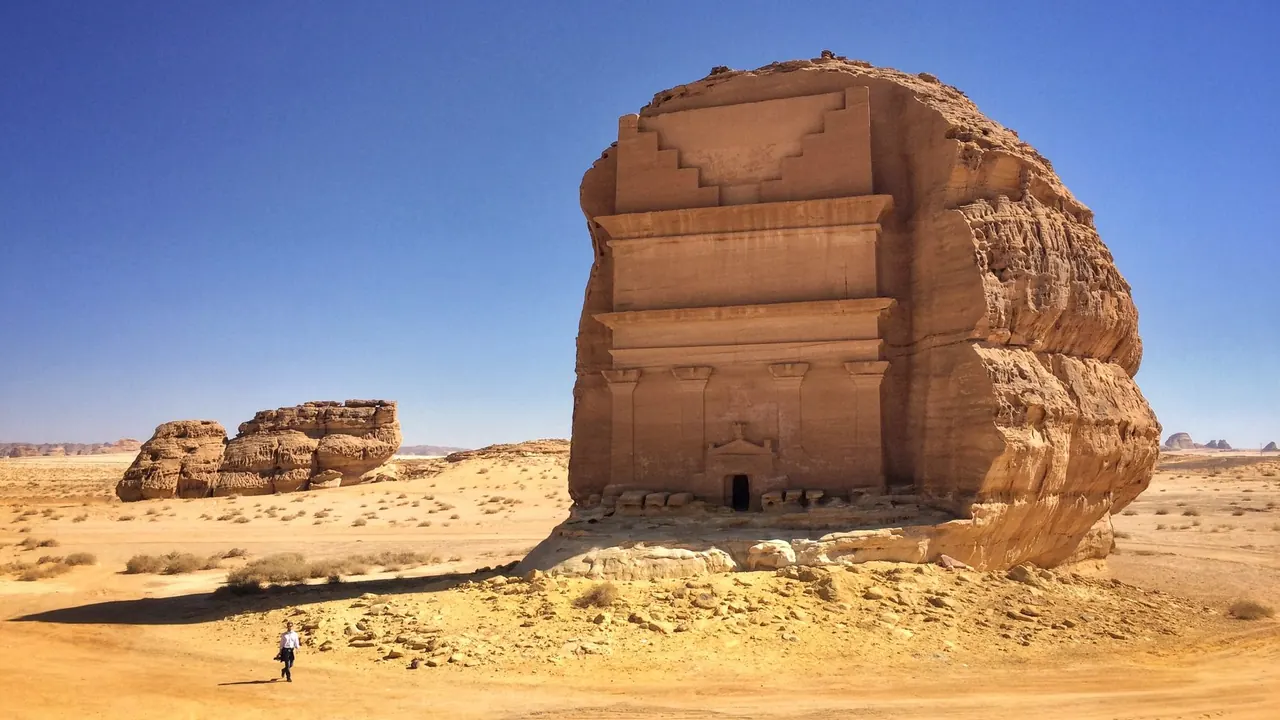
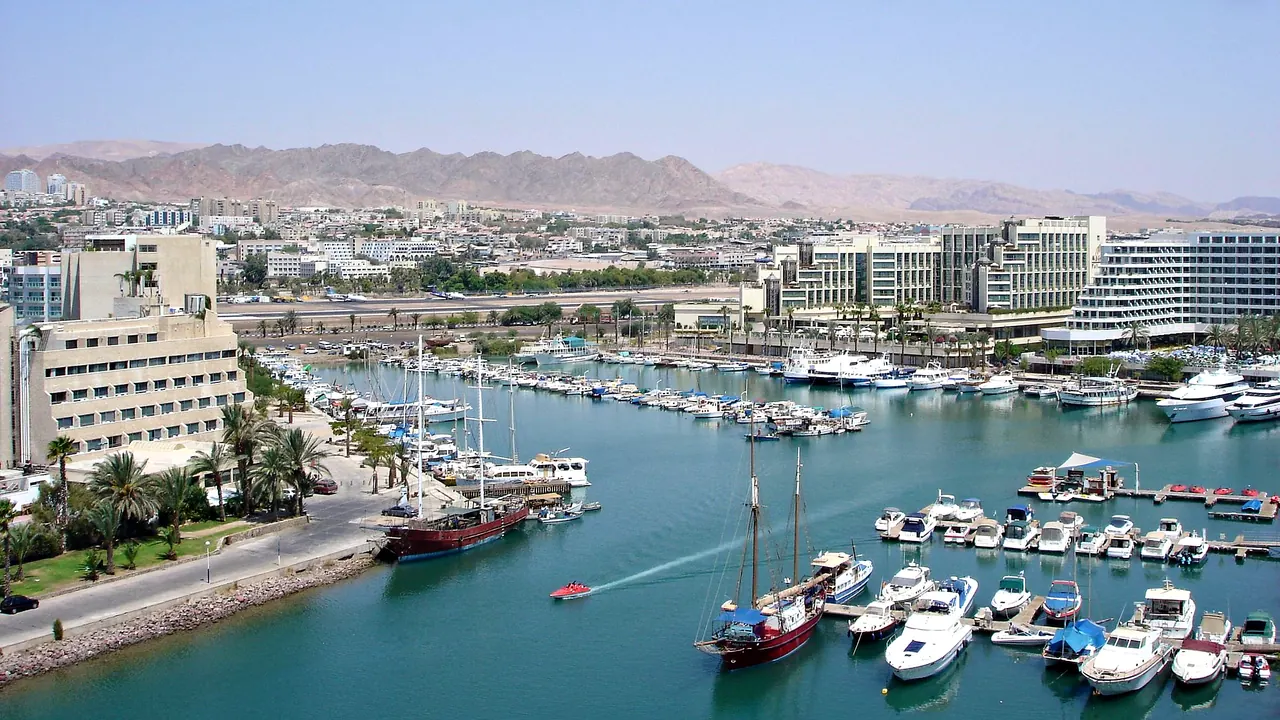
Photos: AlUla by Richard.hargas, CC BY-SA 4.0, cropped; Eilat by Tango7000, Public domain.
AlUla or Eilat?
Our verdict in twelve categories, each scored against the same fixed benchmark cities, and the climate month by month, so you can choose for your trip.
Choose AlUla for
- culture and sights
- live music and the arts
- wellness
AlUla suits travellers who want ancient sites and open desert, and who don't mind building each day around a driver, a tour or a shuttle bus. Hegra's tombs standing alone in the sand, the inscribed canyon walls of Jabal Ikmah and the mud-brick lanes of the Old Town give it a depth of history Eilat can't match. Its quiet evenings under dark skies suit couples and adults far better than anyone hoping for a night out.
Choose Eilat for
- beaches
- nightlife
- getting around
Choose Eilat when the sea is the point of the trip. The reef starts a step off the jetties, the hotels are set up for children, and the compact centre around the lagoon can be walked in the cooler months. There is next to no history in town. In return you get a beach, warm water through the winter and, on busy weekends, a promenade that stays up late.
Scoreboard
Twelve categories on one fixed scale from 0 to 100. The shaded stretch is the gap between the two.
Your match
Pick a travel style or drag the sliders, and both match scores follow your weighting.
Wins on culture and sights and live music and the arts with your weighting.
Wins on beaches and nightlife with your weighting.
What matters to you?
Category by category
What the scores mean for a trip.
Beaches & swimming
This is Eilat's whole reason for existing, and AlUla doesn't compete. The desert oasis is far inland, the Red Sea coast lies a long drive away over the mountains, and a swim means the pool at your resort or camp.
Eilat has only a few kilometres of shore, often coarse and gravelly underfoot. Still, the water is calm, clear and warm through the winter. North Beach is the place for loungers and watersports. Further south, the reserve beaches put you straight onto a living reef.
Food & drink
Neither is a place to travel for its food, but Eilat gives you more ways to eat outside your hotel. AlUla's meals happen mostly in resort restaurants and on a short strip of Old Town terraces. The local dates and cardamom-scented coffee are the high points, and outside the main season some kitchens close.
Eilat has its share of buffets and promenade restaurants aimed at visitors. Walk into the older neighbourhoods, though, and you will find hummus counters, shawarma, falafel and grilled Red Sea fish, the kind of casual local eating AlUla doesn't have.
Culture & sights
AlUla is one of the great archaeological destinations of the region, and Eilat barely features. Hegra, Saudi Arabia's first UNESCO World Heritage Site, has more than a hundred carved Nabataean tombs set in open desert. Add the cliff tombs of Dadan, the inscriptions at Jabal Ikmah and the mud-brick Old Town below its fort, and a few deep days are well filled. The sites are spread out and mostly seen on guided visits.
Eilat is a young port and resort town of hotel towers and malls. Its history lies outside town, at the copper workings of Timna or across the border.
Nightlife
If you want a night out, only Eilat offers one. AlUla has no bars or clubs. Evenings mean a late dinner, a stroll through the lit Old Town and stargazing at dark-sky sites in the desert.
Eilat's promenade and lagoon fill with bars, pubs and beach parties on summer weekends and in school breaks, and a few clubs stay open past midnight. The music is mainstream pop and dance, and on midweek nights in the quiet months the scene thins out.
Nature & outdoors
Both are strong outdoor destinations, but the landscapes are very different. AlUla is all land: sandstone formations such as Elephant Rock, palm groves in the valley, the black lava plateau of Harrat Uwayrid and the red canyons of the Sharaan reserve. You can explore them by via ferrata, on camel or horseback, or from a hot-air balloon.
Eilat's best nature is underwater. Its reef is among the most accessible anywhere, with diving centres along the coast road and a resident dolphin pod. Inland, it adds the Red Canyon trails, Timna's rock formations and the great spring and autumn bird migrations.
Day trips
Eilat has the better outing, and it is a famous one: Petra, across the Jordanian border, reached in about two hours from the crossing, with Aqaba's fort and souk as a shorter alternative. Anyone who has seen Hegra will find the Nabataean link to Petra especially rewarding.
From AlUla, the options are the old oasis towns of Tayma and Khaybar, with their great well, city walls and basalt fortress. Each is a two-hour drive across empty desert, and most people stay within the valley instead.
Good for families
Eilat is built for family vacations, and AlUla is not. Eilat has calm water with no surf, hotel kids' clubs and pools, the underwater observatory and shark tanks at Coral World, glass-bottom boats and snorkelling off the jetties. All of it is close together.
AlUla can thrill older children with ziplines, camel rides, climbing and the sheer size of the tombs. Its sites are far apart, though, there is nothing designed for children, and outside winter the walking in the sun is hard going with little ones.
Getting around
In Eilat you can mostly manage without a car, while in AlUla you can't. Eilat's lagoon hotels, North Beach, the promenade and the malls are all within a short walk of each other. A taxi or local bus covers the few kilometres south to the reef beaches. A car only matters for Timna or the mountain trails.
AlUla stretches along a long valley, with the Old Town, Elephant Rock and Hegra often 20km or more apart and no ordinary public transport. Each day depends on site shuttles, a hire car or a driver.
Shopping & style
Eilat offers more, though it is hardly a shopping destination. Its VAT-free malls bring Israelis for chain fashion, electronics and cosmetics, and Eilat stone jewellery is the one local speciality. Visitors from abroad will find little that is new to them.
AlUla's shopping is a handful of Old Town craft and design shops selling weaving, pottery and perfume, some of it from the local arts school. A box of oasis dates is the souvenir worth carrying home.
Affordability
Both are expensive, and neither makes a budget trip easy. The costs build up in different ways, though. In AlUla, the bill comes from luxury resorts and tented camps, ticketed guided tours to the main sites and a car or driver every day. Simpler rooms are few.
Eilat leaves more room to economise. Midweek and quieter-month rates drop, self-catering apartments and guesthouses away from the beachfront are available, and hummus counters and falafel stands cost far less than the promenade restaurants.
Live music & performing arts
AlUla offers more, provided you time the trip for its winter festival season. Then Maraya, the mirrored concert hall in a desert canyon, hosts international singers and orchestras, and Saudi dance and music are staged among the rocks. The rest of the year is quiet.
Eilat's best-known event is its long-running jazz festival by the Red Sea. Otherwise there are hotel shows, bar musicians on the promenade and occasional Israeli headliners during festivals, and no theatre at all.
Wellness & relaxation
Both are good places to unwind, and in both the relaxation comes from the resorts rather than from any local bathing tradition. AlUla's version is silence: sunrise yoga, pools set among the rocks and evenings by a fire under a very dark sky.
Eilat offers hotel spas with hammam-style steam rooms and Dead Sea mineral treatments, plus long, warm winter days by the water. It is restful midweek, but much noisier when festivals and school breaks fill the town.
When should you go?
Pick your month. The climate figures are measured averages, not a forecast.
AlUla in July
Eilat in July
Daytime high, °C
Rainfall in the month, mm
Where the figures come from
AlUla has no rain gauge within 25 km of the centre, so its rainfall comes from a gridded climate dataset read at the city rather than from a gauge further away.
Temperature and rainfall are climate normals, averaged over the years shown. AlUla: 2010-2025 (rainfall 1991-2020) normals, Alula / Al ‘Ulá (23.7 km from centre). Eilat: 1991-2020 normals, Eilat (0.9 km from centre).
Both follow the same desert calendar: pleasant from late autumn to early spring, fierce in summer and almost without rain. AlUla is at its best from November to March, when afternoons run from about 23°C in midwinter to 29°C at either end of the season. That is warm enough for long mornings at Hegra and canyon walks without wearing you out. What little rain falls comes mostly in November. May and October are already hot, and from June to September the valley passes 40°C, so sightseeing shrinks to the first and last hours of light.
Eilat's winter is a degree or two cooler, and it belongs to the sea. The water stays near 21°C even in February and the sun is reliable, so a beach day in January is realistic. From June to September the town is too hot for walking or hiking except at dawn, though the sea warms to 28°C for anyone who mainly wants to swim. In both places the comfortable months end as spring turns hot and come back in late autumn.
Which traveller are you?
On a culture and arts trip, AlUla is the clear choice. Hegra's Nabataean tombs, the lion tombs at Dadan and the inscriptions at Jabal Ikmah are major sights, and Maraya's winter concerts add a season of performance. Eilat has almost nothing comparable in town.
For a beach and sun trip, Eilat wins easily. It has warm, calm, very clear water all winter, coral you can reach straight from the jetties at Coral Beach, and reliable sunshine. AlUla is far inland, and the only swimming there is in a resort pool.
On a family trip with children, Eilat is much easier. It has calm shallow sea, hotel kids' clubs, the underwater observatory at Coral World and glass-bottom boats, all within a small area. AlUla suits older, outdoorsy children, but its sites are far apart and visits mean long walks in the sun.
Before you go
| Measure | AlUla | Eilat |
|---|---|---|
| Official language | Arabic | Hebrew |
| Currency | Saudi Riyal (SAR) | New Israeli Sheqel (ILS) |
| Sockets | G60 Hz | CHM230 V, 50 Hz |
| Driving side | Right | Right |
| Time zone | UTC+3 | UTC+2, UTC+3 in summer |
| Emergency number | 112 or 911 | Police 100, fire 102 |
| Elevation | 692 m | 16 m |
| Main airport | Al-Ula International Airport (ULH)24 km from centre8 non-stop destinations | Ramon International Airport (ETM)20 km from centre2 non-stop destinations |
By the numbers
| Measure | AlUla | Eilat |
|---|---|---|
| City population | 32,413 | 51,935 |
| People per km² | - | 612 |
| Museums within 10 km | 2 | 6 |
| UNESCO World Heritage sites within 50 km | 1 | 2 |
| Swim season, months above 21 °C | - | 12 months |
Where else could you go?
Every comparison below shares a destination with this one, so you can follow AlUla or Eilat somewhere new.