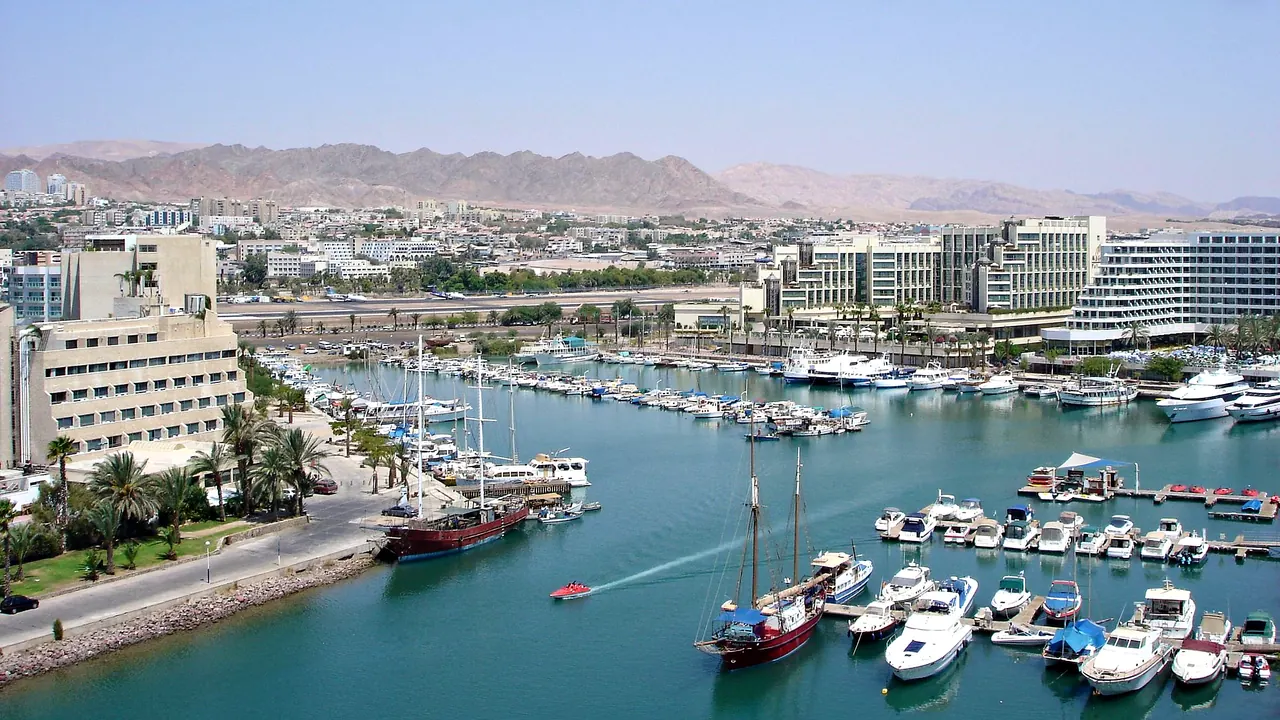
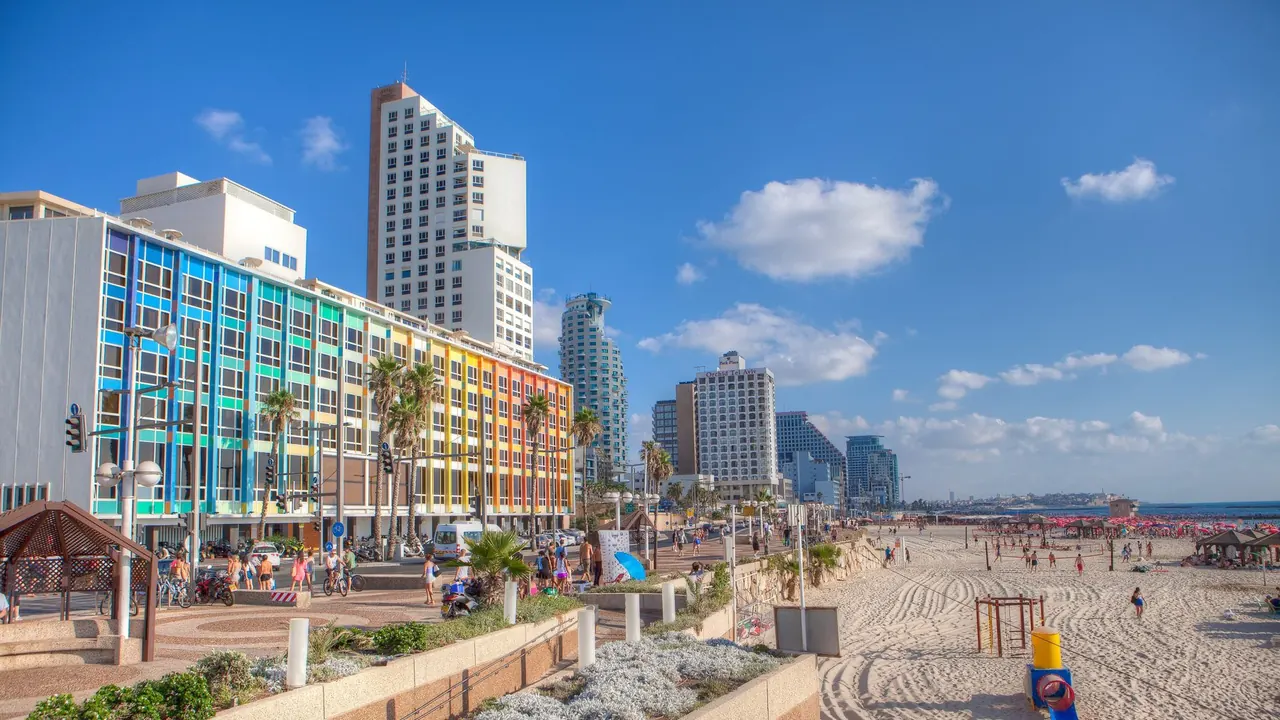
Photos: Eilat by Tango7000, Public domain; Tel Aviv by israeltourism, CC BY-SA 2.0, cropped.
Eilat or Tel Aviv?
Our verdict in twelve categories, each scored against the same fixed benchmark cities, and the climate month by month, so you can choose for your trip.
Choose Eilat for
- nature and the outdoors
- prices
- wellness
Eilat suits a winter-sun escape built around the water. Its reef starts a few steps off the jetties, the desert canyons rise straight behind the hotels, and in the cooler months the days are reliably dry and warm. Choose it if you want to snorkel, dive, hike and then do very little, and you don't mind that the town has almost no history, food culture or stage of its own.
Choose Tel Aviv for
- live music and the arts
- culture and sights
- food and drink
Tel Aviv is the better pick for anyone who wants a real city with a long beach attached. It wins clearly on eating, going out, music and dance, and on Bauhaus streets and old Jaffa. It is also the base for Jerusalem, Caesarea and the Dead Sea. It is the more expensive and noisier of the two, and its sea is too cool for most swimmers in midwinter.
Scoreboard
Twelve categories on one fixed scale from 0 to 100. The shaded stretch is the gap between the two.
Your match
Pick a travel style or drag the sliders, and both match scores follow your weighting.
Wins on nature and the outdoors and prices with your weighting.
Wins on live music and the arts and culture and sights with your weighting.
What matters to you?
Category by category
What the scores mean for a trip.
Beaches & swimming
Tel Aviv has the better beach for a classic beach vacation. Its whole seafront is fine pale sand, from the old port down to Jaffa, within walking distance of most hotels, with lifeguards and breakwaters along the way and a sea that is pleasant from May into November.
Eilat has only a few kilometres of coarse, gravelly shore squeezed between port and border. What it has instead is a coral reef just off the jetties at Coral Beach, so swimming there usually means snorkelling. Its sea also stays warm right through the winter months, when Tel Aviv's water is too cool for most swimmers.
Food & drink
Tel Aviv is one of the region's great places to eat. It has hummus counters, sabich stands and Yemenite and Iraqi cooking from immigrant kitchens, a confident chef-led scene, and Carmel Market and the Levinsky streets for grazing. Jaffa's bakeries and fish restaurants by the port add to it.
In Eilat you will mostly eat hotel buffets and the promenade's steak, sushi and pizza places. The best meals there are the plain hummus, grilled meat and Red Sea fish found away from the hotels. A food lover will run out of options in a couple of days.
Culture & sights
Eilat has almost nothing in this category. It is a young town of hotel towers and malls, and its history lies out at the Timna copper mines or across the border.
Tel Aviv has the UNESCO-listed White City, which is best seen on foot along Rothschild Boulevard and Bialik Street. Add Jaffa's stone lanes and St Peter's Church, the low houses of Neve Tzedek, the Museum of Art, ANU and Independence Hall, and you have several full days. The list is short for a city of its size, but against Eilat it is a world apart.
Nightlife
Eilat lives up to its party reputation mainly on summer weekends and in school breaks, when young Israelis fill the bars around the lagoon and the beach parties run late. The music is mainstream pop and dance, and on a midweek night in the quieter months the waterfront can feel half empty.
Tel Aviv is far the better place for a night out, and the gap is widest in an ordinary week outside the vacation periods. Evenings start late in the wine and cocktail bars around Lilienblum and Allenby, where the crowd spills onto the pavement past midnight, and Thursday is the big night. House and techno play in basement and warehouse clubs in the south of the city, the gay scene is one of the most open in the region, and Jaffa's courtyard bars are there for a quieter drink.
Nature & outdoors
Eilat has the stronger outdoors by a distance. You can step straight off the shore onto one of the world's most accessible coral reefs, dive centres line the coast road, and the Dolphin Reef has its resident pod. Behind the town, the Red Canyon and the Eilat Mountains trails and Timna's sandstone formations make it a real desert hiking base, though only in the cooler months.
Tel Aviv is flat and built up. Its outdoor life is surfing, paddleboarding and cycling along the seafront path and in Yarkon Park. For the Carmel ridge or the canyons of Ein Gedi you need a drive of one to two hours.
Day trips
Eilat has one exceptional outing, Petra, across the Jordanian border. It makes a long, hard day, and Aqaba is an easier half day. On the Israeli side there is little beyond Timna and the Arava kibbutzim, because the Negev cuts the town off from the rest of the country.
Tel Aviv sits at the centre of everything. Jerusalem is about half an hour away by fast train, Caesarea and Haifa's Baha'i Gardens are about an hour up the coast, and Acre, the Zichron Ya'akov wineries and a Masada and Dead Sea day are all within reach. Just plan around Shabbat, when public transport stops.
Good for families
The two are about equal for children, but they offer different kinds of vacation. Eilat is a resort: calm, warm sea, hotels with kids' clubs and pools, and the Coral World observatory, glass-bottom boats and the Dolphin Reef. Away from the water, though, there is little else.
Tel Aviv offers a city vacation with children, who are welcome in restaurants late into the evening. There are lifeguarded beaches, Luna Park in Yarkon Park, the Ramat Gan Safari and the children's museum in Holon. In both places summer heat is the main problem, and Eilat's is the harsher of the two.
Getting around
Tel Aviv is the easier place to get around. Its flat centre is walkable from the old port through the White City to Jaffa, and bike-share, cycle lanes, a light-rail line and fast trains to Jerusalem and the airport fill the gaps. The catch is Shabbat, when most buses and trains stop.
Eilat's lagoon, North Beach and malls sit close together, but the reef beaches are several kilometres south, which usually means a taxi. Timna and the mountain trails need a hire car or a tour, and in summer even short walks at midday are hard work.
Shopping & style
Tel Aviv is the more interesting place to shop. It has Israeli designers in the boutiques of Dizengoff, Sheinkin and Neve Tzedek, the Nahalat Binyamin crafts market and the Jaffa flea market with its vintage and design studios.
Eilat's advantage is being VAT-free, which brings Israelis to its malls for electronics and chain fashion. Apart from Eilat stone jewellery, there is little a foreign visitor couldn't buy at home.
Affordability
Neither is cheap, but Eilat is the slightly easier of the two on the wallet. Its VAT exemption takes some of the sting out of restaurant bills, and rooms drop noticeably midweek and outside festivals and school vacations.
Tel Aviv is among the most expensive cities in the Mediterranean, at every hotel level and for every sit-down meal. In both cities, the way to save is to eat hummus, falafel and sabich at street counters. Tel Aviv's free pleasures, the beach, the promenade and the White City, go further than anything free in Eilat.
Live music & performing arts
Tel Aviv has a real cultural calendar. The Israel Philharmonic plays at the Charles Bronfman Auditorium, the Israeli Opera and Habima share a square, and Batsheva and the Suzanne Dellal Centre make it a dance city of international standing. There is rock, jazz and Mizrahi pop in the clubs, and stages go up in Yarkon Park in summer.
Eilat has its long-running Red Sea jazz festival and the occasional concert by a big Israeli star. Otherwise its live entertainment is hotel shows and bar musicians.
Wellness & relaxation
Eilat is the better place to unwind, at least outside festival weeks. Its resorts are built around pools, gardens and spas offering Dead Sea mineral treatments, and the steady winter warmth makes long, slow days easy.
Tel Aviv runs loud and fast all week. Its calm comes from Shabbat mornings and walks along the promenade, and for serious restorative bathing people drive out to the mud and mineral pools on the Dead Sea shore.
When should you go?
Pick your month. The climate figures are measured averages, not a forecast.
Eilat in July
Tel Aviv in July
Daytime high, °C
Rainfall in the month, mm
Temperature and rainfall are climate normals, averaged over the years shown. Eilat: 1991-2020 normals, Eilat (0.9 km from centre). Tel Aviv: 1991-2020 (sunshine 1961-1990) normals, Bet Dagan (9.5 km from centre).
Eilat is a winter destination. From November to March the days are warm and almost completely dry, around 21°C even in January, and the sea stays warm enough to swim all winter. Spring and late autumn are warmer still and ideal for the beach. From May to September the heat becomes punishing, with highs near 40°C, so walking and hiking are possible only at dawn and dusk.
Tel Aviv follows the opposite rhythm. Winter is its wet season, with rain from November to March that peaks at about 140mm in January, and the sea is cool from January to April. May to October is the beach season, and the sea reaches 28°C by late summer, but July and August are humid enough to make walking the city tiring. Late spring and October are the best compromise, warm enough for swimming and still comfortable on foot. Both cities get plenty of sunshine through the summer, and Eilat has noticeably more in winter.
Which traveller are you?
On a culture and arts trip, Tel Aviv is the only real choice. It has the White City's Bauhaus streets, old Jaffa, the Philharmonic, the opera and Batsheva dance, and Jerusalem is a short train ride away. Eilat has almost no history or performing arts to offer.
For a food and nightlife trip, Tel Aviv is far ahead. You can graze in Carmel Market, then move on to Rothschild cocktail bars and techno clubs that run until dawn. Eilat's resort buffets and its mainstream promenade bars, busy mainly on weekends, can't compete with that.
On an outdoors trip, Eilat comes out ahead. You can snorkel and dive a coral reef straight from the shore, hike the Red Canyon and Timna's sandstone, and watch the great spring and autumn bird migrations. Tel Aviv's outdoor life is the promenade, water sports and Yarkon Park, and real landscape needs a car.
Before you go
| Measure | Eilat | Tel Aviv |
|---|---|---|
| Official language | Hebrew | Hebrew |
| Currency | New Israeli Sheqel (ILS) | New Israeli Sheqel (ILS) |
| Sockets | CHM230 V, 50 Hz | CHM230 V, 50 Hz |
| Driving side | Right | Right |
| Time zone | UTC+2, UTC+3 in summer | UTC+2, UTC+3 in summer |
| Emergency number | Police 100, fire 102 | Police 100, fire 102 |
| Elevation | 16 m | 5 m |
| Main airport | Ramon International Airport (ETM)20 km from centre2 non-stop destinations | Ben Gurion International Airport (TLV)13 km from centre111 non-stop destinations |
By the numbers
| Measure | Eilat | Tel Aviv |
|---|---|---|
| City population | 51,935 | 467,875 |
| People per km² | 612 | 8,998 |
| Museums within 10 km | 6 | 99 |
| UNESCO World Heritage sites within 50 km | 2 | 2 |
| Swim season, months above 21 °C | 12 months | 7 months |
Where else could you go?
Every comparison below shares a destination with this one, so you can follow Eilat or Tel Aviv somewhere new.