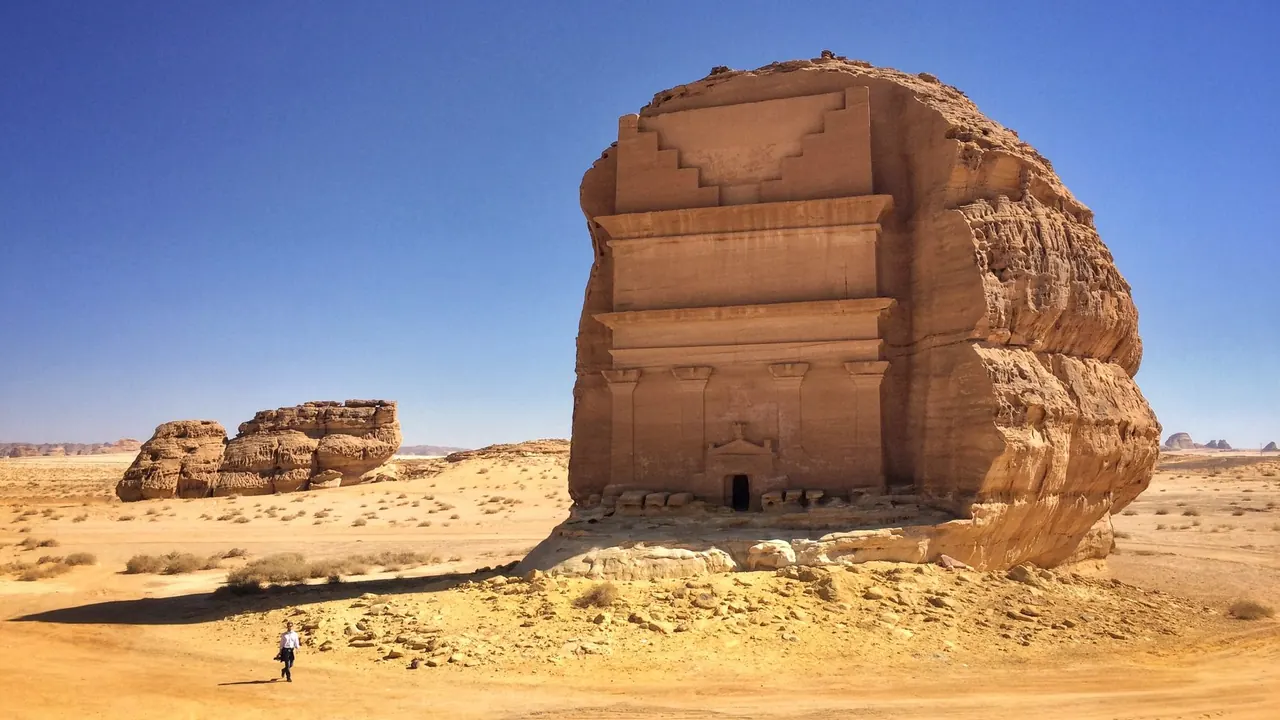
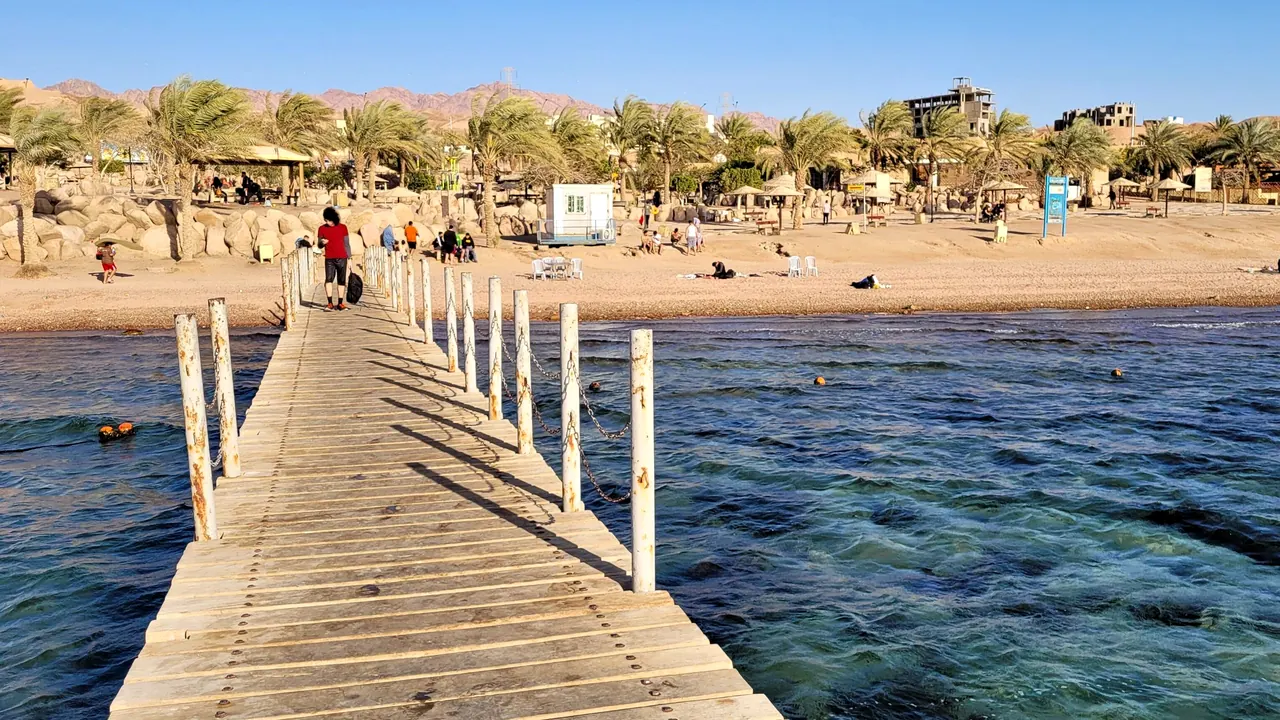
Photos: AlUla by Richard.hargas, CC BY-SA 4.0, cropped; Aqaba by عباد ديرانية, CC BY-SA 4.0, cropped.
AlUla or Aqaba?
Our verdict in twelve categories, each scored against the same fixed benchmark cities, and the climate month by month, so you can choose for your trip.
Choose AlUla for
- culture and sights
- live music and the arts
AlUla is for travellers who want ancient sites and desert scenery on a grand scale and are willing to pay for them. Hegra's lone carved tombs, the inscribed canyon at Jabal Ikmah and the mud-brick Old Town make a trip built around a few deep visits, with resort comfort at the end of each day. Its winter concert season at Maraya is something Aqaba has nothing to match. You will need a hire car or a driver and a generous budget.
Choose Aqaba for
- beaches
- prices
- day trips
If you want the sea in your trip, Aqaba makes more sense. Its reefs start a few metres from shore in water that stays warm all year, Wadi Rum is an hour inland and Petra is close enough for a day trip, so one base covers diving, desert and Jordan's most famous ancient site. It is also the easier and cheaper of the two, with a walkable town centre, local food that costs little and a simple resort routine that works for families.
Scoreboard
Twelve categories on one fixed scale from 0 to 100. The shaded stretch is the gap between the two.
Your match
Pick a travel style or drag the sliders, and both match scores follow your weighting.
Wins on culture and sights and live music and the arts with your weighting.
Wins on beaches and prices with your weighting.
What matters to you?
Category by category
What the scores mean for a trip.
Beaches & swimming
These two are not comparable here. AlUla lies deep in the desert with no sea or lake within reach, and the Red Sea coast is too far for a day out, so swimming means the pool at your resort or camp.
Aqaba is built on the water. The Gulf stays warm all year and reefs begin just off South Beach, so a normal swim easily turns into snorkelling. The sand is narrow and coarse, though, and most visitors settle at the beach clubs south of town and at Tala Bay rather than on the busy public strip.
Food & drink
Neither is worth the journey for food alone, but Aqaba gives you more to explore. In AlUla most meals happen at resort restaurants or on a short row of Old Town terraces, and the most memorable tastes are the oasis dates and cardamom coffee.
Aqaba has a real local dish in sayadieh, fish restaurants near the old town where you choose your catch, and cheap falafel, hummus and shawarma in between. Hotels and some restaurants also serve alcohol, and it costs less than elsewhere in Jordan.
Culture & sights
AlUla is far ahead here. Hegra's monumental tombs standing alone in the sand, the lion tombs of Dadan, the inscribed walls of Jabal Ikmah and the mud-brick Old Town below its fort add up to heritage on a grand scale. You see it through a handful of guided visits rather than a city full of museums.
Aqaba's own past is modest by comparison. The Mamluk fort, the low walls of early Islamic Ayla, a small museum and the site of a very early church fill a morning, and visitors interested in heritage take a day trip to Petra instead.
Nightlife
Evenings are quiet in both, but in Aqaba you can at least get a drink. AlUla has no bars or clubs at all. Nights there mean a late dinner, a walk through the lit Old Town lanes and stargazing out in the desert.
Aqaba adds resort bars, a few pubs for divers and beach clubs with occasional DJ nights in the cooler months, alongside the local habit of walking the corniche and sitting in shisha cafés. There is still no club scene, and early nights before a dive are normal.
Nature & outdoors
Both are excellent for time outdoors, and on land they are well matched. AlUla has its sandstone valley, Elephant Rock, the lava plateau of Harrat Uwayrid and the Sharaan reserve, with via ferrata routes, balloon flights and very dark skies. From Aqaba, Wadi Rum's red mountains and arches are about an hour inland.
What puts Aqaba ahead is the sea. Shore dives at the Japanese Garden, coral shallow enough for snorkellers and wrecks laid down as artificial reefs add a whole underwater landscape that AlUla cannot offer.
Day trips
Aqaba has the day trip many people come to this region for: Petra, about two hours away, usually combined with Little Petra in one long day. Eilat and the Sinai coast are close on the map, but the border crossings make them awkward outings.
AlUla's best sights lie within its own valley. The outings beyond it are the old oasis towns of Tayma and Khaybar, each about two hours across the desert. They are interesting, but they are not reasons to come.
Good for families
Aqaba is the easier choice with children. Calm, shallow water at the edges, glass-bottomed boats over the reef and resorts with kids' clubs make an easy daily routine, and a night at a Wadi Rum camp is a highlight for older children.
AlUla suits older children who like the outdoors, with climbing, camel rides, ziplines and the sheer size of the tombs at Hegra. Nothing there is built for children, though, and the sites are spread out and exposed to the sun. Both are welcoming to families, and both are much easier outside summer.
Getting around
You cannot rely on public transport in either, but Aqaba takes less effort. Its centre, with the corniche, fort and markets, is small enough to walk in the cooler hours, and taxis and hotel shuttles run along the coast road to the resorts and dive sites.
In AlUla the hotels, Old Town and archaeological sites are spread along a long valley, often 20km or more apart. Ticketed shuttles serve the main sites, and for everything else you need a car, a driver or a tour. The roads are empty and easy to drive, but every day needs planning.
Shopping & style
Shopping is a minor part of either trip, though Aqaba has a little more to browse. Its old market streets sell spices, dates, Bedouin textiles and Dead Sea mud and salts, and its tax-free status makes perfume and electronics cheaper than elsewhere in Jordan.
AlUla has no market, only a handful of craft and design shops in the Old Town selling weaving, pottery, jewellery and local perfumes, some of it made at the town's arts and crafts school. The choice is small, and a box of oasis dates is the thing most worth taking home.
Affordability
Aqaba is much the cheaper of the two, at least away from the resorts. Street food, fish meals, taxis and simple hotels in the centre cost little, although a comfortable beach stay with diving and a trip to Petra soon adds up.
AlUla has no cheap side to fall back on. Accommodation is mostly luxury resorts and tented camps, the main sites are visited on paid guided tours, and you almost always need a car or driver, so even a short stay costs well above the rest of the region.
Live music & performing arts
AlUla has the edge, but only in season. Maraya, the mirrored concert hall in a desert canyon, brings international singers and orchestras during the winter festival months, along with outdoor music and traditional Saudi dance among the rocks. If you time your trip to the events calendar, you can have a memorable night out.
Aqaba offers little beyond bands in hotel lounges and Bedouin music around the fire at a Wadi Rum camp. For concerts or theatre in Jordan, Amman is the place.
Wellness & relaxation
Both are good for a slow, quiet stay, but the kind of rest is different. In AlUla the calm comes from the resorts and camps themselves, with spas, sunrise yoga, pools among the rocks and silent desert evenings by a fire, and there is nothing to visit outside them.
Aqaba has more of a bathing culture in the town. Simple Turkish baths offer steam, scrub and massage, the resort spas use Dead Sea mud and salts, and in winter there are warm, dry days by the sea.
When should you go?
Pick your month. The climate figures are measured averages, not a forecast.
AlUla in July
Aqaba in July
Daytime high, °C
Rainfall in the month, mm
Where the figures come from
AlUla has no rain gauge within 25 km of the centre, so its rainfall comes from a gridded climate dataset read at the city rather than from a gauge further away.
Temperature and rainfall are climate normals, averaged over the years shown. AlUla: 2010-2025 (rainfall 1991-2020) normals, Alula / Al ‘Ulá (23.7 km from centre). Aqaba: 1991-2020 normals, Eilat (5.8 km from centre).
Both are winter destinations. In AlUla the comfortable months run from November to March, with highs around 23°C in January that make long days at Hegra and canyon hikes pleasant. By May the heat builds, and from June to September it reaches 43°C, which limits anything outdoors to early morning and dusk. Rain is rare all year, with only a few light showers in late autumn and winter.
Aqaba is a little milder in winter and just as harsh in summer, reaching 40°C in July and August. The sea makes the difference. It never drops much below 21°C, so you can swim even in January, and it warms to 28°C by August. For a beach stay with comfortable sightseeing, April and late October to November are the best months: sunny, almost dry, and warm on the shore without the full summer heat.
Which traveller are you?
On a beach and sun trip, Aqaba is the only real option. AlUla is far inland and offers nothing but resort pools, while Aqaba has clear, warm water all year and coral reefs a short swim from the beach clubs south of town.
For a culture and arts trip, AlUla wins clearly. The tombs of Hegra and Dadan, the inscriptions at Jabal Ikmah and the mud-brick Old Town go far beyond Aqaba's fort and ruins, and Maraya brings big concerts in winter.
On a trip on a tight budget, Aqaba is much kinder. Falafel, fish meals, taxis and simple central hotels cost little. AlUla relies on luxury resorts, ticketed guided tours and a hire car, with few cheaper options to fall back on.
Before you go
| Measure | AlUla | Aqaba |
|---|---|---|
| Official language | Arabic | Arabic |
| Currency | Saudi Riyal (SAR) | Jordanian Dinar (JOD) |
| Sockets | G60 Hz | BCFGJ230 V, 50 Hz |
| Driving side | Right | Right |
| Time zone | UTC+3 | UTC+3 |
| Emergency number | 112 or 911 | 911 |
| Elevation | 692 m | 6 m |
| Main airport | Al-Ula International Airport (ULH)24 km from centre8 non-stop destinations | King Hussein International Airport (AQJ)9 km from centre5 non-stop destinations |
By the numbers
| Measure | AlUla | Aqaba |
|---|---|---|
| City population | 32,413 | 140,000 |
| People per km² | - | 3,733 |
| Museums within 10 km | 2 | 5 |
| UNESCO World Heritage sites within 50 km | 1 | 2 |
| Swim season, months above 21 °C | - | 12 months |
Where else could you go?
Every comparison below shares a destination with this one, so you can follow AlUla or Aqaba somewhere new.