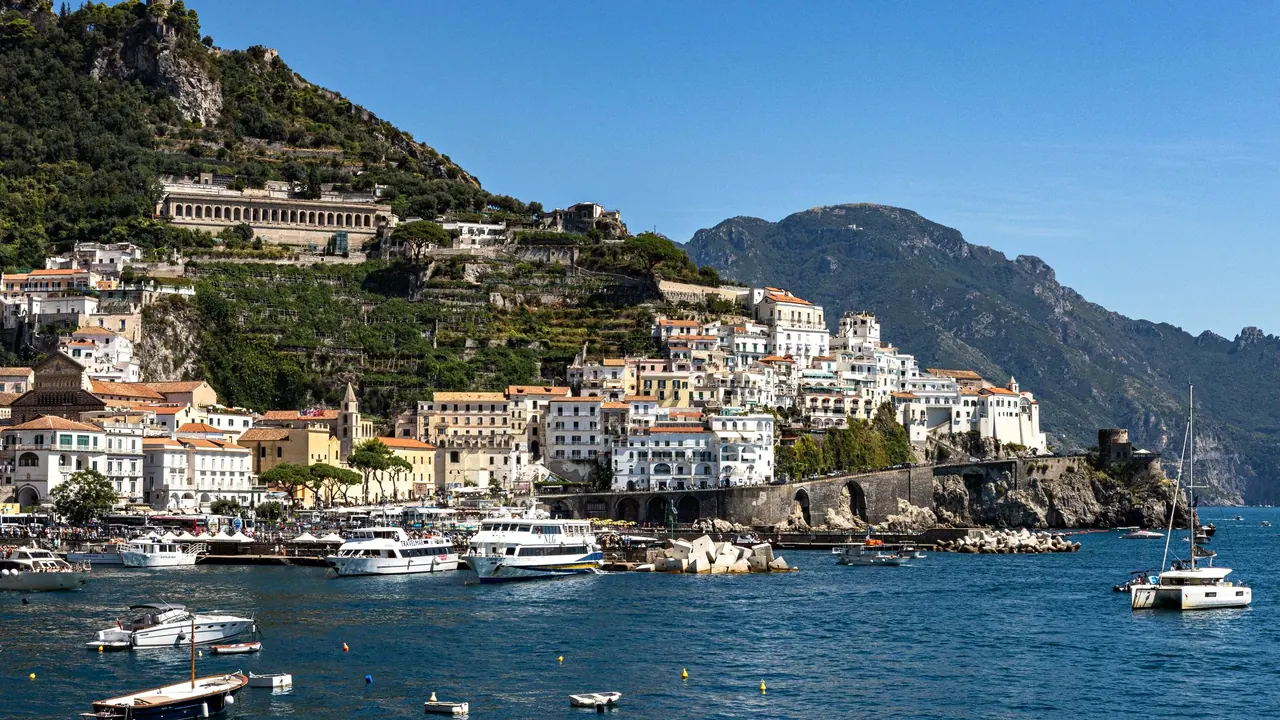
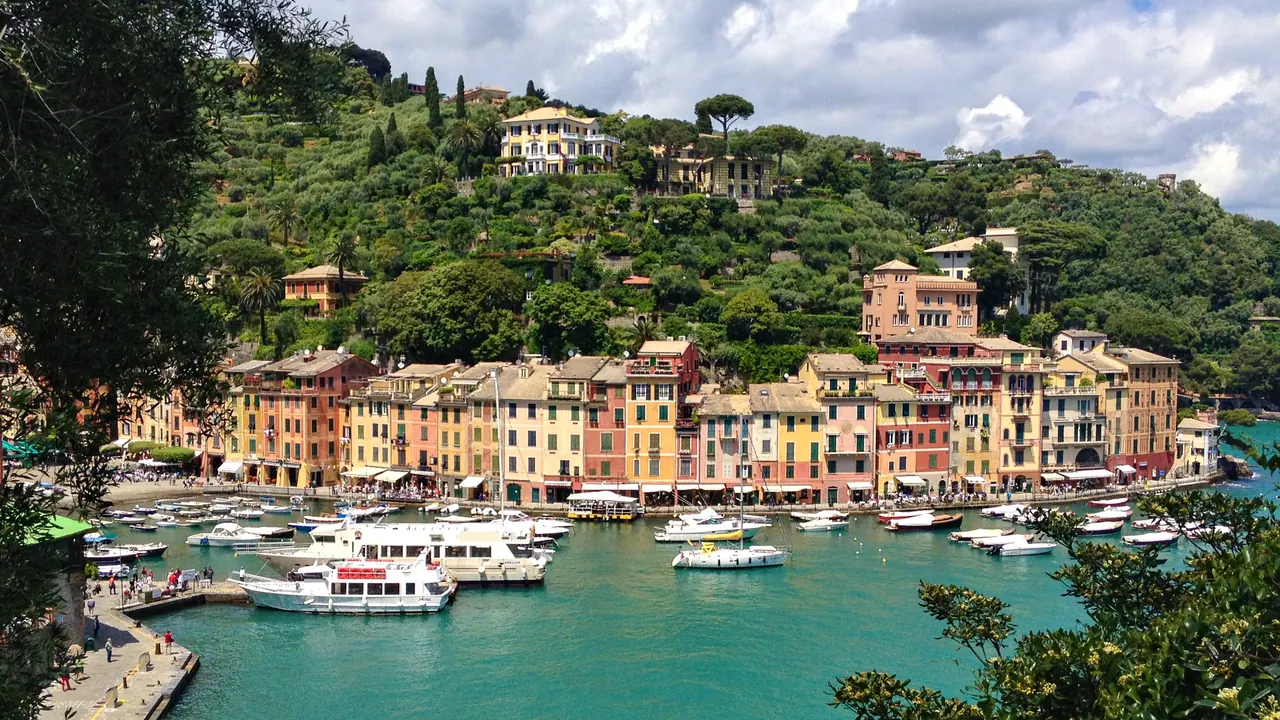
Photos: Amalfi by Oleksandra Zelena, Pexels License; Portofino by Michal Osmenda, CC BY 2.0, cropped.
Amalfi or Portofino?
Our verdict in twelve categories, each scored against the same fixed benchmark cities, and the climate month by month, so you can choose for your trip.
Choose Amalfi for
- live music and the arts
- culture and sights
- food and drink
Amalfi is the better base for travellers who want to keep moving. It sits at the centre of its coast, so Ravello, Positano, Capri, Paestum and Pompeii are all within a day, and the town has more to offer in its own right: the cathedral and cloister of a medieval sea republic, more serious cooking built on lemons and anchovies, and summer concerts up the hill. It suits an active, curious trip and costs slightly less, though it is never cheap.
Choose Portofino for
- wellness
- families
- nightlife
Portofino is for a slower stay. The village is a small, polished harbour on a protected headland, where the pleasure lies in quiet mornings, shaded park trails, swims off the rocks and clear water rich in sea life below. There is less to see and less to eat well, and it is the dearer of the two, but it is calmer at the edges of the day and suits travellers who want to stay put and unwind.
Scoreboard
Twelve categories on one fixed scale from 0 to 100. The shaded stretch is the gap between the two.
Your match
Pick a travel style or drag the sliders, and both match scores follow your weighting.
Wins on live music and the arts and culture and sights with your weighting.
Wins on wellness and families with your weighting.
What matters to you?
Category by category
What the scores mean for a trip.
Beaches & swimming
Neither has a long sandy shore, and swimming is equally good in both, but the two work differently. Amalfi has a proper town beach: Marina Grande's pebbles lie right below the Duomo steps, mostly covered by beach-club loungers, and Atrani's little cove is ten minutes' walk away.
Portofino has no beach of its own. You swim from rock ladders on the lighthouse path into deep, very clear water, or go to the sheltered sand at Paraggi, much of which is taken by paid clubs. In both places the best swims are reached by boat: Amalfi's grottoes and coves such as Santa Croce, or the pebbles below the abbey at San Fruttuoso.
Food & drink
Amalfi eats better. Its cooking draws on the coast's own produce: sfusato lemons from the terraces, colatura from Cetara, and scialatielli with clams, with wines from Furore and Tramonti to go with it. The seafront cafés are average, but there are careful trattorias in the alleys and up the valley.
Portofino has excellent Ligurian dishes to try, such as trofie with pesto and Recco's cheese focaccia, but the village offers little more than a cluster of harbour terraces where you pay for the view of the yachts. Keen eaters head off to Camogli or Santa Margherita for dinner.
Culture & sights
Amalfi has more history to see. It was the seat of a medieval sea republic, which left behind the striped Arab-Norman cathedral with its Constantinople bronze doors, the Chiostro del Paradiso, the old Arsenale and the paper museum in the Valle dei Mulini. That takes about half a day, but it is real heritage.
In Portofino the main attraction is the village itself, with its painted horseshoe of houses, the church of San Giorgio and the gardens of Castello Brown. The finest single sight is the abbey of San Fruttuoso, reached only on foot or by boat.
Nightlife
Both are dinner-and-early-night places, with the difference mostly in tone. Amalfi's evening ends with a gelato or a glass on Piazza Duomo once the day visitors leave. Portofino is dressier, with summer aperitivi in elegant bars facing the moored yachts. For anything later, Amalfi sends you to Salerno or Naples and Portofino to Rapallo or Genoa.
Nature & outdoors
Both have a superb coastal landscape, but the scenery differs. Amalfi's is grander and more vertical: the Lattari mountains drop into the sea, the shaded Valle delle Ferriere gorge starts behind town, and the Path of the Gods runs high above Positano. Old mule stairways climb to Ravello and the hill hamlets.
Portofino's is a compact protected headland, with holm oak and pine trails up Monte di Portofino and chained cliff sections down to San Fruttuoso. Its real strength lies offshore, in a marine reserve made for snorkelling and diving.
Day trips
Amalfi has the stronger list of day trips. Ravello and Positano are a short hop away, ferries cross to Capri, and with some planning you can reach Paestum, Pompeii and Herculaneum, all in a single day each.
Portofino's outings are pleasant but fewer: Camogli, Santa Margherita and Sestri Levante along the Riviera, Genoa's palaces within the hour, and summer boats to the Cinque Terre and Portovenere. On both coasts the ferries only run in season, so winter trips depend on Amalfi's buses or Portofino's trains.
Good for families
Both are awkward with small children, with steps instead of pavements, little free sand and nothing built for children. Amalfi has the more draining logistics, with packed, winding buses that make children carsick. Older swimmers will love its sea caves and valley walks.
Portofino is calmer, and children enjoy the castle walk and swimming off the rocks. Most families sleep in Santa Margherita or Rapallo for the beaches and visit Genoa's aquarium.
Getting around
Both are easy to walk round and hard to reach, but Amalfi is a junction and Portofino a dead end. From Amalfi's harbour front, buses and ferries go in several directions, although stairs make the town tough for anyone with limited mobility.
Portofino sits at the end of one narrow road, 5km from the train station at Santa Margherita, so every trip out starts with that bus or a ferry. In both places summer traffic jams make a car more trouble than it is worth.
Shopping & style
Neither is a shopping destination, but they sell very different things. Amalfi is the place for crafts: handmade cotton paper from the valley mills, majolica tableware and sandals made to measure, though much of the stock on its single main street is the same from shop to shop.
Portofino is about luxury, with designer fashion and jewellery boutiques and resort wear for yacht passengers squeezed into a few lanes. For a proper browse, people go to Chiavari's arcades or to Genoa.
Affordability
Both rank among Italy's most expensive places to stay, but Portofino is harder on the wallet. It has very few hotels, nearly all of them luxury, so most budget-minded visitors sleep in Camogli or Rapallo and come over for the day.
Amalfi gives you more room to save. You can stay in the hill villages, eat in back-street trattorias and travel along the coast on its cheap local buses, especially in spring or autumn.
Live music & performing arts
Amalfi has the better evenings out, mostly because of its neighbour. Every summer the Ravello Festival holds orchestral and chamber concerts on the garden terrace of Villa Rufolo high above the sea, and the feast of Sant'Andrea brings processions and band music to the town.
Portofino offers no more than an occasional summer concert in the piazzetta or at the castle. Opera and theatre mean the trip to Genoa's Teatro Carlo Felice.
Wellness & relaxation
Neither town has thermal baths, and in both the spas belong to the luxury hotels on the cliffs, so rest here comes from the pace rather than treatments. In Amalfi you have to work a little to find calm. It comes early, before the day visitors arrive, or over a long lunch on a shaded terrace and a swim from the rocks. In July and August real peace usually means climbing to hamlets such as Pontone, or coming in May or October instead.
Portofino settles more easily. Even in high summer the busy spell is mostly the middle of the day, and the rest of the day belongs to the village again. Walking paths start right at the harbour and follow the headland, where birdsong and the sea are often the only sounds. It is the better choice for a few slow days of doing very little.
When should you go?
Pick your month. The climate figures are measured averages, not a forecast.
Amalfi in July
Portofino in July
Daytime high, °C
Rainfall in the month, mm
Where the figures come from
Amalfi's temperatures are measured 65 km from the centre, at Grazzanise.
Amalfi has no rain gauge within 25 km of the centre, so its rainfall comes from a gridded climate dataset read at the city rather than from a gauge further away.
Portofino's temperatures are measured 31 km from the centre, at Genova / Sestri.
Portofino has no rain gauge within 25 km of the centre, so its rainfall comes from a gridded climate dataset read at the city rather than from a gauge further away.
Temperature and rainfall are climate normals, averaged over the years shown. Amalfi: 1991-2020 normals, Grazzanise (64.7 km from centre). Portofino: 1991-2020 normals, Genova / Sestri (31 km from centre).
Amalfi is the hotter of the two. July and August reach about 31°C and are almost dry. That is ideal for the sea but hard going on the stairways and exposed trails in the middle of the day. Portofino peaks at a gentler 28°C in August, so summer walking there is less punishing. Both seas are warm enough for swimming from June to September. Amalfi's water stays pleasant into October, while Portofino's cools a little sooner.
Rain returns to both in autumn, but much harder on the Ligurian coast. Amalfi's autumn is clearly wetter than its summer, and October brings about 114mm, as much as midwinter. That is still only half of Portofino's October, which brings around 225mm and makes a late-season stay a gamble. For walking, April, May and October suit Amalfi best, though October has more wet days. Portofino is at its best in May and June, before the summer heat and well ahead of the autumn downpours.
Which traveller are you?
For a culture and arts trip, Amalfi is the clear choice. It has the Duomo and Paradise Cloister of a medieval maritime republic, Ravello's garden concerts a short ride up the hill, and Paestum and Pompeii within a day. Portofino offers atmosphere but little to visit.
On a relaxing and wellness trip, Portofino is the more restful choice. Its mornings and evenings are hushed, the park's shaded paths are quiet, and the harbour calms down once the tour boats leave. Amalfi's centre stays crowded and noisy for more of the summer.
For divers, Portofino has something Amalfi cannot match: a marine reserve with red coral walls, seagrass meadows and the bronze Christ of the Abyss lying in the bay at San Fruttuoso. Amalfi's sea is best explored by kayak or boat, among its grottoes.
Before you go
| Measure | Amalfi | Portofino |
|---|---|---|
| Official language | Italian | Italian |
| Currency | Euro (EUR) | Euro (EUR) |
| Sockets | CFL230 V, 50 Hz | CFL230 V, 50 Hz |
| Driving side | Right | Right |
| Time zone | UTC+1, UTC+2 in summer | UTC+1, UTC+2 in summer |
| Emergency number | 112 | 112 |
| Elevation | 6 m | 20 m |
| Main airport | Naples International Airport (NAP)38 km from centre131 non-stop destinations | Genoa Cristoforo Colombo Airport (GOA)32 km from centre25 non-stop destinations |
| Public holidays this year | 13 days | 13 days |
By the numbers
| Measure | Amalfi | Portofino |
|---|---|---|
| City population | 4,729 | 355 |
| People per km² | 830 | 142 |
| Museums within 10 km | 8 | 14 |
| UNESCO World Heritage sites within 50 km | 5 | 2 |
| Swim season, months above 21 °C | 5 months | 4 months |
Where else could you go?
Every comparison below shares a destination with this one, so you can follow Amalfi or Portofino somewhere new.