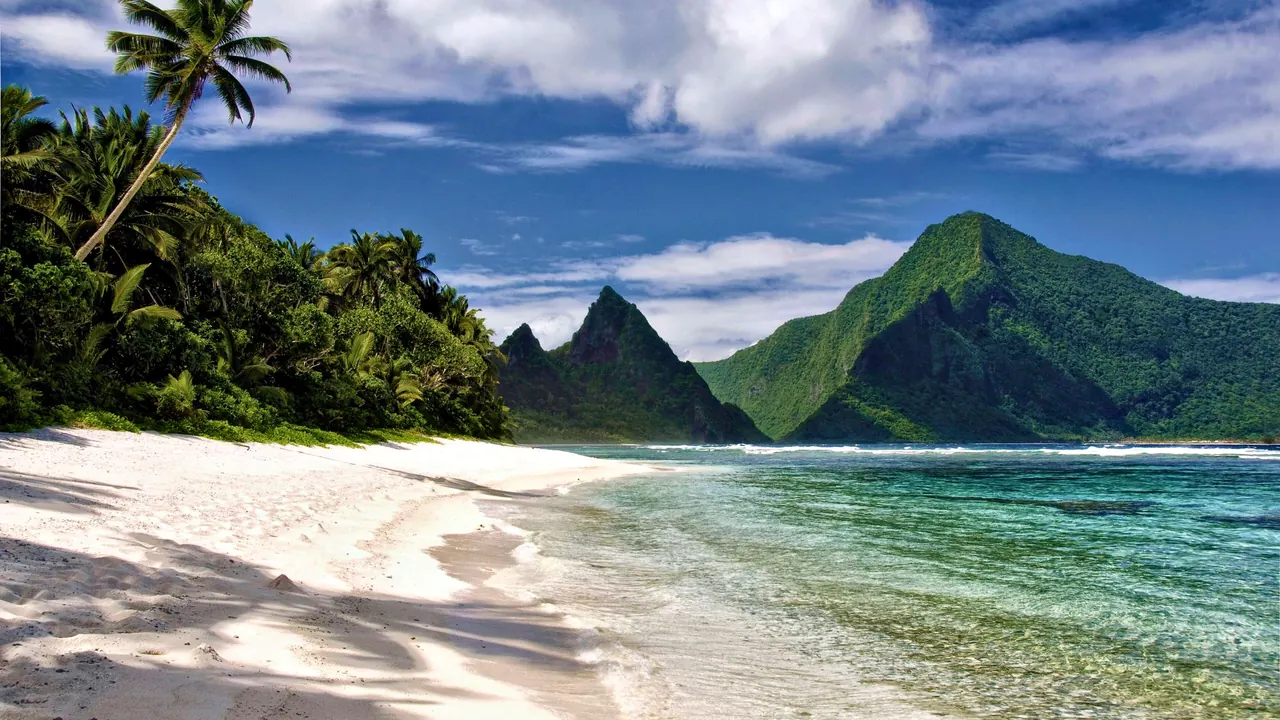
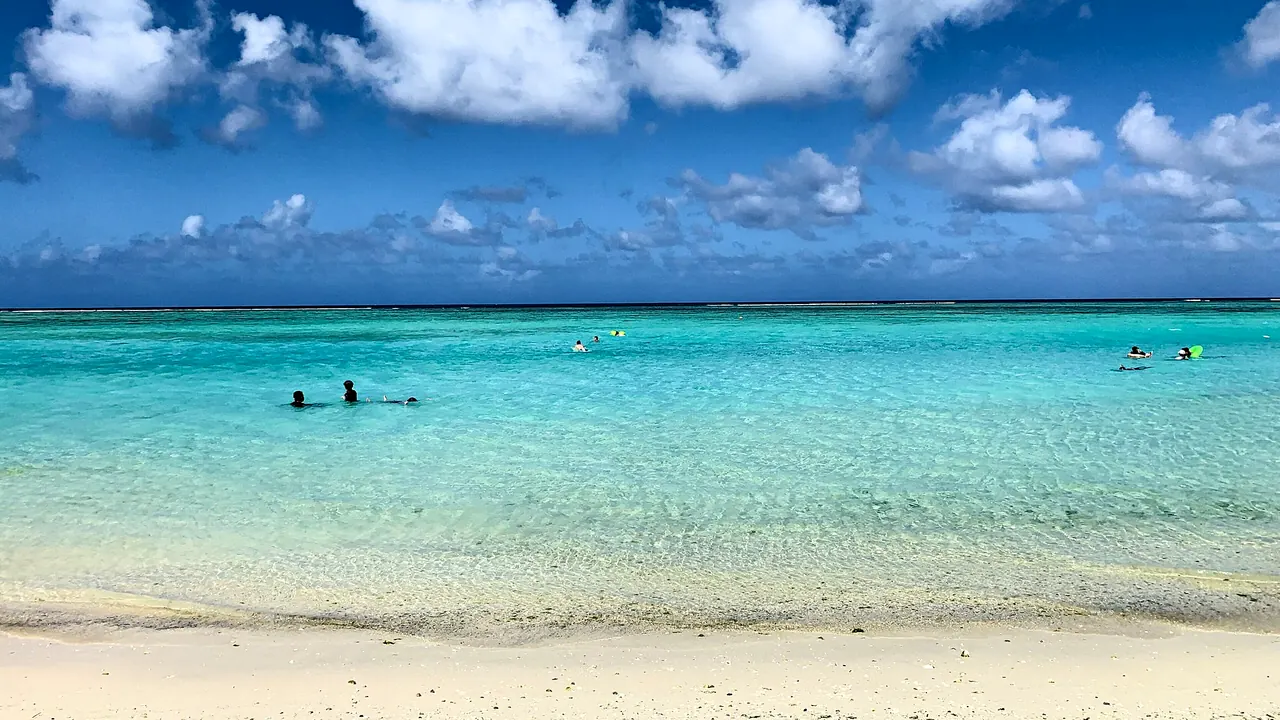
Photos: American Samoa by The U.S. National Park Service (public domain), Public domain; Guam by Daniel Ramirez from Honolulu, USA, CC BY 2.0, cropped.
American Samoa or Guam?
Our verdict in twelve categories, each scored against the same fixed benchmark cities, and the climate month by month, so you can choose for your trip.
Choose American Samoa for
- nature and the outdoors
- live music and the arts
- prices
American Samoa is for the traveller who wants wild country and doesn't need much else. Its national park covers rainforest ridges above Pago Pago harbour, the huge sea cliffs of Ta'u and the coral lagoon at Ofu. Village life follows fa'a Samoa, with Sunday church singing and evening prayer. In return you get simple guesthouses, plain food, almost no nightlife and real effort to reach the outer islands. It suits independent, patient people who are happy with quiet evenings.
Choose Guam for
- shopping
- families
- beaches
Guam is the easier island for a resort-style break. Tumon Bay puts a calm reef lagoon, family hotels, duty-free shopping and the island's bars along one stretch of road. Chamorro food, Spanish churches and the Pacific war sites give you something to do on the days you leave the beach. Families, shoppers and anyone who wants sea and comfort without planning will be better served here, though the landscape is tamer and the forests are oddly quiet.
Scoreboard
Twelve categories on one fixed scale from 0 to 100. The shaded stretch is the gap between the two.
Your match
Pick a travel style or drag the sliders, and both match scores follow your weighting.
Wins on nature and the outdoors and live music and the arts with your weighting.
Wins on shopping and families with your weighting.
What matters to you?
Category by category
What the scores mean for a trip.
Beaches & swimming
Guam has the easier beach life. Tumon Bay is a long curve of pale sand with a calm reef lagoon right in front of the hotels, Ypao is good for picnics and Gun Beach for snorkelling. Further south there are quieter spots at Agat and Cocos Island. The east coast is too rough for swimming.
American Samoa's finest beach, the white strand at Ofu, is arguably the lovelier one, but you need a small-plane flight to reach it. On Tutuila the coves at Alega and Avaio are small and often too shallow to swim at low tide. Most beaches belong to villages, so you may pay a small fee or ask permission, and you shouldn't swim near a village on a Sunday.
Food & drink
Both islands have a cuisine of their own, but Guam makes its cooking far easier to find. Visitors can try red rice, kelaguen and fiesta barbecue at the Chamorro Village night market in Hagåtña or at roadside stands. Away from Tumon's ramen and hotel buffets, eating can be one of the pleasures of a stay.
American Samoa's umu-baked Sunday meal of palusami, oka and roast pork is mostly something you are invited to rather than something you can order. Day to day, Pago Pago and Nu'uuli offer plain diners and fast food, and fresh fish and fruit at the Fagatogo market are the best of it.
Culture & sights
Guam has more sights to visit. They include latte stone pillars in Hagåtña, the Spanish plaza and cathedral, Fort Soledad above Umatac, and the war landing beaches at Asan and Agat, with the Guam Museum tying them together.
American Samoa's heritage is mostly lived rather than displayed. You see it in fale meeting houses, chiefly customs and tattooing along the coast road, with the small Jean P. Haydon Museum and the ancient star mounds for more. Either island fills a day or two.
Nightlife
Guam at least has a nightlife strip. Pale San Vitores Road in Tumon has hotel lounges, sports bars, karaoke and a couple of dance clubs that stay open late at weekends. It is the same small scene every night, though.
American Samoa has a few harbourside bars and karaoke spots, mostly used by locals and fishing crews. Many villages hold an evening prayer curfew, and the islands go silent on Sundays.
Nature & outdoors
The wild landscape is American Samoa's real strength. Its national park takes in Tutuila's ridges rising out of Pago Pago harbour, the trail up Mount Alava, fruit bats flying by day, and on Ta'u some of the highest sea cliffs in the world. Ofu's reef is among the healthiest coral in the Pacific. The trails are steep and muddy, though, and there are few guides.
Guam is better underwater than on land. It has the Blue Hole, coral walls and two wrecks from different world wars lying side by side in Apra Harbor. On land you can reach the Two Lovers Point cliffs, the Ritidian refuge and waterfall walks such as Talofofo, but the forests are quiet because introduced snakes wiped out most of the birds.
Day trips
On both islands, day trips are few. American Samoa's classic outing is a short boat ride to Aunu'u, a car-free islet with a crater lake. Guam's is a drive round the southern villages of Umatac, Merizo and Inarajan. Both have neighbouring islands that need an overnight stay: Apia and the Manu'a group from American Samoa, Rota and Saipan from Guam.
Good for families
Guam is built for young families. Many visitors from nearby Asia come for the shallow Tumon lagoon and resort pools with slides and kids' clubs, all within one stretch of road. Dolphin boats and the Piti underwater observatory add a change from the beach.
American Samoa welcomes children warmly but has nothing made for them. Older children who like rock pools, snorkelling and spotting fruit bats will enjoy it. Small ones face sharp reef flats, humidity, rain and a long journey to get there.
Getting around
On Guam you can manage without a car in Tumon. You can walk the beach road and hotel shuttles run to the shops and Hagåtña. To see the rest of the island you rent a car, but the roads are good and nothing on the 50km island is much more than an hour away.
Tutuila has one main road and colourful aiga buses that run without timetables, thin out in the evening and mostly stop on Sundays, so most visitors hire a car. Getting to the Manu'a islands means infrequent small planes that weather can ground.
Shopping & style
Guam is a shopping destination in its own right. With no sales tax, it has duty-free galleries and luxury boutiques in Tumon and American malls and an outlet centre in Tamuning and Dededo. It has little local craft, though.
That craft is what American Samoa does have: siapo bark cloth, woven mats and fans, carvings and lavalava sarongs at the Fagatogo market. Apart from those, the shops are general stores.
Affordability
Neither island is cheap, but American Samoa costs somewhat less once you have arrived. Day-to-day costs there are close to those on the US mainland. The few hotels around Pago Pago charge mid-range rates for simple rooms, and aiga buses, market fruit and fish, and village beach fees cost very little. Getting there is the biggest expense of the trip, and car hire is the main cost once you have arrived.
Guam costs more day to day. Tumon's beachfront hotels charge full resort prices, and because almost everything is shipped in, meals and groceries cost more than on the mainland, with a rental car on top. Barbecue stands, the Chamorro Village night market and the lack of sales tax help, but they only partly make up for the higher costs.
Live music & performing arts
American Samoa's performances come from community life. Village congregations sing in harmony at Sunday church and welcome modestly dressed visitors. Fire knife and slap dancing turn up at fiafia evenings. Each April, Flag Day brings dance competitions and fautasi longboat races to Pago Pago harbour.
On Guam, most visitors see dance at hotel dinner shows, which feel more staged. Parish fiestas and an occasional symphony or university play add a little more.
Wellness & relaxation
Neither island has a spa tradition, so the difference is in how you rest. Guam's Tumon resorts have their own spas, and massage shops line the main road, which makes a few easy days of pampering simple to arrange. American Samoa has hardly any treatments. Instead it offers real disconnection, in a guesthouse on Ofu or a fale on Tutuila's quiet east end, where Sundays bring everything to a stop.
When should you go?
Pick your month. The climate figures are measured averages, not a forecast.
American Samoa in July
Guam in July
Daytime high, °C
Rainfall in the month, mm
Temperature and rainfall are climate normals, averaged over the years shown. American Samoa: 1991-2020 normals, Pago Pago / Int. Airport (6.6 km from centre). Guam: 1991-2020 normals, Agana, Guam International Airport (3.1 km from centre).
Both islands are hot every month, with daytime highs close to 30°C and a sea around 29°C, so the beach is always warm enough. Rain is what sets them apart. Around Pago Pago in American Samoa there is no real dry season. December and January are the wettest months, at about 385mm, and from June to September the rain eases to roughly half that. Those middle months are also slightly less hot, which makes the muddy ridge trails easier going, although the sunniest stretch actually runs from October to December.
Guam has a clearer pattern, roughly the reverse. Around Tumon on the west coast, January to May is the dry, sunny season, with March the driest at about 70mm and the most sunshine falling between March and May. From July the rain builds sharply, peaking at about 445mm in August and staying heavy through October, which is also typhoon season. If you want dry beach weather, go to Guam in the first half of the year. American Samoa is the better choice in the middle of the year.
Which traveller are you?
On an outdoors trip, American Samoa is the stronger choice. You can walk the Mount Alava ridgeline, see flying foxes in the rainforest and snorkel the healthy reef at Ofu, and humpback whales pass in the southern winter. Guam has good diving, but its walks on land are shorter and tamer.
On a family trip with young children, Guam is far easier. The Tumon lagoon is calm and shallow, and hotels have pools and kids' clubs. The Fish Eye observatory shows children reef fish without anyone getting wet. American Samoa has sharp reef flats, few hotels and nothing built for children.
For a shopping trip, choose Guam. Tumon has duty-free galleries and luxury boutiques with no sales tax, and there are American malls and an outlet centre nearby. In American Samoa, shopping means general stores and a handful of siapo cloths and woven mats at the Fagatogo market.
Before you go
| Measure | American Samoa | Guam |
|---|---|---|
| Official language | English, Samoan | English, Chamorro |
| Currency | US Dollar (USD) | US Dollar (USD) |
| Sockets | ABFI120 V, 60 Hz | AB110 V, 60 Hz |
| Driving side | Right | Right |
| Time zone | UTC-11 | UTC+10 |
| Emergency number | 911 | 911 |
| Main airport | Pago Pago International Airport (PPG)2 non-stop destinations | Antonio B. Won Pat International Airport (GUM)17 non-stop destinations |
By the numbers
| Measure | American Samoa | Guam |
|---|---|---|
| Population | 49,710 | 153,836 |
| People per km² | 250 | 283 |
| Swim season, months above 21 °C | 12 months | 12 months |
Where else could you go?
Every comparison below shares a destination with this one, so you can follow American Samoa or Guam somewhere new.