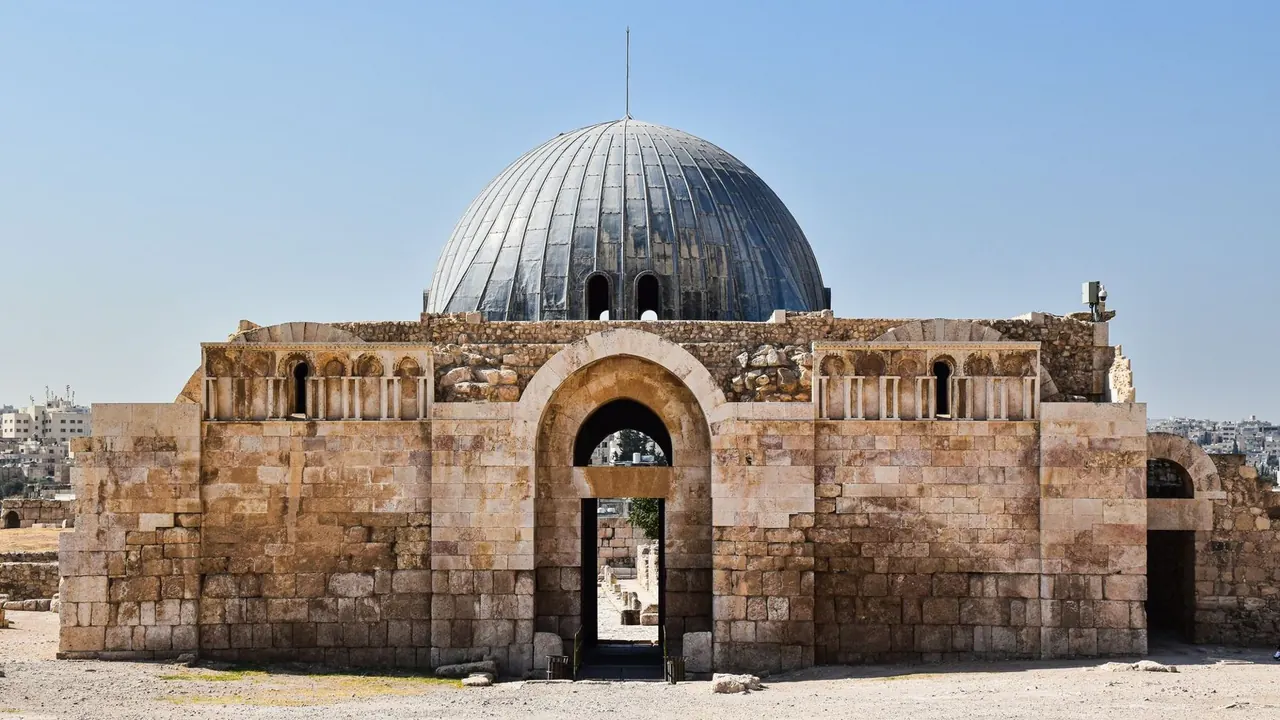
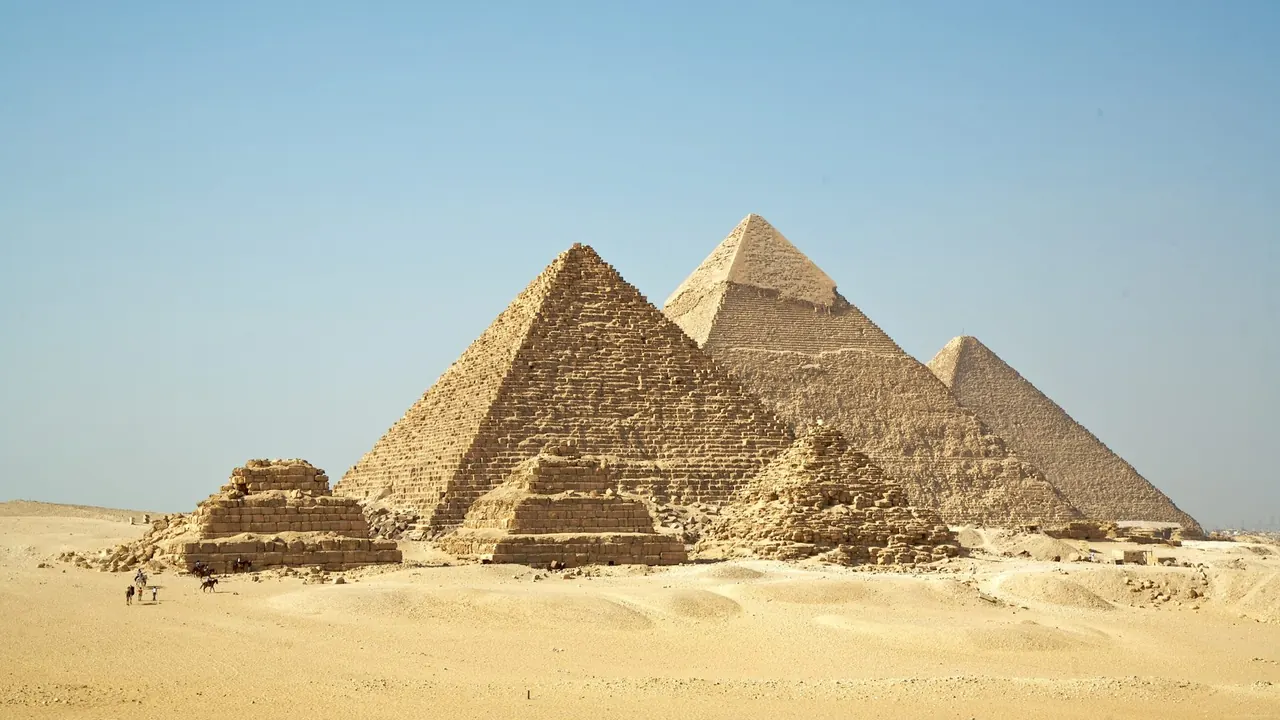
Photos: Amman by AXP Photography, Pexels License; Cairo by Ricardo Liberato, CC BY-SA 2.0, cropped.
Amman or Cairo?
Our verdict in twelve categories, each scored against the same fixed benchmark cities, and the climate month by month, so you can choose for your trip.
Choose Amman for
- wellness
- nature and the outdoors
- day trips
Amman suits travellers who want a calm, easy base for touring a country rather than a city. Its own sights take only a couple of days, but Jerash, Madaba, Mount Nebo, the desert castles and the Dead Sea are all within reach for a day, and the floating, mud and spa resorts on that shore give the trip a restful side Cairo cannot offer. Expect cafés and terraces in the evening rather than late nights out, and hotels and restaurants that cost about what they would in Southern Europe.
Choose Cairo for
- culture and sights
- prices
- live music and the arts
Cairo is for anyone whose main reason to travel is the ancient world. The pyramids, the great museums and the medieval streets of Islamic Cairo are a heritage that few places on earth can match, and staying there costs very little. It also has more going on after dark, from the Opera House to the late coffeehouses. The price is noise, traffic and touts, and little chance to unwind, so it rewards patient travellers with plenty of days.
Scoreboard
Twelve categories on one fixed scale from 0 to 100. The shaded stretch is the gap between the two.
Your match
Pick a travel style or drag the sliders, and both match scores follow your weighting.
Wins on wellness and nature and the outdoors with your weighting.
Wins on culture and sights and prices with your weighting.
What matters to you?
Category by category
What the scores mean for a trip.
Beaches & swimming
Neither city is a beach destination, but Amman has the easier day out. The Dead Sea is about an hour downhill, with sunbeds, showers and water so salty you float rather than swim. It makes a memorable afternoon, though it is not a swim.
From Cairo the nearest shore is Ain Sokhna on the Red Sea, a longer drive to a coast of resort compounds that works better for a few nights than a day trip. In both cities, proper sea swimming means a separate stay on the coast, at Aqaba or on the Red Sea.
Food & drink
The two are evenly matched, and both are at their best cheap and local. Amman leans Levantine: hummus and fuul breakfasts downtown, manakish, hot knafeh, mansaf at a family table, and rooftop terraces in Jabal Amman and Weibdeh for a more modern Arab meal.
Cairo is more of a street city, built on koshari shops, taameya in baladi bread, feteer and stuffed pigeon, with the ahwa coffeehouse at the centre of the day. Neither has much depth at the upmarket end, and alcohol is a side note in both.
Culture & sights
This is where Cairo pulls furthest ahead. The pyramids and Sphinx at Giza, the Grand Egyptian Museum with Tutankhamun's treasures, the royal mummies at Fustat and the mosques, madrasas and Citadel of Islamic Cairo add up to a city you could explore for weeks.
Amman has a fine short list: the Citadel with its Temple of Hercules, the Roman Theatre and the Jordan Museum with its Dead Sea Scrolls and 'Ain Ghazal statues. Two or three days cover it, and Jordan's great heritage lies outside the city.
Nightlife
In both cities the night revolves around tea and shisha more than drinking, but Cairo has more of it. Its streets fill after dark, families walk the Nile corniche, the ahwas of downtown stay packed past midnight, and Zamalek, the big hotels and party boats on the river give a small but real bar scene.
Amman's evenings are quieter and more social, with cafés along Rainbow Street and a handful of bars and rooftop lounges in Jabal Amman, Weibdeh and Abdoun, plus a few weekend DJ nights.
Nature & outdoors
Amman has the better landscapes close by. The road drops about 400 metres below sea level to the Dead Sea, Wadi Mujib offers wading hikes up a sandstone gorge in the warmer months, and the oak and pine trails of Ajloun turn green in spring.
Cairo's outdoors is more limited: Al-Azhar Park, a felucca sail at sunset and the dry canyons of Wadi Degla. The real scenery, the lakes and dunes of the Fayoum and the whale fossils of Wadi Al-Hitan, needs a long day out.
Day trips
Amman is the stronger base, because first-rate sites lie in every direction. Jerash, one of the finest Roman provincial cities anywhere, is under an hour north, with Ajloun castle and Umm Qais beyond, while Madaba's mosaic map, Mount Nebo, Salt, the desert castles and Kerak fill other days.
Cairo's best outing is the string of pyramid fields south of Giza, Saqqara, Dahshur and Memphis, which is superb. After that the options thin out and stretch longer, to the monasteries of Wadi Natrun, the Fayoum and a long day in Alexandria. Both cities need a hired driver for most of these.
Good for families
Neither city is built for children, and Amman is only a little easier. It feels relaxed and safe, it has a hands-on children's museum in King Hussein Park, and floating in the Dead Sea is a day children remember, though steep streets defeat pushchairs.
Cairo has the bigger thrills, the pyramids, a camel ride and the mummies, but relentless traffic, touts and harsh summer heat make it hard going. Families there do best with a hotel pool, a driver and a winter visit.
Getting around
Both are hard work to get around, in different ways. Amman's problem is its hills: there is no metro, the centre joins up only by stone stairways between downtown, Jabal Amman and Weibdeh, and taxis and ride-hailing do the rest.
Cairo has a metro that reaches Coptic Cairo and Heliopolis, but not the pyramids, and its traffic is among the heaviest anywhere. Walking works in short stretches along Al-Muizz Street, in Zamalek or across downtown, and river taxis offer a calmer way over the Nile.
Shopping & style
Cairo has the richer shopping. Khan el-Khalili has been trading since the fourteenth century, and close by are the appliqué workers of the Street of the Tentmakers and the coppersmiths' alley, while Zamalek's boutiques sell contemporary Egyptian design. Expect to haggle and to put up with pushy sellers.
Amman is smaller and gentler. Its downtown souks and gold street are for browsing, and the best things to buy are the embroidery, Hebron glass and olive-oil soap from women's cooperatives around Rainbow Street.
Affordability
Cairo is far cheaper. Meals, the metro, ride-hailing and comfortable rooms downtown or in Zamalek cost very little, and a whole stay comes in low even after tips.
Amman is cheap only at the bottom end, for falafel breakfasts, shawarma and taxis. Its mid-range hotels and restaurants are priced like Southern Europe. Both charge foreigners heavily at the headline sites, and alcohol is expensive in both.
Live music & performing arts
Cairo offers far more to watch. The Opera House on Gezira Island has a symphony orchestra, ballet and Arabic music, and the whirling tanoura dance in the medieval Wikala of al-Ghouri is one of the city's great evenings, with zar and traditional music in smaller halls.
In Amman, a visitor may see nothing at all. There are occasional concerts at the Royal Cultural Centre and irregular, mostly Arabic programmes in Weibdeh, and the one big event is the summer Jerash Festival in the ancient theatres.
Wellness & relaxation
Amman wins this easily, though mostly thanks to what lies below it. The Dead Sea resort spas, with their salt water and mineral mud, are about an hour away, the Ma'in hot springs fall through a desert canyon nearby, and the city itself still has working hammams.
Cairo offers little rest. Its old bathhouses have fallen out of use, so calm means a hotel spa on the Nile, a felucca at dusk or a historic courtyard garden, and many visitors save the unwinding for the Red Sea afterwards.
When should you go?
Pick your month. The climate figures are measured averages, not a forecast.
Amman in July
Cairo in July
Daytime high, °C
Rainfall in the month, mm
Where the figures come from
Amman has no rain gauge within 25 km of the centre, so its rainfall comes from a gridded climate dataset read at the city rather than from a gauge further away.
Amman's sunshine is measured 55 km from the centre, at Mafraq.
Temperature and rainfall are climate normals, averaged over the years shown. Amman: 1994-2020 (sunshine 1991-2020, rainfall 1991-2020) normals, Amman Airport (6 km from centre). Cairo: 1991-2020 normals, Helwan (21.9 km from centre).
The two cities run on different calendars. Amman sits high in the hills and has a real winter: January highs of about 13°C and steady rain from November to March, so the stepped lanes can be cold and wet. Spring and autumn are its best seasons, April, May and October being dry, sunny and mild enough for long days at Jerash or in the Ajloun woods. July and August reach about 33°C, but the air is dry and the evenings cool off on the hills.
Cairo hardly ever sees rain and has sun all year. Its winter is the high season for walking, with January highs near 19°C, and the months from October to April are comfortable for the pyramids and the old city. From May to September the heat climbs to around 36°C, which makes sightseeing at midday hard work, so in summer Amman is the gentler of the two.
Which traveller are you?
On a culture and arts trip, Cairo is the clear choice. Giza, the Grand Egyptian Museum, Islamic Cairo and Coptic Cairo would fill weeks, and the Opera House and tanoura dancers add evenings that Amman's thin programme cannot match.
For a trip on a tight budget, Cairo again wins. Local food, transport and comfortable mid-range rooms there cost very little, whereas Amman's hotels and sit-down meals in the western districts are priced closer to Southern Europe.
On a relaxing and wellness trip, Amman is far better. Within an hour are the Dead Sea resort spas with their floating and mineral mud and the Ma'in hot springs, while Cairo's noise and dust leave only hotel spas and a felucca at dusk.
Before you go
| Measure | Amman | Cairo |
|---|---|---|
| Official language | Arabic | Arabic |
| Currency | Jordanian Dinar (JOD) | Egyptian Pound (EGP) |
| Sockets | BCFGJ230 V, 50 Hz | CF220 V, 50 Hz |
| Driving side | Right | Right |
| Time zone | UTC+3 | UTC+2, UTC+3 in summer |
| Emergency number | 911 | Police 122, ambulance 123, fire 180 |
| Elevation | 776 m | 23 m |
| Main airport | Queen Alia International Airport (AMM)26 km from centre98 non-stop destinations | Cairo International Airport (CAI)17 km from centre127 non-stop destinations |
| Public holidays this year | - | 15 days |
By the numbers
| Measure | Amman | Cairo |
|---|---|---|
| City population | 4,007,526 | 9,801,536 |
| People per km² | 2,385 | 18,564 |
| Museums within 10 km | 8 | 48 |
| UNESCO World Heritage sites within 50 km | 3 | 2 |
Where else could you go?
Every comparison below shares a destination with this one, so you can follow Amman or Cairo somewhere new.