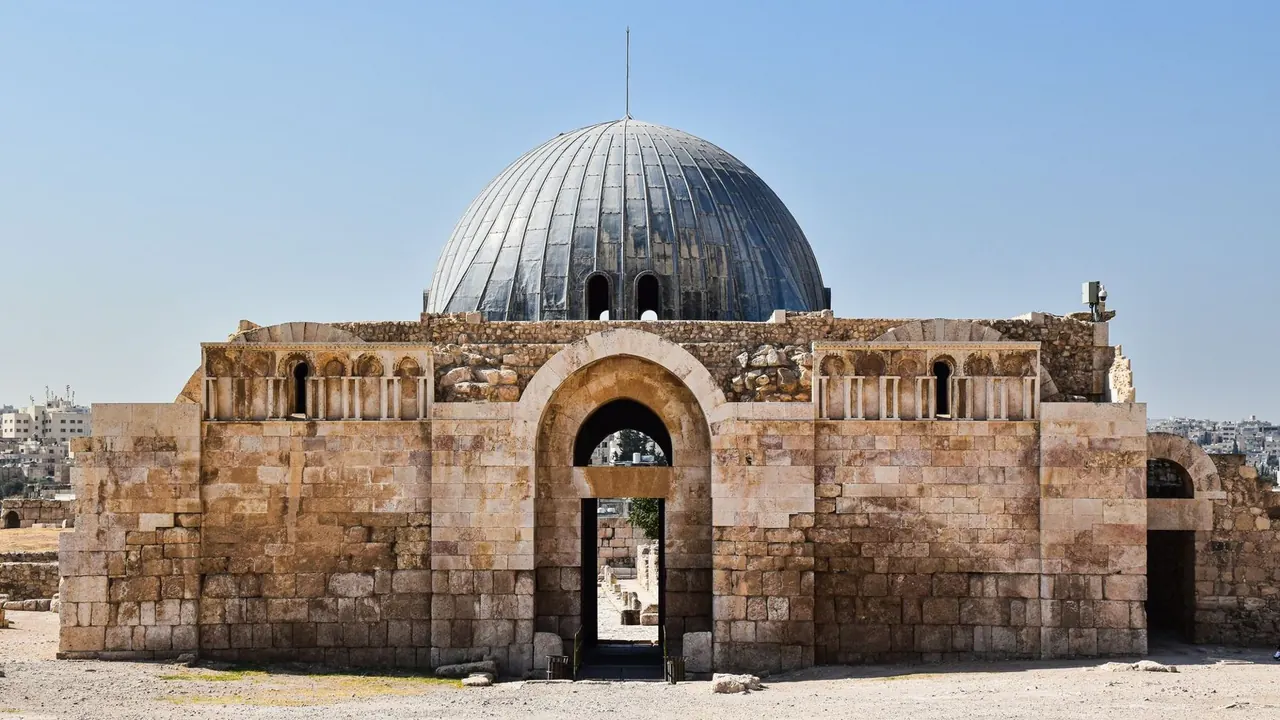
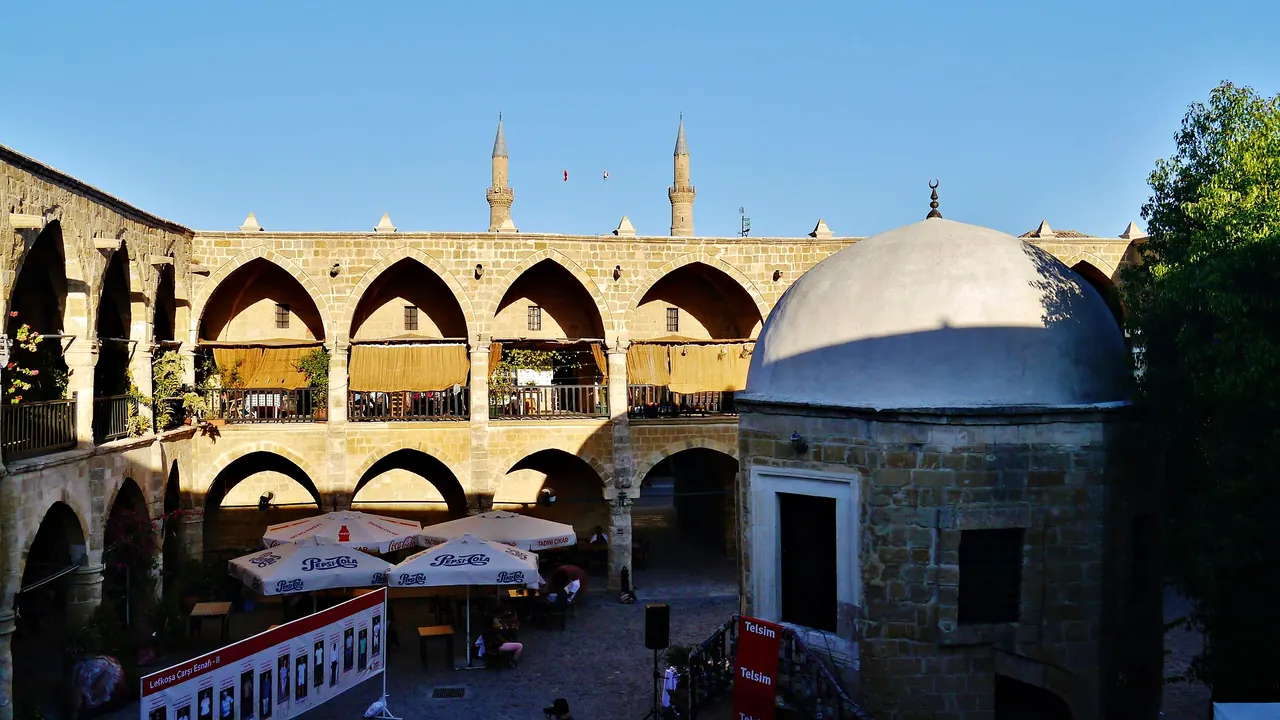
Photos: Amman by AXP Photography, Pexels License; Nicosia by Zairon, CC BY-SA 4.0, cropped.
Amman or Nicosia?
Our verdict in twelve categories, each scored against the same fixed benchmark cities, and the climate month by month, so you can choose for your trip.
Choose Amman for
- wellness
- day trips
- food and drink
Amman suits a traveller who wants to use the city as a base for Jordan's great ancient sites. Jerash, Madaba, Mount Nebo and the desert castles are all easy days out, and you can spend an afternoon floating at the Dead Sea and sitting in its spas. The city itself is hilly and spread out and its evenings are quiet. What you get in return is generous Levantine street food and long nights over tea and shisha.
Choose Nicosia for
- beaches
- culture and sights
- nightlife
For a compact city you can explore on foot, Nicosia is the better choice. Inside its Venetian walls the Cyprus Museum, the Selimiye Mosque and a working crossing over the Green Line are all a short walk apart. Its bars are livelier, the sea and the pine-covered Troodos are closer, and the island's castles, abbeys and Roman ruins are easy drives, though for most of them you will need a hire car.
Scoreboard
Twelve categories on one fixed scale from 0 to 100. The shaded stretch is the gap between the two.
Your match
Pick a travel style or drag the sliders, and both match scores follow your weighting.
Wins on wellness and day trips with your weighting.
Wins on beaches and culture and sights with your weighting.
What matters to you?
Category by category
What the scores mean for a trip.
Beaches & swimming
Neither city has a beach of its own. From Amman the drive goes down to the Dead Sea, where the resort beaches are about the strange experience of floating and covering yourself in mud. For coral and proper swimming you need a separate journey to Aqaba.
Nicosia is closer to ordinary sea bathing. Larnaca's sand is about 45 minutes away, and the Kyrenia coast takes about as long over the hills. The water there is warm well into autumn. It is still a day out rather than something you do before breakfast.
Food & drink
There is little to choose between them, but the eating is quite different. Amman is at its best on the street and at the counter: falafel and fuul for breakfast downtown, hot knafeh from the sweet shops, shawarma late at night, and mansaf for a long family-style lunch. Drink plays only a small part in the scene.
Nicosia eats sitting down. A meze runs slowly from dip to charcoal grill at a taverna in the old town lanes. A short walk across the Green Line gets you kebabs and lahmacun, and Commandaria and the wines of the Troodos villages give dinner a glass that Amman rarely does.
Culture & sights
Nicosia has the richer sightseeing within walking distance. Its Venetian walls enclose Lusignan, Ottoman and British buildings side by side, the Cyprus Museum holds the island's finest antiquities, and crossing the Green Line takes you from Byzantine icons to a Gothic cathedral turned mosque in a single walk.
Amman's Roman Theatre and the columns on the Citadel are impressive, and the Jordan Museum's Dead Sea Scrolls and 'Ain Ghazal statues are worth seeing. Away from the downtown valley, though, the city is mostly modern sprawl. Both cities take two or three days, but Nicosia's sights are packed closer together.
Nightlife
Nicosia has more going on after dark, though neither is a party city. Bars around Faneromeni Square spill onto the pavements, get busy towards midnight and pass the crowd on to a few clubs outside the walls.
Amman's evenings are about company more than drink. People sit late over shisha and tea along Rainbow Street, and drinking is low-key, in hotel bars and rooftop lounges in Weibdeh and Abdoun. During Ramadan alcohol largely disappears and the evenings move to iftar gatherings.
Nature & outdoors
Nicosia has the better outdoors within an hour's drive. The pine-covered Troodos rises to Mount Olympos, which stays cool in summer and has snow in winter, and the Kyrenia range has crest trails with sea views. In spring the plain around the city turns green and full of wildflowers.
Amman's most dramatic scenery is the steep drop to the Dead Sea. Wadi Mujib's wade-and-scramble gorge and the oak woods of Ajloun are good outings, but the gorge closes in winter. Jordan's finest landscapes, Dana and Wadi Rum, are too far for a day and need a night away.
Day trips
Both make good bases, but Amman's day trips carry more weight. Jerash, under an hour north, is one of the best-preserved Roman provincial cities anywhere, and Ajloun's castle and the hilltop ruins of Umm Qais fit on the same northern run. Madaba's mosaic map, Mount Nebo and the Baptism Site lie close together and usually share one easy day, while the frescoed desert castles to the east make a separate loop.
Nicosia's outings mix castles with the coast: Kyrenia's harbour, Bellapais abbey and St Hilarion to the north, Salamis and walled Famagusta to the east, and the painted Troodos churches to the south-west, almost all of them easier with a hire car.
Good for families
For families the two are much alike. Children are welcome everywhere and stay up for dinner late into the evening, but both cities have only a few minor attractions made for children, and the summer heat is tiring in both.
Amman has a hands-on children's museum in King Hussein Park, malls with play areas and a few amusement parks, and older children may enjoy the Citadel and Jerash, though the steep streets are no place for a pushchair. Nicosia offers playgrounds, the moat gardens and hands-on rooms in its museums, its old town is flat and easier to walk, and families usually drive to the coast for a beach day.
Getting around
Nicosia is easier to get around. Everything inside the walls is a short walk, and you can cross to the northern half on foot at Ledra Street. Beyond the walls it is a car-based suburb with few useful buses, and driving is on the left.
Amman rarely joins up on foot. Apart from the stone stairways between downtown, Jabal Amman and Weibdeh, its hills and patchy pavements send visitors to taxis and ride-hailing apps. These are cheap and simple, but rush-hour traffic is heavy.
Shopping & style
Neither is a shopping destination, but they offer different things. Amman's best buys are handmade: embroidered Palestinian textiles, Hebron glass and Bedouin rugs from the women's cooperatives near Rainbow Street, with streets of jewellers in the downtown gold souk.
Nicosia is more of a high street. Ledra Street has chain stores and the avenues just outside the walls have designer brands. For souvenirs there are the Cyprus Handicraft Centre's Lefkara lace and pottery, and spices and copperware in the Bandabulya market across the line.
Affordability
The two cost much the same overall, but the savings are in different places. In Amman the local layer is very cheap: street breakfasts, shawarma and taxi rides cost little. Alcohol, the headline sites' fees for foreigners and drivers for day trips cost a lot.
In Nicosia the best value is a long meze or souvla lunch, and the northern half is cheaper again. Hotels are mostly mid-range business rooms, and the hire car most visitors need is the biggest extra.
Live music & performing arts
Nicosia has more to see. The Cyprus Symphony Orchestra plays a regular season, old-town bars put on live rebetiko, folk and jazz, and summer brings open-air concerts in the moat.
Amman's programme is irregular and mostly in Arabic. There are occasional evenings at the Royal Cultural Centre and small stages in Weibdeh, so outside the summer Jerash Festival a visitor may well not see a performance.
Wellness & relaxation
Amman wins this one because of where it is. An hour downhill, the Dead Sea spas offer mineral mud, salt-water floating and day passes, and the waterfalls of the Ma'in hot springs are nearby. The city itself, with its traffic and horns, is not restful.
Nicosia's offer is smaller and more about history. The domed Omeriye Hammam still steams after four centuries, and there are more old baths in the north. Its main appeal is the slow pace of shaded squares and quiet summer afternoons, and for deeper rest you can go up to the cool Troodos villages.
When should you go?
Pick your month. The climate figures are measured averages, not a forecast.
Amman in July
Nicosia in July
Daytime high, °C
Rainfall in the month, mm
Where the figures come from
Nicosia's temperatures are measured 40 km from the centre, at Larnaca Airport.
Nicosia's station stands 218 m below the city centre, so the centre is likely a little cooler than the figures say.
Nicosia has no rain gauge within 25 km of the centre, so its rainfall comes from a gridded climate dataset read at the city rather than from a gauge further away.
Temperature and rainfall are climate normals, averaged over the years shown. Amman: 1994-2020 (sunshine 1981-2010, rainfall 1981-2010) normals, Amman Airport (6 km from centre). Nicosia: 1991-2020 normals, Larnaca Airport (40.4 km from centre).
Both cities have the same summer peak of 33°C in July and August, with almost no rain. That is hot work for walking ruins or old lanes, though Amman's height makes its evenings a little easier. Winter is where they differ. Amman is the colder of the two, with January highs around 13°C against Nicosia's 17°C, and its rain falls between November and March, heaviest in February at about 71mm. Nicosia's wet months are much the same, but they are milder and a little sunnier.
For sightseeing, Amman is at its best in April, May and October: dry, sunny and warm without the full heat. Nicosia's best months are April, May, October and November. If you want to swim as well, the sea off Cyprus reaches about 27°C from July to September and stays warm through October, so late September and October let you pair comfortable walking in the city with a warm swim on the coast.
Which traveller are you?
On a beach and sun trip, Nicosia is the better choice. Warm Mediterranean sand at Larnaca or around Kyrenia is under an hour's drive away. From Amman the nearest water is the Dead Sea, where you float rather than swim, and real sea swimming means a separate trip to Aqaba.
For a relaxing and wellness trip, choose Amman. The Dead Sea resorts, with their mineral mud and salt-water pools, are an easy half-day away, and the Ma'in hot springs are close by. Nicosia has a restored Ottoman hammam but little else to compare.
For a short city break, Nicosia works better. Its walled old town is walkable, with the main museums, a divided capital and late pavement bars all close together. Amman's sights are spread across steep hills, so getting between them means taxis.
Before you go
| Measure | Amman | Nicosia |
|---|---|---|
| Official language | Arabic | Turkish, Greek, Modern Greek |
| Currency | Jordanian Dinar (JOD) | Euro (EUR) |
| Sockets | BCFGJ230 V, 50 Hz | G240 V, 50 Hz |
| Driving side | Right | Left |
| Time zone | UTC+3 | UTC+2, UTC+3 in summer |
| Emergency number | 911 | 112 |
| Elevation | 776 m | 220 m |
| Main airport | Queen Alia International Airport (AMM)26 km from centre98 non-stop destinations | Larnaca International Airport (LCA)41 km from centre112 non-stop destinations |
| Public holidays this year | - | 17 days |
By the numbers
| Measure | Amman | Nicosia |
|---|---|---|
| City population | 4,007,526 | 56,848 |
| People per km² | 2,385 | 1,112 |
| Museums within 10 km | 8 | 19 |
| UNESCO World Heritage sites within 50 km | 3 | 2 |
| Swim season, months above 21 °C | - | 6 months |
Where else could you go?
Every comparison below shares a destination with this one, so you can follow Amman or Nicosia somewhere new.