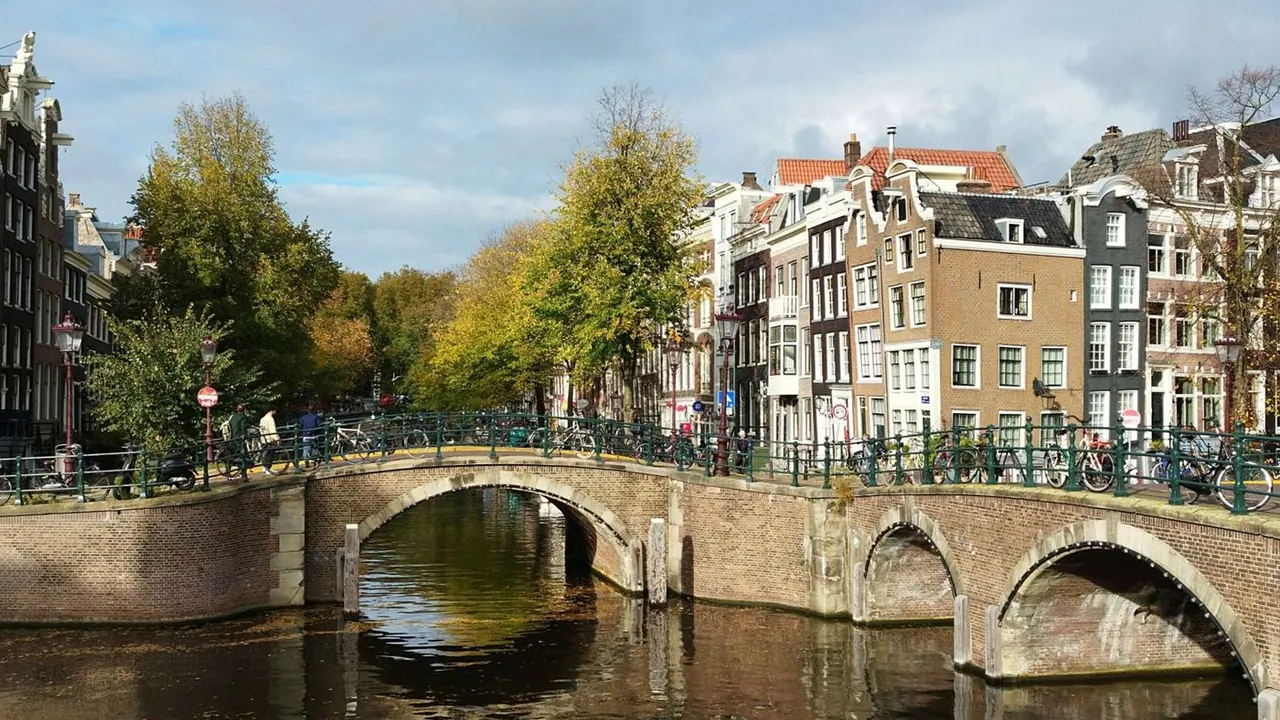
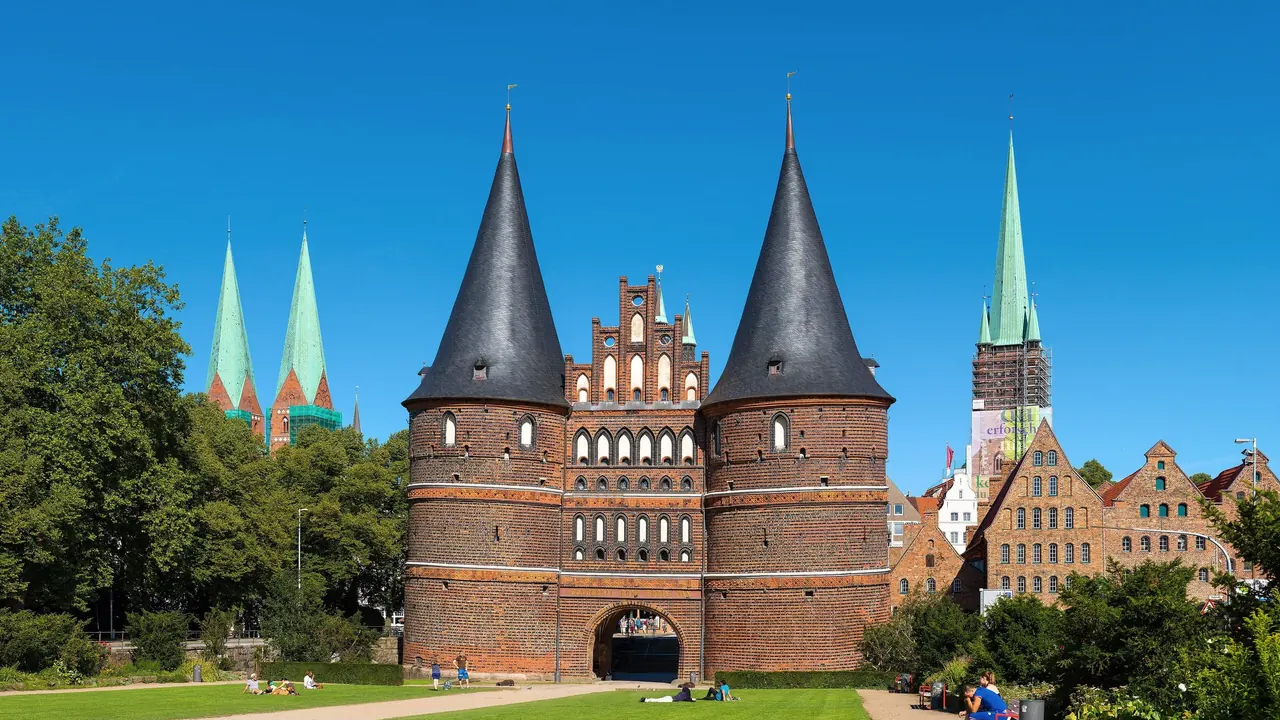
Photos: Amsterdam by Hans, Pexels License; Lubeck by Christian Wolf (www.c-w-design.de), CC BY-SA 3.0 DE, cropped.
Amsterdam or Lubeck?
Our verdict in twelve categories, each scored against the same fixed benchmark cities, and the climate month by month, so you can choose for your trip.
Choose Amsterdam for
- nightlife
- live music and the arts
- shopping
Amsterdam suits the traveller who wants a full city: great museums, a serious club and concert scene, independent shops and a different Dutch town by train almost every day. It rewards a packed itinerary and late nights, as long as you can live with the cost of a room on the canal ring and centre streets crowded with visitors.
Choose Lubeck for
- prices
- beaches
- nature and the outdoors
Lübeck is the gentler, cheaper choice. Its brick Hanseatic old town on an island makes a quiet two days, and a summer stay adds a calm Baltic beach at Travemünde twenty minutes away. Pick it if you want evenings that end early, room rates without a capital's premium, and Hamburg close enough to visit for the bright lights.
Scoreboard
Twelve categories on one fixed scale from 0 to 100. The shaded stretch is the gap between the two.
Your match
Pick a travel style or drag the sliders, and both match scores follow your weighting.
Wins on nightlife and live music and the arts with your weighting.
Wins on prices and beaches with your weighting.
What matters to you?
Category by category
What the scores mean for a trip.
Beaches & swimming
Lübeck has the better seaside because the beach belongs to the city. Travemünde's long sand with its hooded wicker chairs is a short train ride away, and the Baltic there is calm, shallow and free of tides, so it is easy for paddling. More resorts follow the bay to the north.
Amsterdam's nearest proper sand is at Zandvoort, half an hour away on the open North Sea, where wind and grey skies mean most people walk rather than swim. The city's own beaches at IJburg and its lakes are for a warm afternoon only.
Food & drink
Amsterdam eats more widely, thanks to its trading past: Indonesian rijsttafel, Surinamese roti, herring stalls and neighbourhood restaurants in De Pijp and Oost. Its drinking culture of brown cafés, jenever tasting rooms and the evening borrel is the real treat.
Lübeck is narrower but has a distinct character. Marzipan is made around the town hall, Rotspon wine ages in old cellars, and the sea captains' guild house serves meals at long wooden tables. Past that the choice is solid taverns and Travemünde's fish restaurants.
Culture & sights
Amsterdam has the deeper set of sights. The Rijksmuseum's Dutch masters, the Van Gogh Museum, the Stedelijk and the Anne Frank House are collections of world importance, and the UNESCO canal ring sits around them. You need three or four days to do it justice.
Lübeck has a whole medieval townscape rather than great galleries. The Holstentor, the Marienkirche and the stepped-gable merchant houses form the best-preserved Hanseatic city on the Baltic, with the Hansemuseum and the Thomas Mann house to add some context. Two days covers it well.
Nightlife
The gap here is wide. Amsterdam goes from candlelit brown cafés to all-night clubs in converted industrial buildings, and the Amsterdam Dance Event takes over the city each October. Locals drink on canal-side terraces in the Jordaan and De Pijp.
In Lübeck a night out means a quiet pub or wine bar in the old town, or a summer evening on the Obertrave or Travemünde's promenade. Anyone who wants to dance takes the train to Hamburg.
Nature & outdoors
Both sit in flat, gentle country without any wild scenery, and both are best seen by bike. Amsterdam's countryside is polders, dykes and windmills, with Waterland a ferry ride away and dunes with bison near the coast. Lübeck's is woodier and wetter, with canoeing on the reedy Wakenitz, the clay cliff walk above the Baltic north of Travemünde and the Holstein Switzerland lakes within an hour.
Day trips
From Amsterdam, a dense rail network puts Haarlem, Leiden, Delft, Utrecht, The Hague and Rotterdam each within an hour. Windmills at Zaanse Schans and Kinderdijk and the Keukenhof in spring add to the list, so a week of outings is easy.
Lübeck has a few strong choices: Hamburg in about 45 minutes, Wismar's second Hanseatic old town and Schwerin's island castle. The smaller lake towns of Ratzeburg and Eutin follow, but after that the options run out quickly.
Good for families
Amsterdam has more for children within the city itself. On a dry day there is Artis in the Plantage, one of Europe's oldest zoos, along with the city farms and the Vondelpark playgrounds. When it rains, NEMO by the station is the real standby, with hands-on science built for play, and a covered canal boat or a pancake house will get you through a shower. The catch is the fast bikes and the unfenced canal edges, so small children need a hand held.
Lübeck depends on the coast and the summer. The gentle water at Travemünde suits toddlers, and with the aquarium on the bay and Hansa-Park half an hour up the shore, a warm week can be a good seaside stay. Out of season, and on wet days, the old town's small museums are nearly all there is, so it works best as a summer trip.
Getting around
Amsterdam combines a walkable centre with trams, a metro, free ferries to Noord and a direct train to Schiphol, and you can hire a bike to get around as locals do. Lübeck's island old town is only about 2km long and easy on foot, though there are some cobbles. Buses and regional trains to Travemünde and Hamburg cover the rest, but the network is much thinner.
Shopping & style
Amsterdam has shops at every level. Kalverstraat and Leidsestraat have the high-street chains and De Bijenkorf on Dam Square is a grand department store, but the real pleasure is the small specialist shops and galleries spread through the Jordaan and the western canals. The markets add local character, from everyday stalls at the Albert Cuyp to bulbs on the floating Bloemenmarkt.
Lübeck covers the basics and little more. Breite Strasse and Königstrasse are mostly German chains around a single department store, and there are only a few independent craft shops, in the courtyard passages off Hüxstrasse. In Amsterdam you can browse for a whole afternoon, but Lübeck's shops take about an hour. The one thing you will only find here is something to eat: marzipan from the confectioners by the town hall.
Affordability
Lübeck is clearly the cheaper stay. Mid-range rooms in the old town come without a capital's premium, and taverns, bakeries and harbour kiosks keep meals reasonable. The one exception is Travemünde in July and August.
Amsterdam's canal-ring hotels are among the costliest in Europe, and the tourist tax, Northern European restaurant prices and museum tickets add up quickly. Staying in Haarlem or Utrecht helps.
Live music & performing arts
Amsterdam has a world-class stage. The Concertgebouw and its orchestra, the national opera and ballet on the Amstel, contemporary music and jazz on the IJ, and touring bands at Paradiso and the Melkweg make it a city to plan evenings around.
Lübeck is smaller and more intimate. Theater Lübeck stages opera and drama, organ recitals continue Buxtehude's tradition in the Marienkirche, and the Schleswig-Holstein Music Festival brings well-known names in summer. For rock or jazz, people head to Hamburg.
Wellness & relaxation
Neither is a spa destination, but they relax you in different ways. Amsterdam has large, mixed, nude day spas on its edges and quiet mornings on the canals, but its centre is crowded. Lübeck's calm old town and riverside benches are restful in themselves, and Travemünde's long tradition as a seaside spa lives on in wellness hotels and the seawater pools at Scharbeutz.
When should you go?
Pick your month. The climate figures are measured averages, not a forecast.
Amsterdam in July
Lubeck in July
Daytime high, °C
Rainfall in the month, mm
Where the figures come from
Amsterdam has no rain gauge within 25 km of the centre, so its rainfall comes from a gridded climate dataset read at the city rather than from a gauge further away.
Amsterdam's sunshine is measured 35 km from the centre, at De Bilt.
Temperature and rainfall are climate normals, averaged over the years shown. Amsterdam: 1991-2020 normals, Amsterdam Airport Schiphol (12 km from centre). Lubeck: 1991-2020 normals, Luebeck-Blankensee (6 km from centre).
Both cities are at their best from late May to early September, with June to August the only months warm enough to think about the beach. Lübeck has slightly warmer summers, reaching about 24°C, and more sunshine from May to August, while Amsterdam is a little cooler and wetter. The Baltic and the North Sea both stay cool even at their warmest, around 19°C in August, so a swim is brisk at either.
The real difference comes in autumn and winter. Amsterdam's rain builds through the autumn and peaks in October at about 102mm, so pack for wet streets, but its winters are milder. Lübeck stays drier all year but gets colder and much darker in winter, with highs around 4°C in January and very little sun in December. April, May and September are good months for walking either city without the summer heat.
Which traveller are you?
For a food and nightlife trip, Amsterdam is the obvious pick. Rijsttafel, Surinamese roti and old brown cafés fill the evening, and after that come all-night electronic clubs in Noord. In Lübeck most of the city is asleep by midnight.
On a shopping trip, Amsterdam gives you the Nine Streets' boutiques and vintage stores, PC Hooftstraat's luxury labels and markets from Waterlooplein to the Noordermarkt. Lübeck has one main shopping spine and marzipan, and sends fashion shoppers to Hamburg.
On a trip with a tight budget, Lübeck stretches the money much further. Mid-range hotels and guesthouses in the old town are moderately priced, tavern meals and harbour fish sandwiches are reasonable, and walking the island costs nothing. Amsterdam's rooms and tourist tax are hard to avoid.
Before you go
| Measure | Amsterdam | Lubeck |
|---|---|---|
| Official language | Dutch | German |
| Currency | Euro (EUR) | Euro (EUR) |
| Sockets | CF230 V, 50 Hz | CF230 V, 50 Hz |
| Driving side | Right | Right |
| Time zone | UTC+1, UTC+2 in summer | UTC+1, UTC+2 in summer |
| Emergency number | 112 | 112 |
| Elevation | -2 m | 13 m |
| Main airport | Amsterdam Airport Schiphol (AMS)12 km from centre287 non-stop destinations | Hamburg Helmut Schmidt Airport (HAM)53 km from centre120 non-stop destinations |
| Public holidays this year | 11 days | 10 days |
By the numbers
| Measure | Amsterdam | Lubeck |
|---|---|---|
| City population | 921,468 | 217,061 |
| People per km² | 4,208 | 1,013 |
| Museums within 10 km | 101 | 23 |
| UNESCO World Heritage sites within 50 km | 5 | 1 |
| Swim season, months above 21 °C | None | None |
Where else could you go?
Every comparison below shares a destination with this one, so you can follow Amsterdam or Lubeck somewhere new.
- Haarlemvs Amsterdam
- Utrechtvs Amsterdam
- The Haguevs Amsterdam
- Hamburgvs Lubeck
- Rotterdamvs Amsterdam
- Antwerpvs Amsterdam