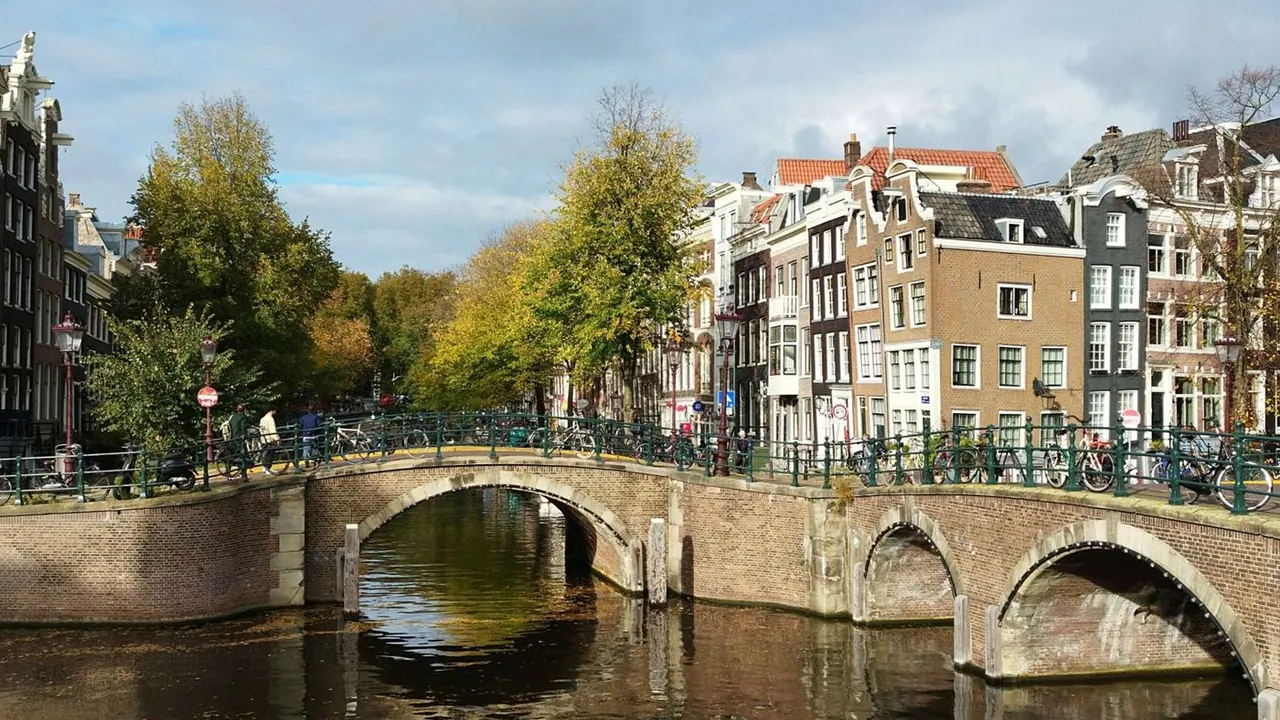
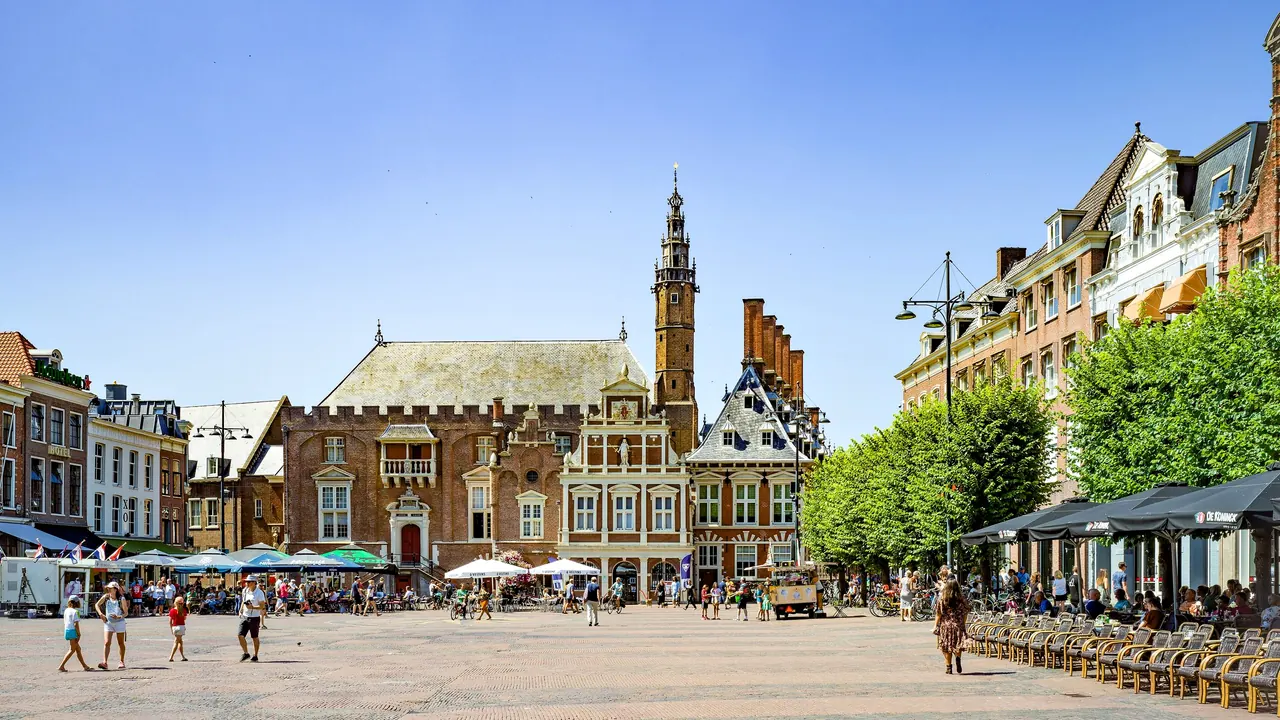
Photos: Amsterdam by Hans, Pexels License; Haarlem by Moroder, CC BY-SA 4.0, cropped.
Amsterdam or Haarlem?
Our verdict in twelve categories, each scored against the same fixed benchmark cities, and the climate month by month, so you can choose for your trip.
Choose Amsterdam for
- nightlife
- live music and the arts
- culture and sights
Amsterdam suits the traveller who wants a full capital-city trip: the Rijksmuseum, the Van Gogh Museum and the Anne Frank House within a few days' reach, an evening at the Concertgebouw, and the choice of a brown café or a club that stays open until morning. Its food draws on Indonesian and Surinamese cooking, and its family attractions are better too, so it gives more to do once you are there. In return you get crowded central streets and some of the costliest rooms in Europe.
Choose Haarlem for
- nature and the outdoors
- prices
- beaches
Haarlem is the better pick for anyone who would rather sleep somewhere quiet and travel out each day. It has a small, intact Golden Age centre, the dunes and the beach a short ride from town, the spring bulb fields close by, and Amsterdam only fifteen minutes away by train. Rooms still cost a lot, but less than in Amsterdam. Evenings are slow, and you get gentle days outdoors rather than a long list of sights.
Scoreboard
Twelve categories on one fixed scale from 0 to 100. The shaded stretch is the gap between the two.
Your match
Pick a travel style or drag the sliders, and both match scores follow your weighting.
Wins on nightlife and live music and the arts with your weighting.
Wins on nature and the outdoors and prices with your weighting.
What matters to you?
Category by category
What the scores mean for a trip.
Beaches & swimming
Neither city is a place for a swimming vacation, and both share the same cool, windy stretch of North Sea. Haarlem is still the better place for a beach day. Zandvoort is about ten minutes away by train, and you can cycle through the dunes to the quieter sand at Bloemendaal aan Zee.
From Amsterdam the same beaches are about half an hour away, so they take more of a day. Within the city, the beaches at IJburg and lakes like the Sloterplas are where locals cool off on hot weekends, but they are a change of scene rather than a real seaside.
Food & drink
Amsterdam has more to eat, and most of the interest comes from its trading past: Indonesian rijsttafel, Surinamese broodjes, and herring and stroopwafels at the Albert Cuyp market. Its drinking culture also runs deeper, with centuries-old jenever tasting rooms as well as brown cafés. You need to eat in De Pijp, the Jordaan or Oost and stay away from the tourist food around Damrak.
Haarlem has reliable bistros, terraces around the Grote Markt and a good craft beer culture, which suits its brewing history. But it has no street food scene and few top restaurants. Expect good meals rather than memorable ones.
Culture & sights
Amsterdam has some of Europe's great museums. Rembrandt's Night Watch, the largest Van Gogh collection anywhere and the Stedelijk all sit around the Museumplein, and the Anne Frank House and the UNESCO canal ring add to them. Seeing it properly takes three or four days.
Haarlem is smaller but just as authentic: St Bavo's and its Müller organ, the Frans Hals Museum, and Teylers with its 18th-century oval room. Its hofjes, the quiet almshouse courtyards, have a calm that central Amsterdam rarely has, and two easy days cover the town.
Nightlife
Here the gap is wide. Amsterdam ranges from candlelit brown cafés to all-night clubs in old industrial buildings and in Noord, and its electronic music scene is respected well beyond the Netherlands. Leidseplein is loud, while the Jordaan and De Pijp are where locals drink.
Haarlem's nights mean a terrace or a brown café around the Grote Markt and the Botermarkt. It is sociable and fairly early, with almost no clubbing. Many Haarlem visitors simply take the train into Amsterdam for a big night.
Nature & outdoors
Haarlem is the better base for time outdoors, because the national park begins at the edge of town. It has dunes, woods and small lakes with ponies and Highland cattle, fallow deer in the water-supply dunes to the south, and kitesurfing on the coast.
From Amsterdam, the easiest escape is the ferry across the IJ to Waterland's meadows and wooden villages, with the Vondelpark and Amsterdamse Bos within the city. Both landscapes are entirely flat and often windy.
Day trips
Both make excellent bases on the same dense rail network, and the difference is mainly which way you face. Amsterdam is better placed for Zaanse Schans, the old Zuiderzee villages such as Volendam and Marken, Utrecht, and Antwerp under two hours away.
Haarlem has Leiden twenty minutes south, a short bus ride to the Keukenhof, and Alkmaar's cheese market to the north. Its biggest advantage is that Amsterdam itself becomes an easy outing, and you return to quieter streets afterwards.
Good for families
Children get far more to do in Amsterdam: Artis, one of Europe's oldest zoos, the hands-on NEMO science museum, canal boats, city farms and pancake houses. Fast bikes, unfenced canals and steep canal-house stairs mean you have to keep a close watch on young children.
Haarlem's car-free centre is calmer, and the dunes and beach give children space to run. Apart from the fossils at Teylers, though, little is built for children, so families end up taking the train to Amsterdam's zoo and NEMO anyway.
Getting around
Amsterdam's network is fuller. Trams cover the canal ring and the museum quarter, a north-south metro line runs under the city, free ferries cross to Noord, and there is a direct train to Schiphol. The bike lanes are busy enough to need confidence.
Haarlem does not need much transport. You can walk across the centre in about twenty minutes, and quiet cycle paths lead to the dunes and beach, while trains and buses cover outings further afield.
Shopping & style
Shopping in Amsterdam covers far more ground, from the boutiques and vintage shops of the Nine Streets to the luxury labels on PC Hooftstraat and De Bijenkorf on Dam Square. Markets such as the Noordermarkt, Waterlooplein and the floating Bloemenmarkt add more.
Haarlem is good for an afternoon of browsing in the independent fashion, design and book shops of Gierstraat and Kleine Houtstraat. It has no luxury street or department store to plan a trip around.
Affordability
Neither is cheap, but Haarlem costs a little less overall. Accommodation is where Amsterdam is hardest on the budget, with some of Europe's costliest rooms around the canal ring and a heavy tourist tax on top.
Haarlem's hotels are few and fill early in tulip season and summer, so book ahead. Meals cost about the same in both places. If you stay in Haarlem, remember that regular train fares into Amsterdam add to the bill.
Live music & performing arts
Amsterdam is in a different league for classical music. It has the Concertgebouw and its orchestra, the Dutch National Opera and Ballet on the Amstel, contemporary music and jazz at the Muziekgebouw and Bimhuis, and touring bands at Paradiso and the Melkweg.
Haarlem has a steady programme at the Philharmonie and the Stadsschouwburg. Its real speciality is organ music, with concerts on St Bavo's great instrument and a long-running international organ festival.
Wellness & relaxation
Neither city has thermal baths, and both depend on the Dutch sauna tradition of large, usually mixed day spas on the edge of town. The real difference is the pace. Haarlem's quiet canals at night and its dune walks are restful in themselves, while in Amsterdam you have to look for calm on an early-morning canal or in the Vondelpark, away from the crowded centre.
When should you go?
Pick your month. The climate figures are measured averages, not a forecast.
Amsterdam in July
Haarlem in July
Daytime high, °C
Rainfall in the month, mm
Where the figures come from
Amsterdam has no rain gauge within 25 km of the centre, so its rainfall comes from a gridded climate dataset read at the city rather than from a gauge further away.
Amsterdam's sunshine is measured 35 km from the centre, at De Bilt.
Haarlem has no rain gauge within 25 km of the centre, so its rainfall comes from a gridded climate dataset read at the city rather than from a gauge further away.
Haarlem's sunshine is measured 49 km from the centre, at De Bilt.
Temperature and rainfall are climate normals, averaged over the years shown. Amsterdam: 1991-2020 normals, Amsterdam Airport Schiphol (12 km from centre). Haarlem: 1991-2020 normals, Amsterdam Airport Schiphol (12.7 km from centre).
The two cities are so close together that their weather is practically the same, so choose your dates by what you want to do rather than where you stay. Late spring is the best time for walking and cycling. April and May are the driest months, May is the sunniest of the year, highs come close to 17°C, and the bulb fields between Haarlem and Leiden are in flower. June to August stay almost as bright and reach about 22°C at their warmest, but summer brings more rain.
The North Sea is warmest in August at about 19°C, so a swim is a quick summer dip at best. From September the rain builds, and October is the wettest month in both places, at over 100mm. Winter is grey, short of daylight and cold, with highs of around 6°C. That suits museums and cafés in Amsterdam better than days in Haarlem's dunes.
Which traveller are you?
For a food and nightlife trip, Amsterdam is the clear choice. It has rijsttafel and Surinamese roti, jenever tasting rooms and the early-evening borrel, then late bars in De Pijp and all-night electronic clubs in Noord. Haarlem's evenings are friendly but finish early.
On an outdoors trip, Haarlem puts you right next to Zuid-Kennemerland National Park. You can cycle through dunes, pine woods and lakes, see the tame deer in the water-supply dunes, take long beach walks and ride among the spring bulb fields. From Amsterdam, all of this means a train ride first.
On a culture and arts trip, Amsterdam offers far more: the Dutch masters, Van Gogh, the Stedelijk, the canal ring and the Concertgebouw orchestra. Haarlem's Frans Hals and Teylers museums are excellent, but they make a day trip rather than a reason to stay.
Before you go
| Measure | Amsterdam | Haarlem |
|---|---|---|
| Official language | Dutch | Dutch |
| Currency | Euro (EUR) | Euro (EUR) |
| Sockets | CF230 V, 50 Hz | CF230 V, 50 Hz |
| Driving side | Right | Right |
| Time zone | UTC+1, UTC+2 in summer | UTC+1, UTC+2 in summer |
| Emergency number | 112 | 112 |
| Elevation | -2 m | 2 m |
| Main airport | Amsterdam Airport Schiphol (AMS)12 km from centre287 non-stop destinations | Amsterdam Airport Schiphol (AMS)12 km from centre287 non-stop destinations |
| Public holidays this year | 11 days | 11 days |
By the numbers
| Measure | Amsterdam | Haarlem |
|---|---|---|
| City population | 921,468 | 162,543 |
| People per km² | 4,208 | 5,064 |
| Museums within 10 km | 101 | 28 |
| UNESCO World Heritage sites within 50 km | 5 | 5 |
| Swim season, months above 21 °C | None | None |
Where else could you go?
Every comparison below shares a destination with this one, so you can follow Amsterdam or Haarlem somewhere new.
- Utrechtvs Amsterdam
- The Haguevs Haarlem
- Utrechtvs Haarlem
- The Haguevs Amsterdam
- Rotterdamvs Haarlem
- Rotterdamvs Amsterdam