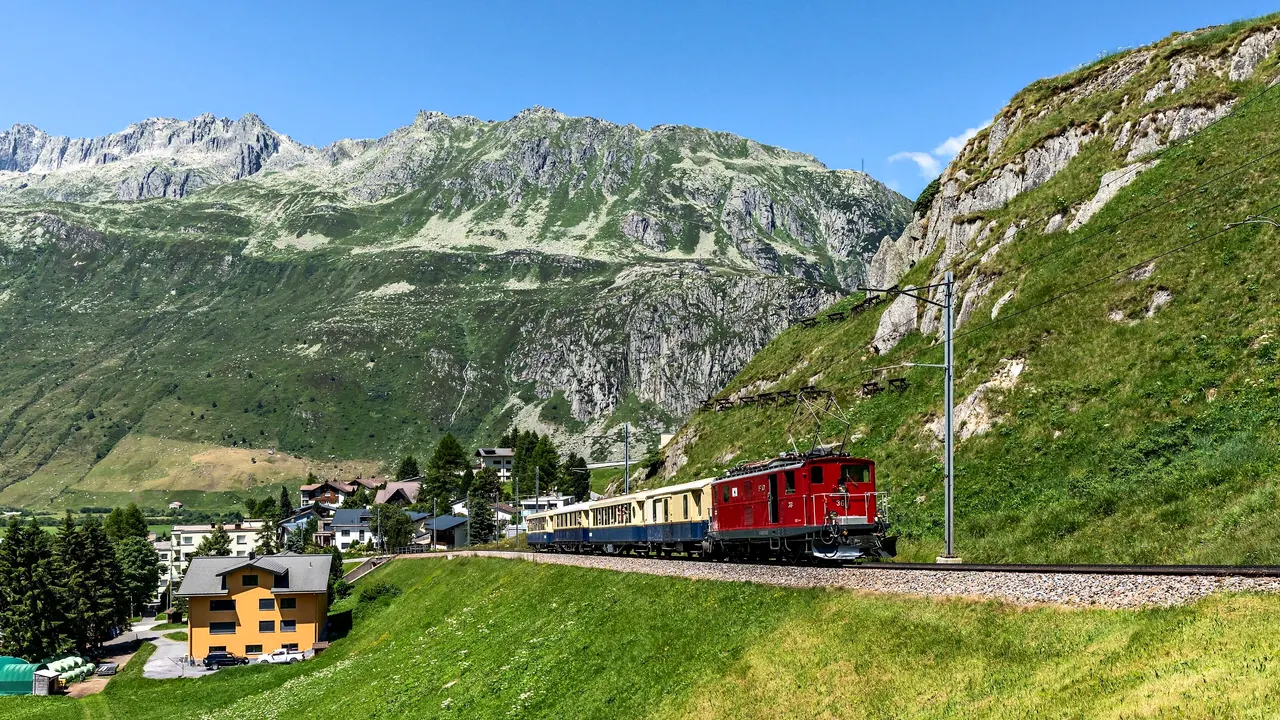
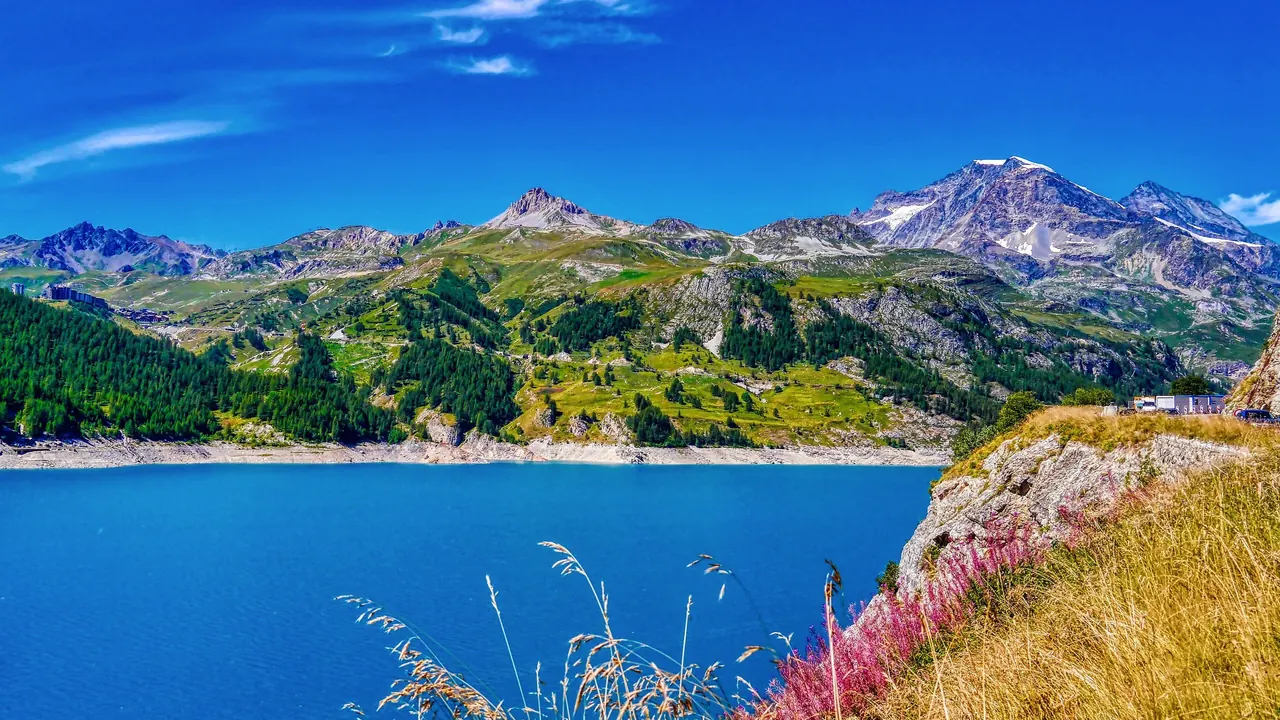
Photos: Andermatt by Kabelleger, CC BY-SA 4.0, cropped; Tignes by Zairon, CC BY-SA 4.0, cropped.
Andermatt or Tignes?
Our verdict in twelve categories, each scored against the same fixed benchmark cities, and the climate month by month, so you can choose for your trip.
Choose Andermatt for
- day trips
- live music and the arts
- getting around
Andermatt suits travellers who want serious mountains with an easy railway connection and a bit more to do away from the slopes. The Gemsstock freeride terrain and the summer passes match anything in the Alps. The Devil's Bridge, a proper concert hall and outings to Lake Lucerne or Bellinzona give a stay some range. Expect quiet evenings and the bigger bill of the two.
Choose Tignes for
- nightlife
- beaches
- families
Tignes is the pick for a ski week built around the snow and the bar afterwards. Its link with Val d'Isère makes a far larger area to ski, the glacier stretches the season, and après-ski in Val Claret and Le Lac runs loud and late. Families do well with ski-in, ski-out apartments and the aquatic centre. Once you are up the valley, though, there is little to see and few places to go.
Scoreboard
Twelve categories on one fixed scale from 0 to 100. The shaded stretch is the gap between the two.
Your match
Pick a travel style or drag the sliders, and both match scores follow your weighting.
Too close to call, 1 point apart
Wins on day trips and live music and the arts with your weighting.
Wins on nightlife and beaches with your weighting.
What matters to you?
Category by category
What the scores mean for a trip.
Beaches & swimming
Neither is a place for swimming, but Tignes at least gives you somewhere to get wet. In July and August its lake has a supervised bathing area with a small sandy shore, and the indoor aquatic centre, with a lagoon pool and slides, is open in any season. In Andermatt the only swimming is in hotel pools, and the Oberalpsee and the other lakes are there to look at.
Food & drink
The food is much the same in both, hearty and with a narrow range, but each has its own flavour. Andermatt is Swiss, with Älplermagronen, rösti and autumn game in wood-panelled inns. A few ambitious hotel dining rooms, Japanese among them, are a surprise in a village.
Tignes is Savoyard cheese country: fondue, tartiflette and croziflette made with Beaufort and Reblochon. Pizzerias and crêperies cover easy evenings, and the delicatessens with local charcuterie and Savoie wines are worth seeking out.
Culture & sights
Andermatt has more to see, though not much more. Its old village is a line of timber and stone houses along the Reuss. Just below it, the Schöllenen gorge makes a memorable walk to the Devil's Bridge and the rock-cut memorial to the Russian army that fought its way through in 1799. In summer, the hospice museum and the fortress inside the mountain on the Gotthard can fill a second day.
Tignes has almost none of this. The resort was built from scratch at altitude as plain apartment blocks after the old village in the valley disappeared under the Chevril dam. That drowned village is its one real story, and a huge mural on the dam wall keeps its memory alive.
Nightlife
In winter Tignes has by far the busier nights. Après-ski starts on the mountain terraces in the late afternoon, then moves to the bars of Val Claret and Le Lac and on to small clubs that stay open well past midnight. The crowd is young, mostly British, Scandinavian and French, and often still in ski boots.
Andermatt has après-ski and a few village and hotel bars that stay busy on good weekends, but no clubs, and outside winter the village goes to bed early. It suits people whose idea of a night out is dinner and a drink by the fire.
Nature & outdoors
Both are among the best mountain bases in the Alps, and the difference is in character. Tignes is higher, at about 2,100m below the Grande Motte glacier. Its link with Val d'Isère gives a huge, snow-sure ski area with a season that starts in autumn, and in summer the Vanoise National Park brings ibex, marmots and trails to alpine lakes.
Andermatt sits where four passes meet, so in summer cyclists and motorcyclists climb the Furka, Gotthard, Oberalp and Susten roads, and hikers walk to the source of the Rhine. In winter the Gemsstock draws freeriders, with ski touring and cross-country trails on the valley floor as well.
Day trips
Andermatt is much the better base for days out, thanks to the railway. You can take the train to Lucerne's covered bridges and old town, a boat on Lake Lucerne from Flüelen, or visit the William Tell monument at Altdorf. Through the Gotthard, the castles of Bellinzona make an Italian-speaking change, and the Glacier Express line over the Oberalp leads to the abbey at Disentis.
From Tignes, the long road down the valley limits your options. Val d'Isère is an easy bus ride, Conflans and Beaufort need a car, and Aosta is only within reach in summer when the Little St Bernard Pass is open.
Good for families
Tignes is better set up for families on skis. It has beginner areas beside Le Lac and Val Claret, children's classes from a young age, ski-in, ski-out apartments, an aquatic centre for white-out days and pedalos on the lake in summer. The altitude can tire very young children, but the hamlets of Les Brévières and Les Boisses keep families away from the bar noise.
Andermatt is small, safe and almost car-free, with nursery slopes near the hotels and the Oberalp train ride as a treat. It has no indoor fallback to match Tignes, though, so a wet day is harder to fill.
Getting around
Andermatt is the easier place to arrive at and leave. It sits on the railway, with trains down the gorge to the Gotthard line and east over the Oberalp. In summer postbuses climb all four passes, so a car is never essential. You can walk across the village in a few minutes.
Tignes is easy once you are there, with free shuttles and lifts linking its villages and, in winter, skiing from door to door. Getting there is the catch. The nearest station is at Bourg-Saint-Maurice, about forty minutes below up a winding road, and most trips beyond the valley need a car.
Shopping & style
Neither is worth a shopping trip. Both have ski hire, outdoor gear and a few boutiques. The small difference is in the local produce: Tignes has delicatessens selling Beaufort, cured sausages and mountain honey, while Andermatt's old village has local cheese, honey and souvenirs, with a few more boutiques around the resort quarter.
Affordability
Neither is cheap, but Tignes is easier to manage on a budget. Most of the resort is self-catering apartments, so you can cook for yourself, early and late season weeks cost noticeably less, and summer brings lower rates for rooms and free activities around the lake.
Andermatt charges full Swiss mountain prices for almost everything. Its resort quarter is built around luxury hotels, and even a simple lunch adds up. Older guesthouses in the village and a Swiss rail pass bring the bill down only a little.
Live music & performing arts
Only Andermatt has a real venue. Its modern concert hall in the resort quarter holds a few hundred people and puts on classical and chamber concerts and visiting Swiss orchestras through the main seasons, so you can plan an evening around it. In Tignes, live music means bands in après-ski bars, DJs on the terraces and the odd free outdoor concert, with no hall or theatre.
Wellness & relaxation
In both places wellness happens indoors rather than in hot springs, and the difference is in mood. Andermatt's large hotel spas are among the most lavish in the Swiss mountains, and several are open to non-residents. With thin traffic and early nights, the whole stay feels restful.
Tignes has the spa and hammam at the aquatic centre and pools in the bigger hotels and residences, and real thermal baths are about an hour away at Brides-les-Bains. Its winter rhythm of early lifts and late bars is far from restful, so anyone after calm should go in summer.
When should you go?
Pick your month. The climate figures are measured averages, not a forecast.
Andermatt in July
Tignes in July
Daytime high, °C
Rainfall in the month, mm
Where the figures come from
Andermatt has no weather station within reach, so its figures come from a gridded climate model rather than a measured record, and read a broad area rather than one spot.
Tignes has no weather station within reach, so its figures come from a gridded climate model rather than a measured record, and read a broad area rather than one spot.
Temperature and rainfall are climate normals, averaged over the years shown. Andermatt: 1991-2020 normals, TerraClimate 4 km grid at the town, no weather station within 90 km. Tignes: 2001-2020 normals, NASA POWER reanalysis grid, no weather station within 90 km.
Both are winter places first. From December to March, daytime highs in Andermatt sit around freezing. In Tignes they stay below it, with January at about -4°C, so dress for real cold in either. Neither ever gets warm enough for beach weather. July and August top out at about 16°C in Andermatt and 18°C in Tignes, which is good for hiking and cycling but not for lying by a lake.
The bigger difference is rain. Andermatt's wettest months are its summer ones, with June bringing around 166mm, so hiking plans there need some slack. Tignes stays noticeably drier all year, and its high summer is fairly settled. In both places April, May and November are the in-between months, when the valleys are thawing or turning cold and there are plenty of grey, damp days.
Which traveller are you?
For a culture and arts trip, Andermatt is clearly the better choice. History is within walking distance and there is a real concert hall for the evenings. Lucerne and Bellinzona are close enough by train to add proper sightseeing days. Tignes was built for skiing and has almost nothing to visit.
On a food and nightlife trip, Tignes suits groups of friends who want to ski hard by day and stay out late with a young international crowd. Andermatt's evenings mean a quiet dinner and an early night, and the cooking is no better there.
On a family trip with children, Tignes makes a ski week easier on parents. Almost everything is within short reach, and there is a plan for days when the weather closes in. Andermatt is calm and safe, but children run out of things to do sooner.
Before you go
| Measure | Andermatt | Tignes |
|---|---|---|
| Official language | French, German, Italian, Romansh | French |
| Currency | Swiss Franc (CHF) | Euro (EUR) |
| Sockets | CJ230 V, 50 Hz | CE230 V, 50 Hz |
| Driving side | Right | Right |
| Time zone | UTC+1, UTC+2 in summer | UTC+1, UTC+2 in summer |
| Emergency number | 112 | 112 |
| Elevation | 1,447 m | 1,440 m |
| Main airport | Zürich Airport (ZRH)91 km from centre226 non-stop destinations | Geneva International Airport (GVA)105 km from centre150 non-stop destinations |
| Public holidays this year | 14 days | 11 days |
By the numbers
| Measure | Andermatt | Tignes |
|---|---|---|
| Population | 1,578 | 1,919 |
| People per km² | 25 | 24 |
| Museums within 10 km | 2 | 0 |
| UNESCO World Heritage sites within 50 km | 2 | 0 |
Where else could you go?
Every comparison below shares a destination with this one, so you can follow Andermatt or Tignes somewhere new.
- Val d'Isèrevs Tignes
- Les Arcsvs Tignes
- La Rosièrevs Tignes
- La Plagnevs Tignes
- Val Cenisvs Tignes
- Courchevelvs Tignes