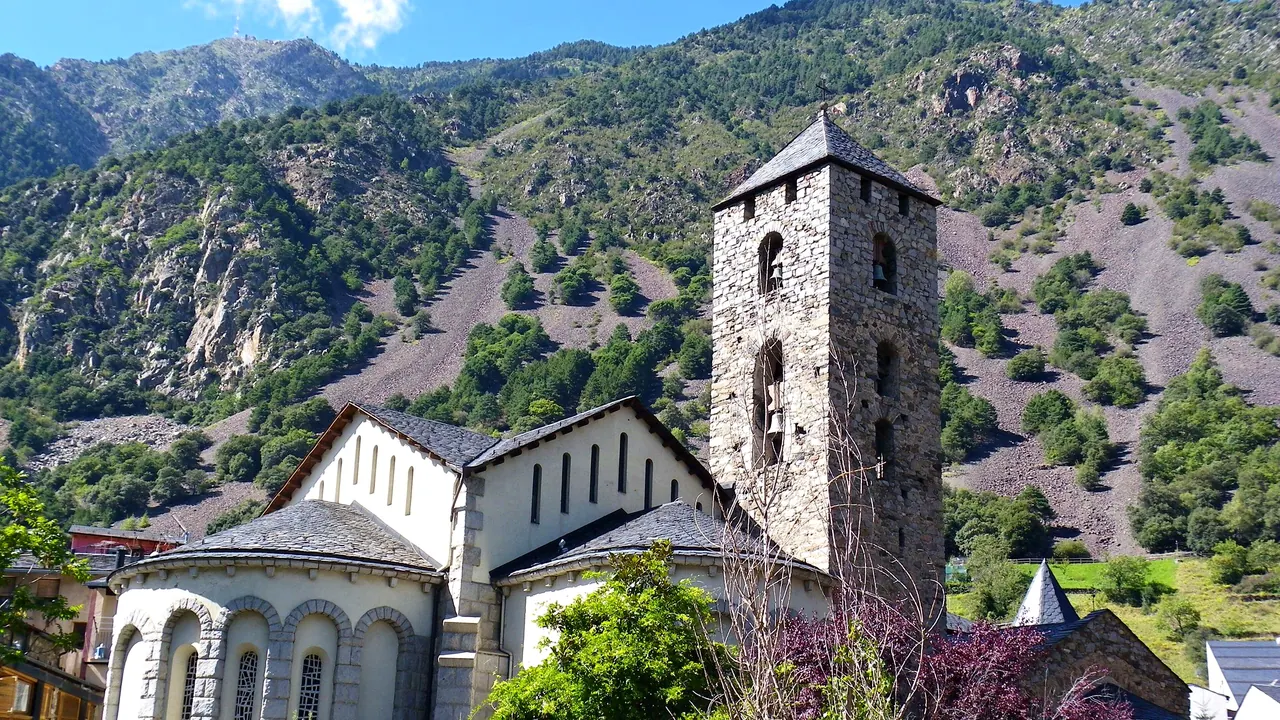
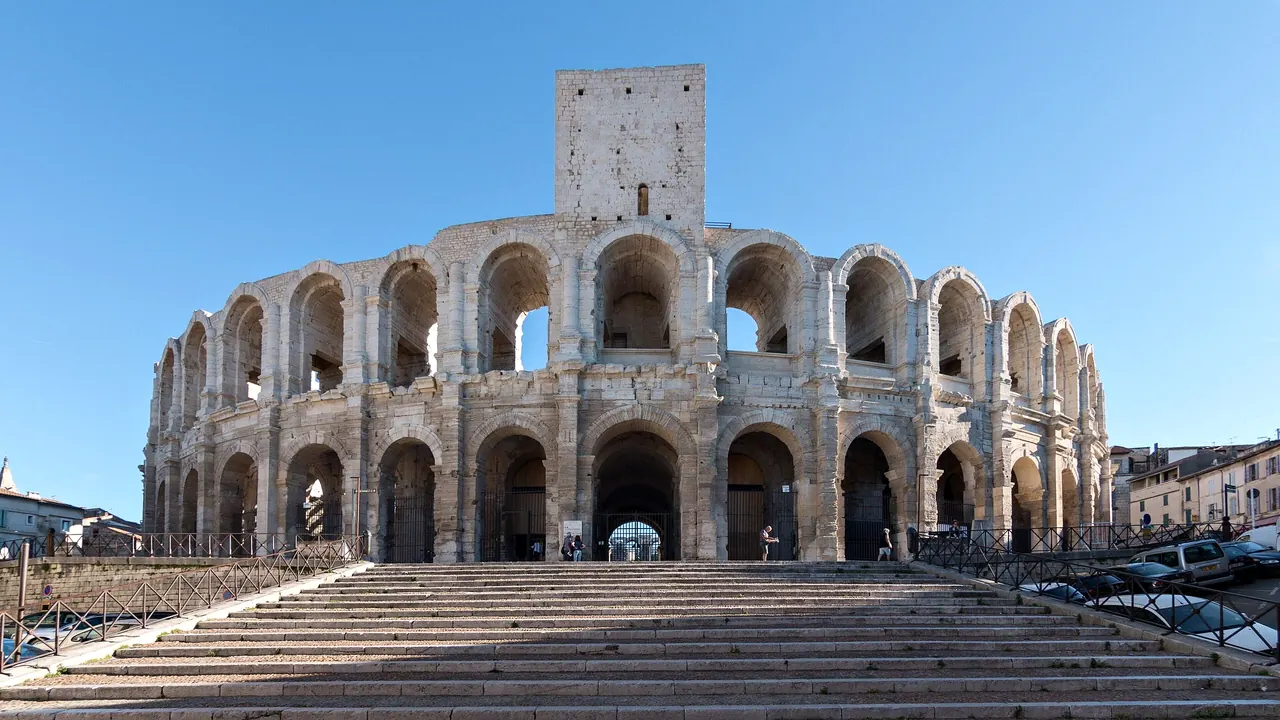
Photos: Andorra la Vella by KRLS, CC BY-SA 3.0, cropped; Arles by Martin Kraft, CC BY-SA 3.0, cropped.
Andorra la Vella or Arles?
Our verdict in twelve categories, each scored against the same fixed benchmark cities, and the climate month by month, so you can choose for your trip.
Choose Andorra la Vella for
- wellness
- shopping
- nature and the outdoors
Andorra la Vella suits travellers who plan to spend their days on a mountain. You can ski the big lift-linked areas in winter, or hike and ride the high valleys from late spring, then finish the day in Caldea's thermal lagoons and stock up on tax-free gear before leaving. The town itself is plain and its evenings end early, so the mountains have to be the reason for going.
Choose Arles for
- day trips
- beaches
- culture and sights
For history, warmth and a region full of places to visit, Arles is the stronger base. The Roman arena, the antique theatre and the cloister of Saint-Trophime are a few minutes apart on foot, and Avignon, Nîmes, the Pont du Gard and Les Baux are all easy outings. The flamingo lagoons and wide beaches of the Camargue start just south of town. It rewards curious adults more than families who want organised fun.
Scoreboard
Twelve categories on one fixed scale from 0 to 100. The shaded stretch is the gap between the two.
Your match
Pick a travel style or drag the sliders, and both match scores follow your weighting.
Wins on wellness and shopping with your weighting.
Wins on day trips and beaches with your weighting.
What matters to you?
Category by category
What the scores mean for a trip.
Beaches & swimming
Andorra la Vella is landlocked deep in the mountains, with the Mediterranean about three hours away by road. Its glacial lakes are too cold for a real swim, so warm water means a hotel pool or the lagoons at Caldea.
Arles at least has the sea within a day's reach. Saintes-Maries-de-la-Mer is about 40km south across the Camargue, and beyond Salin-de-Giraud the wild strands of Piémanson and Beauduc have room to spare, with shallow water that is warm in summer. You need a car, and there is little shade, so treat it as a day at the beach rather than a beach vacation.
Food & drink
Both towns cook regional food without being places to travel for it, but Arles makes eating more of a pleasure in its own right. Andorra's best meals are up in the side valleys, in the bordas, old stone barns where lamb and sausages are grilled over wood fires and served with escudella or trinxat. Down on the shopping avenues, the restaurants mainly feed skiers and shoppers, and the quality is uneven.
Arles brings the Camargue to the table: gardiane stew made with bull, local red rice, tiny tellines clams and olive oil from the Alpilles. The long Saturday market on the Boulevard des Lices is a highlight of the week, and lunch on the Place du Forum with a glass of local rosé is the town at its best. The restaurant range is narrow, though, and many places close in winter.
Culture & sights
Andorra la Vella's heritage takes about a day to see. In the Barri Antic, the old stone quarter above the river, you find the fortified Casa de la Vall, which was the seat of the Andorran parliament for centuries, and the church of Sant Esteve. Add a short ride out to Santa Coloma, with its round bell tower, and the other Romanesque churches of the valleys, and you have seen the best of it. The rest of the town is mostly shops and apartment blocks, and the museums are small.
Arles holds far more for a town its size, and all of it is within walking distance. Its Roman monuments are UNESCO-listed: the arena, which is still in use, the antique theatre, the underground galleries of the cryptoporticus and the Alyscamps, the avenue of tombs that Van Gogh and Gauguin both painted. The Museum of Ancient Arles, with a Roman barge raised from the Rhône, Gehry's twisting tower at Luma and the Rencontres photography festival each summer give you enough for two full days.
Nightlife
Both are early-to-bed towns, but they come alive at different times of year. Andorra la Vella's pubs and wine bars are busiest on winter weekends, and the real après-ski happens up in the resort villages rather than in the capital.
In Arles a night out means a late dinner on a square and a drink at the café tables of the Place du Forum. The exceptions are the ferias at Easter and in September, when street bodegas keep the town up for a few nights. For anything more, people drive to Montpellier or Marseille.
Nature & outdoors
Andorra la Vella sits at about 1,000 m among peaks close to 3,000 m. That puts lift-linked skiing a short ride away in winter, and marked trails to glacial lakes and high refuges within reach in summer. The UNESCO-listed Madriu-Perafita-Claror valley starts almost on the edge of town, and road cyclists come for the long climbs.
Arles offers a gentler, flatter kind of wild. The Camargue delta brings flamingos, white horses, black bulls and migrating waders, best seen on horseback or by bike along the dykes, and the Alpilles add limestone hiking among olive groves. Summer mosquitoes and the mistral make spring and autumn the best seasons there.
Day trips
Arles is ringed with places most travellers would happily cross a country to see. Avignon's Papal Palace is about 20 minutes away by train and Nîmes about half an hour. The Pont du Gard, Les Baux, Saint-Rémy and the walled town of Aigues-Mortes are all easy by car, and Marseille and Aix are about an hour away.
Andorra la Vella's options are pleasant but few. You can head down to the cathedral and market of La Seu d'Urgell, cross to Puigcerdà and the enclave of Llívia on the Cerdanya plateau, or take the high pass into France for Ax-les-Thermes and the castle at Foix.
Good for families
Andorra la Vella does more for children, as long as the family comes for the mountains. There are large ski schools and gentle beginner slopes in winter, and toboggan runs, rope courses and an animal park in summer, with Caldea's family pools for wet days. The busy main road through town is the downside, and children who don't ski or hike may get restless.
In Arles, children enjoy climbing the towers of the arena, exploring the dark cryptoporticus, riding ponies at Camargue ranches and watching flamingos. But nothing there is built for children, and summer heat, mosquitoes, cobbles awkward for buggies and the need for a car make it better suited to older children.
Getting around
Both centres are easy to walk, and the real difference is how you arrive and travel beyond the town. Andorra la Vella runs straight on into Escaldes-Engordany along the river, and national buses climb the valleys. There is no railway in the country, though, so arriving means a long drive from airports in Spain or France on a valley road that clogs at weekends and in the ski season.
Arles packs its sights into about fifteen minutes' walk, with a free shuttle loop around the centre. Its station is close to the old town and has regular trains to Avignon, Nîmes, Marseille and Montpellier. The Camargue ranches and beaches, though, really need a car or a bike.
Shopping & style
If you come to shop, Andorra la Vella offers far more. Low taxes have turned its main avenues into a long strip selling perfume, electronics, watches, spirits and, above all, ski and outdoor gear, anchored by large department stores. It is a place for practical buys rather than style or local craft.
Arles is the opposite: small, personal and Provençal. Here you buy olive oil and Camargue salt at the Saturday market, printed cottons, santons and gardian shirts in the old town, and photography books from its fine bookshops. For fashion, shoppers go to Aix or Marseille.
Affordability
The two cost much the same, with a slight edge to Andorra la Vella. Rooms there are good value outside the peak ski weeks, lunch menus are fair and low taxes make drinks cheap, though ski passes, equipment hire and Caldea cost what they would in any mountain resort.
Arles is cheaper than the smart villages of the Luberon and the Alpilles, and costs about what any French provincial town does. Rooms are scarce and dearer in July and during the festivals, and the car most visitors hire adds to the bill.
Live music & performing arts
Neither is a town for a night at the opera, but Arles has more to see, especially in summer. Concerts fill its Roman theatre and arena, the Les Suds festival brings world music to its courtyards in July, and the ferias and the bloodless course camarguaise fill the arena through the warm months.
Andorra la Vella has a small national orchestra, a summer jazz festival in Escaldes-Engordany and classical concerts in Ordino. Outside those weeks there is usually little on.
Wellness & relaxation
Andorra la Vella has a real spa. Hot springs feed Caldea's lagoons, saunas and treatment rooms, with a quieter adults-only section, and many hotels have spas too. The busy avenues mean real peace is found in the stone villages of the side valleys rather than in town.
Arles has no thermal tradition and only a few hotel spas. Its restfulness comes from the slow pace of the place: shaded squares, siestas in the summer heat, evenings by the Rhône and farmhouse retreats with pools in the Camargue.
When should you go?
Pick your month. The climate figures are measured averages, not a forecast.
Andorra la Vella in July
Arles in July
Daytime high, °C
Rainfall in the month, mm
Where the figures come from
Andorra la Vella has no weather station within reach, so its figures come from a gridded climate model rather than a measured record, and read a broad area rather than the city itself.
Arles's temperatures are measured 28 km from the centre, at Nimes / Courbessac.
Arles has no rain gauge within 25 km of the centre, so its rainfall comes from a gridded climate dataset read at the city rather than from a gauge further away.
Temperature and rainfall are climate normals, averaged over the years shown. Andorra la Vella: 1991-2020 normals, TerraClimate 4 km grid at the town, no weather station within 90 km. Arles: 1991-2020 (sunshine 1981-2010) normals, Nimes / Courbessac (28 km from centre).
Andorra la Vella sits high in the Pyrenees, and its seasons are clear-cut. Winter days are cold, only a few degrees above freezing, which is weather for the ski slopes rather than for strolling the old quarter. Summer tops out at a mild 23°C, ideal for walking, although afternoon storms are common. Rain is spread through the year and heaviest in May and November, at up to 115mm, so June to September is the most reliable window for the trails.
Arles is far warmer and sunnier. July and August reach 31°C, with the most sunshine and very little rain. That suits the Camargue beaches, where the sea is close to 22°C, but makes walking the Roman sites at midday hard going. Rain sets in from September and peaks near 105mm in October. April to early June and late September are the most comfortable months for sightseeing. At those times Andorra is either still holding snow on its high passes or turning cold.
Which traveller are you?
For a culture and arts trip, Arles is the clear choice. Its Roman arena, theatre and Romanesque cloister lie within a short walk of one another, Van Gogh's traces and the summer photography festival add depth, and Avignon and Nîmes make easy extra days.
On an outdoors trip, Andorra la Vella wins on sheer scale. Ski areas are a short ride away in winter, and from late spring the trails to glacial lakes, refuges and long Pyrenean climbs open up. Arles has birdwatching and gentle cycling, but no mountains.
For a relaxing and wellness trip, Andorra la Vella has Caldea's thermal lagoons, saunas and adults-only section right next door, and many hotels have spas of their own. Arles calms you with long lunches and siestas, but it has no spa culture to speak of.
Before you go
| Measure | Andorra la Vella | Arles |
|---|---|---|
| Official language | Catalan | French |
| Currency | Euro (EUR) | Euro (EUR) |
| Sockets | CF220 V, 50 Hz | CE230 V, 50 Hz |
| Driving side | Right | Right |
| Time zone | UTC+1, UTC+2 in summer | UTC+1, UTC+2 in summer |
| Emergency number | 112 or 118 | 112 |
| Elevation | 1,022 m | 0 m |
| Main airport | Josep Tarradellas Barcelona-El Prat Airport (BCN)142 km from centre235 non-stop destinations | Marseille Provence Airport (MRS)54 km from centre126 non-stop destinations |
| Public holidays this year | 14 days | 11 days |
By the numbers
| Measure | Andorra la Vella | Arles |
|---|---|---|
| City population | 24,042 | 51,811 |
| People per km² | 801 | 68 |
| Museums within 10 km | 13 | 3 |
| UNESCO World Heritage sites within 50 km | 4 | 5 |
| Swim season, months above 21 °C | - | 2 months |
Where else could you go?
Every comparison below shares a destination with this one, so you can follow Andorra la Vella or Arles somewhere new.
- Avignonvs Arles
- Montpelliervs Arles
- Aix-en-Provencevs Arles
- Marseillevs Arles
- Carcassonnevs Andorra la Vella
- Gironavs Andorra la Vella