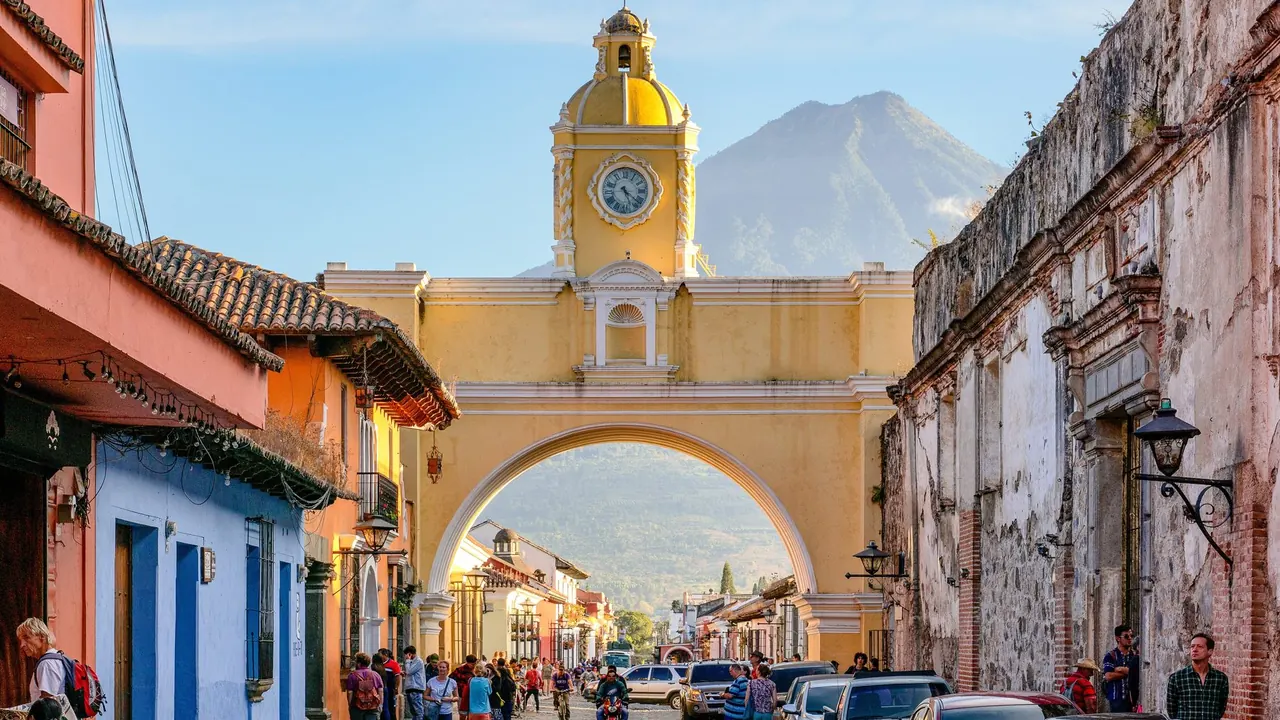
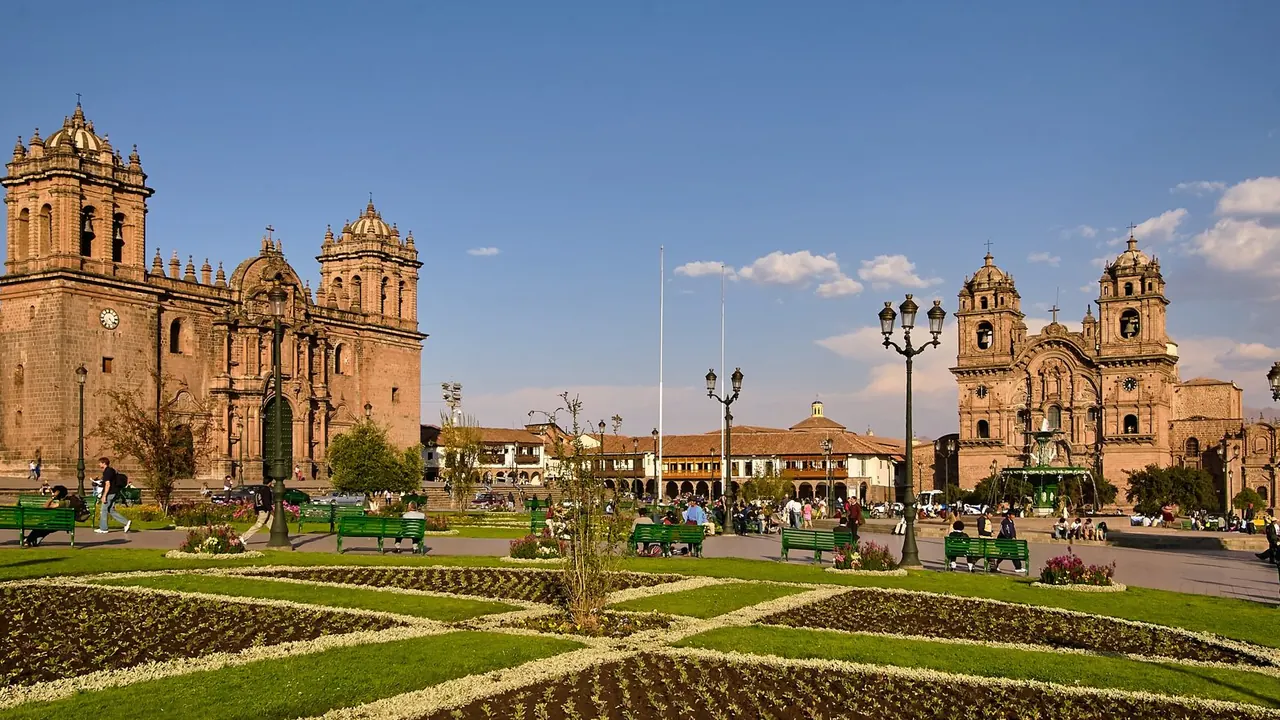
Photos: Antigua Guatemala by Chad Davis, CC BY-SA 2.0, cropped; Cusco by Pedro Szekely, CC BY-SA 2.0, cropped.
Antigua Guatemala or Cusco?
Our verdict in twelve categories, each scored against the same fixed benchmark cities, and the climate month by month, so you can choose for your trip.
Choose Antigua Guatemala for
- families
- getting around
- wellness
Antigua Guatemala suits a traveller who wants a gentle, unhurried stay: a flat colonial grid at a comfortable altitude, ruined convents to wander, courtyard hotels to rest in and a volcano climb when the mood takes you. It is the easier choice with children, and the kinder one for anyone who would rather not spend the first days getting used to thin air.
Choose Cusco for
- day trips
- culture and sights
- food and drink
Cusco is the place when the trip is built around great sights and long walks. Inca stonework under a Spanish city, the Sacred Valley and Machu Picchu give it more to explore, and its treks go further into the mountains than anything near Antigua. The cost is altitude, steep streets and early starts, so it rewards fit adults who have time to acclimatise.
Scoreboard
Twelve categories on one fixed scale from 0 to 100. The shaded stretch is the gap between the two.
Your match
Pick a travel style or drag the sliders, and both match scores follow your weighting.
Too close to call, 2 points apart
Wins on families and getting around with your weighting.
Wins on day trips and culture and sights with your weighting.
What matters to you?
Category by category
What the scores mean for a trip.
Beaches & swimming
Neither city is a beach destination. Both lie high in the mountains, so in town the only swimming is in a hotel pool. The difference is how far the sea is. From Antigua, the black volcanic sand of Monterrico on the Pacific is about two hours away by shuttle, though heavy surf and strong currents make it a place for an overnight stay more than a swim. From Cusco, reaching the coast means a flight.
Food & drink
Cusco offers more to eat, and more of it is ambitious. The San Pedro market and the picanterías cover everyday Andean cooking, from trout and alpaca to soups and chicha. In San Blas and the Sacred Valley, Novoandino tasting menus turn native potatoes, maize and quinoa into serious dining.
Antigua's strength is narrower: coffee from the volcano slopes, cacao, and stews such as pepián and jocón, with set lunches at the comedores in the central market. Fine dining is thin, and the choice runs out sooner. In both towns, the menus around the main square are aimed at visitors and best skipped.
Culture & sights
Cusco has more layers. The Inca capital still stands in its mortarless walls, and the Spanish built directly on top, most strikingly at Qorikancha. Sacsayhuamán's zigzag ramparts are above town, and the cathedral is hung with Cusco School paintings.
Antigua tells one story, the colonial capital left in ruins after the earthquakes of 1773. Its pleasure is walking the cobbled grid past roofless convents such as Capuchinas and Santa Clara and under the Santa Catalina arch. It is beautiful and easy to take in, but two or three days cover it.
Nightlife
Cusco keeps going later. Its bars and clubs off the Plaza de Armas fill with trekkers and backpackers, some stay open into the early hours at weekends, and pub crawls set a rowdier tone, though the altitude and dawn tours slow many people down. Antigua's evenings are gentler and end earlier. Expect rooftop bars facing the volcanoes, mezcal bars behind colonial doorways and salsa with language students, with weekends livelier when visitors come up from the capital.
Nature & outdoors
Both are places for serious walking, and Cusco has the bigger mountain country. Multi-day routes such as the Inca Trail, Salkantay and Ausangate go far beyond anything near Antigua. So do day hikes to Humantay lake and Rainbow Mountain above 5,000m, rafting on the Urubamba and condors over the puna.
Antigua's outdoors centres on its three volcanoes, and it has one experience Cusco cannot match. From the overnight camp on Acatenango you can watch Fuego throw out lava in the dark. Pacaya is a gentler half day over lava fields, and coffee-farm trails fill the hills around town.
Day trips
Cusco has the stronger set of outings, and most are about an hour away in the Sacred Valley: the citadel at Pisac, Ollantaytambo's living Inca street grid, and the terraces of Moray beside the Maras salt pans. Machu Picchu crowns them, though it is a long day by road, train and bus. The themes do repeat.
Antigua's easy trips are short hops to valley villages such as San Antonio Aguas Calientes, plus the Maya ruins of Iximché. Lake Atitlán and the Chichicastenango market are long journeys each way, often better with a night away.
Good for families
Antigua is far easier with children. It is calm and small, and school-age children can climb Pacaya, make chocolate or ride horses, although the broken pavements are tough with a pushchair. Cusco at 3,400m carries a real risk of altitude sickness for young children, who cannot always say how they feel. Its days of ruins and early trains suit older, history-minded children best, and families often base themselves lower down in the Sacred Valley.
Getting around
Antigua is the simpler town to move around. Its flat grid puts almost everything within a 15-minute walk, the volcanoes keep you oriented, and tuk-tuks and chicken buses handle the rest. Cusco's centre is also walkable, but the climbs to San Blas and Sacsayhuamán are hard work in thin air, so cheap taxis earn their keep. Machu Picchu needs a train from outside the city. Both towns have uneven cobbles that call for sturdy shoes.
Shopping & style
Cusco has a little more worth carrying home. Alpaca knitwear, ponchos and naturally dyed weaving from cooperatives in Chinchero are the prize, and San Blas workshops add ceramics and silverwork, though plenty of so-called alpaca around the square is not the real thing.
Antigua's craft is the handwoven huipil, alongside jade, ceramics and bags of local coffee and chocolate. The market by the bus terminal rewards a close look and some bargaining. Neither town has fashion or luxury shopping.
Affordability
Both are cheap from day to day, and Cusco stretches money a little further. Its market lunches, taxis and simple guesthouses cost little, and a combined ticket covers many sites. Its expense comes in a few unavoidable lumps, though: the Machu Picchu train and entry, and guided treks priced for foreigners.
Antigua is Guatemala's most expensive town, but its extras, from volcano hikes to shuttles, are fair for what they include. In both towns, the boutique hotels in colonial mansions charge close to Western rates.
Live music & performing arts
Neither town has a theatre or concert season, but Cusco offers more to watch. Folkloric dance shows run most evenings, and the festivals are spectacular: Inti Raymi at Sacsayhuamán around the June solstice, and Qoyllur Rit'i in the mountains. In Antigua, marimba plays in the central park and the occasional concert fills a ruined cloister. Its great spectacle is Holy Week, with brass bands and sawdust carpets laid across the streets.
Wellness & relaxation
Antigua is the more restful base. Its hotels are built around quiet courtyards with fountains and volcano views, yoga and massage are easy to find, some spas use local coffee and cacao, and temazcal sweat baths turn up here and there. The worst interruption is saints'-day fireworks at dawn.
Cusco has cheap massage and hotels that pump oxygen into rooms, but the altitude, cold nights and early tours make the city itself tiring. Visitors in search of calm head down to the riverside lodges of the Sacred Valley.
When should you go?
Pick your month. The climate figures are measured averages, not a forecast.
Antigua Guatemala in July
Cusco in July
Daytime high, °C
Rainfall in the month, mm
Where the figures come from
Antigua Guatemala has no rain gauge within 25 km of the centre, so its rainfall comes from a gridded climate dataset read at the city rather than from a gauge further away.
Cusco's station stands 151 m below the city centre, so the centre is likely a little cooler than the figures say.
Temperature and rainfall are climate normals, averaged over the years shown. Antigua Guatemala: 1998-2020 (rainfall 1991-2020) normals, Guatemala Aeropuertola Aurora (23.5 km from centre). Cusco: 1991-2020 normals, Cuzco (3.7 km from centre).
The two dry seasons fall at opposite ends of the year. Antigua is driest from November to April, with almost no rain from December to March, and it is warmest in April at about 27°C. From May to October the rains arrive as afternoon storms, heaviest in June at around 297mm, so plan walks and volcano climbs for the mornings. Cusco is dry from May to September, with only about 3mm in June, and wet from December to March, when January brings around 159mm.
Neither city gets hot enough to make walking hard. Antigua is the milder of the two, while Cusco stays close to 21°C by day all year and the nights are cold. Neither has beach weather. A trip in the northern winter favours Antigua, and a mid-year trip favours Cusco.
Which traveller are you?
On a family trip with young children, Antigua is the clear pick. Its gentler altitude, calm pace and hands-on outings make the days manageable. Cusco is better saved until children are old enough to enjoy ruins and long walks.
For a culture and arts trip, Cusco is the stronger choice. Antigua's colonial ruins make a lovely few days, but Cusco layers two civilisations in one city and adds a valley of Inca sites around it, enough to fill a week.
For a short city break, Antigua works better. You can arrive and start exploring the same afternoon, and the compact centre rewards a few unhurried days. Cusco needs time to acclimatise and a long day for Machu Picchu, so it deserves a longer stay.
Before you go
| Measure | Antigua Guatemala | Cusco |
|---|---|---|
| Official language | Spanish | Spanish, Aymara, Quechua |
| Currency | Quetzal (GTQ) | Sol (PEN) |
| Sockets | AB120 V, 60 Hz | ABC220 V, 60 Hz |
| Driving side | Right | Right |
| Time zone | UTC-6 | UTC-5 |
| Emergency number | Police 110/120, ambulance 128, fire 123 | 111 or 911 |
| Elevation | 1,582 m | 3,399 m |
| Main airport | La Aurora International Airport (GUA)22 km from centre19 non-stop destinations | Alejandro Velasco Astete International Airport (CUZ)5 km from centre6 non-stop destinations |
| Public holidays this year | 13 days | 16 days |
By the numbers
| Measure | Antigua Guatemala | Cusco |
|---|---|---|
| City population | 59,091 | 428,450 |
| Museums within 10 km | 2 | 11 |
| UNESCO World Heritage sites within 50 km | 1 | 2 |
Where else could you go?
Every comparison below shares a destination with this one, so you can follow Antigua Guatemala or Cusco somewhere new.