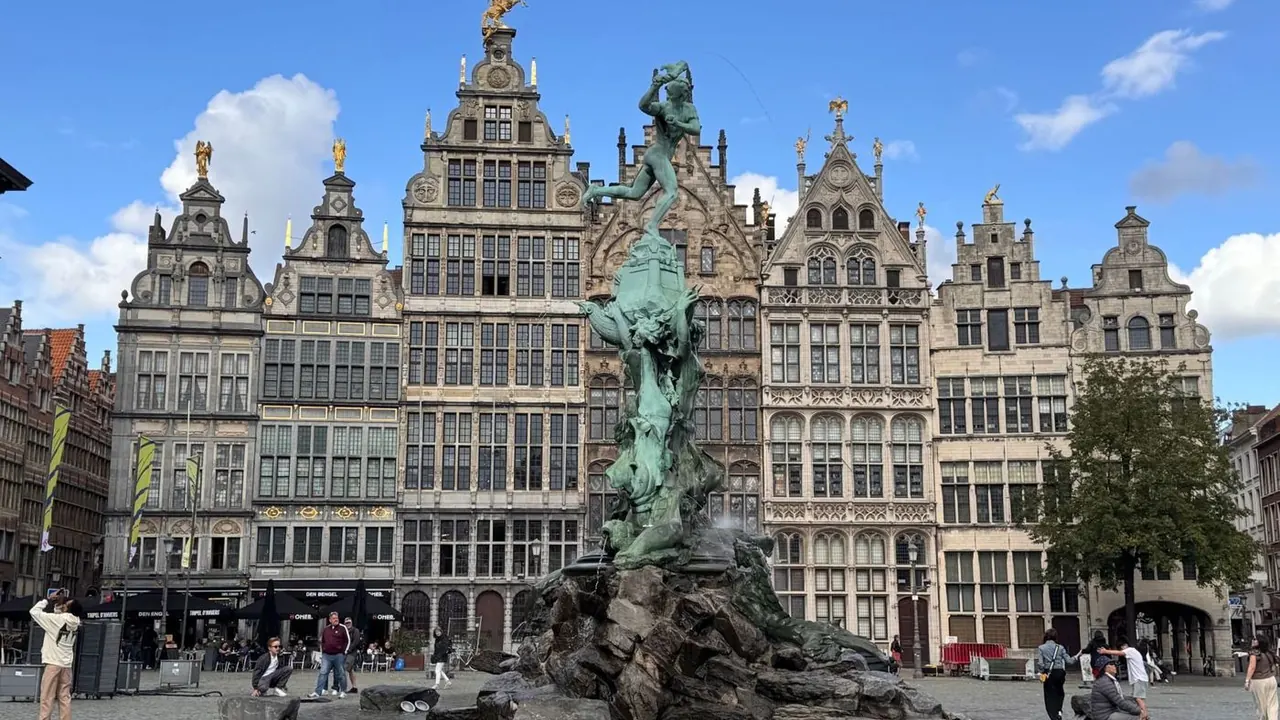
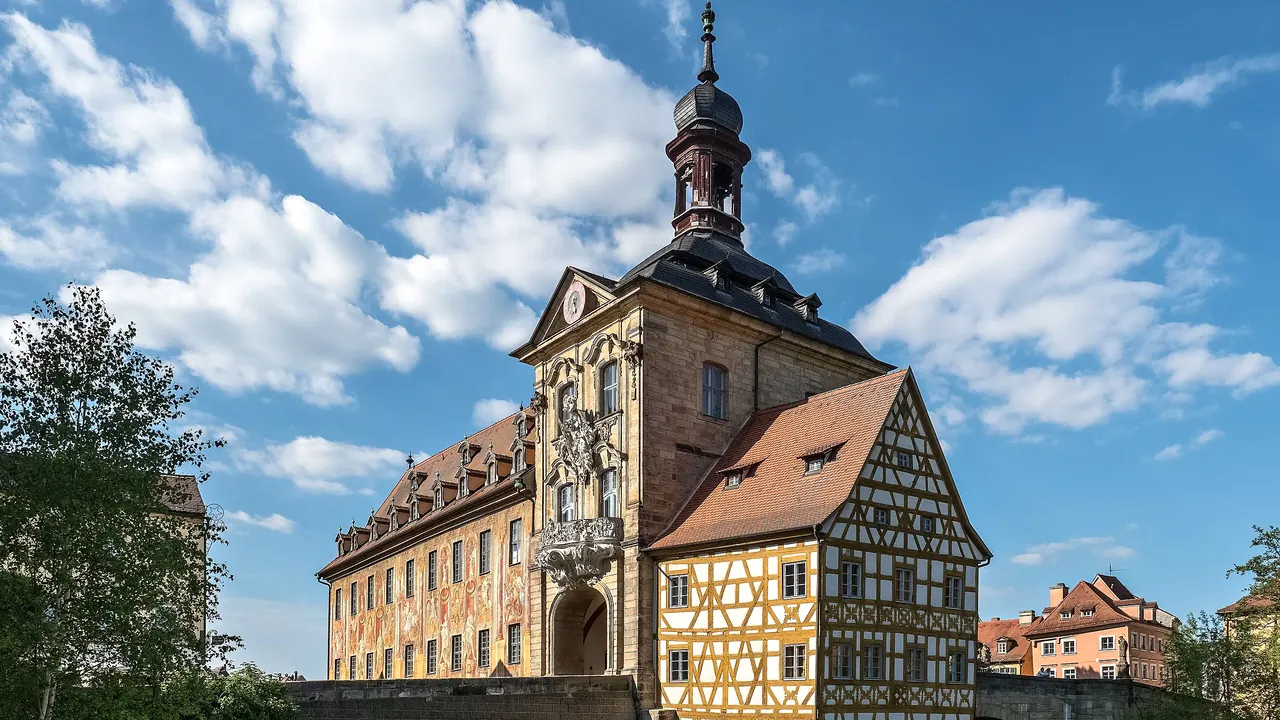
Photos: Antwerp by Norbert Jakab, Pexels License; Bamberg by Ermell, CC BY-SA 4.0, cropped.
Antwerp or Bamberg?
Our verdict in twelve categories, each scored against the same fixed benchmark cities, and the climate month by month, so you can choose for your trip.
Choose Antwerp for
- shopping
- nightlife
- families
Antwerp is the better pick for a city stay with more going on in the shops and after dark: Rubens in the cathedral, designer boutiques around the Nationalestraat, brown cafés that stay open late, warehouse clubs, and fast trains to Ghent, Bruges, Brussels and Rotterdam. It is also easier with children, with the zoo beside the station and a flat centre that suits a pushchair.
Choose Bamberg for
- nature and the outdoors
- prices
- wellness
For a slower, cheaper trip built around walking, beer and countryside, Bamberg suits better. The whole old town is the sight, and the brewery taverns and hillside beer cellars set the rhythm of the day. Franconian Switzerland and the Steigerwald are close enough for hiking and cycling. Evenings end early and the shopping is thin, but that matters little to the traveller who chooses it.
Scoreboard
Twelve categories on one fixed scale from 0 to 100. The shaded stretch is the gap between the two.
Your match
Pick a travel style or drag the sliders, and both match scores follow your weighting.
Wins on shopping and nightlife with your weighting.
Wins on nature and the outdoors and prices with your weighting.
What matters to you?
Category by category
What the scores mean for a trip.
Beaches & swimming
Neither is a place for a beach. Antwerp at least has Sint-Annastrand, a sandy strip on the left bank of the Scheldt, though the tidal river is not for swimming. The North Sea at Blankenberge or Knokke is a long day out by train.
Bamberg is much further from any sea, but its swimming is closer to hand. On a hot afternoon, locals go to the old river bathing spot in the Hain park or the gravel-pit lakes on the edge of town.
Food & drink
Both take beer seriously, but in different ways. Antwerp's brown cafés pour long lists of Trappist and abbey beers alongside the local amber ale in its round bolleke glass. The food runs from stoofvlees and mussels to the modern, design-led cooking of Het Zuid and Het Eilandje, which includes a few starred tables.
Bamberg is narrower and more single-minded. Smoky Rauchbier poured from wooden barrels, summer evenings in the hillside Bierkeller and plates of Schäufele with dumplings are the whole point. Beyond Franconian cooking there is little choice, and not much for a special dinner.
Culture & sights
Antwerp has the bigger collections: Rubens altarpieces in the Cathedral of Our Lady, his house and studio, the Plantin-Moretus printing house and the Royal Museum of Fine Arts. Add Central Station and the Art Nouveau streets of Zurenborg, and it rewards a visitor who wants to go inside and look at paintings.
Bamberg works the other way round. Its museums are small, but the whole old town is a UNESCO site that came through the war intact, and the pleasure is in walking it. Highlights are the four-towered cathedral on its hill, the Old Town Hall on its island in the Regnitz and the fishermen's houses of Little Venice.
Nightlife
Antwerp has a proper night out. Belgian bars have no fixed closing time, so the brown cafés and student streets stay busy past midnight. There is also a house and techno scene in old warehouses and under the railway near the docks, and one of the best-known gay scenes in the Low Countries.
Bamberg's evenings belong to the brewery taverns and, in summer, the beer cellars on the hills. The student bars of the Sand quarter liven up in term time, but clubs are few and the town is mostly quiet before the small hours.
Nature & outdoors
Bamberg has the better countryside within reach. Franconian Switzerland, with its limestone valleys, caves and rock towers, starts less than an hour east, and the Steigerwald forests lie to the west. Hiking routes link village breweries across rolling farmland.
Antwerp's surroundings are flat, and the port takes up much of them. The Kalmthoutse Heide heathland to the north and bike rides on the polder dykes along the Scheldt are pleasant, but they are a break from the city rather than a reason to come.
Day trips
Both make good bases, and Antwerp an exceptional one. Frequent trains reach Mechelen, Brussels, Leuven, Ghent and Rotterdam in about an hour or less, and Bruges, Delft, The Hague and Kinderdijk also work as day trips. A week could hold a different historic city every day.
Bamberg's list is shorter but strong. Nuremberg's castle, Würzburg's Residence, Coburg and Bayreuth are all about an hour away, the baroque churches of Vierzehnheiligen and Banz face each other closer still, and Rothenburg makes a long day out.
Good for families
Antwerp is easier with children. The zoo is next to Central Station and the flat centre suits a pushchair. The MAS rooftop, the trams, the Steen and the foot tunnel under the Scheldt give a few days of variety, though the grey weather means having indoor plans ready.
Bamberg is safe and calm, with playgrounds in the Hain, boats for hire on the Regnitz, a leisure pool with slides and beer gardens where children play between the tables. Beyond that the sights are churches and townscape, and the cobbled climb to the cathedral is hard work with a pushchair.
Getting around
Both are walking cities where a car is unnecessary, but the walking feels different. Antwerp spreads further, about half an hour on foot from Central Station to Het Zuid, so the trams, the underground premetro and the shared bikes on marked cycle lanes are all useful. The station puts Brussels and the Netherlands within easy reach.
Bamberg is smaller, with the island town, the cathedral hill and Little Venice minutes apart. The catch is the short, steep climbs on uneven cobbles, and the station is a fair walk from the old town.
Shopping & style
Antwerp is a real shopping destination, and fashion is the reason. The boutiques of the Nationalestraat and Kammenstraat carry the conceptual Belgian labels that grew out of its fashion academy. Around them are the Meir high street, the antique and interiors shops of the Kloosterstraat and the diamond quarter.
Bamberg has chain stores, a few bookshops and some antique dealers. Its best things to take home are edible: produce from the market gardens and bottled smoked beer from the brewery shops.
Affordability
Bamberg is the cheaper stay. Beer and tavern meals are inexpensive by German standards, rooms are moderately priced for most of the year, and walking takes the place of transport.
Antwerp's rooms cost less than in nearby capitals, but sit-down dinners follow high Belgian prices. Savings come from frites stands, café beers and lunch menus rather than evenings out.
Live music & performing arts
Antwerp has more on stage. Opera Ballet Vlaanderen performs in the historic opera house on the Frankrijklei, and the Antwerp Symphony Orchestra plays in the Queen Elisabeth Hall. deSingel puts on the contemporary dance Flanders is known for, and AMUZ gives early music a Baroque church. Most theatre, though, is in Dutch.
Bamberg's strength is one great orchestra. The Bamberg Symphony has an international reputation, and there are organ and choral concerts in the cathedral. The town has no opera company of its own, so opera lovers look to Bayreuth, an hour away.
Wellness & relaxation
Bamberg is the more restful choice. The town slows down once the day visitors leave, and mornings by the river and afternoons in a shaded beer garden set the pace. The warm brine pools of Bad Staffelstein are about half an hour away by train.
Antwerp is a city for museums and shops rather than rest. Its sauna complexes are in the suburbs and the countryside and are mostly reached by car, so unwinding usually means a park or a brown café.
When should you go?
Pick your month. The climate figures are measured averages, not a forecast.
Antwerp in July
Bamberg in July
Daytime high, °C
Rainfall in the month, mm
Where the figures come from
Antwerp has no rain gauge within 25 km of the centre, so its rainfall comes from a gridded climate dataset read at the city rather than from a gauge further away.
Antwerp's sunshine is measured 47 km from the centre, at Uccle.
Temperature and rainfall are climate normals, averaged over the years shown. Antwerp: 1991-2020 normals, Antwerpen / Deurne (5.2 km from centre). Bamberg: 1991-2020 normals, Bamberg (2.8 km from centre).
Both cities are at their best from May to September, and neither has a beach season in the usual sense. Bamberg has the warmer summer, with highs of around 26°C in July against 23°C in Antwerp, and more sunshine through the long days. That makes a river swim in the Hain or a long evening in a beer cellar realistic in July and August. Its winters are colder, though, with highs of about 4°C in December and January, when the cobbled climb to the cathedral is a chilly business.
Antwerp is milder and greyer. Its rain is spread right through the year and is heaviest in late autumn and early winter, at around 83mm in December, when there is little sunshine. Bamberg is drier for most of the year, and its wettest month is July. Spring and September are the comfortable walking months in both, and in Antwerp's damp winter its museums are the safer plan.
Which traveller are you?
On a shopping trip, Antwerp is the one to choose. Fashion is the city's speciality, so a day of browsing counts as sightseeing, and you go home with labels rarely found elsewhere. Bamberg's shops fill an hour between churches.
For an outdoors trip, Bamberg is the better base. Antwerp's flat surroundings give heath walks and dyke-top cycling. From Bamberg you can spend whole days walking or cycling through wooded hills, breaking for lunch at a village brewery.
On a trip on a tight budget, Bamberg stretches money further. In Antwerp, evenings are the costly part of the day, so savers eat well at lunchtime. In Bamberg, a whole evening of dinner and beer in a tavern stays cheap.
Before you go
| Measure | Antwerp | Bamberg |
|---|---|---|
| Official language | French, German, Dutch | German |
| Currency | Euro (EUR) | Euro (EUR) |
| Sockets | CE230 V, 50 Hz | CF230 V, 50 Hz |
| Driving side | Right | Right |
| Time zone | UTC+1, UTC+2 in summer | UTC+1, UTC+2 in summer |
| Emergency number | 112 | 112 |
| Elevation | 7 m | 262 m |
| Main airport | Brussels Airport (BRU)36 km from centre191 non-stop destinations | Nuremberg Airport (NUE)46 km from centre56 non-stop destinations |
| Public holidays this year | 14 days | 12 days |
By the numbers
| Measure | Antwerp | Bamberg |
|---|---|---|
| City population | 529,247 | 77,218 |
| People per km² | 2,542 | 1,414 |
| Museums within 10 km | 37 | 11 |
| UNESCO World Heritage sites within 50 km | 9 | 1 |
Where else could you go?
Every comparison below shares a destination with this one, so you can follow Antwerp or Bamberg somewhere new.
- Brusselsvs Antwerp
- Nurembergvs Bamberg
- Ghentvs Antwerp
- Rothenburg ob der Taubervs Bamberg
- Rotterdamvs Antwerp
- Brugesvs Antwerp