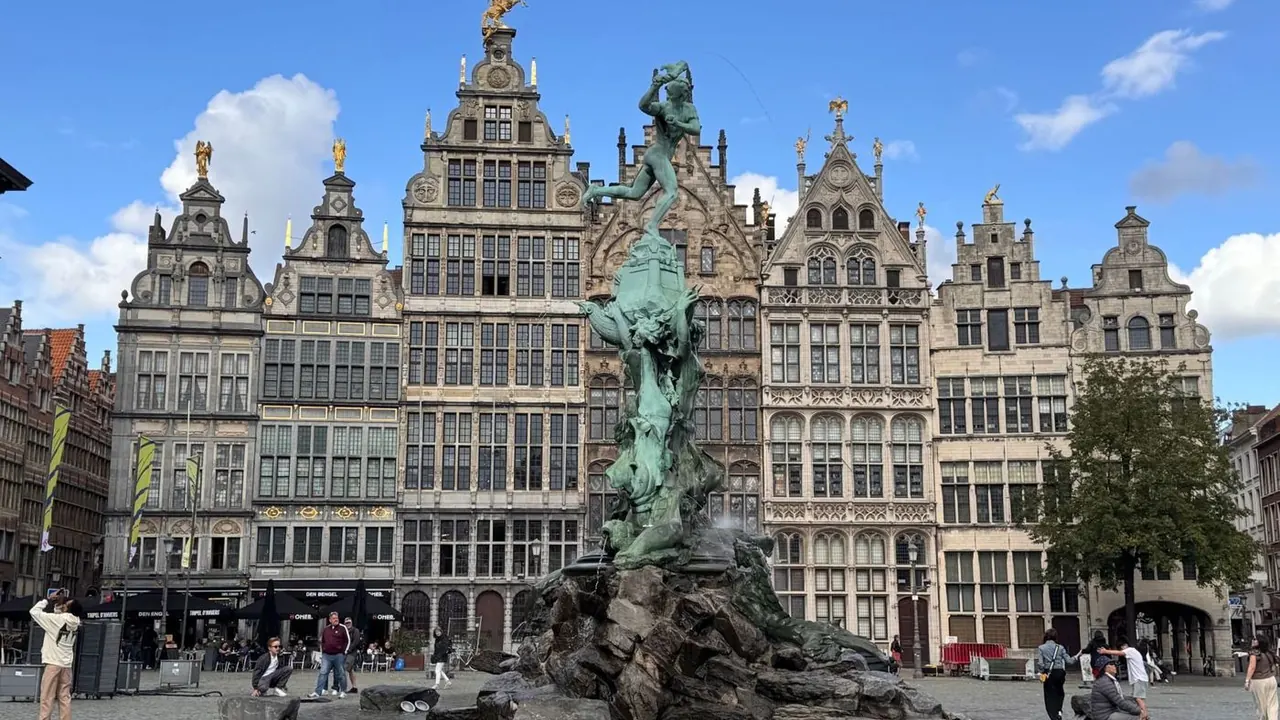
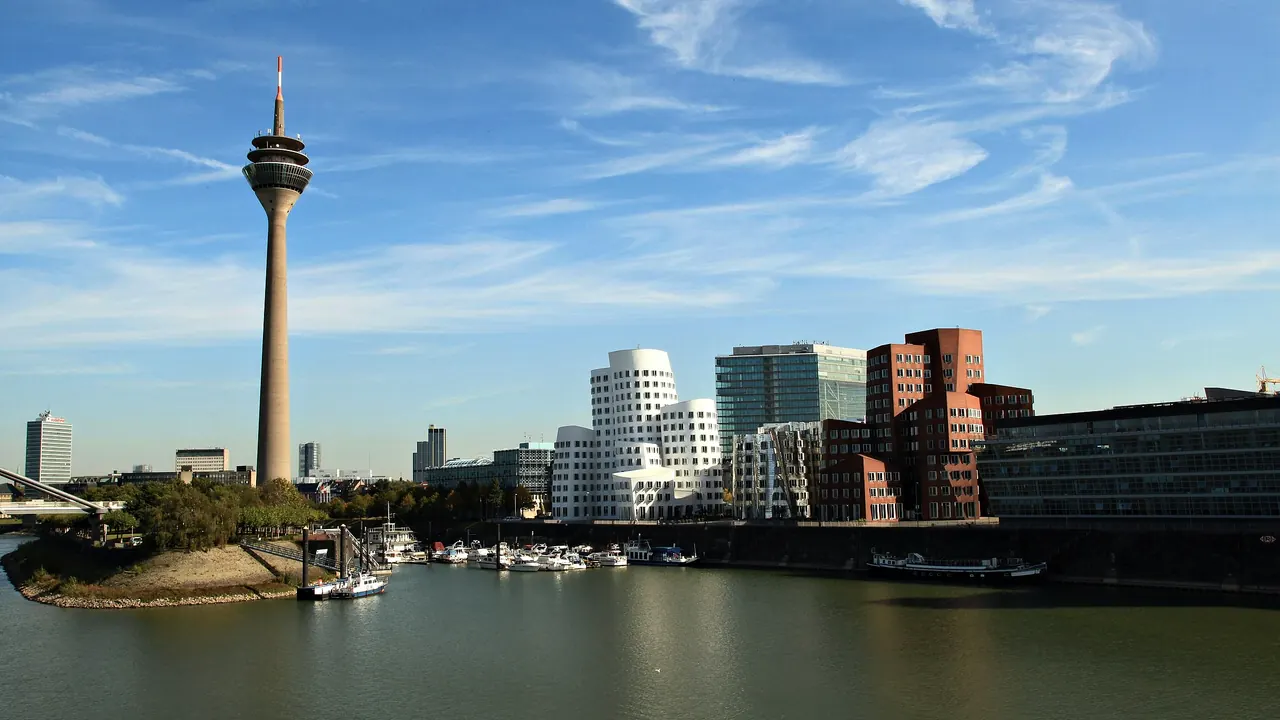
Photos: Antwerp by Norbert Jakab, Pexels License; Dusseldorf by Frank Vincentz, CC BY-SA 3.0, cropped.
Antwerp or Dusseldorf?
Our verdict in twelve categories, each scored against the same fixed benchmark cities, and the climate month by month, so you can choose for your trip.
Choose Antwerp for
- culture and sights
- day trips
- beaches
Antwerp is the better pick for a traveller who wants history and art in the same streets. Rubens in the cathedral, a Renaissance printing house and the guild houses of the Grote Markt give it an old-world depth that Düsseldorf lost in the war. Its rail links to Ghent, Bruges, Brussels and the Dutch cities make it an outstanding base for a week of seeing the Low Countries, and its fashion boutiques reward anyone who likes independent design.
Choose Dusseldorf for
- wellness
- nature and the outdoors
- nightlife
Düsseldorf suits those who want an easier, more sociable stay with green space close at hand. Its Altstadt turns a night out into a street party, the Rhine meadows and nearby wooded hills give more room to walk and cycle, and the German sauna habit makes a slow, restorative few days easy to arrange. Modern art, the Japanese quarter and Königsallee luxury shopping round off a city that is more about comfort than antiquity.
Scoreboard
Twelve categories on one fixed scale from 0 to 100. The shaded stretch is the gap between the two.
Your match
Pick a travel style or drag the sliders, and both match scores follow your weighting.
Too close to call, 1 point apart
Wins on culture and sights and day trips with your weighting.
Wins on wellness and nature and the outdoors with your weighting.
What matters to you?
Category by category
What the scores mean for a trip.
Beaches & swimming
Beaches play no real part in a stay in either city. Antwerp's riverbank has the sandy Sint-Annastrand, but the Scheldt is for looking at, not swimming. The difference is that Antwerp can reach the Belgian coast at Blankenberge or Knokke by train for a long day out.
Düsseldorf is further from any sea. In return it has a proper swimming lake, Unterbacher See, inside the city limits, which is the easier summer dip of the two.
Food & drink
Both cities eat well, and both centre their tables on beer, but the beer and the cooking differ. Antwerp offers Flemish stoofvlees, mussels with frites and chocolate, with Trappist and abbey beers poured in brown cafés and an ambitious modern restaurant scene in Het Zuid and Het Eilandje.
Düsseldorf pairs dark Altbier in its brewhouses with sauerbraten and spicy mustard. Its distinctive extra is the Japanese quarter around Immermannstrasse, where ramen and izakaya give a range of cooking Antwerp cannot match.
Culture & sights
Antwerp has the deeper and older heritage. The Cathedral of Our Lady with its Rubens altarpieces, the UNESCO-listed Plantin-Moretus printing house, the guild houses of the Grote Markt and the domed Central Station make the city itself the attraction, with the MAS and the Red Star Line museum adding to it.
Düsseldorf is strong on modern art, with Klee at K20 and the net under the dome at K21. But its rebuilt Altstadt has little old fabric, and its finest historic site, Benrath Palace, lies out in the suburbs.
Nightlife
Düsseldorf has the more obvious night out. The Altstadt packs hundreds of bars and brewhouses into a few streets, weekend crowds drink standing in the lanes, and Carnival turns the whole city into a party for days. It can be loud, with stag groups in the mix.
Antwerp is quieter on the surface but serious underneath. Its warehouse house and techno clubs and its well-known gay scene give it more to offer anyone who goes out to dance rather than to drink.
Nature & outdoors
Düsseldorf has more to offer outdoors. The broad Rhine meadows carry long cycle paths, Grafenberg forest and the Neandertal valley lie on the city's edge, and the wooded Bergisches Land and the Siebengebirge are close enough for a day's walking.
Antwerp's surroundings are flat and dominated by the port. The Kalmthoutse Heide heathland and the dyke rides through the polders are pleasant by bike, but there is little else beyond city parks.
Day trips
Both are superb rail bases, but Antwerp has the edge. Ghent, Bruges, Mechelen, Leuven and Brussels are all short train rides away, and Rotterdam, Delft and Kinderdijk across the border mean two countries' worth of historic towns.
Düsseldorf's range is excellent too, with Cologne cathedral under half an hour away and Bonn, the Brühl palaces and Aachen within reach. Its list mixes old cities with the industrial heritage of the Ruhr and the castles of the Middle Rhine.
Good for families
Children are equally well served, in different ways. Antwerp's zoo stands right beside Central Station, and the MAS rooftop, the Steen castle and the foot tunnel under the Scheldt make cheap, easy outings.
Düsseldorf counters with the Aquazoo, the free game park in Grafenberg forest and Rhine beaches to play on. Phantasialand and Movie Park are within an hour, which beats Antwerp's car-dependent theme park for a big day out.
Getting around
Both centres are compact and walkable, with trams for longer hops and no need for a car. Antwerp is the more natural city for cycling, with shared bikes and marked lanes, and its premetro links the walking core to Het Eilandje and Zurenborg.
Düsseldorf's advantage is reach. Its network runs on into Cologne and the Ruhr and connects to the airport in minutes, though the fare zones take some getting used to.
Shopping & style
The two are evenly matched for shopping but reward different kinds of shopper. Antwerp is the place for Belgian avant-garde fashion, the legacy of its academy, found in small boutiques around the Nationalestraat and Het Zuid rather than in global brand stores. It also has the old trades that Düsseldorf lacks: antiques and interiors dealers, secondhand auctions and the diamond district by the station. A browser there is more likely to come home with something old or unusual.
Düsseldorf reverses the balance. The Königsallee gathers the luxury flagships and jewellers that Antwerp's fashion streets largely pass over, and its big department stores make mainstream shopping easy. Its independent side is smaller, with Flingern's design shops and the Japanese quarter's stationery and homeware supplying the less predictable finds.
Affordability
Neither is a budget destination, and both suit a mid-range wallet. Antwerp's rooms are usually kinder than in nearby capitals, but sit-down dinners follow high Belgian prices. Frites, café beer and lunch menus keep costs down.
Düsseldorf's food is fairer value through its brewhouses and noodle bars. Its hotels are the risk: during big trade fairs they can cost several times the usual rate, so the dates of a visit matter more there.
Live music & performing arts
The two are closely matched, and both have opera, ballet and a symphony orchestra in proper houses. Antwerp stands out for contemporary dance at deSingel and early music at AMUZ in a Baroque church.
Düsseldorf has the Tonhalle in a domed former planetarium, a strong cabaret tradition and its place in electronic music history as Kraftwerk's home. In both cities much of the theatre is in the local language, Dutch in one and German in the other.
Wellness & relaxation
Düsseldorf makes rest easier. Saunas are part of everyday life in its public pools, several large thermal complexes are within an hour, and Aachen's hot springs are close. The Hofgarten, the Japanese garden in Nordpark and the Rhine meadows add calm places to walk.
Antwerp's wellness options are mostly hotel spas or sauna complexes in the countryside reached by car. Unwinding there usually means a park or a brown café rather than a day of treatments.
When should you go?
Pick your month. The climate figures are measured averages, not a forecast.
Antwerp in July
Dusseldorf in July
Daytime high, °C
Rainfall in the month, mm
Where the figures come from
Antwerp has no rain gauge within 25 km of the centre, so its rainfall comes from a gridded climate dataset read at the city rather than from a gauge further away.
Antwerp's sunshine is measured 47 km from the centre, at Uccle.
Temperature and rainfall are climate normals, averaged over the years shown. Antwerp: 1991-2020 normals, Antwerpen / Deurne (5.2 km from centre). Dusseldorf: 1991-2020 normals, Düsseldorf (8.3 km from centre).
The two cities share almost the same climate, so the season matters more than the choice between them. Both are at their best from May to September, when afternoons are mild for walking and the long days bring the most sunshine. July is the warmest month, a little warmer in Düsseldorf at 25°C than in Antwerp at 23°C. Neither ever gets hot enough to make sightseeing uncomfortable, and neither is warm enough for a proper beach trip. Lake swimming and outdoor pools are realistic only in July and August.
Rain is spread across the whole year in both, with a slightly drier spell in April. The real difference comes in late autumn and winter, when Antwerp is the wetter of the two, reaching 83mm in December against 70mm in Düsseldorf. From November to February both are grey, short of sunshine and around 7°C by day, so a winter visit means museums, cafés and indoor plans.
Which traveller are you?
For a culture and arts trip, Antwerp is the stronger choice. Its Flemish Baroque heritage, Rubens's house, the Plantin-Moretus Museum and the Royal Museum of Fine Arts sit within a historic centre, and Ghent's and Bruges's masterpieces are an easy train ride away.
On an outdoors trip, Düsseldorf gives more to do. Long cycle paths run along the Rhine meadows to Kaiserswerth, Grafenberg forest and the Neandertal are close by, and the Bergisches Land hills begin within half an hour. Antwerp's flat, built-up surroundings offer less.
For a relaxing and wellness trip, Düsseldorf wins clearly. Saunas in its public pools are part of local routine, large thermal complexes and Aachen's hot springs are within reach, and the Hofgarten and riverside walks set a slow pace.
Before you go
| Measure | Antwerp | Dusseldorf |
|---|---|---|
| Official language | French, German, Dutch | German |
| Currency | Euro (EUR) | Euro (EUR) |
| Sockets | CE230 V, 50 Hz | CF230 V, 50 Hz |
| Driving side | Right | Right |
| Time zone | UTC+1, UTC+2 in summer | UTC+1, UTC+2 in summer |
| Emergency number | 112 | 112 |
| Elevation | 7 m | 38 m |
| Main airport | Brussels Airport (BRU)36 km from centre191 non-stop destinations | Düsseldorf Airport (DUS)7 km from centre182 non-stop destinations |
| Public holidays this year | 14 days | 11 days |
By the numbers
| Measure | Antwerp | Dusseldorf |
|---|---|---|
| City population | 529,247 | 619,444 |
| People per km² | 2,542 | 2,849 |
| Museums within 10 km | 38 | 25 |
| UNESCO World Heritage sites within 50 km | 9 | 4 |
Where else could you go?
Every comparison below shares a destination with this one, so you can follow Antwerp or Dusseldorf somewhere new.