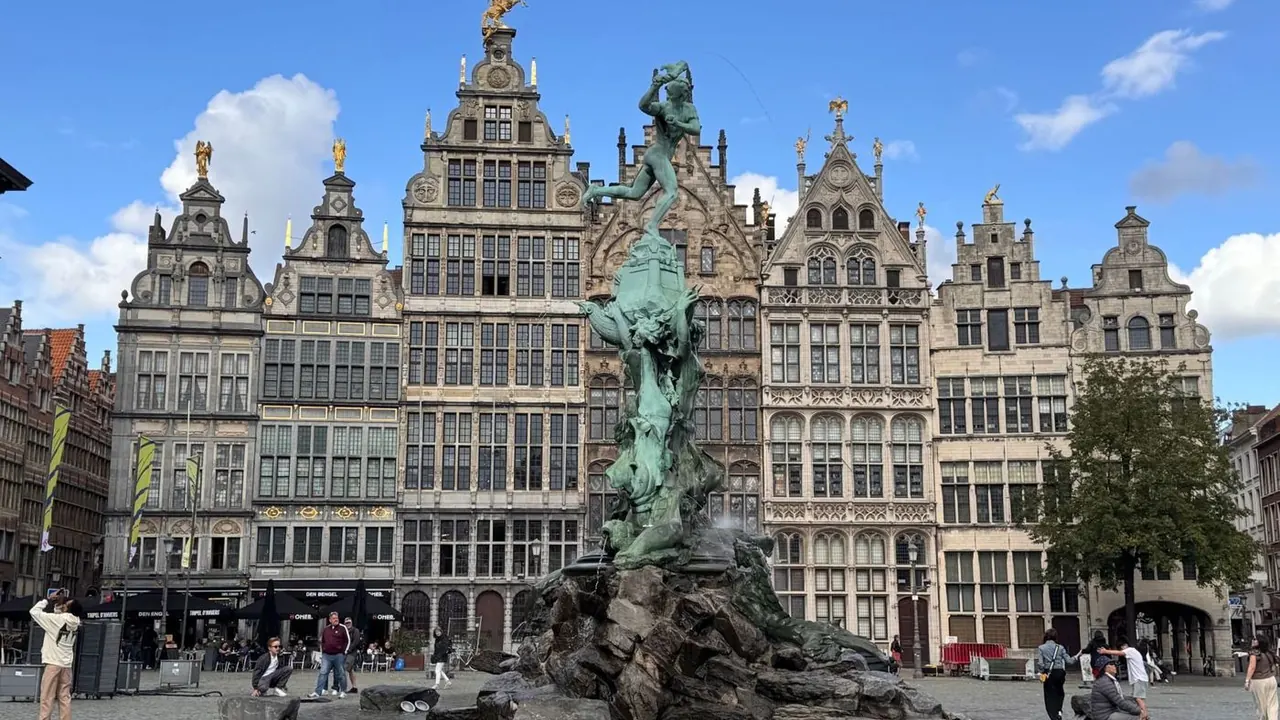
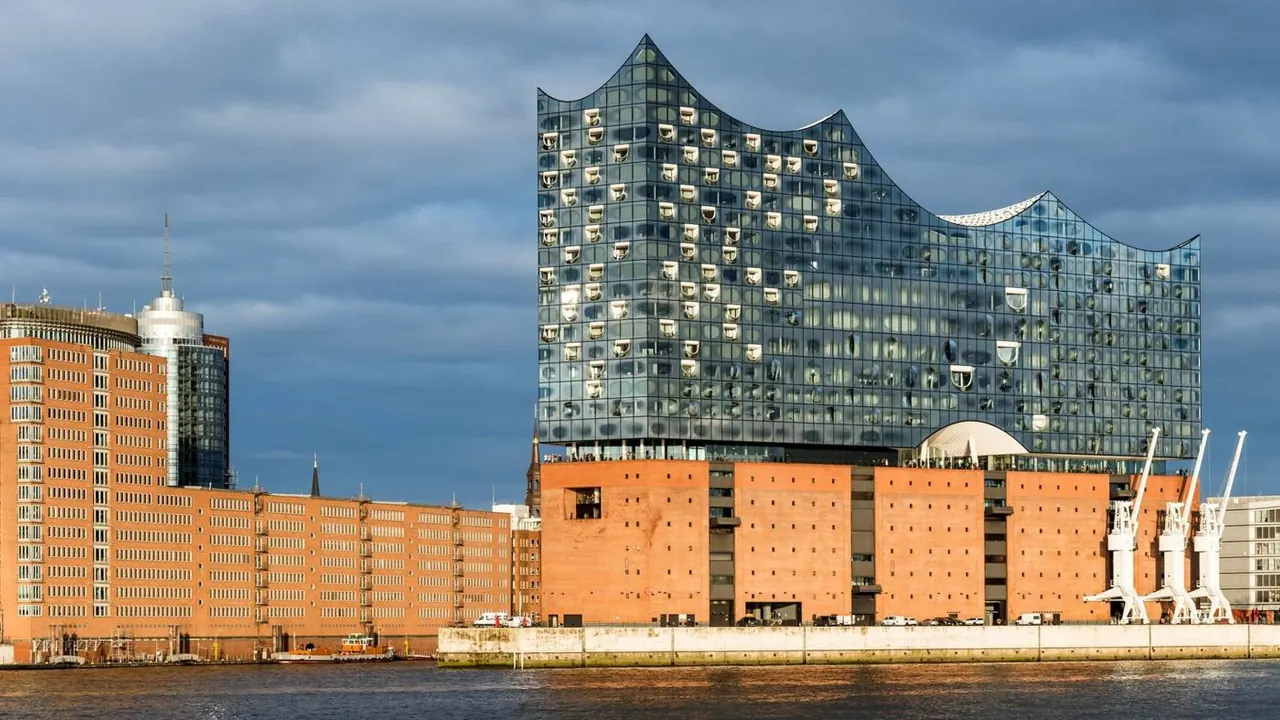
Photos: Antwerp by Norbert Jakab, Pexels License; Hamburg by Wolfgang Weiser, Pexels License.
Antwerp or Hamburg?
Our verdict in twelve categories, each scored against the same fixed benchmark cities, and the climate month by month, so you can choose for your trip.
Choose Antwerp for
- day trips
- culture and sights
- food and drink
Antwerp suits a traveller who wants old masters and a dense historic core. Rubens hangs in the cathedral, and the Plantin-Moretus printing house survives intact from the Renaissance. Evenings go to Flemish cooking and Trappist beer in brown cafés, and the boutiques show the city's avant-garde fashion. It is also the better base for seeing more than one city, with Ghent, Bruges, Brussels and Rotterdam all within easy reach by train.
Choose Hamburg for
- live music and the arts
- nightlife
- nature and the outdoors
Hamburg is the stronger pick for anyone whose evenings matter as much as their days. It has the Elbphilharmonie, a leading opera and ballet, big musicals and the late nights of St Pauli. It also works better with children and offers more to do outdoors, with sailing on the Alster, ferries across the Elbe and orchard cycling in the Altes Land. You give up some historic grandeur, since the city reads as harbour districts and waterside walks rather than an intact old town.
Scoreboard
Twelve categories on one fixed scale from 0 to 100. The shaded stretch is the gap between the two.
Your match
Pick a travel style or drag the sliders, and both match scores follow your weighting.
Wins on day trips and culture and sights with your weighting.
Wins on live music and the arts and nightlife with your weighting.
What matters to you?
Category by category
What the scores mean for a trip.
Beaches & swimming
Hamburg comes out a little ahead, mostly because the sea is closer. The Elbe sand at Oevelgoenne and Blankenese is a pleasant place to watch ships at sunset. The Baltic resorts, with their wicker beach chairs, are about an hour away, which makes a swimming day realistic in a warm spell.
Antwerp's Sint-Annastrand is only a riverbank promenade, and reaching the North Sea at Blankenberge or Knokke takes nearly two hours each way. In both cities summer swimming mostly means lakes and outdoor pools on the edge of town.
Food & drink
Antwerp is the better place to eat and drink. Its Flemish cooking, such as stoofvlees, mussels with frites and shrimp croquettes, is a cuisine in its own right. Its beer culture, from the bolleke of local amber ale to long Trappist lists in the brown cafés, is a reason to visit by itself. Het Zuid and Het Eilandje add modern restaurants with a few starred tables.
Hamburg's food is more about snacks and port classics: fish rolls on the piers, Labskaus, Franzbroetchen with coffee from the old roasteries. There is plenty of good food, but few people travel for it.
Culture & sights
Antwerp has the deeper set of sights. Its sixteenth-century wealth survives as a whole: the Gothic cathedral with Rubens inside, the guild houses of the Grote Markt, Rubens's own house and the Plantin-Moretus Museum. Central Station and Zurenborg's Art Nouveau streets add a second layer from the nineteenth century.
Hamburg is about the merchant waterfront rather than a historic core. Its highlights are the red-brick Speicherstadt and the Chilehaus, and the Kunsthalle is strong on Caspar David Friedrich. The war took most of the old town, so you spend your time walking between districts rather than exploring one old centre.
Nightlife
Hamburg is the clear choice for going out. The Reeperbahn is Germany's best-known nightlife strip, and nights there can run until dawn at the harbour. Each district has its own crowd, from the alternative Schanzenviertel to the smarter bars around the Alster.
Antwerp has a serious night out for a city of its size. It has late brown cafés, a house and techno tradition in old warehouses near the docks, and one of the Low Countries' best-known gay scenes. Outside the weekend, though, it is noticeably quieter.
Nature & outdoors
Hamburg has more to do outside, and nearly all of it involves water. You can sail or paddle on the Alster, canoe into the northern canals or walk the Elbe path to the wooded slopes of Blankenese. Cycling through the Altes Land orchards in blossom season and a trip to Lueneburg Heath round it out.
Antwerp's countryside is flat and largely given over to the port. The Kalmthoutse Heide and bike rides along the Scheldt polder dykes are good half days, but they are about all there is.
Day trips
Antwerp is the better base for day trips by a wide margin. Mechelen, Brussels, Leuven and Ghent are all under an hour by train, and Bruges is not much further. Rotterdam, Delft and the Kinderdijk windmills across the Dutch border are within a day's reach too, which puts two countries' worth of historic towns on the doorstep.
Hamburg's day trips are fewer and more spread out, but they are good ones. Luebeck's Hanseatic old town is the standout, followed by the leaning gables of Lueneburg, Bremen's Schnoor quarter and Schwerin's castle on its lake.
Good for families
Hamburg has more to keep children busy. Miniatur Wunderland can fill a rainy day, Hagenbeck shows its animals across moats with no bars, and a harbour outing with a ferry, the museum ships and the old Elbe tunnel is easy to put together. Two theme parks are about an hour away.
Antwerp works well for a shorter stay. The zoo is right beside Central Station, and the MAS rooftop, the trams and the foot tunnel under the Scheldt are free or simple outings. It just runs out of big attractions sooner.
Getting around
Getting around is easy in both, and neither city needs a car. The difference is in how you move. Antwerp is mainly a walking city: almost everything lies within a half-hour stroll of Central Station, with trams and the premetro covering the outer districts and shared bikes for the rest.
Hamburg is more spread out and relies on its U-Bahn and S-Bahn. The bonus is that the harbour ferries run on the same ticket, so getting about doubles as a boat tour. The airport is on the S-Bahn.
Shopping & style
The two are close for shopping but suit different shoppers. Antwerp is the place for designer fashion with an edge. Conceptual Belgian labels from the fashion academy's circle fill the Nationalestraat and Het Zuid, and the diamond quarter, the Kloosterstraat antique shops and the Vrijdagmarkt auctions add a quirkier side.
Hamburg does polished luxury better. Neuer Wall, the covered arcades and the Alsterhaus are the centre of it, while the Karolinenviertel covers vintage and streetwear.
Affordability
Both cities are expensive, and the costs fall in much the same places: sit-down dinners and central hotels. In Antwerp rooms tend to cost less than in Brussels or Amsterdam, and lunch menus, frites stands and a café beer help keep spending down.
Hamburg's room prices jump during trade fairs and summer weekends. It makes up for that with free sights such as the Elbphilharmonie plaza and the Speicherstadt, and with a day ticket that covers the harbour ferries.
Live music & performing arts
Hamburg is the stronger choice here, and it is one of the best reasons to go. The Elbphilharmonie is a hall people travel for, and the Laeiszhalle, the State Opera, the internationally known Hamburg Ballet and two major drama stages sit alongside it. There are also long-running musicals and the St Pauli club circuit where the Beatles once played.
Antwerp has a solid scene that leans to the specialist. Opera Ballet Vlaanderen, contemporary dance at deSingel and early music at AMUZ are the highlights, though most of its theatre is in Dutch.
Wellness & relaxation
Neither city is a spa destination, but Hamburg makes it easier to relax. The art nouveau Holthusenbad and other city baths have large sauna areas you can reach by public transport. Slow boat rides on the Alster and the Japanese garden in Planten un Blomen are close by too.
Antwerp's bigger sauna complexes are out in the suburbs and the countryside, mostly reached by car. In town, relaxing usually means a park bench or a quiet afternoon in a brown café.
When should you go?
Pick your month. The climate figures are measured averages, not a forecast.
Antwerp in July
Hamburg in July
Daytime high, °C
Rainfall in the month, mm
Where the figures come from
Antwerp has no rain gauge within 25 km of the centre, so its rainfall comes from a gridded climate dataset read at the city rather than from a gauge further away.
Antwerp's sunshine is measured 47 km from the centre, at Uccle.
Temperature and rainfall are climate normals, averaged over the years shown. Antwerp: 1991-2020 normals, Antwerpen / Deurne (5.2 km from centre). Hamburg: 1991-2020 normals, Hamburg Airport (9.3 km from centre).
Both cities have the same short summer. June to August are the warm months, reaching about 23°C, and May and September are mild and good for walking. Neither is ever hot enough to make sightseeing uncomfortable, and neither gets warm enough for a beach trip. Antwerp's late summer is the damper of the two, with August one of its wetter months at around 78mm, while Hamburg gets clearly more sunshine in May, July and August.
Winter is where they differ. Antwerp stays a few degrees milder, around 7°C in January against Hamburg's 4°C, and Hamburg's December and January days get very little sun. Rain falls all year in both, so pack an umbrella whatever the month. For a city break outside high summer, April is the driest month in both cities, and May adds long, bright days without the summer showers.
Which traveller are you?
On a culture and arts trip, Antwerp is the richer choice for sights. Rubens's altarpieces, the Royal Museum of Fine Arts and the UNESCO-listed printing house all sit in a compact centre. Hamburg only wins if concerts and opera are the main reason for going.
For a food and nightlife trip, Antwerp eats and drinks better, with its Flemish cooking and Trappist beer in the brown cafés. If the evenings matter more, choose Hamburg: St Pauli and the Schanzenviertel's pavement bars keep going until dawn.
On a family trip with children, Antwerp suits a long weekend with toddlers, because its flat centre is easy with a pushchair. Hamburg is the better choice for a full week with school-age children, with more big days out and more to do when it rains.
Before you go
| Measure | Antwerp | Hamburg |
|---|---|---|
| Official language | French, German, Dutch | German |
| Currency | Euro (EUR) | Euro (EUR) |
| Sockets | CE230 V, 50 Hz | CF230 V, 50 Hz |
| Driving side | Right | Right |
| Time zone | UTC+1, UTC+2 in summer | UTC+1, UTC+2 in summer |
| Emergency number | 112 | 112 |
| Elevation | 7 m | 6 m |
| Main airport | Brussels Airport (BRU)36 km from centre191 non-stop destinations | Hamburg Helmut Schmidt Airport (HAM)9 km from centre120 non-stop destinations |
| Public holidays this year | 14 days | 10 days |
By the numbers
| Measure | Antwerp | Hamburg |
|---|---|---|
| City population | 529,247 | 1,869,473 |
| People per km² | 2,542 | 2,476 |
| Museums within 10 km | 38 | 77 |
| UNESCO World Heritage sites within 50 km | 9 | 1 |
Where else could you go?
Every comparison below shares a destination with this one, so you can follow Antwerp or Hamburg somewhere new.