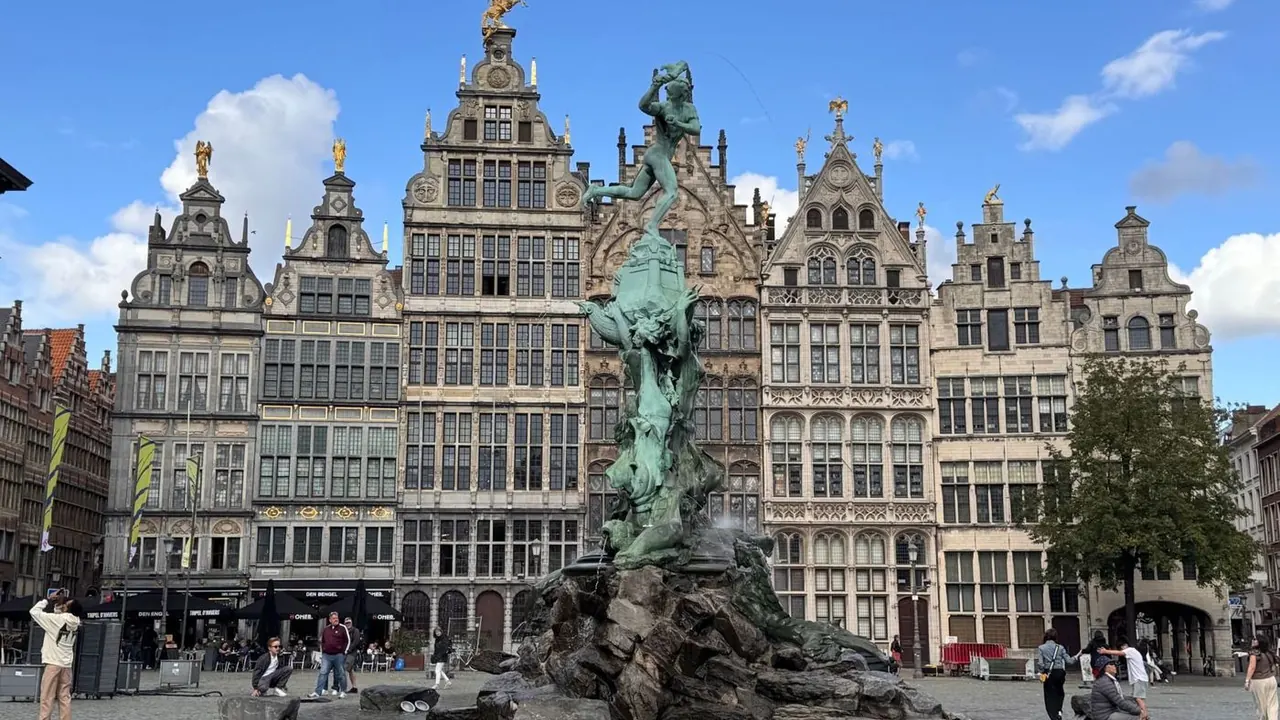
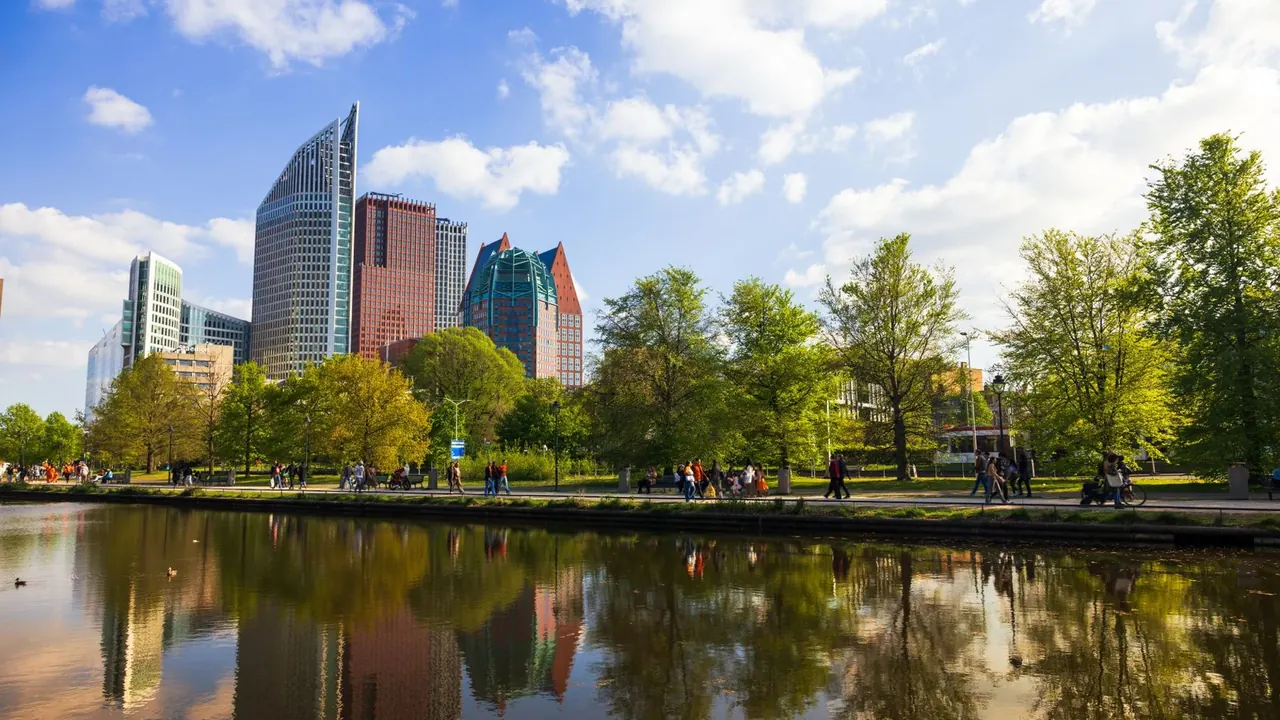
Photos: Antwerp by Norbert Jakab, Pexels License; The Hague by Bráulio jardim, Pexels License.
Antwerp or The Hague?
Our verdict in twelve categories, each scored against the same fixed benchmark cities, and the climate month by month, so you can choose for your trip.
Choose Antwerp for
- nightlife
- shopping
- food and drink
Antwerp is the better pick for a city trip built around eating, drinking, art and shopping. Rubens and the Flemish Baroque, the designer boutiques of the fashion district, beer-focused brown cafés and bars with no fixed closing time give it more to do after dark and more to fill the days indoors. It suits couples and friends who want a lively, compact city with good restaurants and a proper night out.
Choose The Hague for
- beaches
- nature and the outdoors
- wellness
The Hague suits a calmer trip with the sea close at hand. Scheveningen's sand is a tram ride from the Mauritshuis, the dunes and old forest start at the city's edge, and Madurodam, the aquarium and big sauna complexes make it easier for families and for anyone who wants to slow down. Choose it if beach walks, cycling on dune paths and quiet evenings matter more than late bars.
Scoreboard
Twelve categories on one fixed scale from 0 to 100. The shaded stretch is the gap between the two.
Your match
Pick a travel style or drag the sliders, and both match scores follow your weighting.
Too close to call, 1 point apart
Wins on nightlife and shopping with your weighting.
Wins on beaches and nature and the outdoors with your weighting.
What matters to you?
Category by category
What the scores mean for a trip.
Beaches & swimming
The Hague has a real beach and Antwerp does not. Scheveningen's long, wide sands sit about a quarter of an hour from the centre by tram, with pavilions and deckchairs in summer and quieter Kijkduin backed by dunes further south.
In Antwerp the closest thing is Sint-Annastrand on the tidal Scheldt, which is for strolling, not swimming, and the coast at Knokke or Blankenberge means a long return trip by train. Either way the North Sea stays cold, so The Hague's edge is a beach afternoon on your doorstep rather than a swimming vacation.
Food & drink
Antwerp eats and drinks better across the board. Flemish dishes such as beer-braised stoofvlees, mussels and shrimp croquettes, frites from a proper frietkot and a bolleke of the local amber ale are the everyday pleasures, and Het Zuid and Het Eilandje add ambitious modern kitchens with a few starred tables.
The Hague's strength is narrower but distinctive: Indonesian cooking, from a full rijsttafel to quick plates of rendang and sate, is unusually good thanks to the city's long ties with the former Dutch East Indies. Beyond that and the herring carts and harbour fish stalls of Scheveningen, meals are pleasant rather than a reason to come.
Culture & sights
Antwerp has the richer set of sights. The Gothic cathedral with its Rubens altarpieces, the painter's own house, the UNESCO-listed Plantin-Moretus printing house and a major fine arts collection make a strong Flemish Baroque core, with Central Station, Zurenborg's Art Nouveau and the MAS adding later layers.
The Hague is more stately and more concentrated. The Mauritshuis, with Vermeer's Girl with a Pearl Earring, is a world-class small museum beside the medieval Binnenhof, and the Peace Palace, the Mondrians at the Kunstmuseum, Escher and Panorama Mesdag round it out. Both fill two or three days, but Antwerp's are more varied and more grand.
Nightlife
Antwerp goes out much later and harder. Belgian bars keep no fixed closing time, the city has a long house and techno tradition in old warehouses near the docks and one of the Low Countries' best-known gay scenes, and Het Zuid adds cocktail and wine bars.
The Hague is a place for an after-work drink on the Plein's terraces, a weekend round on the Grote Markt and summer sundowners at the Scheveningen beach pavilions. Clubbing is thin, and people wanting a big night take the train to Rotterdam or Amsterdam.
Nature & outdoors
The Hague has far more open country within easy reach. The dunes of Meijendel and the Westduinpark run along its shore, the old Haagse Bos forest reaches nearly into the centre, and the coast gives beach walks, dune cycling towards the bulb fields and kitesurfing when the wind is up.
Antwerp's surroundings are flat and taken up largely by the port, so green space means city parks such as Rivierenhof and the Stadspark. The Kalmthoutse Heide heathland and the dyke rides through the Scheldt polders are worth a cycle, but they take an effort to reach.
Day trips
Both are excellent bases, and the difference is the region they open up. Antwerp gives the Flemish art cities: Mechelen on the doorstep, Ghent with its Van Eyck altarpiece, Brussels, Leuven and Bruges, plus Rotterdam and even Delft and Kinderdijk across the border.
The Hague's neighbours are closer still. Delft and Leiden are about a quarter of an hour away, Gouda and Rotterdam barely more, and Amsterdam, Haarlem and Utrecht are under an hour. In spring the Keukenhof gardens and bulb fields are an easy addition that Antwerp cannot match as simply.
Good for families
The Hague is the easier city with children. Madurodam's miniature Netherlands is a classic outing, and a sandy beach with a pier, a sea aquarium, the hands-on Museon and Duinrell's rides and water park just outside town give several days of variety.
Antwerp has a strong opening day, with one of the world's oldest zoos right beside Central Station, then the MAS rooftop, the Steen and the foot tunnel under the Scheldt. Its bigger draws, Bobbejaanland and the coast, need a car or a long train ride.
Getting around
Both are easy without a car, but the layouts differ. Antwerp packs nearly everything into a half-hour walk from Central Station along the Meir to the cathedral and the river, with trams and the underground premetro for Het Eilandje and Zurenborg.
The Hague's historic core is small, yet the beach, Madurodam and the Peace Palace lie further out, so you rely on the trams more. In return it is the better city for cycling, with separate lanes nearly everywhere and dune paths along the coast, where Antwerp's cobbles and tram tracks need more care.
Shopping & style
Antwerp is the stronger shopping city, and fashion is the reason. The legacy of its fashion academy fills the Nationalestraat, Kammenstraat and Het Zuid with conceptual Belgian labels, while the diamond quarter, the Kloosterstraat antique dealers and Belgian chocolate add further reasons to browse.
The Hague is smaller and genteel: antiques, galleries and boutiques on the Denneweg and Noordeinde, the glass-roofed Passage and the usual chains around Grote Marktstraat. Its standout is the huge Haagse Markt, piled with fabrics and spices, rather than anything to match Antwerp's designers.
Affordability
Neither is cheap, and the costs land in different places. In Antwerp hotel rooms tend to cost less than in nearby capitals, but sit-down dinners follow high Belgian prices, so frites, café beers and set lunches are how you save.
In The Hague, rooms are often easier to find at fair prices at weekends, when business travellers leave, though Scheveningen's seafront charges more in summer. Indonesian and Surinamese eateries and picnics from the Haagse Markt keep food spending down well.
Live music & performing arts
The two are evenly matched, but in different art forms. Antwerp has the opera: Opera Ballet Vlaanderen in the historic house on the Frankrijklei, the Antwerp Symphony Orchestra beside Central Station, adventurous contemporary work at deSingel and early music in the Baroque church of AMUZ.
The Hague has no resident opera, but it is home to Nederlands Dans Theater, which makes it the place to see world-class contemporary dance. The Residentie Orkest and the Royal Conservatory cover concerts, and summer brings festivals at the beach. In both cities most theatre is in Dutch.
Wellness & relaxation
The Hague is the better place to unwind. Large Dutch sauna complexes in the city and on its edge are built for whole days of saunas, cold plunges, gardens and massage, where nudity is usually the rule, and the city's quiet embassy streets and early evenings help.
Antwerp has a solid Flemish sauna tradition too, but its big complexes are mostly out in the suburbs and countryside and reached by car, so the realistic choices are hotel spas or an idle afternoon in a park or brown café.
When should you go?
Pick your month. The climate figures are measured averages, not a forecast.
Antwerp in July
The Hague in July
Daytime high, °C
Rainfall in the month, mm
Where the figures come from
Antwerp has no rain gauge within 25 km of the centre, so its rainfall comes from a gridded climate dataset read at the city rather than from a gauge further away.
Antwerp's sunshine is measured 47 km from the centre, at Uccle.
The Hague has no rain gauge within 25 km of the centre, so its rainfall comes from a gridded climate dataset read at the city rather than from a gauge further away.
The Hague's sunshine is measured 60 km from the centre, at De Bilt.
Temperature and rainfall are climate normals, averaged over the years shown. Antwerp: 1991-2020 normals, Antwerpen / Deurne (5.2 km from centre). The Hague: 1991-2020 normals, Valkenburg (13.6 km from centre).
Both cities share the same mild, damp North Sea climate, so June to early September is the comfortable stretch for walking the streets and sitting outdoors. Antwerp is a couple of degrees warmer, reaching 23°C in July and August against 21°C in The Hague, where the sea peaks at only 19°C in August. That means sunbathing on Scheveningen's sand and a brisk dip at most, and none of it on cool, windy days. Winters are grey and chilly in both, with long dark afternoons from November to February.
April is the driest month in each and a good time for sightseeing, with The Hague slightly sunnier through spring and early summer. The rain is spread differently through the year. Antwerp's wettest spells come in July and August, at 78mm, and again in December, while The Hague stays wet from July right through to December, so its autumn is soggier than Antwerp's.
Which traveller are you?
For a food and nightlife trip, Antwerp is the clear choice. Eating and drinking are reasons to come in themselves, and one evening can run from dinner through a brown café to a club, where The Hague's nights wind down early.
On a shopping trip, Antwerp leads because it sells something hard to find elsewhere: Belgian designer fashion with a distinct, conceptual style. The Hague is pleasant for browsing antiques and its big market, but offers little worth travelling to buy.
On a family trip with children, The Hague works better. Its outings for children fill several easy days rather than one, the sand is a short tram ride away, and calm, safe streets make long days with a pushchair simple.
Before you go
| Measure | Antwerp | The Hague |
|---|---|---|
| Official language | French, German, Dutch | Dutch |
| Currency | Euro (EUR) | Euro (EUR) |
| Sockets | CE230 V, 50 Hz | CF230 V, 50 Hz |
| Driving side | Right | Right |
| Time zone | UTC+1, UTC+2 in summer | UTC+1, UTC+2 in summer |
| Emergency number | 112 | 112 |
| Elevation | 7 m | 1 m |
| Main airport | Brussels Airport (BRU)36 km from centre191 non-stop destinations | Rotterdam The Hague Airport (RTM)16 km from centre53 non-stop destinations |
| Public holidays this year | 14 days | 11 days |
By the numbers
| Measure | Antwerp | The Hague |
|---|---|---|
| City population | 529,247 | 548,320 |
| People per km² | 2,542 | 5,589 |
| Museums within 10 km | 38 | 54 |
| UNESCO World Heritage sites within 50 km | 9 | 4 |
| Swim season, months above 21 °C | - | None |
Where else could you go?
Every comparison below shares a destination with this one, so you can follow Antwerp or The Hague somewhere new.