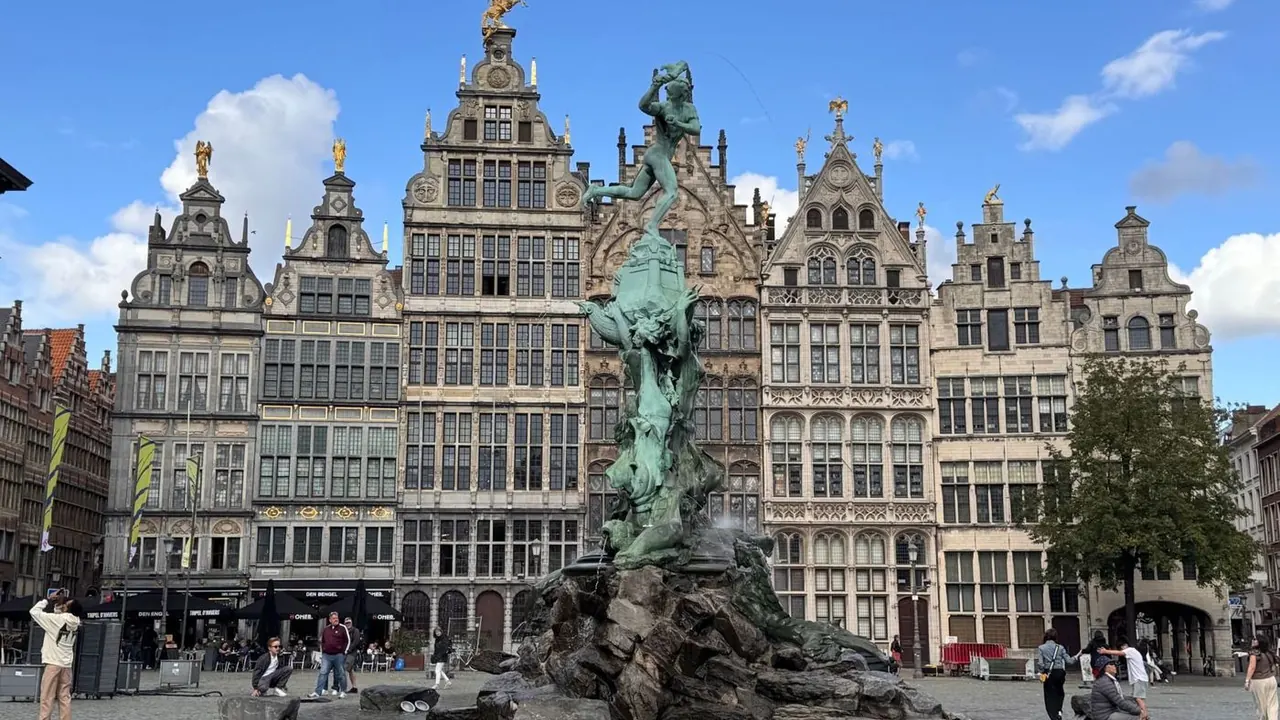
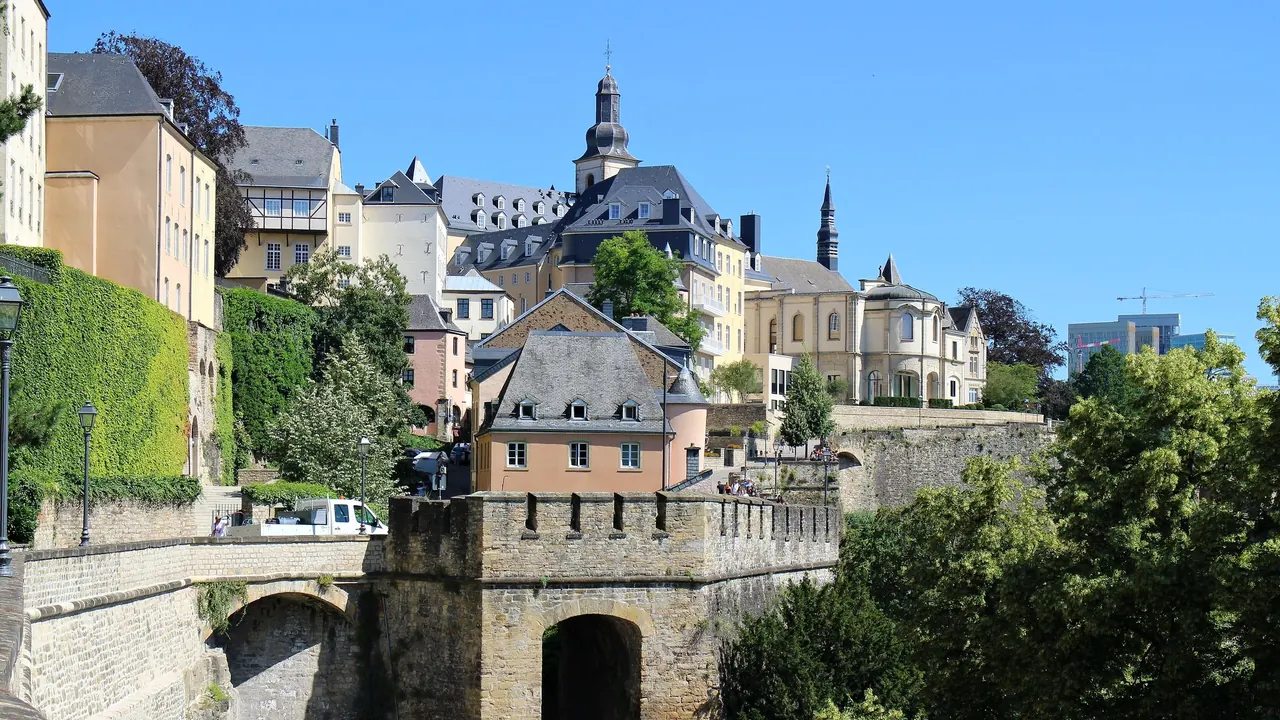
Photos: Antwerp by Norbert Jakab, Pexels License; Luxembourg by Suicasmo, CC BY-SA 4.0, cropped.
Antwerp or Luxembourg?
Our verdict in twelve categories, each scored against the same fixed benchmark cities, and the climate month by month, so you can choose for your trip.
Choose Antwerp for
- shopping
- nightlife
- prices
Antwerp is the better choice for a city stay built on museums, fashion and evenings out. It has Rubens and the Flemish Baroque, designer boutiques, brown cafés pouring Trappist ales and a club scene that runs late. It also sits within easy train reach of Ghent, Bruges, Brussels and Rotterdam. It suits travellers who want plenty to see and do in town, and it costs less than Luxembourg, though neither is a cheap destination.
Choose Luxembourg for
- nature and the outdoors
- wellness
- getting around
Luxembourg suits a quieter, greener trip. The fortress city sits above wooded gorges, the Müllerthal and the Ardennes are close, and there are Moselle vineyards and a thermal spa at Mondorf-les-Bains. Free public transport makes all of it easy to reach. Choose it for walking, wine and a slower pace, and expect smaller nightlife, less shopping and higher prices.
Scoreboard
Twelve categories on one fixed scale from 0 to 100. The shaded stretch is the gap between the two.
Your match
Pick a travel style or drag the sliders, and both match scores follow your weighting.
Wins on shopping and nightlife with your weighting.
Wins on nature and the outdoors and wellness with your weighting.
What matters to you?
Category by category
What the scores mean for a trip.
Beaches & swimming
Neither city is a place for a beach vacation. In Antwerp, the North Sea coast at Blankenberge or Knokke is a long day out by train, and the water stays cool. Luxembourg is landlocked, so swimming there means the Upper Sûre reservoir or the gravel-pit lakes at Remerschen, which are pleasant on a hot afternoon and warmer than the Belgian sea. Both cities treat swimming as an occasional summer outing.
Food & drink
Antwerp has more to eat and drink. Stoofvlees, mussels with frites, shrimp croquettes and the city's own chocolate make for a clear local cuisine. Its beer culture, from the bolleke of amber ale to long Trappist lists, gives every evening a focus. The ambitious cooking is in Het Zuid and Het Eilandje.
Luxembourg mixes French, German, Portuguese and Italian traditions, and its own dishes are few. Its real strength is Moselle Riesling and crémant, along with a fine-dining tier that is surprisingly serious for the city's size. Casual eating is thinner, so it suits a special dinner more than grazing.
Culture & sights
The difference is between great paintings and a great site. Antwerp's sights grew out of Flemish Baroque wealth. Rubens altarpieces hang in the Cathedral of Our Lady, you can visit his house and studio, and the Plantin-Moretus printing house is on the UNESCO list. Add the Royal Museum of Fine Arts, the MAS and Zurenborg's Art Nouveau streets, and you have two or three full days.
In Luxembourg the city itself is the attraction more than any collection. The fortress remains, the Bock casemates and the view from the Corniche down to the Grund are what stay with you. The palace, the cathedral and MUDAM make up a smaller list that fits into two days.
Nightlife
Antwerp is far better for going out. With no fixed closing time, its brown cafés and student streets keep going past midnight, and house and techno nights run in warehouses near the docks. It also has one of the best-known gay scenes in the Low Countries.
Luxembourg's nights are concentrated in the Rives de Clausen, the riverside pubs of the Grund and a few later venues in Hollerich. Thursday and Friday are the busy nights because residents tend to leave at weekends, so it is a terrace-and-crémant place rather than a clubbing one.
Nature & outdoors
Luxembourg is much the better choice for time outdoors. Wooded gorges cut through the city centre, the mossy rock passages of the Müllerthal are half an hour away, and the Ardennes hills and Moselle vineyard paths are close by.
Antwerp's surroundings are flat and dominated by the port. The Kalmthoutse Heide heathland and the polder dykes give good cycling, but there are no hills, and the city's parks are for an afternoon rather than a trip.
Day trips
Both are good bases, and Antwerp has more within reach. Mechelen, Brussels, Leuven and Ghent are each under an hour by train, Bruges is a little further, and Rotterdam, Delft and Kinderdijk bring the Netherlands into range.
Luxembourg's choice crosses three borders: Roman Trier and Metz's Gothic cathedral are each under an hour away. Closer to home, Vianden's castle, Echternach and the Moselle wine villages give it more countryside outings, while Antwerp's day trips are mostly to other cities.
Good for families
With children, Antwerp is the easier city to fill. One of the world's oldest zoos is right beside Central Station, and the MAS rooftop, the Steen castle and the foot tunnel under the Scheldt are all easy wins in a flat centre that works with a pushchair.
Luxembourg is calm and safe, and its lifts and funicular make buggies easy. Beyond the fortress tunnels, the natural history museum and the small Parc Merveilleux, though, little is built for families. It works better for a short stay with older children than for a full week.
Getting around
Luxembourg is the easier of the two, mainly because all public transport is free: the tram to Kirchberg, the buses, and trains out to Vianden, Clervaux and the Moselle. The city is built on several levels, but public lifts and a funicular link the upper town with the valleys.
Antwerp is flatter and very walkable, with most sights within a half-hour walk. Trams and premetro lines, shared bikes and Central Station's fast rail links cover the rest. Neither city needs a car.
Shopping & style
Antwerp is the place to shop. Its fashion academy shaped a generation of avant-garde designers, and their conceptual Belgian labels fill the Nationalestraat, Kammenstraat and Het Zuid. Antiques along the Kloosterstraat and the diamond quarter add range.
Luxembourg's Grand-Rue offers the same international luxury brands found anywhere, and there is little independent design. The local specialities to take home are Villeroy & Boch porcelain and a few bottles of crémant.
Affordability
Neither is cheap, but Antwerp is easier on a mid-range budget. Rooms cost less than in nearby capitals, and café beers, frites and lunch menus keep daily costs reasonable. The compact centre means you walk most places for free.
Luxembourg is one of the more expensive stays in Western Europe, with hotels priced for business travel and restaurant bills well above the norm. Free transport, free museums and wine by the glass help a little. Some visitors save by staying in Trier or Metz and coming in by train.
Live music & performing arts
The two are fairly close, but Antwerp has the edge because it has its own companies with reputations. Opera Ballet Vlaanderen performs in the historic opera house, deSingel programmes contemporary dance, a field where Flanders is known internationally, and AMUZ specialises in early music. Much of the theatre is in Dutch, though.
Luxembourg is built around the Philharmonie, a hall with fine acoustics that touring orchestras visit regularly. The Grand Théâtre stages visiting productions, often in English or French, which makes it more accessible to visitors even though most of the programme comes from elsewhere.
Wellness & relaxation
Luxembourg is the better place to slow down. The thermal spring at Mondorf-les-Bains, half an hour away, has pools, saunas and treatments in a landscaped park, and the quiet evenings and river walks in the Grund help too.
Antwerp has no spring or bathhouse of its own. Its Flemish sauna complexes are mostly out of town and reached by car, so in the city, unwinding usually means a park or a slow afternoon in a brown café.
When should you go?
Pick your month. The climate figures are measured averages, not a forecast.
Antwerp in July
Luxembourg in July
Daytime high, °C
Rainfall in the month, mm
Where the figures come from
Antwerp has no rain gauge within 25 km of the centre, so its rainfall comes from a gridded climate dataset read at the city rather than from a gauge further away.
Antwerp's sunshine is measured 47 km from the centre, at Uccle.
Temperature and rainfall are climate normals, averaged over the years shown. Antwerp: 1991-2020 normals, Antwerpen / Deurne (5.2 km from centre). Luxembourg: 1991-2020 normals, Luxembourg / Luxembourg (6.3 km from centre).
Both cities are at their best from May to September. Summer highs are almost the same, 23°C in Antwerp and 24°C in Luxembourg in July, which is good walking weather but not beach weather in either. Luxembourg gets noticeably more sun through the summer, around 258 hours in July. That makes it the brighter choice for hiking in the Müllerthal or cycling along the Moselle. Rain is spread evenly through the year in both, and Antwerp's wettest stretch comes in summer and late autumn.
Winter is colder inland. Luxembourg's January high of 4°C is a few degrees below Antwerp's, and both get very little winter sun. Autumn favours Luxembourg if you want to be outdoors, because the forests turn and the grape harvest begins. In Antwerp, the cold months suit museums, cafés and indoor plans.
Which traveller are you?
For a food and nightlife trip, Antwerp lets you plan whole evenings on foot: stoofvlees and a bolleke for dinner, a brown café until late, then a warehouse club near the docks at the weekend. In Luxembourg you would book one serious dinner and turn in early.
On an outdoors trip, Antwerp offers little more than a hired bike and a flat day on the dykes. In Luxembourg you can take free public transport to a different trailhead each morning, walk a day stage through forest and rock, and be back for dinner.
For a shopping trip, bring an empty suitcase to Antwerp. You can spend an afternoon among Belgian designer labels, browse antiques for another and pick up chocolate to take home. In Luxembourg an hour on the Grand-Rue is enough, and crémant is the best buy.
Before you go
| Measure | Antwerp | Luxembourg |
|---|---|---|
| Official language | French, German, Dutch | French, German, Luxembourgish |
| Currency | Euro (EUR) | Euro (EUR) |
| Sockets | CE230 V, 50 Hz | CF230 V, 50 Hz |
| Driving side | Right | Right |
| Time zone | UTC+1, UTC+2 in summer | UTC+1, UTC+2 in summer |
| Emergency number | 112 | 112 |
| Elevation | 7 m | 300 m |
| Main airport | Brussels Airport (BRU)36 km from centre191 non-stop destinations | Luxembourg-Findel International Airport (LUX)6 km from centre115 non-stop destinations |
| Public holidays this year | 14 days | 12 days |
By the numbers
| Measure | Antwerp | Luxembourg |
|---|---|---|
| City population | 529,247 | 137,678 |
| People per km² | 2,542 | 2,663 |
| Museums within 10 km | 37 | 19 |
| UNESCO World Heritage sites within 50 km | 9 | 4 |
Where else could you go?
Every comparison below shares a destination with this one, so you can follow Antwerp or Luxembourg somewhere new.
- Brusselsvs Antwerp
- Ghentvs Antwerp
- Rotterdamvs Antwerp
- Brugesvs Antwerp
- The Haguevs Antwerp
- Maastrichtvs Antwerp