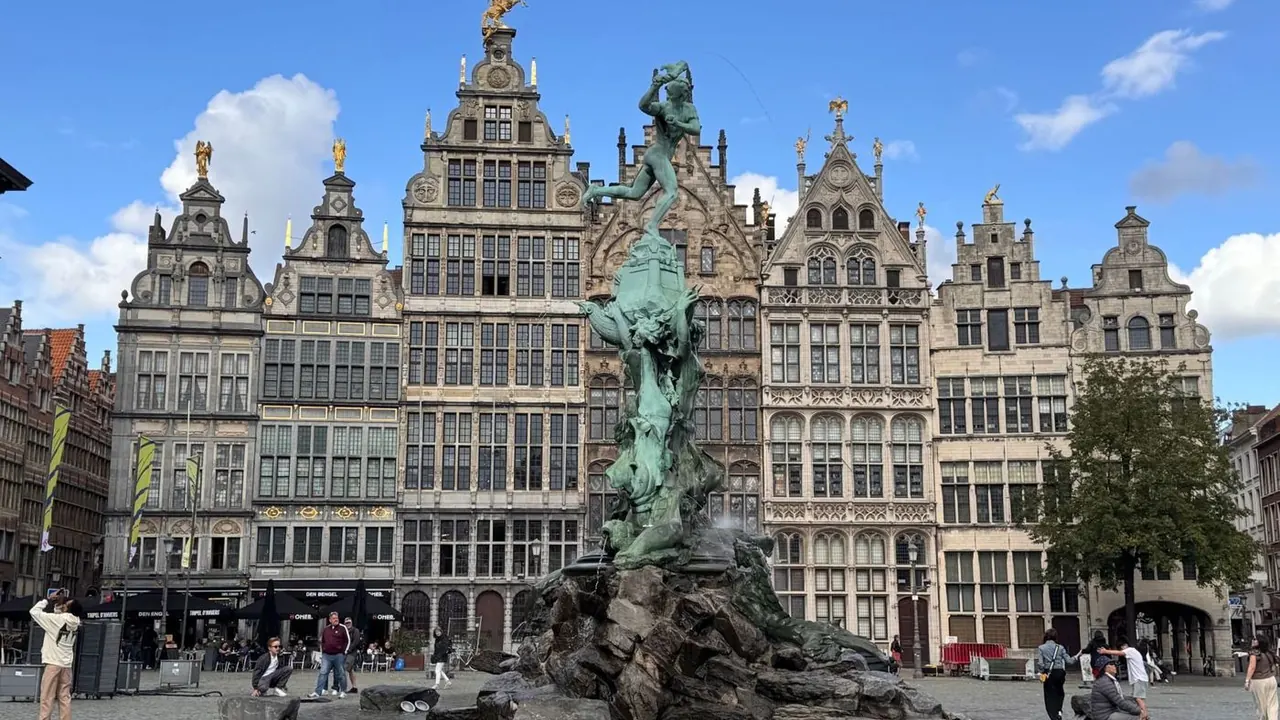
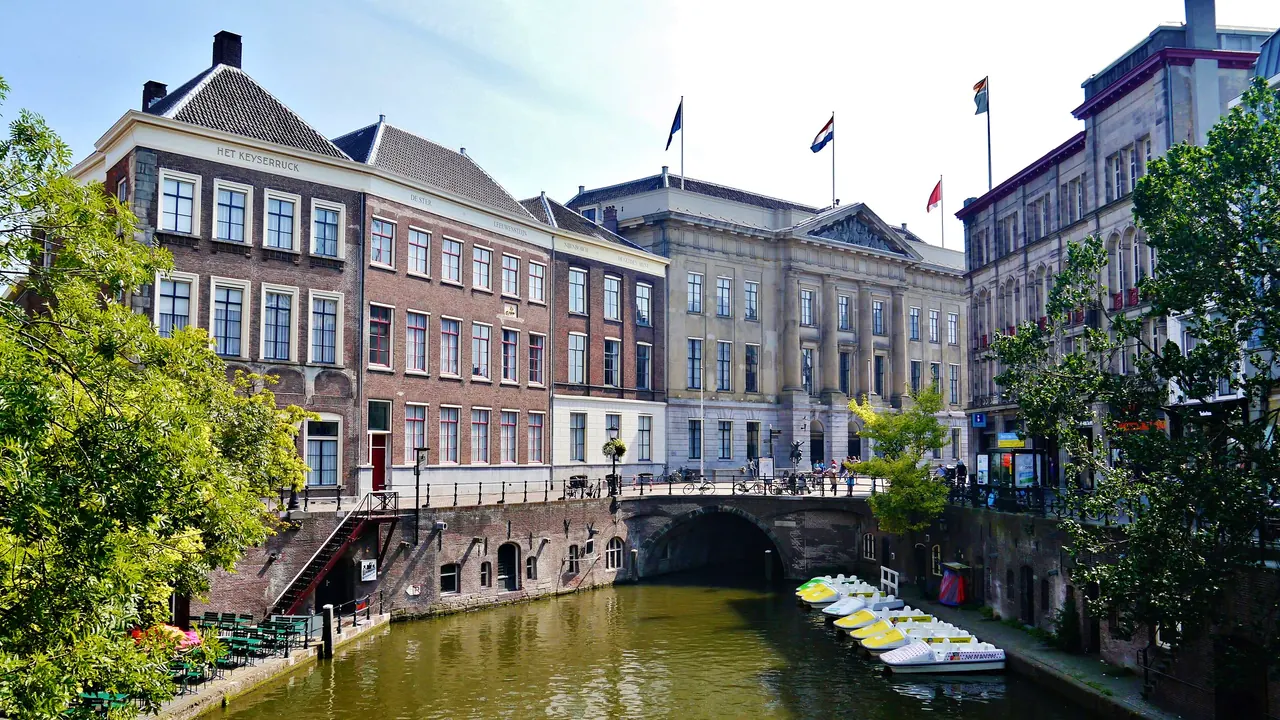
Photos: Antwerp by Norbert Jakab, Pexels License; Utrecht by Zairon, CC BY-SA 4.0, cropped.
Antwerp or Utrecht?
Our verdict in twelve categories, each scored against the same fixed benchmark cities, and the climate month by month, so you can choose for your trip.
Choose Antwerp for
- food and drink
- shopping
- culture and sights
Antwerp is the better pick for travellers who want a city with weight to it. It has Rubens altarpieces in the cathedral, the Plantin-Moretus printing house and a fine arts museum running from the Flemish primitives to Ensor. It also has a serious food and beer culture, fashion boutiques shaped by its famous academy, and bars and clubs that stay open late. It suits a few rich, urban days of art, eating and going out.
Choose Utrecht for
- nature and the outdoors
- wellness
- getting around
Utrecht rewards those who want an easy, gentle stay with the whole of the Netherlands on the doorstep. The station sits beside a compact medieval centre, the canal wharves make for calm evenings by the water, and bikes take you out to the Vecht estates and the wooded Heuvelrug. It is the more relaxed base for families, cyclists and anyone happy to trade a little depth for an unhurried pace.
Scoreboard
Twelve categories on one fixed scale from 0 to 100. The shaded stretch is the gap between the two.
Your match
Pick a travel style or drag the sliders, and both match scores follow your weighting.
Too close to call, 2 points apart
Wins on food and drink and shopping with your weighting.
Wins on nature and the outdoors and wellness with your weighting.
What matters to you?
Category by category
What the scores mean for a trip.
Beaches & swimming
Neither city is a place for a beach trip, and they are equally weak here. Antwerp's riverside sand at Sint-Annastrand is for strolling, since the tidal Scheldt is not for swimming, and the Belgian coast takes the best part of two hours by train. From Utrecht the North Sea at Zandvoort or Scheveningen is a bit closer. Utrecht's lakes, including the Maarsseveense Plassen and the Loosdrecht waters, give it the more natural place for a dip on a hot day.
Food & drink
Antwerp is the stronger place to eat by some distance. It has a real regional kitchen in beer-braised stoofvlees, shrimp croquettes and proper frites, a chocolate tradition of its own and a beer culture built around the bolleke and long abbey lists. Het Zuid and Het Eilandje add design-led restaurants with a few starred tables.
Utrecht offers a good setting more than a cuisine. Eating on the old Oudegracht wharves at water level is memorable, and the student city keeps Indonesian and Surinamese kitchens and casual bistros in Lombok and the Twijnstraat busy. Fine dining is thin, though, and few people would build a trip around it.
Culture & sights
Antwerp has the bigger cultural offer, rooted in its sixteenth-century wealth: Rubens in the Cathedral of Our Lady and in his own house, the UNESCO-listed Plantin-Moretus Museum and a major fine arts collection. Central Station, Art Nouveau Zurenborg, the MAS and the Red Star Line museum stretch the visit well beyond the Baroque.
Utrecht's appeal is the townscape more than the collections. You climb the Dom Tower, look across the square where the nave fell in 1674 and walk the two-level Oudegracht. Its museums are modest by comparison, though the Rietveld Schröder House and the De Stijl holdings make it a fine stop for lovers of modern design.
Nightlife
Antwerp goes out harder. Belgian bars keep no fixed closing hour, there is a long-standing house and techno scene in warehouses and railway arches by the docks, and its gay scene is one of the best known in the Low Countries.
Utrecht is livelier midweek than you might expect, because its students fill the Neude, the Janskerkhof and the canal-side terraces most nights. The scene is mostly bars and brown cafés with only a handful of clubs, and for a big night locals head to Amsterdam.
Nature & outdoors
Utrecht has the more inviting countryside. Bike routes run along the Vecht past estates and windmills, the Utrechtse Heuvelrug offers low wooded ridges, heath and sandy forest trails, and the Loosdrecht lakes are good for sailing and canoeing.
Around Antwerp the land is flatter, more built up and dominated by the port to the north. The Kalmthoutse Heide heathland and the dyke rides through the Scheldt polders are worth a day, but the outdoors is a side note here.
Day trips
Both are superb bases for day trips, and the difference is which country you mostly see. From Antwerp the reach is Flemish: Mechelen, Brussels, Leuven, Ghent with its Van Eyck altarpiece and Bruges, plus Lier for a half day, with Rotterdam and Breda across the border.
Utrecht puts the Dutch heartland on the doorstep. Amsterdam is under half an hour away, The Hague, Leiden, Haarlem and Gouda are easy, and Kasteel de Haar, Naarden and the Kröller-Müller Museum lie in other directions. Delft and Kinderdijk can be reached from either city.
Good for families
With children the two are roughly level, and the attractions differ in kind. Antwerp's historic zoo sits beside Central Station, and the Steen castle, the MAS rooftop and the foot tunnel under the Scheldt make cheap, easy outings.
Utrecht has the Railway Museum, one of the country's best for children, and the Miffy museum for toddlers, with Kasteel de Haar as a fairy-tale day out. Its centre feels a touch calmer, though the steady flow of bikes needs watching with small children.
Getting around
Utrecht is the easier city to get around. Its huge station sits right on the edge of the old town, so the Dom, the canals and even the Railway Museum are a short, flat walk away, and trains, trams and buses share one tap-in card.
Antwerp is also walkable, but the sights spread along a half-hour line from the station via the Meir to the river and Het Zuid. Trams and the premetro fill the gaps, and cobbles and tram tracks make cycling a little less carefree.
Shopping & style
Antwerp is the stronger choice for shopping, thanks to fashion. Its academy's avant-garde designers shaped the boutiques of the Nationalestraat, Kammenstraat and Het Zuid. Add the Meir high street, the diamond quarter, the Kloosterstraat antiques trade and the Vrijdagmarkt auctions, and the range is unusually wide.
Utrecht does charm on a smaller scale, with independent design, book and homeware shops along the wharves and the Twijnstraat. Its markets are a pleasure, including the flowers on the Janskerkhof. Dedicated fashion shoppers will find more in Antwerp.
Affordability
Neither is a budget city, and the costs fall in different places. In Antwerp rooms tend to undercut the nearby capitals, but sit-down dinners follow high Belgian prices, so lunch menus, frites and a café beer are where to save.
In Utrecht the bed is the main expense, as central hotels are few and weekends dearer. Day to day it is gentler, with modest museum fees and plenty of cheap student lunch spots. In both, a compact centre keeps transport costs close to nothing.
Live music & performing arts
The two are evenly matched, with different strengths. Antwerp has opera and ballet in its historic house on the Frankrijklei, its symphony orchestra in the Queen Elisabeth Hall, and deSingel for the contemporary dance Flanders is known for.
Utrecht has no opera house, but TivoliVredenburg stacks classical, pop and jazz under one roof, and the Festival Oude Muziek is a major draw. Early-music lovers are well served in both, since Antwerp has AMUZ. In both cities most theatre is in Dutch.
Wellness & relaxation
Utrecht is the slightly better place to slow down, mostly because of its pace. Evenings on the canal wharves after the day-trippers leave and the quiet Pandhof cloister garden by the Dom make unwinding easy, and the sauna complexes in the green belt can be reached by bus.
Antwerp is more about museums, shops and tables than rest. Its large sauna centres mostly need a car, so relaxing here usually means a park or a long sit in a brown café.
When should you go?
Pick your month. The climate figures are measured averages, not a forecast.
Antwerp in July
Utrecht in July
Daytime high, °C
Rainfall in the month, mm
Where the figures come from
Antwerp has no rain gauge within 25 km of the centre, so its rainfall comes from a gridded climate dataset read at the city rather than from a gauge further away.
Antwerp's sunshine is measured 47 km from the centre, at Uccle.
Temperature and rainfall are climate normals, averaged over the years shown. Antwerp: 1991-2020 normals, Antwerpen / Deurne (5.2 km from centre). Utrecht: 1991-2020 normals, De Bilt (4.3 km from centre).
The two cities share almost the same climate, so timing barely tips the choice. Both are best from May to September, when afternoons reach about 23°C at the peak and the long, brighter days suit café terraces, canal walks and cycling. Utrecht has slightly more sunshine in spring. April is the driest month in both, at around 42mm, which makes it a good time for city walking before the summer showers arrive. Neither is ever too hot for exploring on foot.
Rain is spread across the year. In Antwerp it builds through late autumn to a December peak. Utrecht gets as much in midsummer as in winter, around 85mm in July. From December to February highs hover near 7°C, the days are short and grey, and both cities are better for museums than for long outdoor days. The North Sea within reach of Utrecht only warms to about 19°C in August, so a sea swim is a brief summer bonus at best.
Which traveller are you?
For a food and nightlife trip, Antwerp is the place. An evening can run from a slow Flemish dinner through rounds of Belgian beer to a club near the docks, all on foot. Utrecht's nights are smaller, mostly student drinks by the canal.
On a shopping trip, Antwerp gives you more to hunt for: Belgian designer clothes you will not find at home, antiques and interiors, and chocolate to carry back. Utrecht suits a gentler afternoon of browsing small shops and markets.
On an outdoors trip, Utrecht is the better base. A bike hired at the station soon takes you out into open countryside and woodland, and a summer day can end on a lake. Around Antwerp, getting outside mostly means a park or one heathland outing.
Before you go
| Measure | Antwerp | Utrecht |
|---|---|---|
| Official language | French, German, Dutch | Dutch |
| Currency | Euro (EUR) | Euro (EUR) |
| Sockets | CE230 V, 50 Hz | CF230 V, 50 Hz |
| Driving side | Right | Right |
| Time zone | UTC+1, UTC+2 in summer | UTC+1, UTC+2 in summer |
| Emergency number | 112 | 112 |
| Elevation | 7 m | 5 m |
| Main airport | Brussels Airport (BRU)36 km from centre191 non-stop destinations | Amsterdam Airport Schiphol (AMS)34 km from centre287 non-stop destinations |
| Public holidays this year | 14 days | 11 days |
By the numbers
| Measure | Antwerp | Utrecht |
|---|---|---|
| City population | 529,247 | 359,370 |
| People per km² | 2,542 | 3,619 |
| Museums within 10 km | 38 | 28 |
| UNESCO World Heritage sites within 50 km | 9 | 5 |
| Swim season, months above 21 °C | - | None |
Where else could you go?
Every comparison below shares a destination with this one, so you can follow Antwerp or Utrecht somewhere new.