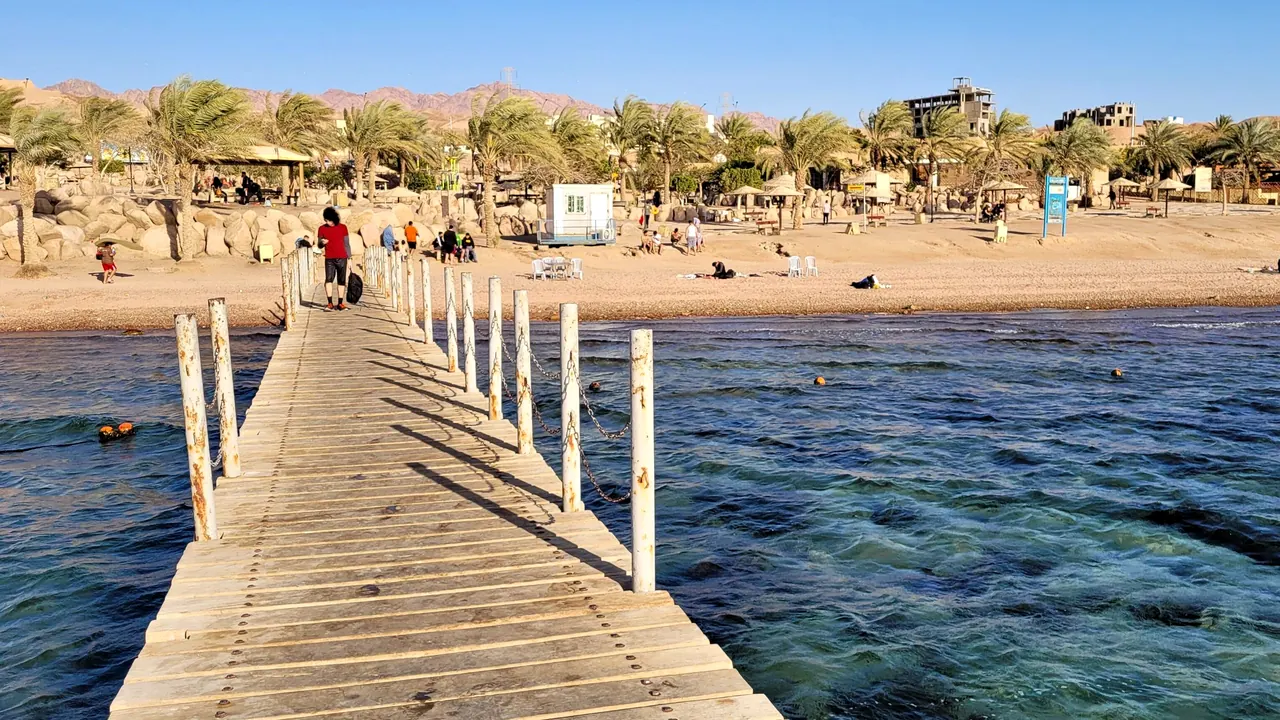
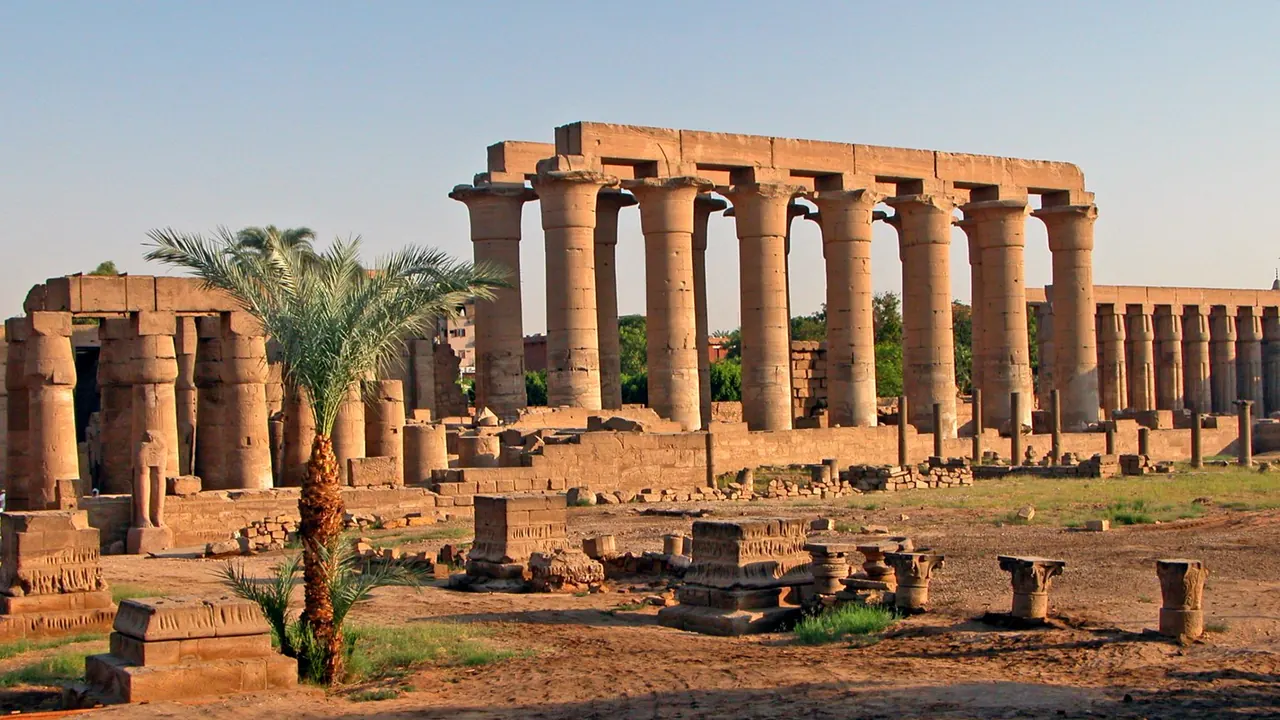
Photos: Aqaba by عباد ديرانية, CC BY-SA 4.0, cropped; Luxor by Dennis G. Jarvis, CC BY-SA 2.0, cropped.
Aqaba or Luxor?
Our verdict in twelve categories, each scored against the same fixed benchmark cities, and the climate month by month, so you can choose for your trip.
Choose Aqaba for
- beaches
- nature and the outdoors
- families
Choose Aqaba for a warm-water vacation built around the reef and the desert. Coral starts a few metres off South Beach, snorkelling and shore diving are easy, and the red sandstone valleys of Wadi Rum are an hour inland. That suits travellers who want to spend their days in the water and outdoors, with resort pools for the children, and Petra within reach for the history the town itself lacks.
Choose Luxor for
- culture and sights
- prices
- day trips
Luxor is for the traveller who comes to see things. Karnak, Luxor Temple and the painted tombs of the Valley of the Kings make it one of the great heritage stops anywhere, and several days barely cover both banks of the Nile. It is also much cheaper to stay and eat, though entry fees add up. There is no beach and little to do beyond the monuments, so it rewards curiosity and early starts rather than lazy days.
Scoreboard
Twelve categories on one fixed scale from 0 to 100. The shaded stretch is the gap between the two.
Your match
Pick a travel style or drag the sliders, and both match scores follow your weighting.
Wins on beaches and nature and the outdoors with your weighting.
Wins on culture and sights and prices with your weighting.
What matters to you?
Category by category
What the scores mean for a trip.
Beaches & swimming
Aqaba is a real swimming destination and Luxor is not. The Gulf of Aqaba is clear, calm and warm all year, and the reefs off South Beach make snorkelling part of every swim. The sand is coarse and the strips are narrow, though, so most visitors use the resort stretches south of town and at Tala Bay.
Luxor's water is the Nile, which is not for swimming, so bathing means the hotel pool. The nearest sea is around Hurghada, about four hours away, which makes it a separate stay rather than an outing.
Food & drink
Neither is a food destination, but Aqaba gives you a little more to work with. At the fish restaurants near the old town you choose the catch for sayadieh, the resorts add a few more polished tables, and tax-free status makes alcohol easy to find and cheap.
Luxor's best eating is Egyptian street food such as koshari, taameya and grilled pigeon, along with home cooking in the West Bank guesthouses. The rooftop restaurants rely on their temple views more than their cooking, and there is hardly any drinking culture.
Culture & sights
This is where Luxor leaves Aqaba far behind. It is built on ancient Thebes, and Karnak's Great Hypostyle Hall, the floodlit Luxor Temple, the Valley of the Kings and Hatshepsut's temple at Deir el-Bahari are all a short ride from one another. Seeing them properly takes days.
Aqaba's own sights, the Mamluk fort, the excavated walls of Ayla and a small museum, fill a morning. Its great monument is Petra, two hours away, so seeing heritage from Aqaba means a day trip rather than time in the town itself.
Nightlife
Both towns go to bed early, but Aqaba has a little more for a drink after dark: resort bars, pubs for divers and expats, and beach clubs on the south coast that sometimes put on DJ nights in the cooler months. In Luxor an evening out is a hotel bar or a rooftop terrace, then tea and shisha in a street café, and most visitors are asleep early before a dawn visit to the tombs or a balloon flight.
Nature & outdoors
Aqaba is by far the stronger of the two for the outdoors. Under water there are shore dives at the Japanese Garden and wrecks laid down as artificial reefs. On land, the sandstone mountains and arches of Wadi Rum are an hour away for jeep trips, climbing and nights in Bedouin camps.
Luxor's nature is gentler and more limited: a felucca at sunset, birdlife on the river islands, cycling through the West Bank fields and the path over the Theban hills to Deir el-Bahari. The dawn balloon flight over the valley is its one big spectacle.
Day trips
Luxor has the longer list of day trips, though every one is a temple. Dendera's painted ceilings, the vivid reliefs at Esna and the complete Ptolemaic temple at Edfu are all within two hours, and Abydos makes a long day out.
Aqaba depends on a single outing, Petra, usually combined with Little Petra. Little else is easy, because Eilat and Sinai both involve border formalities. Aqaba's one trip is famous, but Luxor gives you more days out.
Good for families
Aqaba is the easier choice for families. Calm, shallow water, glass-bottomed boats over the reef, resort pools and kids' clubs give younger children plenty to do, and a night in a Wadi Rum camp is often the highlight for older ones.
Luxor works best for older children who are already fascinated by the pharaohs and will love crawling into tombs and visiting the Mummification Museum. For little ones, the long walks without shade and the persistent touts are hard going, so a hotel with a pool and shade matters even more.
Getting around
Both need transport for much of a stay, but in different ways. Aqaba's centre is small and walkable. The resorts and dive sites strung along the coast road to the south need taxis, shuttles or a hire car, and the good roads make driving to Petra and Wadi Rum simple.
Luxor is divided by the Nile. The East Bank is walkable, if tiring, and a cheap public ferry crosses the river. The West Bank sites are spread out and usually mean hiring a driver for the day, or a bicycle in winter. In Luxor you agree the fare before every ride.
Shopping & style
Neither is a shopping destination, and the markets in both lean on mass-produced souvenirs. What sets Aqaba apart is its tax-free status, which makes perfume, electronics and alcohol cheaper, and it also sells spices and Dead Sea mud and salts. Luxor's most interesting stop is the alabaster workshops on the West Bank, where stone is still carved by hand, but the selling in its souk and outside the sites is much more persistent.
Affordability
Luxor is much the cheaper place to spend a week. Guesthouses, mid-range hotels and local food cost little, the ferry costs almost nothing and even the grand riverside hotels are good value. The big expense is the pile of temple and tomb tickets.
Aqaba is cheap only at street level. A comfortable stay on the resort strip, dive courses, desert tours and the entrance to Petra bring it closer to the cost of a Mediterranean resort, though drinks are cheaper than elsewhere in Jordan.
Live music & performing arts
Neither has live performance worth planning a trip around. Luxor's one regular show is the sound-and-light walk through floodlit Karnak, plus tanoura and belly dance on hotels and cruise boats. In Aqaba the most memorable music is Bedouin song by the fire at a Wadi Rum camp, and for real theatre or concerts in Jordan you have to go to Amman.
Wellness & relaxation
Aqaba is the better place to be looked after. Its old bathhouses in town are where locals go for steam and a scrub, and Luxor has nothing like them. On top of that, the resorts on the south coast run full spas built around mud and salt from the Dead Sea, while Luxor's treatments are limited to a hammam or massage room in a few of the larger hotels by the Nile.
Luxor relaxes you through the shape of the day rather than through treatments. You go out to the sites early, spend the hot afternoon by the pool and finish on the river at dusk. For real quiet, stay in the West Bank guesthouses among the fields, because the traffic and touts of the East Bank soon wear you down. Aqaba's warm, dry winters suit a slower kind of rest, with no dawn starts needed.
When should you go?
Pick your month. The climate figures are measured averages, not a forecast.
Aqaba in July
Luxor in July
Daytime high, °C
Rainfall in the month, mm
Temperature and rainfall are climate normals, averaged over the years shown. Aqaba: 1991-2020 normals, Eilat (5.8 km from centre). Luxor: 1998-2020 (rainfall 1971-2000) normals, Luxor (6.5 km from centre).
Both cities are almost rainless, so the calendar comes down to heat. From November to March both are warm and comfortable for walking, with Aqaba a touch milder. In Luxor these cooler months are the time for long days at the tombs and cycling on the West Bank. By June both are close to 40°C, with Luxor a little hotter at 41°C, and sightseeing shrinks to the early mornings.
For swimming, Aqaba's sea never drops much below 21°C and peaks around 28°C in August, so the Gulf is pleasant all year. The best beach weeks are April and May, and October and November, when the water is warm and the air is short of its summer peak. Aqaba also has long, sunny days in every season. Luxor has no sea, so in any month the only swim is in a hotel pool.
Which traveller are you?
On a beach and sun trip, Aqaba is the clear pick. The Gulf is calm, clear and warm all year, with reefs to snorkel straight off the shore and loungers at Tala Bay. Luxor offers only a hotel pool and a four-hour drive to the coast.
For a culture and arts trip, Luxor wins outright. Karnak, Luxor Temple, the Valley of the Kings and Hatshepsut's terraced temple fill several days, with Dendera and Edfu beyond. Aqaba's fort and ruins take a morning, and its great history lies at Petra.
On a trip on a tight budget, Luxor makes money go further. Guesthouses, local food and the river ferry cost very little, and temple fees are the main expense. Aqaba is cheap in town, but its resorts, dive courses and desert tours push costs up.
Before you go
| Measure | Aqaba | Luxor |
|---|---|---|
| Official language | Arabic | Arabic |
| Currency | Jordanian Dinar (JOD) | Egyptian Pound (EGP) |
| Sockets | BCFGJ230 V, 50 Hz | CF220 V, 50 Hz |
| Driving side | Right | Right |
| Time zone | UTC+3 | UTC+2, UTC+3 in summer |
| Emergency number | 911 | Police 122, ambulance 123, fire 180 |
| Elevation | 6 m | 89 m |
| Main airport | King Hussein International Airport (AQJ)9 km from centre5 non-stop destinations | Luxor International Airport (LXR)7 km from centre31 non-stop destinations |
| Public holidays this year | - | 15 days |
By the numbers
| Measure | Aqaba | Luxor |
|---|---|---|
| City population | 140,000 | 202,232 |
| People per km² | 3,733 | 486 |
| Museums within 10 km | 5 | 4 |
| UNESCO World Heritage sites within 50 km | 2 | 1 |
| Swim season, months above 21 °C | 12 months | - |
Where else could you go?
Every comparison below shares a destination with this one, so you can follow Aqaba or Luxor somewhere new.