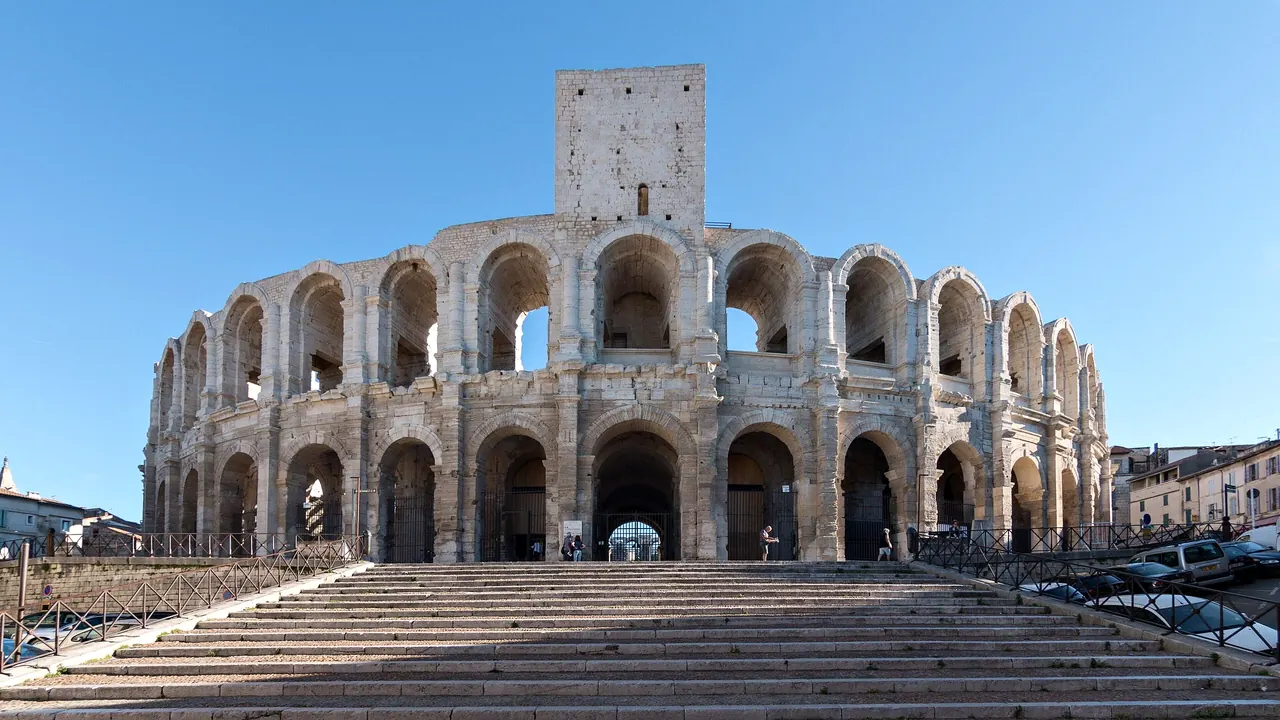
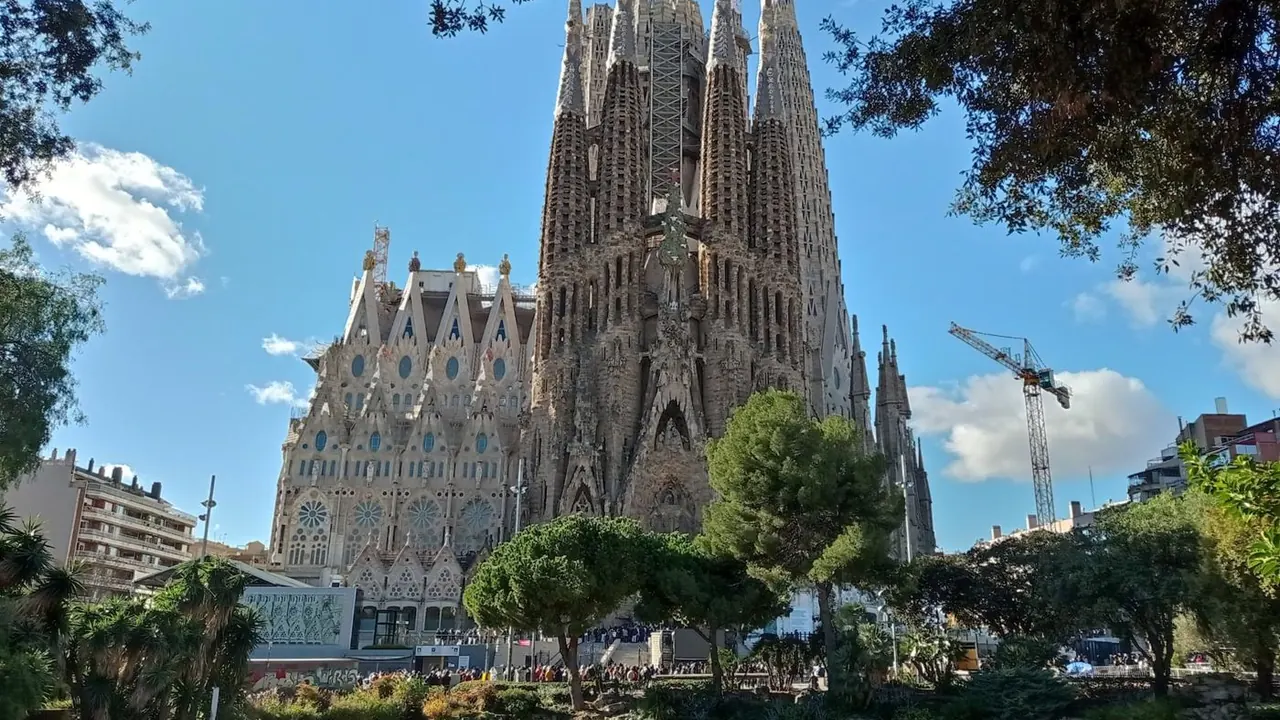
Photos: Arles by Martin Kraft, CC BY-SA 3.0, cropped; Barcelona by Canaan, CC BY-SA 4.0, cropped.
Arles or Barcelona?
Our verdict in twelve categories, each scored against the same fixed benchmark cities, and the climate month by month, so you can choose for your trip.
Choose Arles for
- day trips
- prices
Arles suits an unhurried traveller who wants Roman stones, Romanesque carving and the flat, bird-filled country of the Camargue, and who is happy to hire a car. Its real draw is as a base: Avignon, Nîmes, Les Baux and the Pont du Gard all lie close by, so a week here is spent touring Provence and coming back to a quiet town for dinner on a square.
Choose Barcelona for
- nightlife
- shopping
- live music and the arts
Barcelona is the choice for anyone who wants a big city that does everything well at once. Gaudí and the Gothic Quarter by day, a city beach in the afternoon, Catalan cooking late in the evening and bars and clubs until dawn, all reached on foot or by metro. It also works far better with children, and for opera, concerts and shopping.
Scoreboard
Twelve categories on one fixed scale from 0 to 100. The shaded stretch is the gap between the two.
Your match
Pick a travel style or drag the sliders, and both match scores follow your weighting.
Wins on day trips and prices with your weighting.
Wins on nightlife and shopping with your weighting.
What matters to you?
Category by category
What the scores mean for a trip.
Beaches & swimming
Arles is a river town, and its sea is a drive of about 40km across the Camargue to Saintes-Maries or the empty strands of Piémanson and Beauduc. These beaches are wild, wide and shallow, but they have little shade, mosquitoes and wind, and they make a day out rather than a reason to come.
Barcelona has sand right at the city's edge, from Barceloneta to Mar Bella, with warmer water and the metro to get you there. The catch is the summer crush on those man-made city beaches, though Sitges and the Maresme coast offer more space a short train ride away.
Food & drink
Arles eats well but simply: gardiane bull stew, Camargue rice, tellines and long lunches built around the Saturday market on the Boulevard des Lices. The choice of restaurants is small, and many shut in winter.
Barcelona is in another league for eating out. Catalan cooking has real depth, the neighbourhood markets of Santa Caterina and Sant Antoni feed locals at their counters, and the range runs from workers' set lunches to serious tasting menus. Just keep off the Rambla and get used to dinner after nine.
Culture & sights
Arles packs a remarkable Roman and Romanesque heritage into a few streets: the arena, the antique theatre, the Alyscamps and the cloister of Saint-Trophime, with the Luma tower and the photography festival adding a modern note. Two full days cover it.
Barcelona offers more and fills a week. Gaudí's Sagrada Família, Casa Batlló and Park Güell have no equivalent anywhere, and beneath them sit the Gothic Quarter, Santa Maria del Mar, the Picasso Museum and the Romanesque frescoes of the MNAC.
Nightlife
After a late dinner and a drink on the Place du Forum, Arles goes to bed, and only the Easter and September ferias keep it up late. Barcelona barely starts before midnight: cellar cocktail bars in the Born, scruffy Raval bars, Gràcia's squares on warm nights and electronic club nights running to dawn. For a night out, there is no contest.
Nature & outdoors
Both have fine outdoors on the doorstep, but of very different kinds. Arles opens onto the flat Camargue delta of lagoons, salt flats and reed beds, with flamingos, white horses and black bulls, and the limestone Alpilles for hiking among olive groves.
Barcelona's nature is hills and sea: the wooded Collserola park with the Carretera de les Aigües above the city, paddleboarding and windsurfing off Mar Bella, and Montserrat's pinnacles or the Costa Brava cliff paths further out. In both, summer heat pushes serious walking into spring and autumn.
Day trips
Arles is the better base, because so much lies so close. Avignon and Nîmes are a short train ride away, and Les Baux, Saint-Rémy, Tarascon, Montmajour and the Pont du Gard are all within an hour, with Aigues-Mortes and Aix not much further. A car makes the villages far easier.
Barcelona's outings are fewer and more spread out, but fast trains make them simple without driving: Girona's walled old town, Dalí in Figueres, Roman Tarragona, Montserrat, Sitges and the cava cellars of the Penedès.
Good for families
Barcelona is the far easier city with children, with the aquarium, CosmoCaixa, the zoo, Tibidabo's funfair, beaches by metro and PortAventura an hour south. Children are welcome in restaurants late in the evening, and every square has a playground.
Arles is safe and small, and older children enjoy the arena towers and the dark cryptoporticus, but the best family outings, pony rides and flamingos, mean driving into the Camargue in summer heat and mosquitoes.
Getting around
Arles is easy on foot, with every sight within about fifteen minutes of the next, but beyond town the buses are sparse and the Camargue really needs a car or bike. Barcelona works without one: a flat, walkable centre, a simple metro with shared tickets, and funiculars and cable cars for the uphill sights. There a car is a burden; in Arles, for any stay of several days, it is close to essential.
Shopping & style
In Arles shopping means Provençal fabrics, santons, Camargue salt, gardian shirts and good bookshops, with the Saturday market as the highlight and no fashion to speak of. Barcelona has the Passeig de Gràcia for luxury and Spanish labels, independent designers in the Born, small craft shops in Gràcia and vintage and records in the Raval, which makes it a proper shopping destination.
Affordability
The overall cost is much the same, but the money goes on different things. In Arles, meals and mid-range hotels are at French provincial levels and cheaper than the smart Luberon villages, but the hire car most visitors need adds up, and rooms tighten during the ferias and the photography festival.
In Barcelona the expense is the bed, plus a tourist tax and steep tickets for the Gaudí buildings. Set lunches, tapas bars and transport passes keep the daily spend down.
Live music & performing arts
Barcelona has a full year-round calendar: opera and ballet at the Liceu, concerts under the stained glass of the Palau de la Música, the symphony at L'Auditori, jazz cellars and flamenco, then Sónar, Primavera Sound and the Grec festival in early summer.
Arles comes alive mainly in summer and outdoors, with concerts in the Roman theatre, the Les Suds world music week and the course camarguaise in the arena. The rest of the year its stages are modest.
Wellness & relaxation
Neither city has a bathing tradition, but Barcelona has more you can actually book, with its Arab-style bath houses in the old town and the spas of its larger hotels. Arles offers only a few hotel spas.
What Arles has instead is quiet: siestas, shaded squares, evenings by the Rhône and farmhouse retreats with pools out in the Camargue and Alpilles. Barcelona's calm lies in Gràcia's terraces and the Collserola paths, away from the crowded, late-night centre.
When should you go?
Pick your month. The climate figures are measured averages, not a forecast.
Arles in July
Barcelona in July
Daytime high, °C
Rainfall in the month, mm
Where the figures come from
Arles's temperatures are measured 28 km from the centre, at Nimes / Courbessac.
Arles has no rain gauge within 25 km of the centre, so its rainfall comes from a gridded climate dataset read at the city rather than from a gauge further away.
Temperature and rainfall are climate normals, averaged over the years shown. Arles: 1991-2020 (sunshine 1981-2010) normals, Nimes / Courbessac (28 km from centre). Barcelona: 1991-2020 normals, Barcelona / Aeropuerto (14.4 km from centre).
Arles has the sharper seasons. Midsummer reaches about 31°C, which makes July and August hard work for walking the old town in the afternoon, though these are also the sunniest months by a clear margin. The sea off the Camargue peaks at about 22°C in August. May, June and September are the best balance of warmth and comfort. Autumn brings the rain, heaviest in October at around 105mm, and winter days are cool and short.
Barcelona is gentler at both ends. Summer stays a few degrees below Arles, the sea warms to about 25°C in August and is pleasant for swimming from June to late September, and January still manages around 14°C, mild enough for walking the streets. Its wettest spell is September and October, so late spring and early summer are the safest bet for sightseeing and the beach together.
Which traveller are you?
For a food and nightlife trip, Barcelona wins easily. Its Catalan cooking, market counters and tasting menus far outrun Arles's short list of local dishes, and its late bars and clubs keep going long after Arles has gone quiet for the night.
On a family trip with children, Barcelona is the easier choice. The aquarium, CosmoCaixa, the Tibidabo funfair and beaches a metro ride away fill days without a car, while Arles has few attractions for children and needs driving for its ponies and flamingos.
For birdwatchers and wildlife lovers, Arles has something Barcelona cannot match. The Camargue starts at the edge of town, with flamingos, herons and migrating waders on the lagoons, best explored by bike along the dykes or on horseback in spring and autumn.
Before you go
| Measure | Arles | Barcelona |
|---|---|---|
| Official language | French | Spanish |
| Currency | Euro (EUR) | Euro (EUR) |
| Sockets | CE230 V, 50 Hz | CF230 V, 50 Hz |
| Driving side | Right | Right |
| Time zone | UTC+1, UTC+2 in summer | UTC+1, UTC+2 in summer |
| Emergency number | 112 | 112 |
| Elevation | 0 m | 9 m |
| Main airport | Marseille Provence Airport (MRS)54 km from centre126 non-stop destinations | Josep Tarradellas Barcelona-El Prat Airport (BCN)13 km from centre235 non-stop destinations |
| Public holidays this year | 11 days | 14 days |
By the numbers
| Measure | Arles | Barcelona |
|---|---|---|
| City population | 51,811 | 1,731,649 |
| People per km² | 68 | 17,094 |
| Museums within 10 km | 3 | 95 |
| UNESCO World Heritage sites within 50 km | 5 | 3 |
| Swim season, months above 21 °C | 2 months | 3 months |
Where else could you go?
Every comparison below shares a destination with this one, so you can follow Arles or Barcelona somewhere new.
- Avignonvs Arles
- Montpelliervs Arles
- Aix-en-Provencevs Arles
- Marseillevs Arles
- Gironavs Barcelona
- Andorra la Vellavs Barcelona