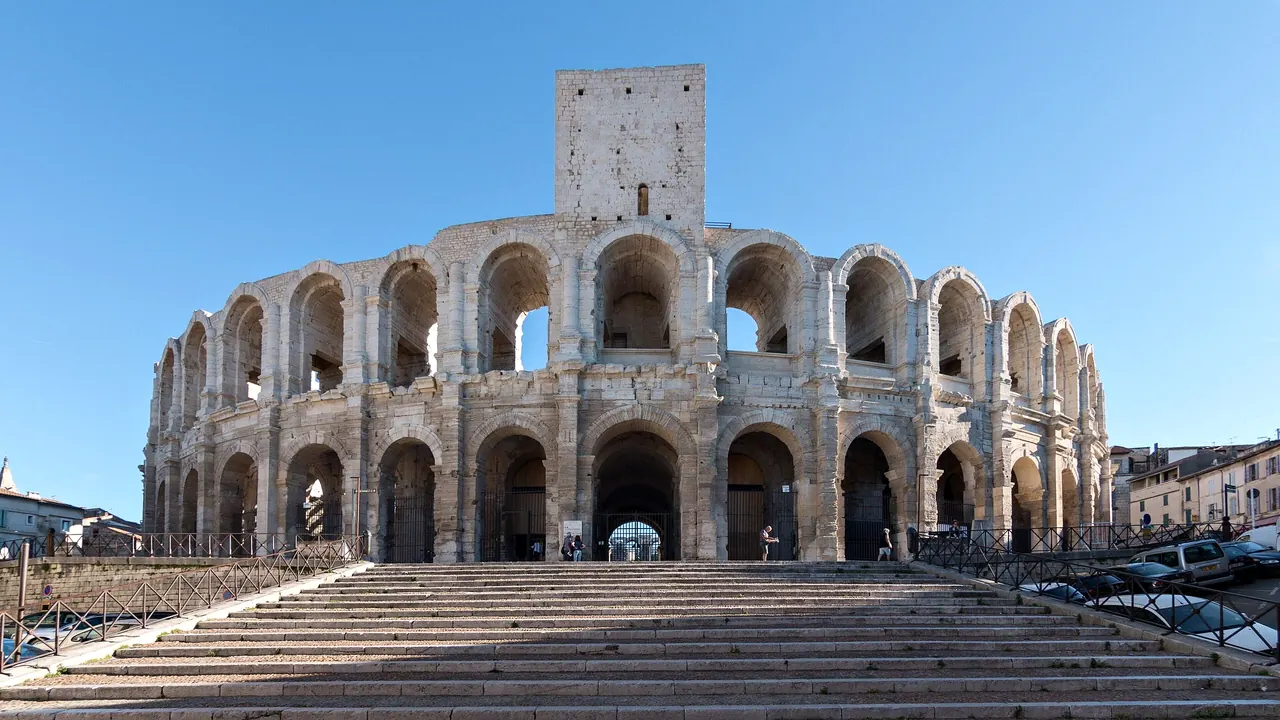
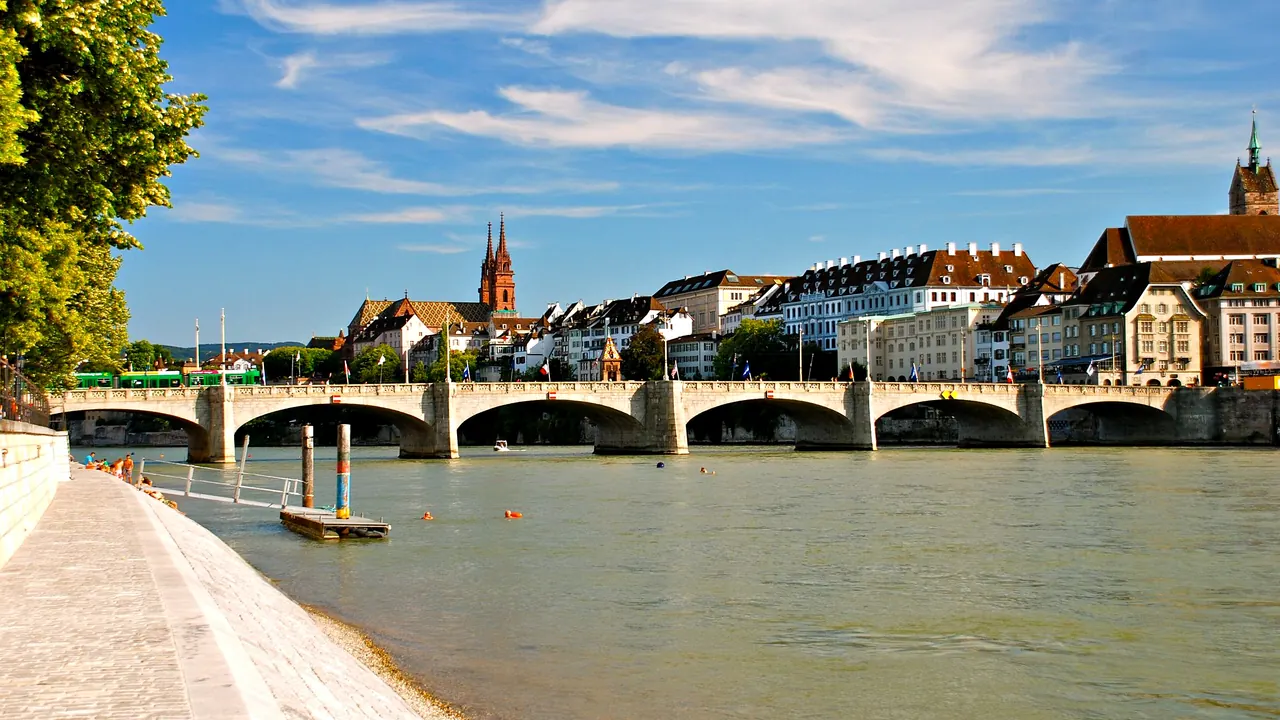
Photos: Arles by Martin Kraft, CC BY-SA 3.0, cropped; Basel by Lucazzitto, CC BY-SA 3.0, cropped.
Arles or Basel?
Our verdict in twelve categories, each scored against the same fixed benchmark cities, and the climate month by month, so you can choose for your trip.
Choose Arles for
- prices
- beaches
- nature and the outdoors
Arles suits travellers who want Roman Provence and the wild delta on the same trip. You get an arena, a theatre and Romanesque cloisters in the old town, flamingos and white horses in the Camargue just outside it, and a sea you can drive to for the day. It is cheaper, sunnier and slower than Basel, and it rewards anyone happy to hire a car and keep long lunches on the schedule.
Choose Basel for
- getting around
- live music and the arts
- wellness
Basel is the better pick for museums, opera and concerts, and for a trip where the logistics look after themselves. Trams and fast trains reach three countries without a car, families have a first-rate zoo and easy outings, and the spa towns are close by. Expect to pay Swiss prices for all of that ease.
Scoreboard
Twelve categories on one fixed scale from 0 to 100. The shaded stretch is the gap between the two.
Your match
Pick a travel style or drag the sliders, and both match scores follow your weighting.
Wins on prices and beaches with your weighting.
Wins on getting around and live music and the arts with your weighting.
What matters to you?
Category by category
What the scores mean for a trip.
Beaches & swimming
Arles gives you a real day at the sea. Across the Camargue are the long, wild strands of Piémanson and Beauduc and the dunes around Saintes-Maries-de-la-Mer, with shallow Mediterranean water that is easy to swim in. You need a car to get there, and there is little shade or service once you arrive.
Basel has no shore at all. What it has is the summer custom of floating down the Rhine past the old town in a swim bag, then drying off on the gravel banks. It is great fun for confident swimmers, but it is a river with a strong current, not a beach.
Food & drink
The two eat about equally well, but in different ways. Arles cooks with its own land: gardiane of Camargue bull, red rice, tellines from the delta beaches and Alpilles olive oil. Its best food moment is the long Saturday market on the Boulevard des Lices.
Basel has few dishes of its own. It borrows tarte flambée from Alsace and wine from Baden, and it has a small, accomplished fine-dining tier. Arles thins out in winter, when many restaurants close, while Basel's Markthalle keeps going all year.
Culture & sights
Roman stone against painting collections: that is the real choice here. Arles keeps its antiquity in the open, with the arena, the antique theatre, the cryptoporticus and the carved cloister of Saint-Trophime all a short walk apart, plus Van Gogh's Alyscamps and the Gehry tower at Luma. Two full days cover it.
Basel keeps its treasures indoors. Holbein hangs in the Kunstmuseum and the Impressionists at the Fondation Beyeler, and the Vitra campus lies over the German border. The red sandstone Münster and the guild-house lanes make a handsome setting, and the museums deserve three or four days.
Nightlife
Neither is a party town, but Basel gives you more to do after dinner. In summer people drink on the riverside steps of Kleinbasel, all year there are bars around the Kaserne, and a few clubs in old harbour buildings play electronic music at weekends. Fasnacht turns the city over to drums and lanterns for three nights in late winter.
Arles goes quiet after a drink on the Place du Forum. The exception is the ferias at Easter and in September, when bodegas fill the streets.
Nature & outdoors
Arles has the more unusual landscape on its doorstep. The Camargue begins at the edge of town, with flamingos in the lagoons, bulls and white horses on the marshes, and dyke paths around the Étang de Vaccarès to explore by bike or on horseback. The Alpilles add olive-grove hiking.
Basel's countryside is wooded hills rather than wetland. The Jura, the Black Forest and the Vosges are all close, with marked trails and some winter walking, and the flat Rhine paths make easy cycling. It suits walkers, while Arles suits wildlife watchers.
Day trips
Both are excellent bases, but they open on to different worlds. From Arles you reach Roman and papal Provence: Avignon and Nîmes by short train rides, plus the Pont du Gard, Les Baux and Aigues-Mortes. The villages are much easier with a car.
Basel opens on to three countries. Colmar and the Alsace wine villages, Freiburg in Germany, and Lucerne and Bern within Switzerland are all about an hour away. Fast trains do nearly all the work, so you can go without a car.
Good for families
Basel is the easier city with children. The Zolli is a short walk from the station, the Natural History Museum and toy museum are there for wet days, and the ferries that drift across the Rhine delight younger children. Europa-Park is a realistic day out.
Arles has the arena towers to climb and the dark cryptoporticus to explore. Its best family moments are outside town, on pony rides at Camargue ranches and among the flamingos. Cobbled streets, summer mosquitoes and the need for a car make it better for older children.
Getting around
Basel is about as easy as a city gets. Green trams cover both banks and cross into France and Germany, hotel guests ride them free, and direct trains leave for three countries.
Arles is easy only inside its old town, where everything is within about fifteen minutes on foot and a free shuttle loops the centre. Trains reach the bigger towns, but the Camargue, the wild beaches and the Alpilles villages realistically need a car or a bike.
Shopping & style
Basel offers a little more. Freie Strasse has Swiss watches, jewellery and chocolatiers, the lanes of Spalenberg hold small design shops, and the Christmas market by the Münster is a pretty one.
Arles is all about the market and Provence: Camargue salt and rice, printed cottons, santons, gardian shirts, and good bookshops and photography prints in a publishing town. Neither is worth a trip for fashion.
Affordability
The gap here is wide. Arles is one of the more reasonable bases in Provence, with provincial French prices for rooms, lunches and market food. Hiring a car and visiting in festival weeks are the main things that push the bill up.
In Basel, hotels, meals, drinks and museum entry all cost what you would expect in Switzerland, and rooms become scarce and costly during the big fairs. Free trams and cheaper meals over the border in France and Germany soften the bill, but they do not close the gap.
Live music & performing arts
Basel has a proper stage scene. Theater Basel puts on bold opera, ballet and drama, the Sinfonieorchester Basel plays at the Stadtcasino, and early-music concerts add something unusual. The season runs from autumn to early summer.
Arles comes alive in exactly the months when Basel goes quiet. In summer there are concerts in the Roman theatre and arena, world music at Les Suds in July, and the course camarguaise, but there is no opera or orchestra.
Wellness & relaxation
Basel is better for a spa day. The saline thermal baths at Rheinfelden are about twenty minutes away, and the German-style mineral pools and saunas of Badenweiler and Bad Krozingen are just over the border. Its quiet Sundays help too.
Arles offers rest rather than treatments: siestas through the heat, shaded squares, and converted mas in the Camargue and the Alpilles with pools. It has no thermal tradition, so it suits anyone who simply wants a slower pace.
When should you go?
Pick your month. The climate figures are measured averages, not a forecast.
Arles in July
Basel in July
Daytime high, °C
Rainfall in the month, mm
Where the figures come from
Arles's temperatures are measured 28 km from the centre, at Nimes / Courbessac.
Arles has no rain gauge within 25 km of the centre, so its rainfall comes from a gridded climate dataset read at the city rather than from a gauge further away.
Temperature and rainfall are climate normals, averaged over the years shown. Arles: 1991-2020 (sunshine 1981-2010) normals, Nimes / Courbessac (28 km from centre). Basel: 1991-2020 (sunshine 1961-1990) normals, Basel / Binningen (1.9 km from centre).
Arles has a long, sunny southern season. May and June are warm and bright without being oppressive, and they are the best months for the Camargue and the old town alike. July and August reach about 31°C. That is too hot for walking the streets at midday, but it is the time for the sea, which warms to around 22°C. Autumn turns wet, with October the rainiest month at about 105mm. Winters are mild and fairly bright, good for seeing the Roman sights without the heat.
Basel is cooler and greener all year. Summer highs sit around 26°C, which is comfortable for walking and warm enough for floating down the Rhine from June to early September. From May to August, though, it is also the wetter of the two, with about 96mm in May. Winters are cold and short of sunshine. Spring and early autumn suit both cities, but if you want heat and dry weather in high summer, Arles has them and Basel does not.
Which traveller are you?
On a trip with a tight budget, Arles goes further. Rooms, lunch menus and market food cost what they do anywhere in provincial France, and a combined pass covers the sights. In Basel nearly everything is priced at Swiss levels.
On a family trip with children, Basel is easier. It has the Zolli, the current-drawn Rhine ferries and trams that take prams without fuss, with Europa-Park within reach. In Arles most outings need a car, and summer brings heat and mosquitoes.
For a relaxing and wellness trip, Basel has the edge. The saline baths at Rheinfelden are twenty minutes away and the mineral spas of southern Baden lie just over the border. Arles offers slow afternoons and farmhouse pools, but it has no bathing tradition.
Before you go
| Measure | Arles | Basel |
|---|---|---|
| Official language | French | French, German, Italian, Romansh |
| Currency | Euro (EUR) | Swiss Franc (CHF) |
| Sockets | CE230 V, 50 Hz | CJ230 V, 50 Hz |
| Driving side | Right | Right |
| Time zone | UTC+1, UTC+2 in summer | UTC+1, UTC+2 in summer |
| Emergency number | 112 | 112 |
| Elevation | 0 m | 247 m |
| Main airport | Marseille Provence Airport (MRS)54 km from centre126 non-stop destinations | EuroAirport Basel–Mulhouse–Freiburg (BSL)7 km from centre112 non-stop destinations |
| Public holidays this year | 11 days | 10 days |
By the numbers
| Measure | Arles | Basel |
|---|---|---|
| City population | 51,811 | 176,329 |
| People per km² | 68 | 7,378 |
| Museums within 10 km | 3 | 61 |
| UNESCO World Heritage sites within 50 km | 5 | 2 |
| Swim season, months above 21 °C | 2 months | - |
Where else could you go?
Every comparison below shares a destination with this one, so you can follow Arles or Basel somewhere new.