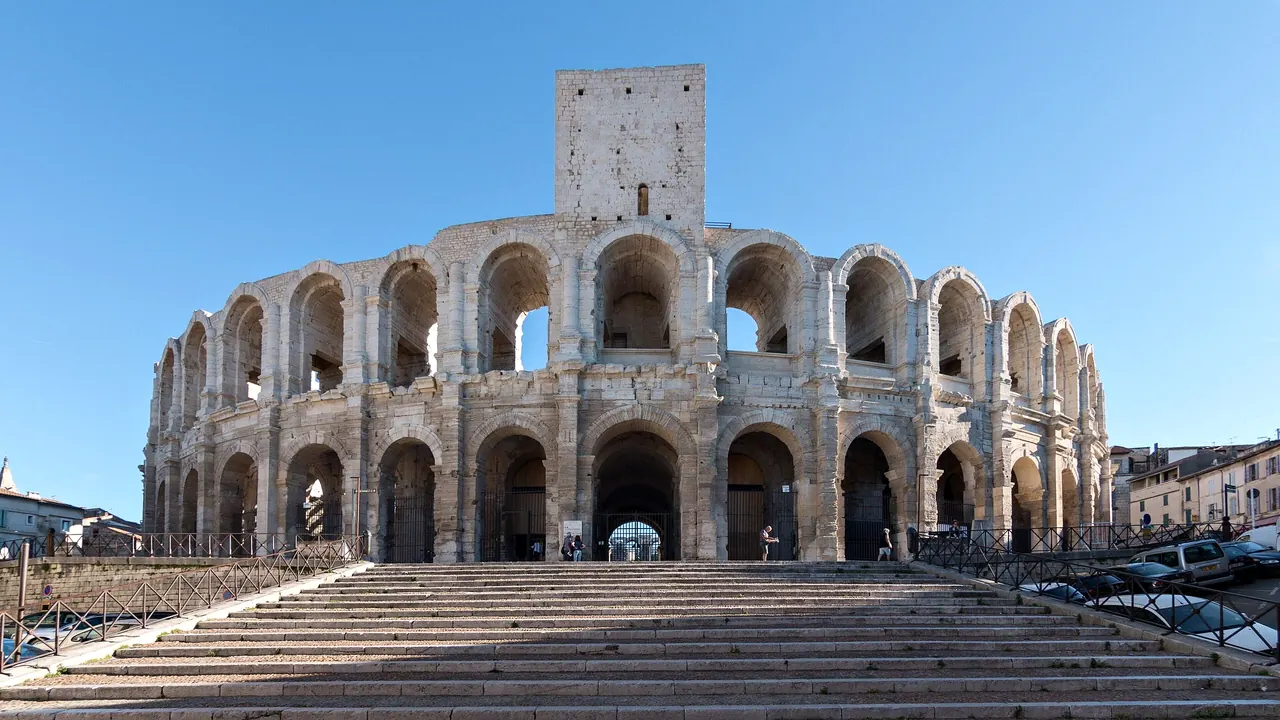
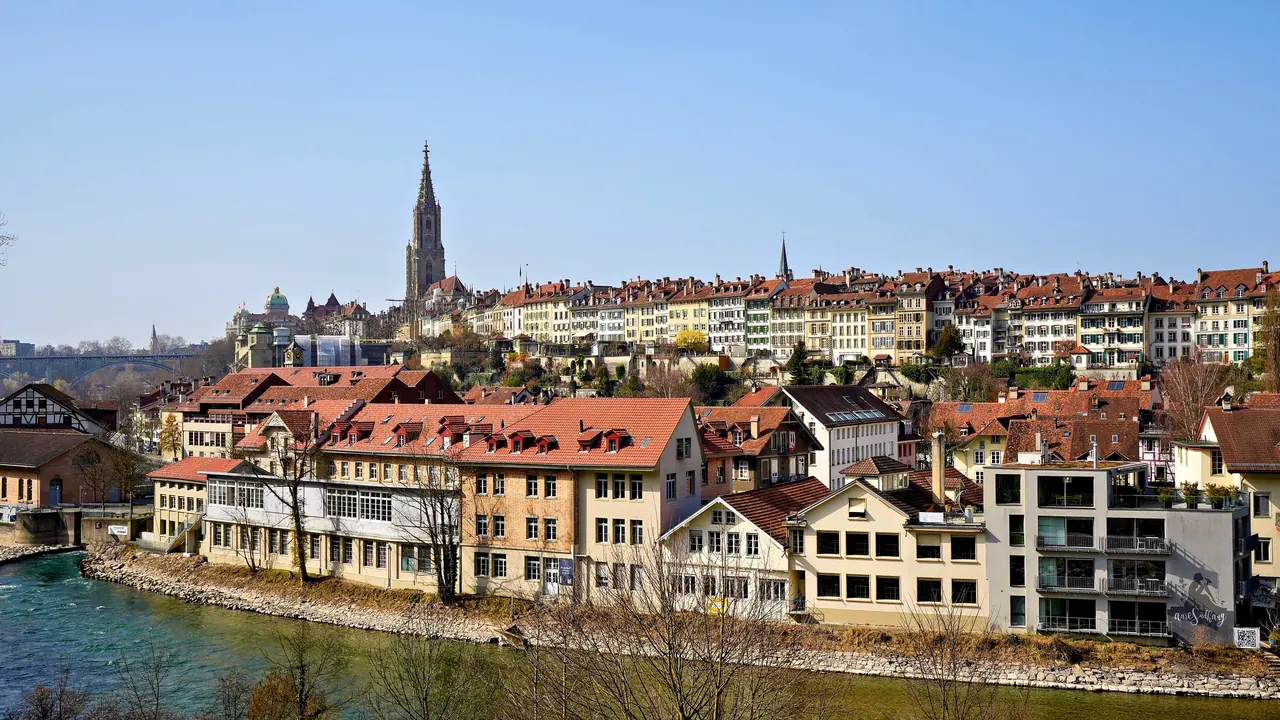
Photos: Arles by Martin Kraft, CC BY-SA 3.0, cropped; Bern by Beat Bieri, Pexels License.
Arles or Bern?
Our verdict in twelve categories, each scored against the same fixed benchmark cities, and the climate month by month, so you can choose for your trip.
Choose Arles for
- prices
- food and drink
- beaches
Arles suits a traveller who wants Roman stones, Provençal markets and the wild Camargue at a gentler cost, and who doesn't mind hiring a car. The arena, the theatre and Saint-Trophime are all within a few minutes of each other. Lunch is a long affair on a square, and the delta's flamingos and empty beaches are a short drive away. The trade-off is quiet evenings and a town that slows right down in winter.
Choose Bern for
- getting around
- families
- wellness
Choose Bern for an easy, well-run trip with the Alps on the horizon. Everything works on foot or by tram, and families have the bear park, the zoo and the Gurten. Trains reach Lucerne, Interlaken or Lake Thun without any planning. Evenings and the stage offer more as well. The catch is the cost, which is steep by any European measure.
Scoreboard
Twelve categories on one fixed scale from 0 to 100. The shaded stretch is the gap between the two.
Your match
Pick a travel style or drag the sliders, and both match scores follow your weighting.
Wins on prices and food and drink with your weighting.
Wins on getting around and families with your weighting.
What matters to you?
Category by category
What the scores mean for a trip.
Beaches & swimming
Neither is a beach destination, but Arles at least has the Mediterranean within reach. Across the Camargue are the long, wild sands of Saintes-Maries, Piémanson and Beauduc, shallow and warm in high summer. You need a car to get there, though, and there is little shade.
Bern swaps the sea for the Aare. Floating down the cold, fast current from the Marzili past the Federal Palace is memorable, but only for strong swimmers. The calmer option is Lake Thun by train. Swimming here is a summer pleasure, not a reason to come.
Food & drink
Arles eats better, mostly because of the local produce: Camargue rice, tellines, slow-cooked bull stew and olive oil from the Alpilles. The long Saturday market on the Boulevard des Lices is the centre of it all, followed by rosé on the terraces of the Place du Forum. The choice of restaurants is narrow, though, and many close in winter.
Bern's cooking is heavier and more Alpine: Berner Platte, rösti and fondue in old guildhalls and vaulted cellars, with chocolate as its real treat. There is a little more international choice, but eating out is costly and rarely surprising.
Culture & sights
Both are compact, UNESCO-listed towns that two days will cover, but Arles packs in more. The Roman arena, theatre, cryptoporticus and Alyscamps, the Romanesque cloister of Saint-Trophime and the links to Van Gogh give it a depth of history rare in a town this size. The Rencontres photography festival adds to it every summer.
Bern's main sight is the medieval old town as a whole: the arcades, the painted fountains, the Zytglogge and the Minster. Its museums lean towards the modern, with the Zentrum Paul Klee, the Kunstmuseum and Einstein's old flat on Kramgasse.
Nightlife
Neither is a place for clubbing, but Bern gives you more to do after dinner. Cellar bars under the arcades, Aarbergergasse at weekends, riverside terraces in summer and late parties at the Reitschule add up to a modest but real night out.
In Arles you get dinner on a square, a last drink on the Place du Forum, and then silence. The exception is the Easter and September ferias, when bodegas fill the streets for a few days.
Nature & outdoors
Bern has the bigger outdoors. The Eiger, Mönch and Jungfrau are about an hour away by train, with cable cars, high-mountain hiking and skiing in winter. Lake Thun, the Gurten and the paths along the Aare are right on the doorstep.
Arles offers a flatter, wilder kind of nature. The Camargue's lagoons, flamingos, white horses and black bulls are best seen on horseback or by bike, and the Alpilles have proper walking. Spring and autumn are excellent for birdwatching, but summer brings heat, mosquitoes and the mistral.
Day trips
Both make outstanding bases, and the difference is in how you travel. From Arles, Avignon and Nîmes are short train rides away, but the real prizes, Les Baux, Saint-Rémy, the Pont du Gard and Aigues-Mortes, are far easier with a car. The trips here are steeped in Roman and Provençal history.
From Bern the trains do everything. Lucerne, Basel and Zurich are about an hour away, and Fribourg, Murten, Thun and Solothurn are closer still, all without a car. The mix here is lakes, castles and Alpine scenery rather than ruins.
Good for families
For children, the best of Arles lies just outside town. Pony and horse rides at the Camargue ranches, the flamingos at the ornithological park near Saintes-Maries and the shallow, gentle sea off the delta beaches make good days out. Back in town, climbing the arena towers and exploring the dark galleries of the cryptoporticus usually go down well. Most of these outings need a car, though, and nothing is built for children, so Arles suits older ones who like animals and history.
Bern makes family days easier to run, with more to do close at hand. The bear park and the Dählhölzli zoo are both beside the Aare, the Natural History Museum's dioramas fill a rainy morning, and the funicular up the Gurten leads to a big playground. The Marzili has shallow pools for little ones, which matters because the river itself is only for strong swimmers. There is no theme park or big aquarium, so many families add a few days in the mountains.
Getting around
Arles is easy on foot within its old centre, where everything is about fifteen minutes apart, and it has a free shuttle and a station close by. Beyond that, buses to the villages and the Camargue are sparse, and most visitors who stay a few days end up hiring a car.
Bern is in another league. It has punctual trams and buses on a single fare system, funiculars down to the river, and arcades that keep you dry in the rain. The main station sits at the top of the old town, so you never need a car.
Shopping & style
Arles shopping is small and local: Provençal cottons, santons, gardian shirts, Camargue salt and photography books. The Saturday market is the best place to browse all week.
Bern has more range, though neither is a shopping destination. Its long arcaded streets have watch and chocolate shops, a department store and the Swiss chains. Antiques, design and books are in the cellar shops of Gerechtigkeitsgasse, reached by steep steps down from the pavement.
Affordability
This is the sharpest difference between the two. Arles costs what any French provincial town does, with lunch menus, market food and mid-range hotels at sensible levels. Hiring a car and visiting during festival weeks add to the bill.
Bern is very expensive across the board, from a guesthouse room to a beer on a terrace. Free pleasures such as the bear park, the river paths and the old town help, as do the tram pass hotels give out and supermarket lunches. Even so, it costs a great deal more.
Live music & performing arts
Bern has a year-round programme that Arles lacks. The Stadttheater stages opera, ballet and drama in German, the Bern Symphony Orchestra plays at the Casino, and the Dampfzentrale puts on new dance. Add a spring jazz festival and the Gurtenfestival in July.
In Arles, live performance mostly happens in the warm months. There are concerts in the Roman theatre and arena, the Les Suds world music week in July, and the ferias with their brass bands and the course camarguaise. Out of season there is little beyond a modest town theatre.
Wellness & relaxation
Arles relaxes you through its pace rather than through spas. You get shaded squares, summer siestas and quiet evenings by the Rhône, and a few converted farmhouses in the Camargue and the Alpilles are run as restful retreats with pools.
Neither town has a bathing tradition, but Bern has more real spa time. There is a large thermal and wellness complex on the western edge, a hammam-style spa in the old town and several hotel spas, with mountain spa hotels in the Oberland not far away.
When should you go?
Pick your month. The climate figures are measured averages, not a forecast.
Arles in July
Bern in July
Daytime high, °C
Rainfall in the month, mm
Where the figures come from
Arles's temperatures are measured 28 km from the centre, at Nimes / Courbessac.
Arles has no rain gauge within 25 km of the centre, so its rainfall comes from a gridded climate dataset read at the city rather than from a gauge further away.
Bern has no rain gauge within 25 km of the centre, so its rainfall comes from a gridded climate dataset read at the city rather than from a gauge further away.
Bern's sunshine is measured 41 km from the centre, at Payerne.
Temperature and rainfall are climate normals, averaged over the years shown. Arles: 1991-2020 (sunshine 1981-2010) normals, Nimes / Courbessac (28 km from centre). Bern: 2010-2020 (sunshine 1961-1990, rainfall 1991-2020) normals, Bern / Bern - Belp Airport (5.5 km from centre).
Arles is the warmer, sunnier and drier of the two. July and August reach about 31°C and the sea is near 22°C, which is good for the Camargue beaches but hot for walking round the Roman sites at midday. That makes May, June and September the most comfortable months for sightseeing. The rain comes in autumn and peaks at about 105mm in October. Winters are mild and fairly bright.
Bern is cooler all year. Summer highs of around 26°C make July and August pleasant for walking and swimming in the river, but May to August is also its wettest stretch, with frequent showers. Winter is cold and grey, around 5°C, with very little sunshine in the city, so late spring to early autumn is the time to go.
Which traveller are you?
On a trip on a tight budget, Arles is clearly the better choice. Meals, rooms and sights cost what they do anywhere in provincial France. Bern is expensive even for a simple guesthouse or a beer on a terrace, however many free walks you take.
On a family trip with young children, Bern wins comfortably. The bear park, the zoo, the playground on the Gurten and trams that are easy with a pushchair keep the days simple. Arles means cobbles, summer heat, mosquitoes and car journeys to reach the ponies and flamingos.
For a short city break, Bern needs the least planning. You step off the train into the arcaded old town, get around by tram and funicular, and find a cellar bar at night. Arles has richer Roman sights but quiet evenings, and you need a car once you leave town.
Before you go
| Measure | Arles | Bern |
|---|---|---|
| Official language | French | French, German, Italian, Romansh |
| Currency | Euro (EUR) | Swiss Franc (CHF) |
| Sockets | CE230 V, 50 Hz | CJ230 V, 50 Hz |
| Driving side | Right | Right |
| Time zone | UTC+1, UTC+2 in summer | UTC+1, UTC+2 in summer |
| Emergency number | 112 | 112 |
| Elevation | 0 m | 542 m |
| Main airport | Marseille Provence Airport (MRS)54 km from centre126 non-stop destinations | Zürich Airport (ZRH)101 km from centre226 non-stop destinations |
| Public holidays this year | 11 days | 10 days |
By the numbers
| Measure | Arles | Bern |
|---|---|---|
| City population | 51,811 | 136,988 |
| People per km² | 68 | 2,655 |
| Museums within 10 km | 3 | 30 |
| UNESCO World Heritage sites within 50 km | 5 | 2 |
| Swim season, months above 21 °C | 2 months | - |
Where else could you go?
Every comparison below shares a destination with this one, so you can follow Arles or Bern somewhere new.
- Avignonvs Arles
- Interlakenvs Bern
- Montpelliervs Arles
- Lucernevs Bern
- Aix-en-Provencevs Arles
- Baselvs Bern