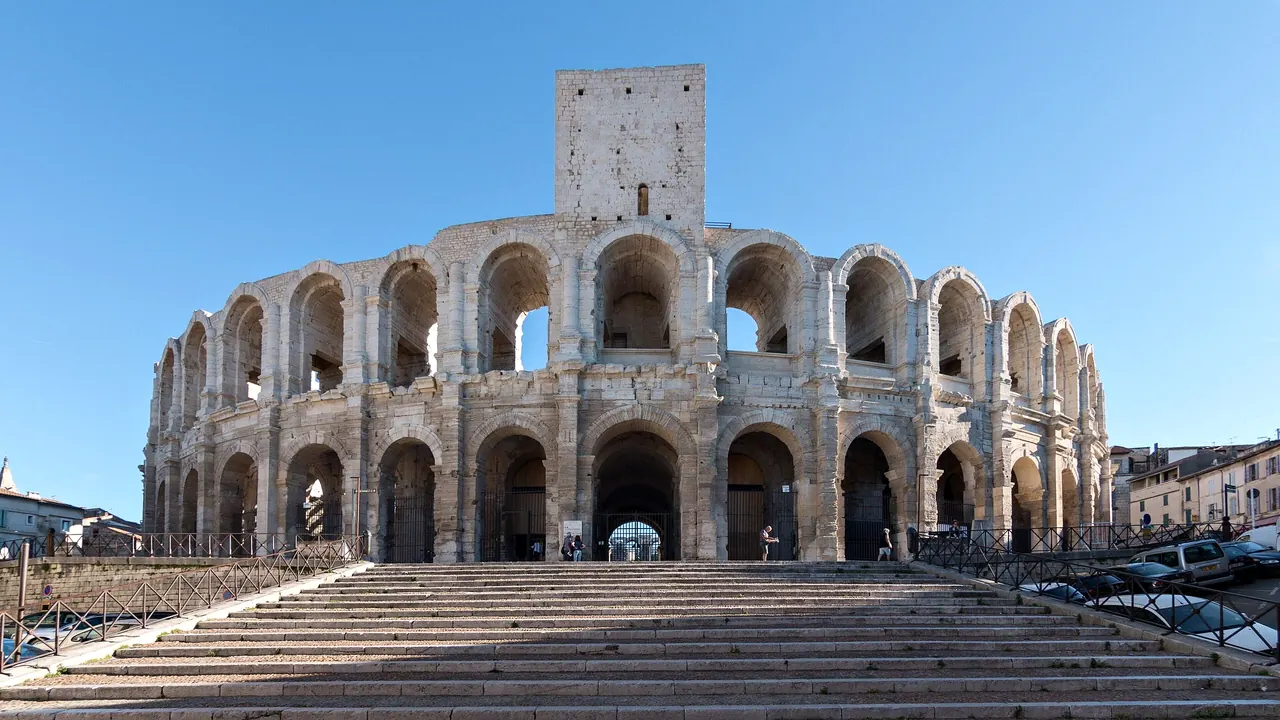
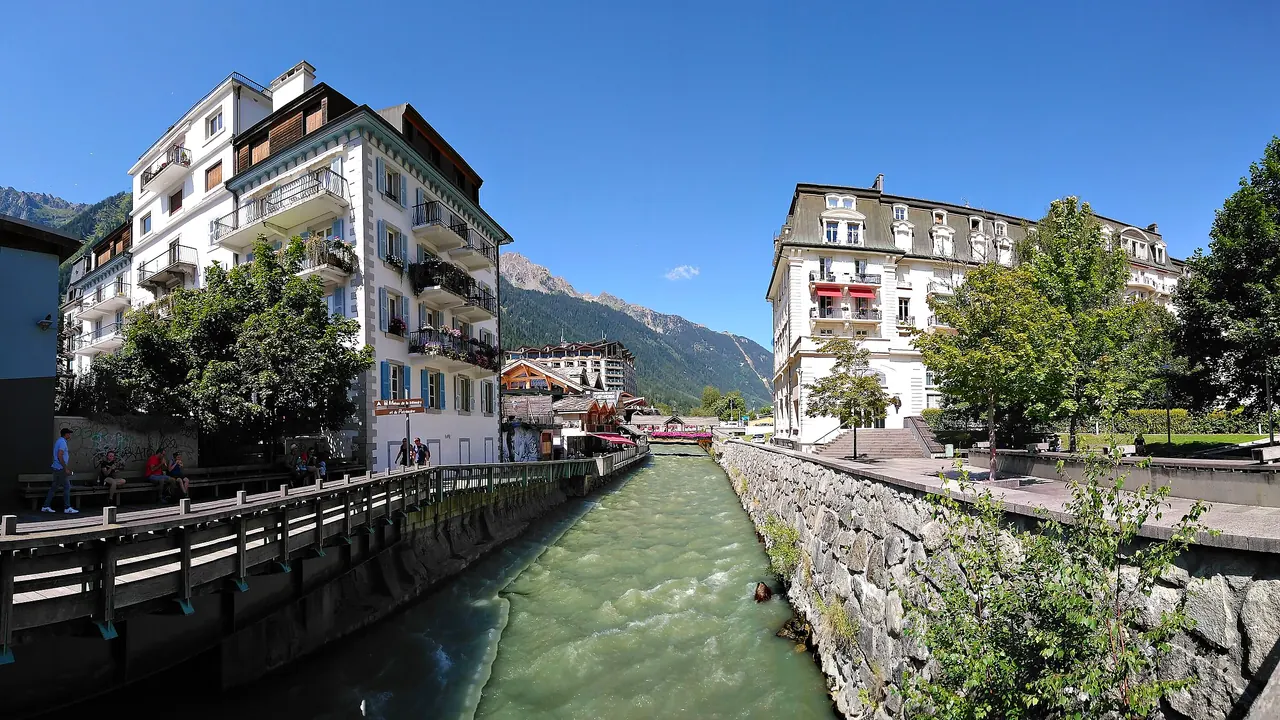
Photos: Arles by Martin Kraft, CC BY-SA 3.0, cropped; Chamonix by Tiia Monto, CC BY-SA 3.0, cropped.
Arles or Chamonix?
Our verdict in twelve categories, each scored against the same fixed benchmark cities, and the climate month by month, so you can choose for your trip.
Choose Arles for
- culture and sights
- beaches
- day trips
Arles suits travellers who want history and Provence. The Roman arena, the Alyscamps and Saint-Trophime are a short walk apart, and Avignon, Nîmes and the Pont du Gard are easy outings. It is cheaper, warmer and sunnier than Chamonix, with a day on the Camargue beaches if you want one. The trade-off is quiet evenings and a town that two full days will cover.
Choose Chamonix for
- nature and the outdoors
- wellness
- families
Choose Chamonix if the mountains are the whole point. Cable cars lift you from the valley into glacier country, the Tour du Mont Blanc and Lac Blanc start from town, and winter brings serious skiing. It costs a lot more and has little in the way of museums. In return, active families, skiers and climbers will find far more to do, and the evenings are livelier than anything Arles manages outside its ferias.
Scoreboard
Twelve categories on one fixed scale from 0 to 100. The shaded stretch is the gap between the two.
Your match
Pick a travel style or drag the sliders, and both match scores follow your weighting.
Wins on culture and sights and beaches with your weighting.
Wins on nature and the outdoors and wellness with your weighting.
What matters to you?
Category by category
What the scores mean for a trip.
Beaches & swimming
Neither is a beach destination, but only Arles has the sea within reach. About 40km across the Camargue are the sands of Saintes-Maries-de-la-Mer and the wide, wild strands of Piémanson and Beauduc. By midsummer the water there is shallow and warm enough for a proper day of swimming.
Chamonix has mountain lakes instead. Lac de Passy has a small sandy strip and a view of Mont Blanc, and Lake Annecy is a drive of over an hour. A swim there is a summer afternoon off, not part of the plan.
Food & drink
Both kitchens grow out of their landscape, but Arles has the broader table. Gardiane bull stew, Camargue rice, tellines and the long Saturday market on the Boulevard des Lices make eating a pleasure in itself, with rosé to follow on the Place du Forum.
Chamonix eats Savoyard food: fondue, raclette and tartiflette, best on a refuge terrace facing the glaciers. Down in town, resort menus repeat one another, and the cheese shops and charcuteries for a picnic are the real highlight.
Culture & sights
On culture the two differ more than anywhere else. Arles has a UNESCO-listed Roman core: the arena, the theatre, the cryptoporticus and the Alyscamps. It also has the Romanesque carving of Saint-Trophime, the Roman barge in the Museum of Ancient Arles and Gehry's tower at Luma.
Chamonix's story is mountaineering. The Musée Alpin tells it well, and the guides' quarter and the climbers' cemetery fill it in, but half a day covers everything.
Nightlife
Chamonix is the livelier of the two after dark, at least in winter. Après-ski runs into a lane of busy pubs, and a couple of small clubs stay open late for a young, largely English-speaking crowd. In summer, evenings are mostly terrace drinks after a day in the hills.
Arles winds down after dinner on its squares, with a few bars and little else. The exception is the ferias, when bodegas fill the streets and the town stays up for a few nights.
Nature & outdoors
Arles has real nature on its doorstep: the flamingos, white horses and reed beds of the Camargue, with the Alpilles for hiking. Chamonix is in another league, though. The Aiguille du Midi lifts you to 3,842m, the Mer de Glace is a short train ride away, and the valley offers skiing, mountaineering, climbing and paragliding.
The Camargue is flat and open, best explored on horseback or by bike. Chamonix is steep and demanding, and high up the weather can turn quickly.
Day trips
Arles sits in the middle of one of the richest stretches of southern France. Avignon and Nîmes are short train rides away, and the Pont du Gard, Les Baux, Saint-Rémy and Aigues-Mortes are easy by car. Few bases offer as many first-rate outings.
Chamonix's outings take you across borders. Courmayeur and the Aosta valley are through the tunnel, Martigny is a ride on the Mont Blanc Express, and Annecy and Geneva are also within reach. Beyond those, the mountain roads mostly lead to other resorts.
Good for families
Arles has the arena towers to climb, Camargue ponies and flamingos, but no attractions made for children. Cobbles, mosquitoes and summer heat add to the effort, so it suits older children who enjoy history and animals.
Chamonix is better set up for active families. Winter brings nursery slopes and sledging, and summer brings the luge, treetop courses, the Merlet animal park and the little red train to the Mer de Glace. The highest cable cars are not suitable for small children.
Getting around
Both centres are compact and easy to walk. In Arles, trains to Avignon, Nîmes and Marseille are good, but the Camargue ranches, the villages and the wild beaches need a car or a bike. Most visitors staying a while hire a car.
Chamonix is easier beyond the centre. Valley buses and the Mont Blanc Express run from Les Houches to Vallorcine, free with the guest card, so a car is optional, though winter ski buses get packed.
Shopping & style
Neither is a shopping destination, and for fashion both send you elsewhere: Arles to Aix or Marseille, Chamonix to Geneva or Annecy. What you take home is completely different.
Arles is for Provençal cottons, santons, Camargue salt, olive oil, and photography books from its good bookshops. Chamonix is the place for technical climbing and ski gear from long-established specialists, along with Savoyard cheese and génépi.
Affordability
Arles is far kinder on the wallet. It is priced like any French provincial town and is cheaper than the smart Luberon villages, with car hire as the main extra cost. Chamonix charges the rates of a famous resort for rooms, and lift passes, the big cable cars and guides add up quickly.
In Chamonix, self-catering, the free valley buses and trails that start from the valley floor all help. Both towns cost more in July, and Arles also during its ferias and the photography festival.
Live music & performing arts
Arles has the stronger summer programme. There are concerts in the Roman theatre and the arena, the Les Suds world music festival in July, and brass bands and the course camarguaise around the ferias. Out of season there is little on.
Chamonix has less still: a jazz festival with some sets played up in the mountains, church concerts and mountain film evenings, and no theatre season. For opera, you would go to Avignon from Arles or to Geneva from Chamonix.
Wellness & relaxation
Chamonix has more for unwinding. A large thermal-style day spa has hot outdoor pools facing the glaciers, many chalets have saunas, and the warm springs of Saint-Gervais are down the valley. The town itself is busy and starts its days early.
Arles has no spa culture beyond a few hotel spas. It relaxes you through its pace instead: shaded squares, long lunches, and farmhouses in the Camargue and the Alpilles run as quiet retreats with pools.
When should you go?
Pick your month. The climate figures are measured averages, not a forecast.
Arles in July
Chamonix in July
Daytime high, °C
Rainfall in the month, mm
Where the figures come from
Arles's temperatures are measured 28 km from the centre, at Nimes / Courbessac.
Arles has no rain gauge within 25 km of the centre, so its rainfall comes from a gridded climate dataset read at the city rather than from a gauge further away.
Chamonix's temperatures are measured 35 km from the centre, at Bourg-St-Maurice.
Chamonix has no rain gauge within 25 km of the centre, so its rainfall comes from a gridded climate dataset read at the city rather than from a gauge further away.
Temperature and rainfall are climate normals, averaged over the years shown. Arles: 1991-2020 (sunshine 1981-2010) normals, Nimes / Courbessac (28 km from centre). Chamonix: 1999-2020 (rainfall 1991-2020) normals, Bourg-St-Maurice (34.9 km from centre).
Arles is best in warm weather. May and June are pleasant for walking the old town. July and August reach about 31°C with long, sunny days. That is hot for sightseeing, but it is when the sea off the Camargue is warm enough to swim, peaking at around 22°C. September is still lovely. October brings the heaviest rain, about 105mm, and winter is mild but cool and greyer.
Chamonix is cooler and wetter all year, with no real dry season. July highs of about 27°C make June to September the time for hiking and the high lifts. December to March is cold, with the wettest weather at the turn of the year, and that is the ski season. In spring and autumn, Arles is the warmer and drier choice. For summer in the mountains or a winter on skis, pick Chamonix.
Which traveller are you?
For a culture and arts trip, Arles is the clear pick. The Roman arena and theatre, the cryptoporticus, Saint-Trophime's cloister and the Van Gogh sites are all within walking distance. Avignon and Nîmes add more, each about half an hour away by train.
On an outdoors trip, Chamonix wins outright. Cable cars reach glacier terrain in minutes, the Tour du Mont Blanc starts in town, and the valley serves skiers, climbers, paragliders and trail runners. The Camargue and the Alpilles are gentler country by comparison.
On a trip with a tight budget, your money goes much further in Arles, with market lunches and provincial hotel prices. Chamonix charges resort rates for rooms, lift passes and guides. Its free valley transport and picnic lunches only soften that a little.
Before you go
| Measure | Arles | Chamonix |
|---|---|---|
| Official language | French | French |
| Currency | Euro (EUR) | Euro (EUR) |
| Sockets | CE230 V, 50 Hz | CE230 V, 50 Hz |
| Driving side | Right | Right |
| Time zone | UTC+1, UTC+2 in summer | UTC+1, UTC+2 in summer |
| Emergency number | 112 | 112 |
| Elevation | 0 m | 995 m |
| Main airport | Marseille Provence Airport (MRS)54 km from centre126 non-stop destinations | Geneva International Airport (GVA)68 km from centre150 non-stop destinations |
| Public holidays this year | 11 days | 11 days |
By the numbers
| Measure | Arles | Chamonix |
|---|---|---|
| City population | 51,811 | 8,705 |
| People per km² | 68 | 75 |
| Museums within 10 km | 3 | 3 |
| UNESCO World Heritage sites within 50 km | 5 | 0 |
| Swim season, months above 21 °C | 2 months | - |
Where else could you go?
Every comparison below shares a destination with this one, so you can follow Arles or Chamonix somewhere new.
- Avignonvs Arles
- Annecyvs Chamonix
- Montpelliervs Arles
- Genevavs Chamonix
- Aix-en-Provencevs Arles
- Zermattvs Chamonix