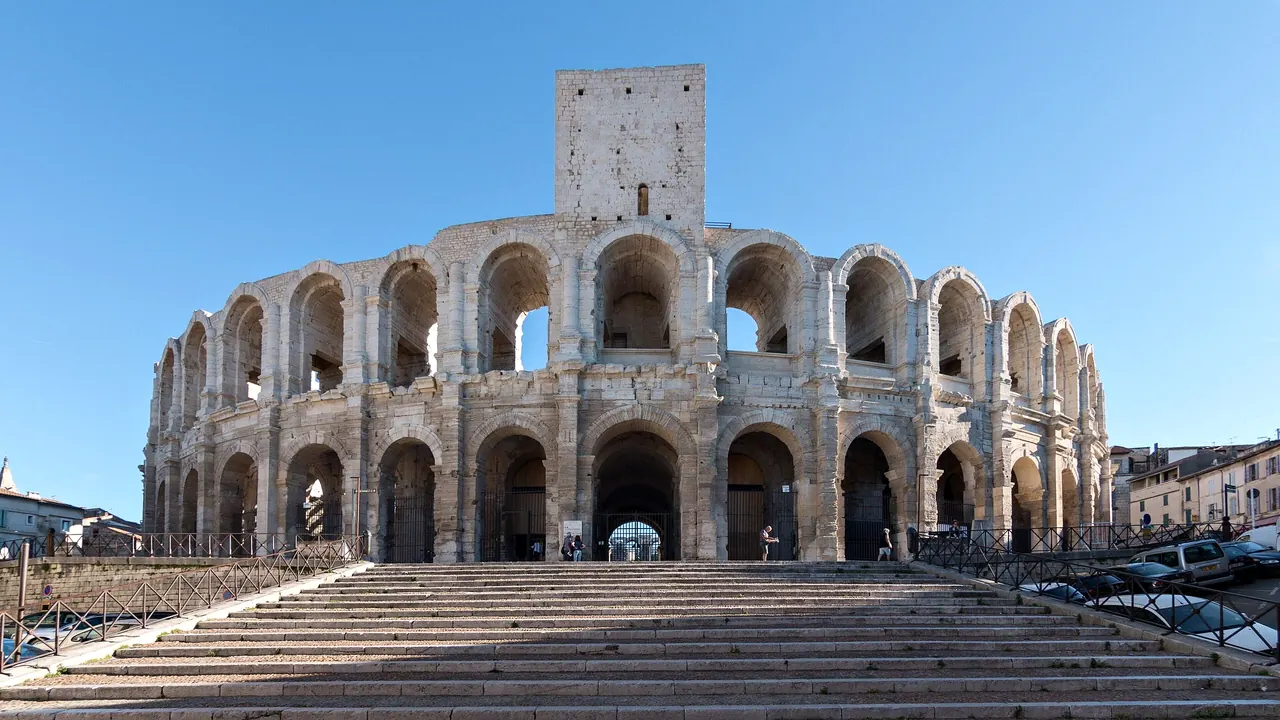
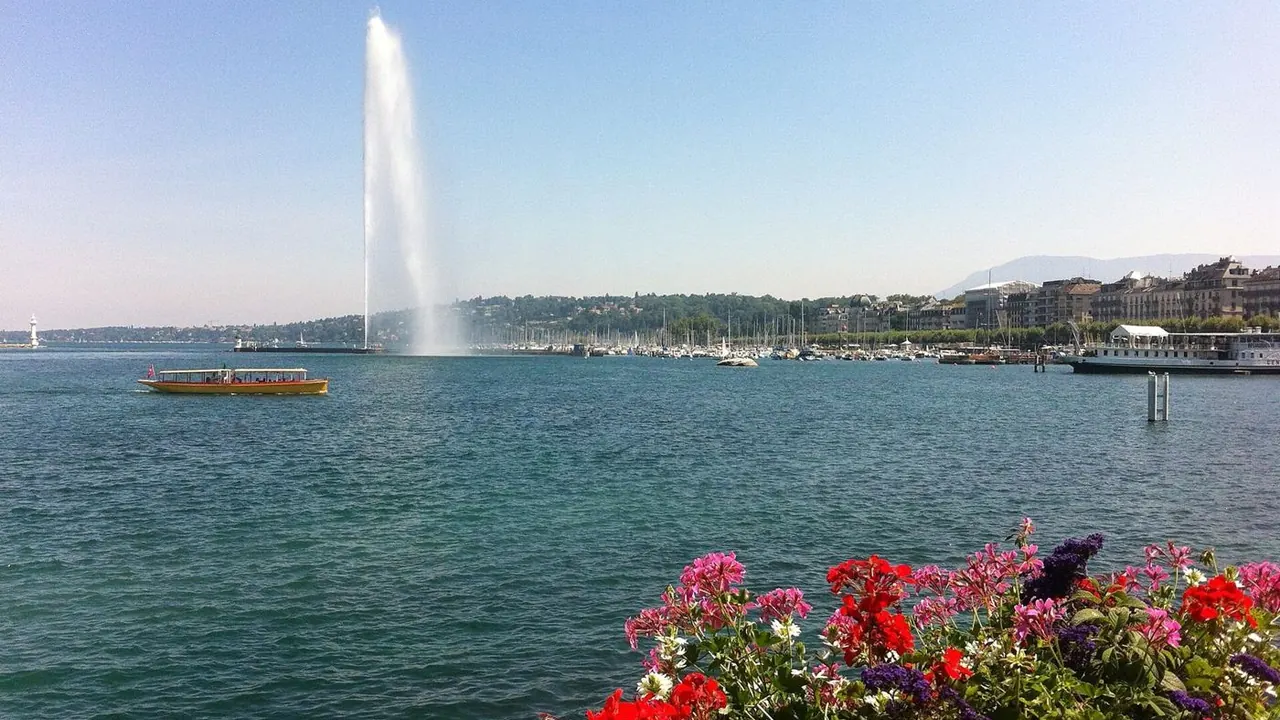
Photos: Arles by Martin Kraft, CC BY-SA 3.0, cropped; Geneva by Diviosen, CC BY-SA 3.0, cropped.
Arles or Geneva?
Our verdict in twelve categories, each scored against the same fixed benchmark cities, and the climate month by month, so you can choose for your trip.
Choose Arles for
- prices
- culture and sights
- day trips
Arles suits a traveller who wants history close at hand and Provence spread out around it. The arena, the Roman theatre and the cloister of Saint-Trophime are all a short walk apart, and Avignon, Nîmes, Les Baux and the Camargue are easy day outings. It costs far less than Geneva, the summers are hotter and sunnier, and the sea is a drive away. Choose it for long lunches and early nights rather than evenings out, and expect to hire a car.
Choose Geneva for
- shopping
- getting around
- live music and the arts
For someone who wants a city that runs smoothly, Geneva is the better pick. Trams, lake boats and trains make a car optional, and it has an opera house and an orchestra, serious watch shopping, and the Salève, the Jura and Chamonix on the horizon. It is also easier with children. The catch is the cost, which is among the steepest anywhere, and a swimming season that is short.
Scoreboard
Twelve categories on one fixed scale from 0 to 100. The shaded stretch is the gap between the two.
Your match
Pick a travel style or drag the sliders, and both match scores follow your weighting.
Wins on prices and culture and sights with your weighting.
Wins on shopping and getting around with your weighting.
What matters to you?
Category by category
What the scores mean for a trip.
Beaches & swimming
Neither is a beach destination, and the swimming is quite different in each. From Arles you drive across the Camargue to wild, flat, sandy shores at Saintes-Maries, Piémanson and Beauduc, with dunes, little shade and the open Mediterranean.
Geneva swims in its lake, right in town. People dive off the Bains des Pâquis jetty with the Jet d'Eau in view, or lie on the lawns and pebbles at Genève-Plage. You need no car, but the water stays cold until June and the season is short.
Food & drink
Both cook in a broadly French way, with different accents. Arles is about produce: gardiane bull stew, Camargue rice, tellines and the long Saturday market on the Boulevard des Lices, all enjoyed over long lunches on the squares. The choice is narrow, though, and many places close in winter.
Geneva has more range. It runs from lake perch and fondue in wood-panelled brasseries to international cooking and polished fine dining in Carouge and the Old Town, with local Chasselas on the wine lists. It has none of Arles's market life or cheap casual food, and every meal costs more.
Culture & sights
Arles has the richer heritage, packed into less space. The arena, the Roman theatre, the cryptoporticus, the Alyscamps and the carving at Saint-Trophime form a UNESCO-listed group you can walk round in a morning. Van Gogh's traces, the Luma tower and the summer photography festival add a modern layer.
Geneva's sights tell a later story: Calvin's cathedral and the Reformation Wall, then the Palais des Nations, the Red Cross museum and CERN. They are interesting, especially if you are curious about diplomacy or science, but less striking to walk through than Roman Provence.
Nightlife
Arles goes to bed early. After a late dinner on a square and a drink at the café tables of the Place du Forum, the town is quiet. The exception is the feria at Easter or in September, when bodegas fill the streets and people stay up late for a few days.
Geneva gives you more choice after dark, even if weeknights are calm and every round is costly. Bars in the Pâquis behind the station stay busy late, Carouge has wine bars with a village feel, and the alternative centres of Plainpalais and Jonction put on club nights with a small electronic scene.
Nature & outdoors
Arles looks out over flat wetland, while Geneva looks up at mountains. The Camargue begins at the edge of Arles, and you can see its flamingos, white horses and black bulls on horseback, by bike along the dykes round the Étang de Vaccarès or on foot through the bird reserve. The Alpilles add hill walks among olives and pines. Summer brings mosquitoes and the mistral, so spring and autumn are the seasons to go.
Geneva is the stronger base for active days in any season. There is the cable car up the Salève for cliffs and paragliding, forest hikes and cross-country skiing on the Jura, and sailing and paddleboarding on the lake. Chamonix and the ski resorts are about an hour away.
Day trips
Both are excellent bases, and Arles has the edge for the sheer number of places close by. Avignon and Nîmes are under half an hour by train, and the Pont du Gard, Les Baux, Saint-Rémy, Aigues-Mortes and Aix are all a short drive. You could fill a week without repeating yourself.
Geneva's outings are built around the lake and the border: steamers to Lausanne, Lavaux's vineyard terraces and Chillon, the boat to Yvoire, Annecy by road, and Gruyères and Bern further out. Most are easy without a car, while the villages around Arles really need one.
Good for families
Geneva is the easier city with children. It is flat and orderly, and you can take a pushchair on the trams. The Natural History Museum's dioramas keep young children busy for hours, and the lakeside playgrounds, the little harbour boats and the small animal parks fill the gaps.
Arles works best for older children who enjoy the arena towers and the dark cryptoporticus, and for horse rides and flamingos in the Camargue. Cobbles, summer heat, mosquitoes and the need for a car make it harder with small ones.
Getting around
You can walk around both centres, but beyond them the gap is wide. Geneva's trams, buses and yellow lake boats run as one network, the airport is minutes away by train, and regional rail reaches France and the rest of Switzerland, so you rarely need a car.
Arles has a compact old town with a small free shuttle and good trains to the big towns. Its buses are infrequent, though, and the Camargue and the villages are really for drivers.
Shopping & style
For anything expensive, Geneva is far ahead. The Rue du Rhône holds the flagship boutiques of the great Swiss watch houses. At the more modest end there are chocolatiers, craft workshops in Carouge and the Plainpalais flea market.
Arles is for small Provençal finds: Camargue salt and olive oil at the Saturday market, printed cottons, santons, gardian shirts and good bookshops for photography. It has almost no fashion or luxury shopping.
Affordability
This is the sharpest difference between them. Arles costs what a French provincial town costs, with lunch menus, market food and a combined pass for the sights, though car hire and festival weeks add to the bill.
Geneva is among the dearest cities in the world for hotels and meals alike. Free museums, free local transport for hotel guests and cheap lake lidos help, and many visitors on a budget stay across the border in France.
Live music & performing arts
Geneva has a formal stage that Arles lacks, with a full season of opera and ballet at the Grand Théâtre, the Orchestre de la Suisse Romande in Victoria Hall and French-language theatre at the Comédie.
Arles comes alive mainly in summer, with concerts in the Roman theatre and the arena, world music at Les Suds in July and the brass bands of the ferias. Outside the warm months, serious programmes mean a trip to Avignon or Marseille.
Wellness & relaxation
Geneva has a real bathing habit. In winter the Bains des Pâquis runs a sauna and hammam, with a plunge into the cold lake afterwards, and there are lakefront hotel spas, with Évian and Divonne across the border.
Arles offers rest of another kind: shaded squares, long lunches and quiet evenings by the Rhône. Farmhouse retreats with pools in the Camargue and the Alpilles help, but there is little in the way of spas.
When should you go?
Pick your month. The climate figures are measured averages, not a forecast.
Arles in July
Geneva in July
Daytime high, °C
Rainfall in the month, mm
Where the figures come from
Arles's temperatures are measured 28 km from the centre, at Nimes / Courbessac.
Arles has no rain gauge within 25 km of the centre, so its rainfall comes from a gridded climate dataset read at the city rather than from a gauge further away.
Temperature and rainfall are climate normals, averaged over the years shown. Arles: 1991-2020 (sunshine 1981-2010) normals, Nimes / Courbessac (28 km from centre). Geneva: 1991-2020 normals, Geneve-Cointrin (5.7 km from centre).
Arles is warmer and much sunnier all year. May, June and September are the best months for walking the Roman sites and the Camargue. July and August reach 31°C, which is hot for sightseeing at midday but right for the sea, at its warmest around 22°C in August. Summer is fairly dry, and the rain comes in autumn, with October the wettest month at about 105mm. Winters are mild and bright for the season.
Geneva is cooler. Summer highs near 27°C make July and August comfortable for the lake and for city walks alike, and late spring and early autumn are good for the hills. Rain falls steadily in every month rather than in one wet season. Winter is cold and grey, around 5°C in January, better suited to the nearby ski slopes than to the streets.
Which traveller are you?
On a trip on a tight budget, Arles is the clear choice. Meals, rooms and sights cost what they do in provincial France, while Geneva is among the dearest cities anywhere, and its free museums and transport only soften the bill.
For a shopping trip, Geneva wins easily. The Rue du Rhône is a world address for Swiss watches and jewellery, with chocolatiers, the Carouge workshops and a flea market besides. Arles offers market goods, Provençal cottons and bookshops.
On a culture and arts trip built around sights, Arles gives more: a UNESCO-listed Roman town, fine Romanesque carving and Van Gogh's landscapes, with Avignon and Nîmes close by. Choose Geneva if opera, ballet and orchestral concerts matter most.
Before you go
| Measure | Arles | Geneva |
|---|---|---|
| Official language | French | French, German, Italian, Romansh |
| Currency | Euro (EUR) | Swiss Franc (CHF) |
| Sockets | CE230 V, 50 Hz | CJ230 V, 50 Hz |
| Driving side | Right | Right |
| Time zone | UTC+1, UTC+2 in summer | UTC+1, UTC+2 in summer |
| Emergency number | 112 | 112 |
| Elevation | 0 m | 403 m |
| Main airport | Marseille Provence Airport (MRS)54 km from centre126 non-stop destinations | Geneva International Airport (GVA)5 km from centre150 non-stop destinations |
| Public holidays this year | 11 days | 9 days |
By the numbers
| Measure | Arles | Geneva |
|---|---|---|
| City population | 51,811 | 211,152 |
| People per km² | 68 | 13,280 |
| Museums within 10 km | 3 | 34 |
| UNESCO World Heritage sites within 50 km | 5 | 2 |
| Swim season, months above 21 °C | 2 months | - |
Where else could you go?
Every comparison below shares a destination with this one, so you can follow Arles or Geneva somewhere new.
- Avignonvs Arles
- Annecyvs Geneva
- Lausannevs Geneva
- Montpelliervs Arles
- Chamonixvs Geneva
- Aix-en-Provencevs Arles