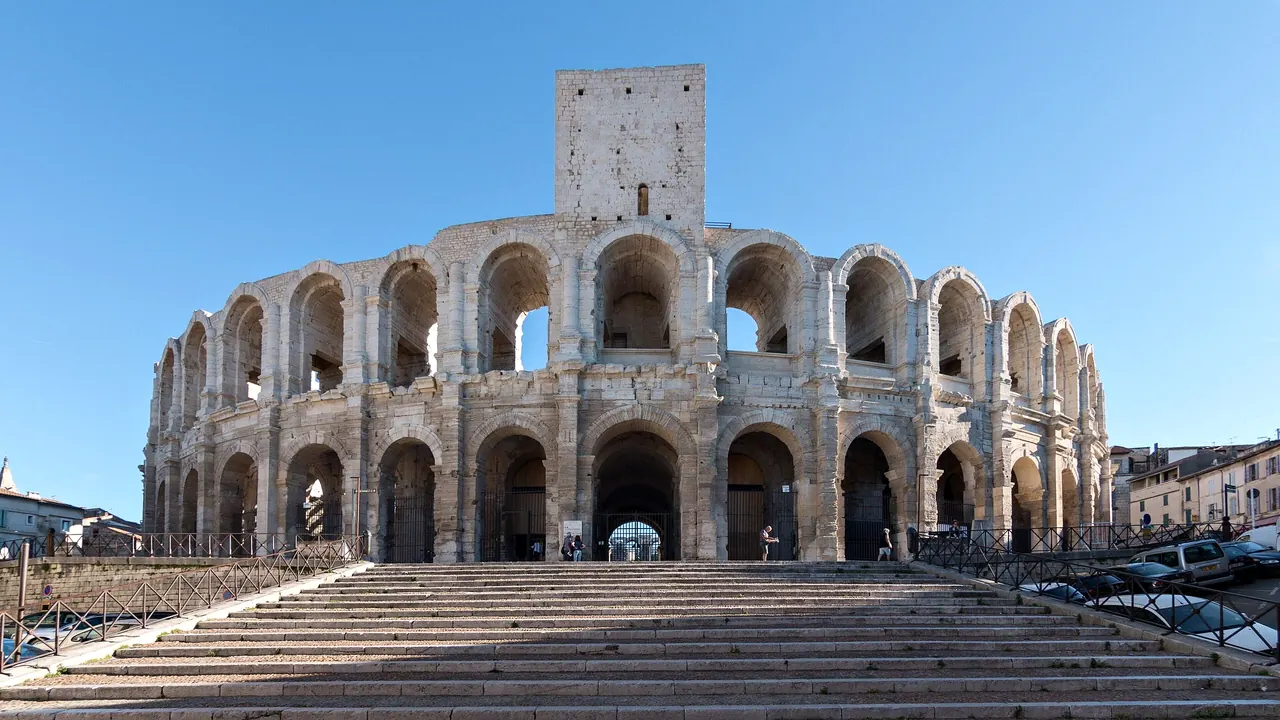
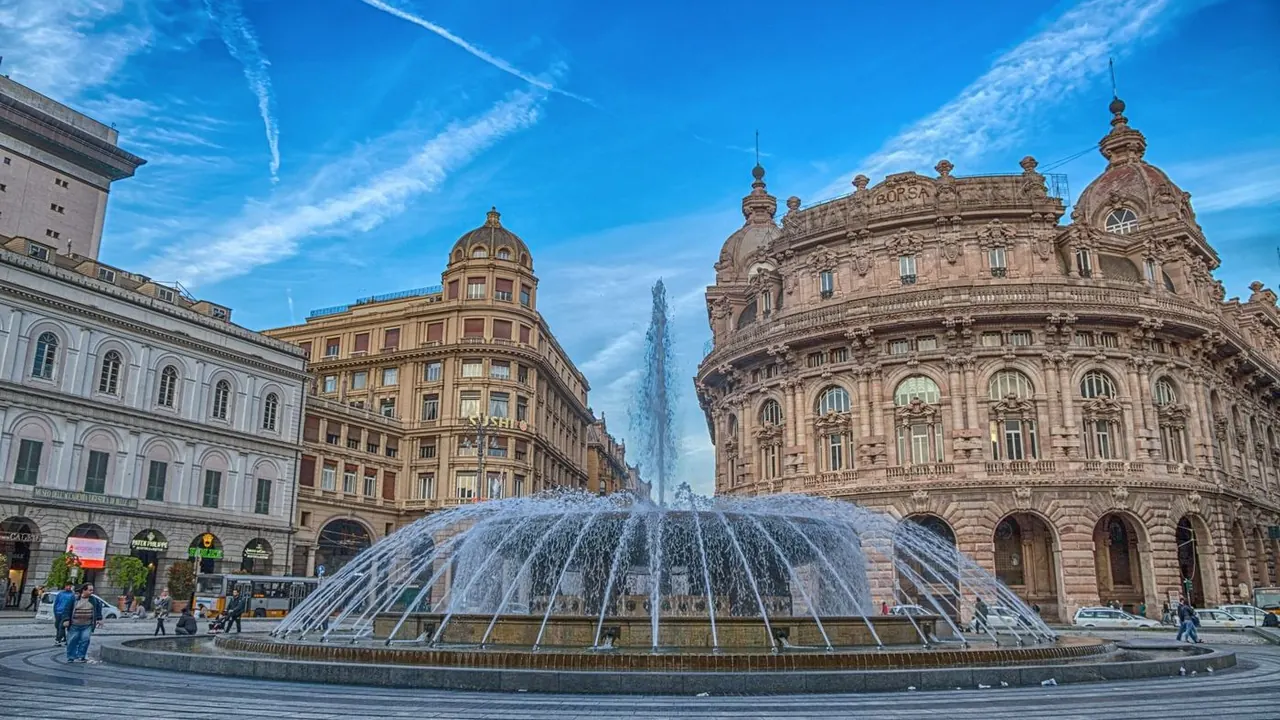
Photos: Arles by Martin Kraft, CC BY-SA 3.0, cropped; Genoa by Faber1893, CC BY-SA 4.0, cropped.
Arles or Genoa?
Our verdict in twelve categories, each scored against the same fixed benchmark cities, and the climate month by month, so you can choose for your trip.
Choose Arles for
- day trips
Arles suits a slower trip through Provence: a small Roman town you can cross on foot in a quarter of an hour, with the Camargue's marshes, flamingos and white horses starting at its edge and Avignon, Nîmes and Les Baux all close by. Choose it if you want sunshine, history and a base for touring by car, and are happy with quiet evenings and market lunches.
Choose Genoa for
- food and drink
- families
- nightlife
Genoa is the better choice for almost everything else. It is a real city, with a medieval old town far larger than anything in Arles, Ligurian cooking that makes every meal worth planning, an opera house, an aquarium for the children and Riviera swimming one short train ride away. Go there for a fuller, livelier trip that needs no hire car.
Scoreboard
Twelve categories on one fixed scale from 0 to 100. The shaded stretch is the gap between the two.
Your match
Pick a travel style or drag the sliders, and both match scores follow your weighting.
Wins on day trips with your weighting.
Wins on food and drink and families with your weighting.
What matters to you?
Category by category
What the scores mean for a trip.
Beaches & swimming
Neither city is built for a beach vacation, but Genoa makes swimming part of an ordinary day. You can take a dip at Boccadasse, the bathing platforms of Corso Italia or Nervi, and Camogli or Sestri Levante are a short train ride away, in clearer and warmer water, though mostly over pebbles and among rented loungers.
Arles is the opposite in kind. Its beaches are sandy, flat and wild, at Saintes-Maries-de-la-Mer and the open strands of Piémanson and Beauduc, with plenty of room even in August. They need a drive, though, and come with little shade, the mistral and mosquitoes.
Food & drink
Genoa is the stronger food destination by some way. Pesto was born here, and the city has a real street food tradition in its friggitorie and farinata shops, plus trattorias serving fish fresh from the harbour and the covered Mercato Orientale.
Arles has its own character, with gardiane bull stew, Camargue rice and tellines, and its Saturday market on the Boulevard des Lices is a highlight of any week in Provence. But the choice of restaurants is narrow and thins out further in winter.
Culture & sights
Both are UNESCO towns, but of different kinds and sizes. Arles is Roman and Romanesque in miniature: arena, theatre, cryptoporticus, the Alyscamps and the Saint-Trophime cloister, plus Van Gogh's legacy and the summer photography festival, all seen in a couple of days.
Genoa offers more to fill the time. Its caruggi make up one of Europe's largest medieval quarters, the palaces of Via Garibaldi hold Van Dyck and Rubens, and Staglieno's sculpted cemetery is unlike anything in Provence.
Nightlife
Genoa has the livelier evenings, though it is no party city. Students and locals spill out of the small bars around Piazza delle Erbe at weekends, and in summer the crowd drifts to the waterfront and the beach clubs.
Arles, by contrast, is mostly a late dinner on the Place du Forum and then bed. Only the Easter and September ferias, when bodegas set up in the streets, keep the town awake.
Nature & outdoors
Both sit at the edge of remarkable country, and Genoa has the edge for walkers. A funicular to Righi leads to the trail around the ridge fortresses, the Portofino park and the Cinque Terre paths are reachable by train, and boats go out to watch whales and dolphins.
The landscape round Arles is flat and watery rather than steep. The Camargue's lagoons, flamingos, horses and bulls are best seen by bike, on horseback or in the bird reserve, with the Alpilles for proper hill walking.
Day trips
Both are first-rate bases for day trips, and the difference is in kind. Arles opens onto Roman and Provençal France. Avignon's Papal Palace and the Maison Carrée in Nîmes are a short train ride away, while the Pont du Gard, the hill village of Les Baux, Saint-Rémy and the walls of Aigues-Mortes across the delta are best reached by car.
Genoa's trips are mostly along the coast. The Riviera railway runs east to Camogli, Santa Margherita, Sestri Levante and the Cinque Terre, and west to Finale Ligure and Noli. Portofino has no station, but it is a short bus or boat ride on from Santa Margherita. Milan and Turin are about an hour and a half away by train for a day in a big city, so the whole list works without a car.
Good for families
Genoa does far more for children. The Porto Antico gathers one of Europe's largest aquariums, a science centre, a biosphere and a submarine to walk through, and the funiculars and public lifts are a treat on their own, even if the steep lanes defeat pushchairs.
Arles has the arena towers and the dark cryptoporticus, and children who like animals will love the Camargue ponies and flamingos. Beyond that there is little made for them, and summer heat and mosquitoes add to the effort.
Getting around
In Arles the centre is easy, everything within about fifteen minutes on foot, but leaving town usually means a hire car, since buses to the Camargue and the villages are infrequent.
Genoa is steeper and more of a maze, yet better connected. Funiculars, lifts and a short metro line handle the hills, and the coastal railway reaches Nervi and the Riviera towns, so a car is a nuisance rather than a necessity.
Shopping & style
Genoa gives a little more scope, with the arcades of Via XX Settembre, Italian labels on Via Roma and old town workshops for silver filigree and coral, though serious fashion shoppers will want Milan.
Arles is smaller and more particular: Provençal cottons, santons, gardian shirts and good bookshops, with photography books a speciality, and the Saturday market for salt, oil and linens.
Affordability
Genoa goes a bit further on a budget. Focaccia and farinata cost little, central hotels are cheaper than in Italy's best-known cities, and public transport covers most trips, though loungers and Riviera resorts add up in summer.
Arles is reasonable for Provence, but rooms grow scarce during the ferias and the summer festival, and the car most visitors need adds noticeably to the bill.
Live music & performing arts
Genoa has the steadier programme. The Teatro Carlo Felice on Piazza De Ferrari runs opera, ballet and symphony concerts, and the city honours Paganini with concerts of its own.
Arles is seasonal and outdoors: summer concerts in the Roman theatre and arena, the Les Suds world music festival in July, and the ferias with their brass bands and the course camarguaise. Out of season, there is little beyond a modest town theatre.
Wellness & relaxation
Neither is a spa destination, though Genoa has slightly more to offer, with Acqui Terme's thermal waters an hour or so away and the gardens and promenade of Nervi for calm hours.
In Arles the rest comes from the pace itself: siestas, shaded squares and evenings by the Rhône, with some restful farmhouse retreats with pools out in the Camargue and the Alpilles.
When should you go?
Pick your month. The climate figures are measured averages, not a forecast.
Arles in July
Genoa in July
Daytime high, °C
Rainfall in the month, mm
Where the figures come from
Arles's temperatures are measured 28 km from the centre, at Nimes / Courbessac.
Arles has no rain gauge within 25 km of the centre, so its rainfall comes from a gridded climate dataset read at the city rather than from a gauge further away.
Genoa has no rain gauge within 25 km of the centre, so its rainfall comes from a gridded climate dataset read at the city rather than from a gauge further away.
Genoa's sunshine is measured 80 km from the centre, at Capo Mele.
Temperature and rainfall are climate normals, averaged over the years shown. Arles: 1991-2020 (sunshine 1981-2010) normals, Nimes / Courbessac (28 km from centre). Genoa: 1991-2020 normals, Genova / Sestri (6.7 km from centre).
Arles is the hotter and sunnier of the two. Its summer afternoons reach about 31°C in July and August, too warm for long walks round the arena in the middle of the day, while Genoa stays a few degrees milder in the sea breeze. The sea is warmer on the Ligurian side, reaching about 25°C in August against the low 20s off the Camargue, so Genoa has the better swimming from June into September. July is the driest and brightest month in both.
Autumn is where they part most. Genoa turns very wet from September, with October bringing over 200mm, roughly twice what falls in Arles. Late spring, from April to early June, is the best time for both, with warm days for walking and the Camargue's birds on the move. Winter is cool and quiet in each, though Arles keeps more sunshine.
Which traveller are you?
For a short city break, Arles works neatly. The arena, the antique theatre, Saint-Trophime and the museums sit within a short walk of the station, and two days take in the whole UNESCO group without any need for transport.
On a food and nightlife trip, Genoa wins clearly. Pesto, focaccia, farinata and harbour seafood make eating a pleasure, and the bars around Piazza delle Erbe fill until late, while Arles goes quiet after dinner.
On a family trip with children, Genoa is the easier choice. The aquarium, the science centre and the walk-through submarine at the Porto Antico fill whole days, and funiculars are fun in themselves. Arles offers ponies and flamingos, but most of that needs a car.
Before you go
| Measure | Arles | Genoa |
|---|---|---|
| Official language | French | Italian |
| Currency | Euro (EUR) | Euro (EUR) |
| Sockets | CE230 V, 50 Hz | CFL230 V, 50 Hz |
| Driving side | Right | Right |
| Time zone | UTC+1, UTC+2 in summer | UTC+1, UTC+2 in summer |
| Emergency number | 112 | 112 |
| Elevation | 0 m | 20 m |
| Main airport | Marseille Provence Airport (MRS)54 km from centre126 non-stop destinations | Genoa Cristoforo Colombo Airport (GOA)7 km from centre25 non-stop destinations |
| Public holidays this year | 11 days | 13 days |
By the numbers
| Measure | Arles | Genoa |
|---|---|---|
| City population | 51,811 | 558,745 |
| People per km² | 68 | 2,325 |
| Museums within 10 km | 3 | 51 |
| UNESCO World Heritage sites within 50 km | 5 | 1 |
| Swim season, months above 21 °C | 2 months | 4 months |
Where else could you go?
Every comparison below shares a destination with this one, so you can follow Arles or Genoa somewhere new.
- Portofinovs Genoa
- Avignonvs Arles
- Montpelliervs Arles
- Aix-en-Provencevs Arles
- Marseillevs Arles
- La Speziavs Genoa